Is Your Cat Straining to Urinate? Why Water is Better Than "Magic" Kibble
It’s a heart-stopping moment for any pet parent when you notice your cat visiting the litter box over and over with nothing happening. If you see your cat straining to...

PurrScript Editorial Team
Editorial Team
Is Your Cat Straining to Urinate? Why Water is Better Than "Magic" Kibble
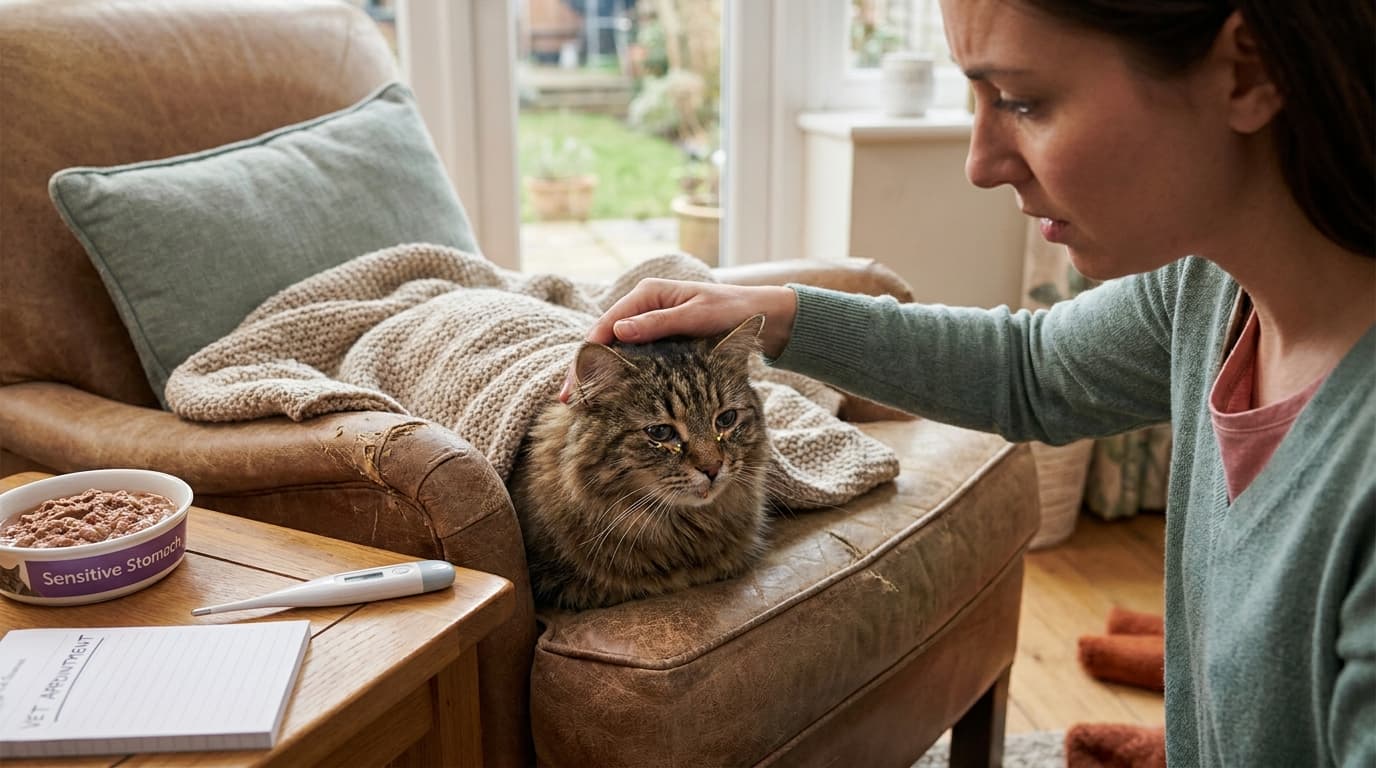
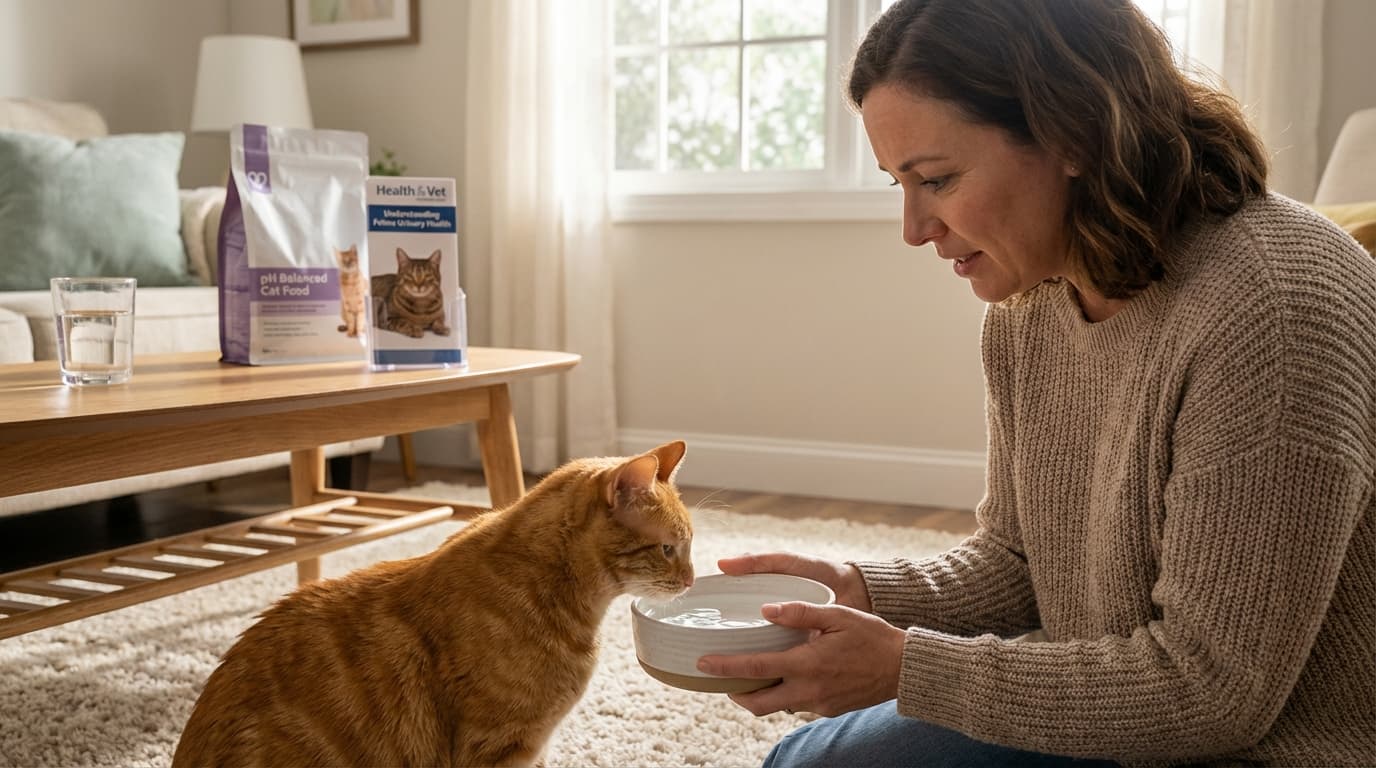
It’s a heart-stopping moment for any pet parent when you notice your cat visiting the litter box over and over with nothing happening. If you see your cat straining to urinate, it’s easy to panic and wonder if they’re just constipated or if something’s seriously wrong. Most of the time, this isn’t just a grumpy bladder but a sign of feline cystitis symptoms or even painful crystals in cat urine.
Urinary health is one of the most misunderstood parts of owning a cat because our feline friends are masters at hiding their pain. While many people reach for a bag of magic prescription kibble, the real secret to a healthy bladder is actually much simpler. We’re going to look at why a blocked male cat emergency happens and why the water bowl is often more powerful than any medicine cabinet.
This guide covers how to spot the red alerts, why dilution is the solution, and how to transition even the pickiest kibble addict to a moisture-rich diet. You’ll walk away knowing exactly how to keep your cat’s system flushing smoothly to prevent future scares and keep them happy and hydrated at home.
The Red Alert: When Straining Becomes an Emergency
Have you ever watched your cat hover over the litter box, looking frustrated and producing nothing? It is easy to think they are just having an off day or maybe they are annoyed by a new brand of litter. But here is the reality: when it comes to feline urinary health, there is a very fine line between a grumpy bladder and a life-threatening emergency. A grumpy bladder, or sterile cystitis, is painful and annoying, but a blockage is a literal ticking clock. If your cat cannot pee, toxins start backing up into their system almost immediately. You are not just looking at a litter box issue; you are looking at a full-body crisis.
Within just 24 to 48 hours, a complete urinary blockage can progress to acute kidney failure. That is a terrifyingly small window for any pet owner to manage. This is why Dr. Duncan Houston has a golden rule every cat owner should memorize: straining is always medical until proven otherwise. You should never wait and see if they feel better tomorrow or try to change their food first. If you see your cat straining with no urine coming out, it is not a behavioral quirk or a protest. It is a trip to the emergency vet. This matters because by the time a cat shows they are in pain, the situation is usually quite advanced.
Think of it this way: crystals in the urine are like tiny shards of glass. They are the building blocks of bladder stones and are usually invisible without a microscope until they grow much larger. When these crystals or mucus plugs get stuck, the situation turns from a discomfort into a total shutdown. While some cats just have inflammation, you cannot tell the difference from the outside. Treating it as an emergency every single time is the only way to ensure your cat stays safe. Most urinary issues are actually managed through better hydration rather than magic kibble ingredients. Water dilutes the urine and reduces the concentration of minerals that form these dangerous plugs.
While any cat can develop urinary issues, male cats are definitely playing the game on hard mode. It all comes down to a simple, frustrating bit of anatomy. The male urethra is much longer and narrower than the female version. It is essentially a physical bottleneck. A female cat might pass tiny crystals or a bit of mucus with some discomfort, but for a male, those same tiny particles can act like a cork in a bottle. This is why a small amount of struvite crystals, which are often linked to dry food diets, can be a minor issue for one cat and a death sentence for another. It is not that the crystals are different, but the pipe they have to travel through is much smaller.
This anatomical quirk is why we see so many more blocked males in emergency rooms. The risk is even higher for indoor-only male cats who are overweight or less active. These cats often drink less and urinate less frequently, giving microscopic crystals more time to settle and cause trouble. It is a perfect storm of biology and lifestyle that requires extra vigilance from us as owners. Monitoring clump size in the litter box and encouraging movement are some of the best ways to catch these issues before they become a total blockage. If your boy is less active, his hydration needs to be your top priority.
Key insights:
- Straining is never behavioral; it is a medical emergency until a vet confirms otherwise.
- A urinary blockage can lead to kidney failure in as little as 24 to 48 hours.
- The narrow anatomy of male cats makes them significantly more prone to life-threatening obstructions.
- Hydration is the most critical factor in preventing crystals from clumping into dangerous plugs.
Why the Boys Have It Harder
Male cats unfortunately drew the short straw. It comes down to a literal bottleneck. While a female cat has a wide urethra, a male's is long and narrow. Think of it like a garden hose tapering to a tiny straw. Microscopic crystals that a female passes easily can get stuck in a male, creating a life-threatening plug.
This is a blocked male cat emergency. A blockage can lead to kidney failure and become fatal in just 24 to 48 hours. If your boy is straining to urinate with no results, don't wait. Dr. Duncan Houston notes that straining to urinate is always medical until proven otherwise. It is never just a behavioral quirk.
Who is most at risk? Usually, it's indoor-only males between 2 and 10, particularly if they are overweight. These cats often rely on dry food, which is only 5-10% water. Without enough moisture to flush the system, their urine becomes a concentrated sludge where struvite crystals in cat urine thrive. Keeping them hydrated is a literal lifesaver.
Key insights:
- The male urethra is significantly longer and narrower than the female's, making it prone to physical obstructions.
- A urinary blockage is a critical emergency that can lead to kidney failure within 24 to 48 hours.
- Indoor, overweight, and less active males are the highest risk group for life-threatening crystals and stones.
Crystals, Stones, and Sludge: What’s Actually Happening Inside?
Think of your cat’s bladder like a tiny, delicate aquarium. In a healthy state, the water stays clear and the minerals stay dissolved. But when the environment gets out of balance, microscopic sand starts to form. These are crystals. You cannot see them with the naked eye, but they feel like tiny shards of glass against the bladder wall. If these crystals keep piling up, they eventually fuse into boulders, which are the painful bladder stones that can no longer be passed naturally.
The science of how these stones form is all about solubility. Struvite stones, made of magnesium and phosphate, are the most common. Think of them like sugar cubes. Because they usually form in alkaline urine, we can often dissolve them just by changing what your cat eats to adjust the pH. But then there is Calcium Oxalate. These stones are the stubborn ones. They thrive in acidic environments and will not melt away no matter what special food you use. Once they form, surgery is usually the only way to get them out.
Why does this sand turn into sludge in the first place? It usually comes down to how concentrated the urine is. Cats on dry food diets live in a state of mild, chronic dehydration. While a cat’s natural prey is about 70 percent water, dry kibble is a measly 5 to 10 percent. Without enough water to flush the system, minerals sit and stew until they turn into a dangerous sludge. This can lead to a total blockage, which is a massive emergency that can become life-threatening in just 24 to 48 hours. As Dr. Duncan Houston points out, most urinary diets work because of water, not magic ingredients.
If you see your cat straining or find a drop of blood in the litter box, your first instinct is likely to call for antibiotics. However, true bacterial UTIs are actually quite rare in younger cats. Most of the time, what you are seeing is sterile cystitis. This is a fancy way of saying the bladder is inflamed, but there is no bug to kill. It is a painful condition, but antibiotics will not fix it because there is no infection present.
When we rush to treat every urinary issue with pills, we often miss the real culprits like stress or a lack of moisture in the diet. Over-diagnosing UTIs leads to unnecessary antibiotic use and ignores the fact that the bladder wall is likely just raw and angry from crystals or stress-induced pH changes. Instead of reaching for a quick fix, we need to focus on calming the inflammation and flooding the system with hydration. Think of it this way: you cannot wash away a problem if there is no water in the bucket.
Key insights:
- Hydration is the single most critical factor in preventing feline urinary issues, outweighing specific mineral or pH-control ingredients.
- Urinary tract infections are frequently over-diagnosed, as sterile cystitis is far more common than bacterial infections in cats.
- Struvite crystals can often be dissolved with diet, but calcium oxalate stones typically require surgical intervention.
- Male cats face a significantly higher risk of life-threatening blockages due to their longer and narrower urethral anatomy.
The Myth of the 'Urinary UTI'
When you see blood in the litter box, your brain likely screams 'infection.' It feels natural to rush to the vet and ask for antibiotics, but here is a surprising reality: most cats with these symptoms do not actually have a bacterial infection. Instead, they are usually suffering from sterile cystitis. This is a painful condition where the bladder becomes inflamed and irritated without any germs or bacteria present at all.
Over-diagnosing UTIs is a common trap that leads to unnecessary medication and missed clues. Since blood in the urine is not a definitive sign of infection, jumping straight to antibiotics can be a mistake. The real culprit is often highly concentrated urine that acts like sandpaper on the bladder wall. If we focus only on killing bacteria that are not there, we might overlook the underlying stress or crystals that are the true source of the pain.
As Dr. Duncan Houston points out, 'Most urinary diets work because of water, not magic ingredients.' The same applies to treatment. Instead of a magic pill, your cat likely needs more moisture to flush the system. Sterile cystitis is far more common than bacterial issues, so the goal should be dilution. What does this mean for you? It means that more water in the bowl - and the food - is often the best medicine.
Key insights:
- Sterile cystitis involves inflammation without a bacterial infection.
- Antibiotics are frequently prescribed for cats that do not actually have a UTI.
- Blood in the urine is often caused by irritation from concentrated urine or crystals rather than germs.
The 70% Rule: Why Your Cat is Constantly Dehydrated
Ever wonder why your cat treats their water bowl like a piece of decorative furniture? It is because deep down, they are still desert hunters. In the wild, a cat’s thirst drive is naturally low because their meals - think mice and birds - are roughly 70% water. They evolved to eat their hydration rather than drink it. But when we swap that natural diet for a bowl of crunchy kibble, their biological programming backfires. Their bodies do not automatically realize they need to drink a massive amount of extra water to make up the difference.
This is where the math of moisture gets scary. While natural prey is 70% water, your average bag of dry food is a dusty 10% at most. This creates a massive moisture gap that most cats cannot close just by drinking from a bowl. Think of it this way: eating dry food is like trying to survive on saltine crackers. Even if your cat visits the fountain more often, they rarely drink enough to bridge that 60% deficit, leaving them in a state of chronic, low-level dehydration.
This is why canned food is a total game-changer for feline health. Recent data shows that cats on a canned food diet take in at least double the total amount of water compared to cats eating dry food. Since canned food is roughly 78% moisture - almost identical to what they would eat in the wild - it hydrates them automatically with every single bite. You are not just feeding them dinner; you are providing a life-saving water treatment twice a day that keeps their internal machinery running smoothly.
When it comes to preventing painful crystals or life-threatening blockages, remember that dilution is the solution. Think of your cat’s bladder like a sink. If the water is barely running, minerals like magnesium and phosphate can settle and bond together, forming struvite crystals. But if you keep the faucet on high by providing enough moisture, you flush the bladder before those crystals have a chance to turn into stones. For most cats, the goal is to hit about 50 to 60 ml of water per kilogram of body weight every day.
You might see fancy bags of urinary health kibble claiming to have magic ingredients, but experts like Dr. Lisa Pierson argue that there is no secret additive better than plain H2O. As she puts it, water is the most important word when considering urinary tract health. Most prescription diets actually work because they encourage more water intake, not because of some hidden chemical. If you can get more moisture into the bowl, you are already doing more for your cat’s bladder than any expensive kibble ever could.
This matters because a urinary blockage is a true emergency that can progress to kidney failure in as little as 24 to 48 hours. This is especially critical for male cats, whose narrow anatomy makes them prone to getting stuck. By focusing on the 70% rule and prioritizing wet food, you are effectively rinsing out those tiny building blocks of stones before they become a crisis. It is a simple change, but for a desert animal living in a modern home, it is the single most important thing you can do for their long-term survival.
Key insights:
- Cats are biologically designed to get moisture from food, not a water bowl.
- Canned food provides double the total hydration of a dry food diet.
- Diluting urine is the most effective way to prevent struvite crystals from forming.
- A urinary blockage can become life-threatening in just 24 to 48 hours, particularly for male cats.
- Hydration is more critical for urinary health than any specific pH-control ingredient in dry food.
Dilution is the Solution
Think of your cat's bladder like a sink. If the water only trickles, gunk builds up. This is how microscopic crystals turn into painful stones. By increasing water intake, you flush the system before those crystals bond together. It is the best way to avoid a scary blockage that can become life-threatening in only a day or two.
How much is enough? Aim for 50 to 60 ml of water per kilogram of body weight. Since cats rarely drink enough from bowls, diet is everything. Dry food is only 5 to 10 percent water, but canned food is around 78 percent. Switching to wet food can double their water intake instantly.
As Dr. Pierson points out, no magic ingredient beats plain water. Many prescription diets mainly work by helping the body stay hydrated. More water means thinner urine and fewer crystals. Dilution is the solution, and it starts with what you put in their bowl.
Key insights:
- Canned food provides nearly double the total hydration of a dry food diet.
- Flushing the bladder daily prevents microscopic crystals from forming stones.
- The target intake is 50 to 60 ml of water per kg of body weight.
Choosing the Right Fuel: pH Balance and Ingredients
Think of your cat’s food as a precision tool. It doesn't just fill their belly. It actually changes the chemistry of their urine. For cats prone to struvite crystals, those tiny microscopic building blocks that can grow into painful stones, the goal is to keep the urine slightly acidic. When the pH is just right, those crystals can actually melt away. It sounds like magic, but it is just chemistry in action. However, many owners get tripped up by mineral levels. While magnesium and phosphorus are necessary nutrients, too much of them in a dry environment is a recipe for trouble. These minerals are the primary ingredients in struvite stones, and without enough water to flush them out, they settle and form dangerous blockages.
If you are dealing with a 'kibble addict,' switching to wet food can feel like an uphill battle. But consider this. Cats on canned diets consume at least double the total water of those on dry food. Since normal feline prey is about 70% water and dry food is only about 10%, your cat is naturally designed to get their hydration from their meals. Dr. Lisa Pierson reminds us that water is the most important word when thinking about urinary health. To make the switch easier, try mixing a tiny bit of wet food into their favorite kibble or adding a splash of warm water to create a gravy. It is about slow progress, not an overnight overhaul. Most urinary diets work because of this extra moisture, not some secret magic ingredient.
But here is the thing. Your cat’s environment is just as important as their bowl. A big move or a new baby in the house isn't just a mental hurdle. It can literally change your cat's urine pH. This physical reaction to stress is why environmental enrichment, like cat trees or quiet hiding spots, is a medical necessity for urinary health. When a cat feels unsafe, their body chemistry shifts, making them more vulnerable to flare-ups and crystals. It is a direct link between their mood and their bladder.
You can be a detective at home by watching the litter box. Monitoring clump size is your best early warning system. If those clumps start getting smaller or you notice your cat visiting the box more often, it is a sign that their system is struggling. As Dr. Duncan Houston points out, straining with no urine is always a medical emergency, never just a behavior quirk. A blockage can progress to kidney failure and become life-threatening in just 24 to 48 hours, especially for indoor male cats who have narrower anatomy. Keeping a close eye on those daily deposits is the simplest way to catch a problem before it becomes an emergency.
Key insights:
- Struvite crystals can often be dissolved with the right acidic diet, while calcium oxalate stones usually require surgery.
- Target water intake for a healthy cat is roughly 50 to 60 ml per kg of body weight every single day.
- Straining in the litter box is always a medical issue that needs a vet, never just a behavior quirk.
The Stress Connection
Did you know a big life change like moving house or a new baby can change your cat’s internal chemistry? Stress is a major trigger for urinary issues. When a cat feels anxious, their urine pH shifts, creating a space where crystals thrive. This is a physical reaction, not just a bad mood, and it can happen much faster than most owners realize.
Because of this, vets now view environmental enrichment as a medical necessity. A stressed cat is a high-risk cat. Providing vertical space and quiet hiding spots helps keep their system balanced and their cortisol levels low. Think of a tall cat tree as a preventive prescription rather than just a place to sleep.
You can also play detective by checking the litter box every day. Pay attention to the size of the urine clumps. If those usual scoops suddenly shrink to the size of a grape, your cat might be struggling. Catching these tiny changes early can prevent a life-threatening blockage before it becomes an emergency.
Key insights:
- Stress directly alters urine pH, making crystal formation more likely in anxious cats.
- Environmental enrichment like scratching posts and hiding spots is a vital medical tool for urinary health.
- Monitoring 'clump size' in the litter box serves as a crucial early warning system for owners.
Common Questions About Cat Urinary Health
If you see your cat hovering over the litter box and nothing is happening, your first thought might be that they are just being finicky. But here is the truth. Straining with no urine is never just a phase. As Dr. Duncan Houston says, it is medical until proven otherwise. For male cats especially, a blockage can become life-threatening in as little as 24 to 48 hours. Their anatomy is much narrower than females, so even a tiny mucus plug or a few microscopic crystals can act like a cork in a bottle. This is why watching for feline cystitis symptoms is so important for every cat owner.
You might wonder if a fancy urinary support kibble is the answer. While those bags talk about pH balance, the real secret is usually just water. Most urinary diets work because of moisture, not magic ingredients. Think about it this way. A cat's natural prey is about 70% water. Canned food is around 78% water, while dry kibble is a dusty 5% to 10%. Cats on a canned diet end up getting double the total water of those eating dry food. That extra moisture dilutes the urine and flushes out the building blocks of stones before they can grow into a bigger problem.
In homes with multiple cats, the situation gets even more interesting because stress changes a cat's internal chemistry. We are seeing more evidence that stress-induced issues are often more common than actual bacterial infections. If your cats are fighting over food or space, it can trigger inflammation in the bladder. This is why vets now see things like extra litter boxes and climbing trees as medical necessities. Adding more vertical space can be just as important for their health as finding the right pH balanced cat food. It is all about making them feel safe in their own home.
So, how much water does your cat actually need? A good goal is about 50 to 60 ml for every kilogram of body weight each day. If you have a 5kg cat, that is about a cup of water. Since cats have a low thirst drive and do not always drink enough to make up for dry food, switching to wet food is the easiest way to hit that goal. Keep an eye on those clumps in the litter box too. Monitoring their size and frequency is your best early warning system for staying ahead of a serious health crisis before it becomes a blocked male cat emergency.
Key insights:
- Hydration is the single most important factor in preventing crystals, often more effective than mineral-controlled dry diets.
- Male cats face a higher risk of life-threatening blockages because their urethra is longer and narrower than a female's.
- Many urinary issues are caused by stress rather than bacteria, making environmental enrichment a key part of medical care.
- Canned food provides significantly more water than dry kibble, which is essential for flushing the bladder regularly.
Frequently Asked Questions
It is actually really tough to tell the difference just by watching them, but here is the rule of thumb: treat any straining like a medical emergency. While constipation is uncomfortable, a urinary blockage can become life-threatening in as little as 24 to 48 hours. If your cat is spending a lot of time in the litter box and coming out empty-handed, you need to act fast.
Dr. Duncan Houston puts it perfectly when he says that straining with no urine is never just a behavior quirk. It is a medical issue until a vet proves otherwise. This is especially true for male cats because their anatomy makes them way more likely to get a total blockage from tiny crystals or mucus plugs. If you see them squatting over and over with nothing to show for it, do not wait to see if it clears up on its own.
The short answer is that it is usually not the best tool for the job. Most of these diets are marketed as having special minerals, but the real secret to urinary health is just plain old water. As Dr. Duncan Houston points out, most urinary diets work because of water, not magic ingredients. When a cat eats dry food, they only get about 5 to 10 percent moisture, which is nowhere near the 70 percent they would get from natural prey.
Here is the thing: cats have a very low thirst drive. They do not just drink more water from a bowl to make up for dry kibble. Cats on canned food diets end up getting at least double the total water of cats on dry food. If you want to keep those crystals from forming into stones, you need to flush the bladder constantly. Switching to a moisture-rich wet food is almost always a better move than sticking with a dry urinary kibble.
You should treat this as a total emergency and get to a vet right away. If a male cat can't pee, it's often because of a physical blockage in his narrow urethra. This isn't something that will just fix itself at home, so don't wait to see if he gets better on his own.
The scary part is how fast things go downhill. A blockage can lead to kidney failure and become life-threatening in only 24 to 48 hours. Experts like Dr. Duncan Houston point out that straining is never just a behavioral quirk. It's a medical crisis until a vet says it isn't, especially for boys who are indoor-only or a bit overweight.
It really can. It might seem odd that a stressful move or a new neighbor cat could cause physical bleeding, but cats often carry their stress in their bladders. This condition is called feline idiopathic cystitis, and it's a leading cause of those scary red spots in the litter box.
Here's the thing most people miss: blood doesn't always mean your cat has a bacterial infection. In fact, true infections are often over-diagnosed. Most of the time, the bladder is just very inflamed because of stress or because they aren't getting enough water. While it's still a medical issue that needs a vet's look, the long term fix often involves making your cat feel safer and more relaxed at home.
Conclusion
So where does all this leave us and our favorite felines? It shows that while special kibble has its place, it can't beat the simple power of water. When your cat gets enough moisture, their bladder stays flushed and those pesky crystals don't get a chance to settle. It is a shift from just treating a problem to preventing one by looking at the food bowl and the litter box in a whole new way.
Your next move doesn't have to be a total overhaul. You might start by adding a bit of warm water to their current meals or finally setting up that cat fountain they have been eyeing. If you have a stubborn kibble addict, take it slow and be patient. The goal is simply getting more moisture into their system every single day to keep things moving safely.
Keeping an eye on those litter box habits might feel a little strange, but it is truly the best way to catch trouble before it becomes an emergency. Trust your gut if your cat's behavior changes. A well-hydrated cat is a much more comfortable cat, and a clear bladder means many more years of happy head bumps and peaceful naps.
Send it to someone who should read it next.
PurrScript Editorial Team
Editorial Team
PurrScript's in-house editorial team. We research, write, and review every guide using established veterinary and behavioral resources, and update articles as best practices evolve.
View all articles