Is Your Cat's 'Hairball' Actually a Warning Sign? The Truth About Feline IBD
We've all been there. You wake up to that familiar hacking sound and think it's just another grooming byproduct. But here's a reality check: 73% of cats with small bowel...

PurrScript Editorial Team
Editorial Team
Is Your Cat's 'Hairball' Actually a Warning Sign? The Truth About Feline IBD
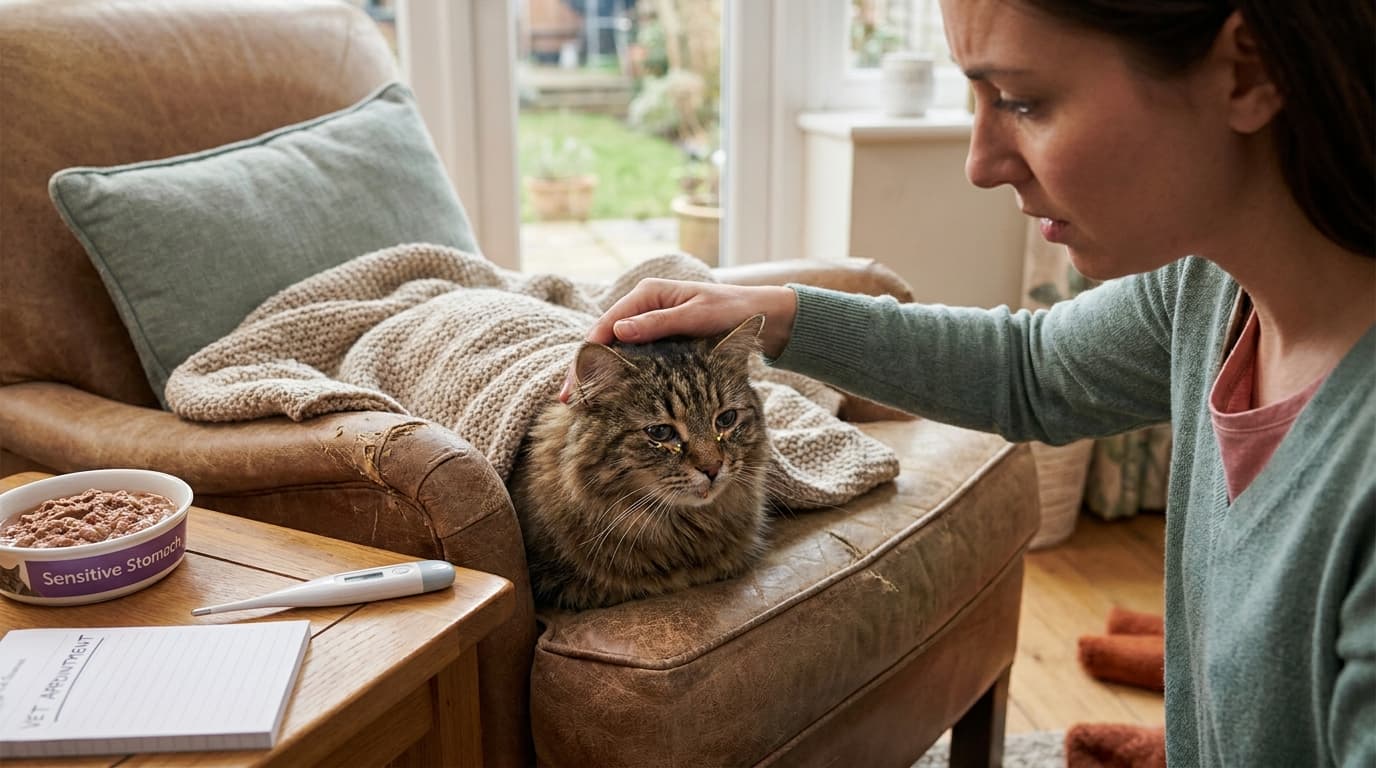
We've all been there. You wake up to that familiar hacking sound and think it's just another grooming byproduct. But here's a reality check: 73% of cats with small bowel issues actually suffer from chronic vomiting in cats. If your kitty is bringing up a "hairball" once a week, it might not be hair at all. It could be a major warning sign of inflammatory bowel disease in cats.
Frequent stomach upset is never "just a cat thing." Whether it's a bacterial imbalance or an autoimmune response, these issues can leave your furry friend feeling tired and thin. You can often manage these symptoms by switching to a hydrolyzed protein diet or using feline probiotics to help balance their gut.
This guide looks at why those "hairballs" happen and how the right sensitive stomach cat food can help. We'll also cover cat hairball remedies that work and what tests to ask your vet for. Let's get your cat back to their playful self.
Why Your Cat's 'Hairball' Might Be Something Much Bigger
We usually think hairballs are just a messy part of having a cat. You hear that hacking sound, clean the rug, and move on. But here is the truth: hairballs are often a misunderstood warning sign. Dr. Gary Norsworthy notes that these aren't just quirks. They are actually early signals of brewing small bowel disease or even cancer.
The numbers are eye-opening. About 73% of cats with small bowel disease deal with chronic vomiting. If your cat throws up material with little hair or gets sick once a week, it is not normal. This is a common sign of Feline IBD. In this condition, inflammation in the gut walls crowds out healthy cells and makes it hard for your kitty to absorb nutrients.
Ignoring these signs might let a serious issue go untreated. Understanding this link is the first step to helping your kitty feel better. By focusing on gut health and simple dietary changes, you can stop the cycle of sickness and get your cat back to their happy, playful self.
Key insights:
- Vomiting more than once a week is a medical concern that requires a vet visit.
- Chronic hairballs are often early indicators of IBD or gastrointestinal inflammation.
- Inflammatory bowel disease hinders nutrient absorption by crowding out healthy cells in the stomach.
The 'Normal' Myth: Why Frequent Vomiting Is a Red Flag
We have all been there: you are relaxing on the couch when you hear that unmistakable, rhythmic 'hork-hork' sound from the hallway. You grab a paper towel, sigh, and think, 'Well, that is just life with a cat.' But here is the truth: if your cat is vomiting once a week or more, it is never just a cat thing. We have spent years normalizing feline barfing, but frequent vomiting is actually a major red flag that something is wrong under the hood. Recent findings show that this behavior is far from benign, often masking underlying issues that need a vet's attention.
Dr. Kelly Diehl, a veterinary internist, has a specific rule of thumb for concerned pet parents. If a cat throws up material with very little to no hair, or does it more than once a week, they need a professional evaluation. It is easy to confuse a grooming byproduct with a medical emergency, but the difference usually lies in the frequency and the contents of the mess. While a stray clump of fur every few months is typical for some cats, consistent vomiting is one of the top reasons cats end up at the clinic. It is a sign that the 'conveyor belt' of their digestive tract has stalled or reversed.
The connection between these episodes and serious gut issues is quite startling. Dr. Gary Norsworthy explains that hairballs are frequently misinterpreted as normal behavior when they are actually early warning signs of brewing small bowel disease, such as IBD or even cancer. In fact, chronic vomiting is present in 73% of cats diagnosed with small bowel disease. Think of it as a smoke detector going off before a fire really takes hold. It is a slow progression from an occasional mess to a chronic state of inflammation that fundamentally changes how your cat's body functions.
When a cat has IBD, their immune system mistakenly identifies normal bacteria as harmful, triggering an autoimmune-like response. Inflammatory cells begin to crowd out the healthy cells in the stomach or intestinal walls, which makes it nearly impossible for them to absorb nutrients properly. This gut dysbiosis does not just cause a tummy ache; it can eventually lead to more severe conditions like lymphoma. Identifying these signs early is crucial because digestive issues, including vomiting and diarrhea, are consistently ranked as top reasons for veterinary visits for a reason.
What does this mean for you as a cat parent? It means we have to stop looking at the roll of paper towels as a standard grocery item and start looking at the food bowl. Since IBD is often triggered by bacterial imbalances or 'junky' fillers, dietary intervention is usually the first and most effective way to help. By keeping meals simple and focusing on high-quality proteins, you can reduce that digestive stress and promote better gut health. After all, a happy cat gut means a much cleaner carpet and a much longer life together.
Key insights:
- Vomiting once a week is a clinical symptom of illness, not a normal feline behavior.
- Chronic inflammation in the gut walls prevents cats from absorbing essential nutrients from their food.
- Frequent hairballs are often the first sign of brewing cancer or IBD rather than just a grooming issue.
- Small bowel disease is present in nearly three-quarters of cats who suffer from chronic vomiting.
The Link Between Hairballs and Small Bowel Disease
Most cat owners think hairballs are just a part of life. But here is the truth: they are often an early warning sign for small bowel disease or even cancer. Dr. Gary Norsworthy points out that we should not dismiss these 'occasional messes' as normal behavior. What starts as a simple cleanup can quickly turn into a serious health issue.
The numbers back this up, as chronic vomiting shows up in 73% of cats with small bowel disease. It is actually one of the main reasons cats end up at the vet. When inflammation kicks in, rogue cells crowd out the healthy ones in the intestinal walls. This makes it very tough for your cat to soak up the nutrients they need to stay healthy.
Dr. Kelly Diehl warns that if your cat throws up once a week or more, even if there is no hair in it, you need to see a professional. What looks like a simple cleaning chore might actually be a cry for help from your cat's digestive system. Do not wait for the problem to get worse before taking action.
Key insights:
- Hairballs are frequently an early symptom of IBD or lymphoma rather than a grooming fluke.
- Vomiting once a week is a clinical red flag that requires a veterinary evaluation.
- Inflammation physically blocks nutrient absorption by crowding out healthy gut cells.
What’s Actually Happening Inside Your Cat’s Tummy?
Ever wonder why your cat barfs so much? We often shrug off hairballs as just a routine cat thing, but the truth is often more serious. Recent findings show that about 73% of cats with small bowel disease deal with chronic vomiting. If your kitty is throwing up once a week or more, it is not just a messy quirk you have to live with. It is usually a major sign of Inflammatory Bowel Disease, or IBD. Think of IBD as a group of diseases where inflammatory cells basically start a turf war inside the stomach and intestinal walls. These invaders crowd out the healthy cells that are supposed to be doing the hard work of digestion.
When those healthy cells get pushed aside, the gut loses its ability to soak up nutrients properly. This process of malabsorption is exactly why a cat with IBD might seem lazy or lose their usual spark. They simply are not getting the fuel they need from their meals, no matter how much they eat. But there is a scarier connection to keep in mind. If that inflammation keeps simmering without any treatment, it can actually lead to lymphoma, which is a common feline cancer. It is a heavy thought to process, but catching these signs early makes a massive difference in their quality of life.
So, why does the body start attacking itself like this? It often comes down to an autoimmune response where the wires get crossed. Basically, your cat’s immune system gets confused and starts treating good, helpful bacteria like they are dangerous enemies. This state of bacterial imbalance is known as gut dysbiosis. When the gut environment is out of whack, it triggers constant chronic distress in the GI tract. It is a cycle that keeps the entire body in a state of high alert and prevents true healing from taking place.
Since the gut is really the foundation for feline immunity, keeping it balanced is everything. When the bacterial levels are off, the whole system suffers. This is why many experts now see frequent hairballs as an early warning sign of brewing small bowel disease rather than just a grooming issue. Think of the gut as the engine room of your cat's health. By paying attention to these small signals and addressing the imbalance now, you can help protect your cat’s long-term well-being and keep their tummy happy for years to come.
Key insights:
- Chronic vomiting is a medical symptom, not a personality trait, and affects over 70% of cats with bowel disease.
- IBD causes inflammatory cells to physically block the absorption of nutrients, leading to lethargy.
- Untreated gut inflammation is a known precursor to feline lymphoma.
- Frequent hairballs are often the first visible sign that a cat's gut health is failing.
The Autoimmune Connection and Gut Dysbiosis
Think of your cat's gut as a busy neighborhood where the security team has lost the manual. In a healthy cat, the immune system knows which bacteria are friends. But with IBD, the system glitches and attacks those helpful microbes like they are enemies. This friendly fire causes the intestinal walls to swell with inflammatory cells. It is a cycle where the body fights itself, making it hard for your pet to soak up the nutrients they need.
This imbalance, known as gut dysbiosis, is the secret driver behind chronic GI distress. Recent data shows that 73% of cats with small bowel disease suffer from chronic vomiting. If the gut is out of whack, the whole immune system feels it. Since gut health is the foundation of feline immunity, keeping those bacteria in balance is the best way to keep your cat's internal defenses sharp.
Key insights:
- IBD acts as an autoimmune response where the body mistakenly attacks beneficial gut bacteria.
- Chronic vomiting affects 73% of cats with small bowel disease, signaling deep internal inflammation.
- A healthy microbiome is the primary defense for a cat's immune system and nutrient absorption.
The First Line of Defense: Food as Medicine
Most of us have woken up to that unmistakable sound of a cat hacking in the hallway at 3 AM. It is easy to shrug it off as just a hairball, but the reality is usually more serious. Chronic vomiting is present in 73% of cats with small bowel disease. If your cat gets sick once a week or more, it is not normal. Dr. Gary Norsworthy notes these hairballs are often early warning signs of brewing small bowel disease. In these cases, inflammatory cells crowd out normal cells in the stomach walls, making it hard for your cat to absorb nutrients.
This is where food as medicine comes in. For many cats, dietary changes are more effective than medication alone because they address the root cause of the irritation. Dr. Tabitha Thompson recommends keeping meals simple and free of junky fillers to reduce digestive stress. One effective tool is a hydrolyzed protein diet. These proteins are broken down so small that they are essentially invisible to the immune system. Because the body does not recognize them as a threat, the immune response stops and inflammation can finally subside.
Choosing the right food means looking for AAFCO and WSAVA labels on the bag to ensure real nutritional standards. Focus on highly digestible proteins and Omega-3 fatty acids to soothe an inflamed intestinal lining. It is also worth looking for a balance of prebiotic and insoluble fibers. These help keep things moving through the digestive tract, preventing the backup that often leads to more vomiting and discomfort.
We are also seeing a shift away from traditional high-fiber prescription diets toward raw feeding or Limited Ingredient Diets. These minimal recipes make it much easier to identify which protein triggers your cat’s symptoms. While raw feeding requires care regarding safety and sourcing, the goal is to fix the bacterial imbalance in the gut. By simplifying what goes into the bowl, you give your cat’s digestive system the break it needs to heal.
Key insights:
- Vomiting more than once a week is a medical red flag rather than a standard feline quirk.
- Hydrolyzed proteins prevent the immune system from overreacting to food triggers.
- Limited ingredient diets help owners isolate specific allergens through a process of elimination.
- Proper gut health often requires a balance of Omega-3s and specific fibers to manage inflammation.
Choosing the Best Sensitive Stomach Cat Food
Ever wonder if those weekly hairballs are just a normal cat thing? They might actually be a cry for help. Since chronic vomiting shows up in 73% of cats with small bowel disease, picking the right sensitive stomach cat food is vital. Start by looking for AAFCO and WSAVA labels on the bag. These ensure the food meets real nutritional safety standards and isn't just clever marketing.
When you check the ingredients, look for highly digestible proteins or even a hydrolyzed protein diet to ease gut inflammation. Omega-3 fatty acids also help soothe the digestive tract, acting like a cooling balm for an irritated belly. You also want a mix of prebiotic fibers and insoluble fiber to keep things moving. This combination helps your cat feel less like a volcano and more like a comfortable, happy pet.
The goal is to keep meals simple and free of fillers that cause stress. If your cat vomits more than once a week, it is time for a vet check and a diet change. Think of it this way: you are not just feeding them, you are helping them heal from the inside out. Why settle for messy cleanups when they could be thriving?
Key insights:
- Vomiting once a week or more is a major red flag for IBD, not just a normal part of being a cat.
- AAFCO and WSAVA labels are the gold standard for ensuring your cat's food is nutritionally complete.
- Simple, limited-ingredient diets with Omega-3s and specific fibers are the most effective way to manage sensitive stomachs.
The Shift Toward Raw and Limited Ingredient Diets
For years, the go-to for a sensitive stomach was a bulky bag of high-fiber prescription kibble. But things are changing. Many cat owners are now ditching those filler-heavy formulas for something much simpler. Why? Because we are realizing that IBD is often an autoimmune reaction to a messy gut. By moving toward limited ingredient diets, you essentially clear the noise. Dr. Tabitha Thompson notes that keeping meals simple and free of junky fillers reduces digestive stress. It is like a puzzle where fewer ingredients make it easier to spot exactly what is triggering the inflammation.
Some are even exploring raw feeding to mirror a cat's natural biology. Since 73% of cats with small bowel disease deal with chronic vomiting, getting the diet right is a priority. If you go raw, safety is the first rule. Stick to high-quality and pathogen-tested brands rather than DIY recipes to keep things clean. It is all about finding that balance where their gut finally feels calm and the vomiting stops for good.
Key insights:
- Limited ingredient diets act as an elimination tool to identify specific protein triggers.
- Raw feeding can support gut health but requires commercially prepared, safe sources to avoid bacteria.
- High-fiber prescription diets are losing favor as owners prioritize biological appropriateness.
Probiotics and Supplements: Healing the Microbiome
Think of your cat’s gut like a busy city. When IBD hits, it is like a massive traffic jam where nobody can get where they need to go. Feline probiotics act like the traffic controllers, stepping in to restore order when things get chaotic. These helpful bacteria do more than just sit there; they actively push back against the 'bad' bugs that trigger the immune system to overreact. Since IBD is often an autoimmune response to a bacterial imbalance, getting the right probiotics into their bowl is one of the fastest ways to calm the storm.
It is not just about the bacteria, though. Adding Omega-3 fatty acids is like pouring cool water on a fire. These fats are famous for their anti-inflammatory power, helping to soothe the stomach and intestinal walls where inflammatory cells are currently crowding out healthy ones. Whether you are feeding a fresh raw diet or a high-quality commercial food, these supplements make it easier for your cat to actually absorb their nutrients again. It is a simple addition that makes a huge difference in how they feel every day.
You might wonder how vets actually know if the gut is healing. That is where B12 and folate come in. Think of these levels as a secret 'thermometer' for gut health. When a cat has small bowel disease, they often cannot hang onto these nutrients, leading to a crash in their blood serum levels. Checking these numbers is a key part of the diagnostic process because it tells the real story of what is happening inside. If the B12 levels are steady, it is a great sign that the gut is finally doing its job and absorbing what it needs.
Navigating the Vet Visit: What to Ask For
Walking into the vet clinic with a vomiting cat can feel like a guessing game. You might expect a standard blood panel to reveal the culprit, but here is the tricky part: basic tests often come back perfectly normal even when IBD is brewing. This happens because standard labs usually look at general organ function rather than the specific state of the intestinal lining. Since chronic vomiting is present in about 73% of cats with small bowel disease, a clean basic test does not always mean your cat is in the clear.
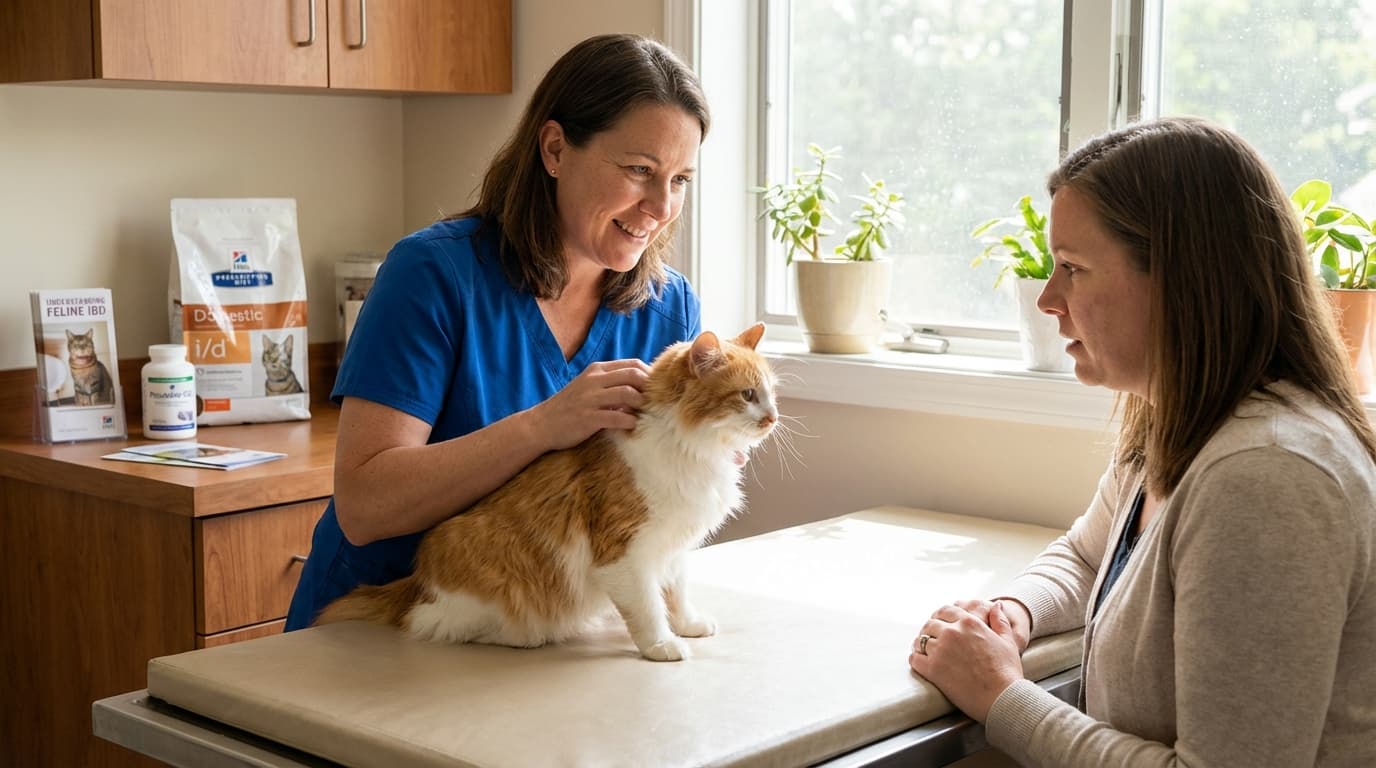
To get real answers, you should ask for specific markers like B12 and folate serum levels. These tests check for nutrient malabsorption, which is a major red flag for gut inflammation. As Dr. Kelly Diehl points out, if your cat throws up more than once a week, it is time for a real evaluation. Think of these tests as a deeper look into how well your cat is actually absorbing its food. It is the difference between checking if the engine is on and checking if the fuel is actually reaching the cylinders.
Once you have those results, work with your vet to build a long-term plan that goes beyond just stopping the symptoms. This might involve a hydrolyzed protein diet or adding probiotics to help balance the gut. The goal is to move past the wait and see approach and start treating the underlying inflammation before it leads to bigger issues. This matters because early action keeps your cat comfortable and helps prevent the disease from progressing into something more serious like lymphoma.
Key insights:
- Standard blood work often misses early IBD because it does not measure intestinal absorption.
- B12 and folate serum tests are essential tools for identifying hidden gut inflammation.
- Chronic vomiting in 73% of cases is linked to small bowel disease, making it a vital symptom to track.
Frequently Asked Questions
Actually, it is not normal at all. While many of us grew up thinking hairballs were just a standard part of owning a cat, experts now say that vomiting once a week or more is a major red flag. It is often one of the first signs of Inflammatory Bowel Disease or other gut issues rather than just a grooming quirk.
Here is the thing: Dr. Kelly Diehl, a veterinary internist, points out that if your cat is throwing up material with very little hair, you should definitely get them checked out. Since chronic vomiting is present in about 73% of cats with small bowel disease, it is much better to be safe and talk to your vet about it early on. Dr. Gary Norsworthy even warns that these hairballs can be an early warning sign of brewing cancer or IBD.
Think of a sensitive stomach as a temporary disagreement with a specific ingredient, whereas IBD is a group of diseases where the gut is physically inflamed. In cats with IBD, inflammatory cells crowd out the normal cells in the intestinal walls. This makes it really hard for your cat to absorb the nutrients they need from their meals.
It can be a bit of a gray area because the symptoms like vomiting and diarrhea look similar, but IBD is often an autoimmune response linked to a bacterial imbalance in the gut. While a sensitive stomach might just need a simpler recipe, IBD often requires more specific help like hydrolyzed proteins, B12 supplements, or probiotics to help the immune system stop attacking the gut.
It definitely can help. These diets work by breaking down proteins into such tiny pieces that your cat's immune system doesn't even recognize them as a threat. Since IBD is often an autoimmune reaction where the body attacks normal stuff in the gut, this takes the pressure off. It is a common first step for many vets trying to manage sensitive stomachs.
But here is the big thing: vomiting is not just a quirk of being a cat. Experts like Dr. Kelly Diehl point out that throwing up once a week or more is a major red flag. Many owners mistake these episodes for just hairballs when they are actually early warning signs of small bowel disease. In fact, about 73 percent of cats with small bowel issues deal with chronic vomiting. Switching to a hydrolyzed diet helps address that underlying inflammation so your cat can finally keep their food down.
They are generally very safe and are actually becoming a standard part of treatment for gut issues. Most experts now see IBD as a result of gut dysbiosis, which is basically a fancy way of saying the bacteria in the gut are out of balance. Probiotics help put the good guys back in charge to calm things down.
You will notice that even big name brands are starting to add probiotics and omega-3s to their sensitive stomach lines because they work so well at reducing inflammation. Also, many pet owners are moving toward limited ingredient diets to help with this balance. Just make sure any food you choose meets AAFCO and WSAVA standards so you know your cat is getting the right nutrients while their tummy heals.
Conclusion
So what is the bottom line for you and your cat? It turns out that those weekly hairballs we usually ignore are often a clear signal that something is wrong deep inside the gut. When chronic vomiting becomes a routine, it is usually a sign of inflammatory bowel disease in cats rather than just a grooming habit. By connecting the dots between diet and inflammation, you can stop the cycle of discomfort before it turns into something much worse.
The good news is that you have so much control over their recovery. Switching to a hydrolyzed protein diet or adding feline probiotics can calm a sensitive stomach faster than most medications. If you are seeing these red flags, your next move should be a chat with your vet about a targeted nutrition plan or specialized sensitive stomach cat food that fits their needs.
You are the only one who truly sees your cat's daily habits, which makes you their most important health advocate. Taking these symptoms seriously today means more comfortable naps and playful mornings for your furry friend tomorrow.
Send it to someone who should read it next.

PurrScript Editorial Team
Editorial Team
PurrScript's in-house editorial team. We research, write, and review every guide using established veterinary and behavioral resources, and update articles as best practices evolve.
View all articles