Is Your Home Actually Cat-Safe? Hidden Hazards Every Owner Should Know
Did you know a single lily petal can cause fatal kidney failure in your cat in under three days? It's a scary thought, but many common items are silent threats...

PurrScript Editorial Team
Editorial Team
Is Your Home Actually Cat-Safe? Hidden Hazards Every Owner Should Know
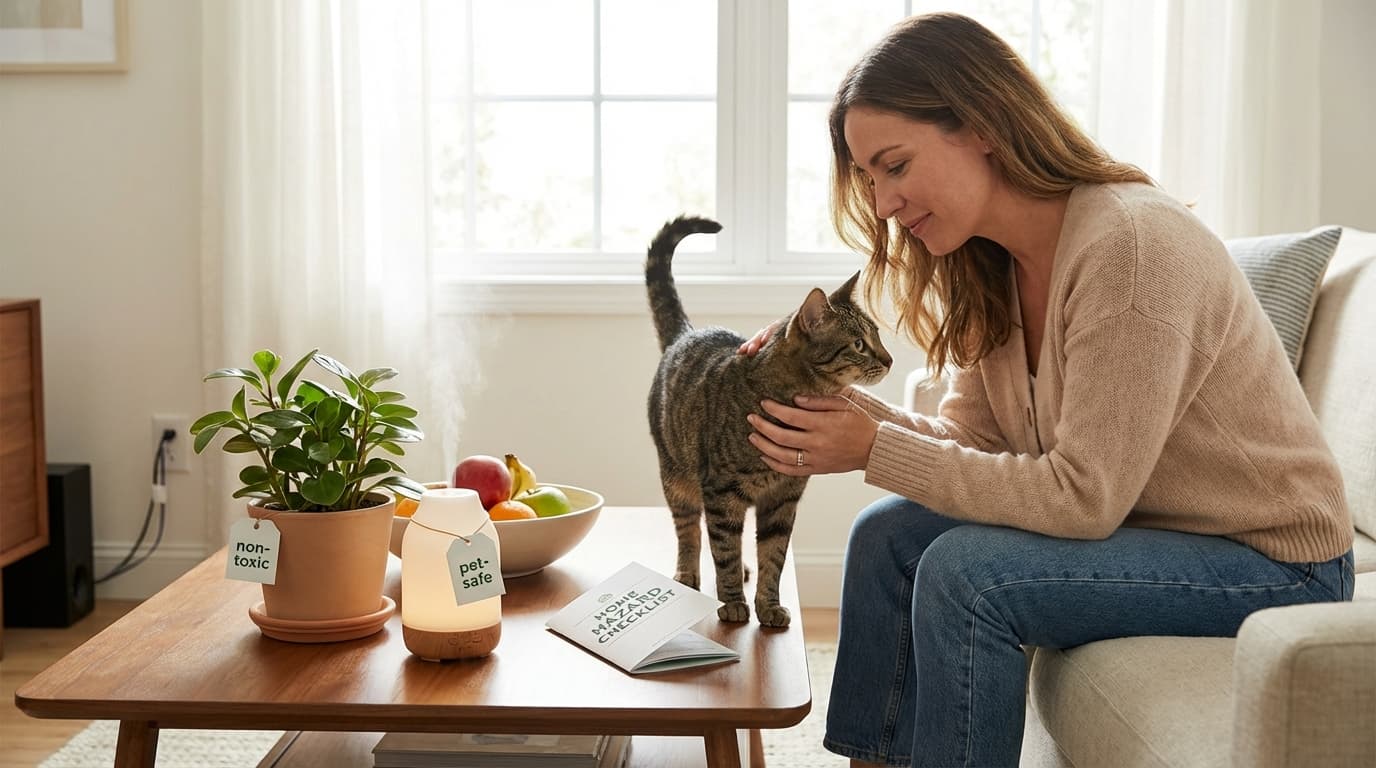
Did you know a single lily petal can cause fatal kidney failure in your cat in under three days? It's a scary thought, but many common items are silent threats to our feline friends. When it comes to Cat Care, knowing these hidden dangers is just as important as picking the right food or the softest bed. From lily toxicity in cats to the surprising risks of hair growth cream, your living room might hold more hazards than you realize.
Cats are natural explorers, but their biology means they can't process certain chemicals the way humans do. Whether you're kitten-proofing your home or just want to keep your senior cat safe, you need to know which cat-safe houseplants to buy and which essential oils are dangerous to cats. It's not about being paranoid, it's about being a great pet parent so your kitty stays safe and happy.
We will cover the human foods cats can't eat and bathroom products that are surprisingly lethal. You'll get a clear roadmap to making your home a sanctuary, plus tips for middle-of-the-night emergencies. Let's look at how to spot these risks early.
Ever wonder if your living room is actually safe for your cat? It is a bit of a shock to realize that many common household items are silent threats. Cats are uniquely sensitive compared to us or even dogs, meaning things we find harmless, like a stray flower or a drop of medicine, can quickly become a major health risk.
Lilies are a perfect example of a hidden danger. A tiny bit of pollen or a sip of vase water can cause fatal kidney failure in less than three days. If veterinary treatment is delayed by 18 hours, the damage is often permanent. Other hidden killers include human hair growth meds like Rogaine and dog-specific flea treatments, which are toxic to cats in even the smallest doses.
Creating a feline sanctuary means looking past the obvious. From toxic plants to the bottles on your bathroom counter, spotting these hazards early is the best way to keep your curious friend healthy. Let's look at how to identify these risks before they become a problem.
Key insights:
- Cats have a unique physiology that makes them much more vulnerable to toxins than humans or dogs.
- The entire lily plant is toxic; even the water in the vase can cause total kidney failure.
- Common human products like Minoxidil (Rogaine) are fatal to cats after just a single lick.
The Truth About Lilies: Why One Petal Can Be Fatal
Most cat owners know that chocolate is a no-go, but did you know a single lily petal in a bouquet can be a death sentence? It sounds like an exaggeration, but it is the scary reality. True lilies are so toxic that even a few grains of pollen brushed off a coat during grooming or a quick sip of the water from the vase can trigger total kidney failure in less than three days. This isn't just a case of 'don't let them eat the flowers' - it is about keeping these specific plants out of your home entirely.
Timing is everything when dealing with these toxins. If you suspect your cat touched a lily, you have a roughly 18-hour window to get them to a vet before the damage to their kidneys becomes irreversible. The tricky part is that early signs - like drooling, hiding, or vomiting - usually show up in the first 12 hours and might look like a simple upset stomach. By the time your cat looks truly sick a day later, their organs are already shutting down. Waiting for visible illness is often too late, so immediate veterinary intervention is the only way to save them.
It helps to know that not every plant with 'lily' in the name is an organ killer, though they all cause trouble. True lilies and Daylilies are the ones that cause fatal failure. In contrast, Peace and Calla lilies contain tiny crystals that irritate the mouth and throat, causing immediate drooling and pain but not organ damage. Still, telling them apart in a store-bought bouquet can be hard. To stay safe, why not skip the risk? Stick to cat-friendly alternatives like roses, sunflowers, or snapdragons that look just as beautiful without the hidden danger.
Key insights:
- True lilies and daylilies cause fatal kidney failure, while Peace and Calla lilies primarily cause mouth irritation.
- The entire plant is dangerous, including the pollen and the water in the vase.
- Treatment must begin within 18 hours of exposure to prevent permanent organ damage.
The 18-Hour Window You Can't Afford to Miss
If you find a chewed lily leaf and your cat looks fine, do not be fooled. When it comes to lily toxicity in cats, you have a tiny 18-hour window to act before kidney damage becomes permanent. Waiting for your cat to look sick is a dangerous mistake because the real damage happens silently and fast. By the time you see a physical change, the internal crisis is already well underway.
The timeline is brutal. In the first 12 hours, you might only notice minor drooling, some vomiting, or a bit of lethargy. It is easy to shrug these off as a simple upset stomach, but by day three, total kidney failure can set in. It is not just about eating the flowers, either. Even licking a few grains of pollen or drinking the water from the vase can be fatal.
This is why you cannot afford to wait for symptoms. If you suspect any contact at all, get to an emergency vet immediately. Early treatment like IV fluids can flush the toxins out, but once that 18-hour mark passes, the damage is usually irreversible. Your quick reaction is the only thing standing between your cat and a tragic ending.
Key insights:
- The 18-hour mark is the critical point of no return for successful treatment.
- Early symptoms like drooling are often mistaken for minor issues until it is too late.
- Every part of the lily plant, including the pollen and vase water, is lethal to cats.
Know Your Lilies: Peace, Calla, and Daylilies
It is easy to get lilies mixed up, but knowing the difference could save your cat's life. While the name sounds innocent, it covers plants with very different risks. Peace or Calla lilies cause painful mouth irritation and drooling if a cat bites them. They are unpleasant but usually not fatal. The real danger comes from true lilies and daylilies. These are the organ killers.
For these toxic varieties, the danger is everywhere. Your cat could lick pollen off their fur or sip the vase water and face kidney failure in less than three days. If you do not get to a vet within 18 hours, the damage is often permanent. It is a scary, fast timeline that leaves very little room for error.
Want a safe home? Stick to roses or snapdragons instead. If you notice vomiting after a flower delivery, do not wait to see if things improve. With true lilies, every hour matters.
Key insights:
- True lilies and daylilies are far more dangerous than Peace or Calla lilies.
- Pollen and vase water are just as toxic as the leaves and petals.
- A delay in treatment longer than 18 hours usually leads to permanent kidney damage.
Bathroom Dangers: From Hair Growth to Flea Meds
Your bathroom might be your peaceful morning spot, but to a curious cat, it is a chemistry lab full of hidden dangers. Take Minoxidil, found in hair growth products like Rogaine. It sounds scary, but a single lick from your scalp or a stray drop on the counter can be fatal. Their tiny systems just cannot process the chemical, which can lead to quick heart failure.
Then there is the borrowing trap. Never use a dog’s flea treatment on a cat. Many contain Permethrin, which is safe for dogs but a deadly poison for felines that causes tremors and seizures. The best fix is a simple habit: store everything in closed cabinets and never leave bottles where a curious paw can knock them over.
Why is the one lick rule so strict? It comes down to basic biology. Cats lack the specific liver enzymes needed to break down chemicals that humans process easily. This means a standard Ibuprofen or Tylenol tablet isn't just a human dose - it is a toxic overload. What cures your headache can cause a cat's kidneys to shut down almost immediately.
It is not just pills, though. Topical creams for skin rashes or muscle pain are just as risky if your cat licks your skin after application. Always wash your hands after using ointments and double-check the floor for dropped pills. A few seconds of caution is all it takes to keep those nine lives safe.
Key insights:
- Cats lack the liver enzymes to process common human medications like Tylenol.
- Permethrin in dog flea meds is a common cause of feline poisoning.
- Topical creams can be just as toxic as swallowed pills if licked off the skin.
The 'One Lick' Rule for Human Meds
Your medicine cabinet is a hidden minefield. While we take an Advil or apply hair cream without thinking, these items are lethal to cats. They simply lack the liver enzymes needed to process human drugs safely. What heals us often poisons them, and the speed of the reaction can be terrifying.
It truly only takes one lick to cause a crisis. For instance, Minoxidil, a common hair growth treatment, can be fatal in tiny doses - even if a cat just licks it off your skin or hair. Common pills like Ibuprofen and Acetaminophen are equally dangerous, often causing rapid organ failure. Even 'dog-only' flea treatments containing Permethrin can cause tremors or vomiting if your cat brushes against a treated pet. If a vet didn't prescribe it, keep it behind a closed door.
Kitchen Rules: Human Foods to Keep Off the Counter
Have you ever noticed how your cat treats your kitchen counter like their own personal stage? It is tempting to share a snack when those big eyes look up at you, but some common staples are actually hidden dangers. Take the allium family for instance. Onions, garlic, and leeks might make our dinners delicious, but they can cause serious damage to a cat's red blood cells. Even a small amount over time can lead to anemia. It is best to keep the stir-fry leftovers far out of reach and ensure your cat does not lick the plates.
Then there is the mystery of grapes and raisins. Scientists still are not exactly sure why, but even a tiny serving can cause sudden kidney failure in some pets. It is a risk that simply is not worth taking. Imagine you are unpacking groceries and a grape rolls under the fridge. To us, it is a minor spill. To a curious cat, it is a toy that might end up as a snack. Because we do not fully understand the toxic mechanism behind grapes, the safest rule is zero tolerance in the house.
While you are checking labels, keep an eye out for Xylitol. This sugar substitute is common in sugar-free gum and some peanut butters. It can cause a life-threatening drop in blood sugar or even liver failure. Xylitol is appearing in more products every day, from chewable vitamins to specialized spreads. Checking the back of the package takes five seconds but can save a life. What does this mean for you? It means being a bit of a detective before you leave groceries out. Think of it as kitten-proofing your snacks so your furry friend stays safe while they explore.
Sometimes the biggest threats are the ones you cannot see. You might think a sprinkle of garlic powder is harmless compared to a fresh clove, but it is actually much more concentrated. This makes it far more toxic in smaller doses. One heavy shake of the spice jar could be enough to cause trouble. This is why we have to be careful about where we store our seasonings and what we leave out during meal prep. Even a small spill of powder on the floor can be dangerous if a cat walks through it and licks their paws later.
We also need to talk about baking day. Raw yeast dough is a double threat. Not only can it expand painfully in a cat's stomach, but the fermenting yeast actually produces alcohol. Since a cat's body is so small, even a tiny bit of alcohol can lead to dangerous toxicity. Keeping these ingredients tucked away in the pantry is the easiest way to prevent a midnight trip to the vet and keep your kitchen a happy place for everyone. A little bit of caution goes a long way when it comes to these hidden recipe risks.
Key insights:
- Concentrated powders like garlic or onion powder are significantly more dangerous than their fresh counterparts.
- Xylitol is a hidden danger in many household items beyond just candy, including some brands of peanut butter.
- The fermentation process in raw dough produces alcohol, which is highly toxic to cats even in small amounts.
Hidden Ingredients in Your Favorite Recipes
Your spice rack holds surprising risks. Garlic powder is actually more dangerous than fresh cloves because it is so concentrated. A tiny amount of seasoned food can quickly damage your cat's red blood cells. It is a hidden danger we often overlook while prepping dinner.
Baking bread also brings risks. Keep that rising dough out of reach. Raw yeast is a double threat because it expands in a cat's stomach and produces alcohol as it ferments. This leads to alcohol toxicity, which is a major emergency.
Just like how a single lick of Minoxidil or lily pollen is toxic, these common kitchen items are high-risk. Always think twice before sharing a scrap from your plate. It is better to stick to cat-safe treats and keep the human recipes strictly for humans.
Key insights:
- Powdered spices like garlic are more potent and toxic than their fresh counterparts.
- Fermenting yeast dough can cause both physical blockage and alcohol poisoning in pets.
- Immediate action is required if a cat ingests concentrated seasonings or raw dough.
Creating a Jungle: How to Pick Cat-Safe Houseplants
We all want that lush, indoor jungle vibe, but for cat parents, a trip to the nursery can feel like walking through a minefield. You have probably heard the horror stories about lilies. It is no exaggeration. True lilies and daylilies are so toxic that even licking a few grains of pollen or drinking the vase water can cause fatal kidney failure in less than three days. But the danger does not stop at the florist's favorite. Other common greens, like the Sago palm, are just as risky. They can lead to severe liver failure if a curious kitty takes a nibble.
So, how do you go green without the anxiety? Stick to the safe list of beauties like Calatheas, Haworthia succulents, and the ever-popular Money Tree. If your cat is a dedicated leaf-chewer, consider moving your collection upward. Hanging planters are a total game-changer here. Tucking your greens into macramé slings or high shelves keeps those tempting trailing vines far out of reach from even the most athletic jumpers. It is about creating a space where you can relax without constantly hovering over the pots.
If you are looking for a starter plant, the Spider plant is a classic for a reason. Many cats actually find them mildly hallucinogenic, almost like a leafy version of catnip. While it is totally safe, do not be surprised if your cat tries to make it their personal snack bar. On the fern front, always double-check the label. A lush Boston fern is a perfectly safe friend for your feline, but a Sago palm is a deadly foe. It is easy to get them confused at the garden center, so take a second to verify the species before you buy.
Key insights:
- Always verify the scientific name of ferns because Sago palms are often mislabeled and are highly toxic.
- Spider plants provide a safe, catnip-like experience for cats who enjoy chewing on greenery.
- Hanging planters serve as an effective physical barrier for cats that cannot resist nibbling on leaves.
Spider Plants and Ferns: The Safe Choice
Ever notice your cat acting a bit weird around your spider plant? You aren't imagining it. These plants are often like catnip for kitties because they can trigger a mild, harmless high. It is perfectly okay if your cat decides to bat at the dangling leaves or take a small bite. They get a little entertainment, and you get to keep your peace of mind knowing these are non-toxic.
But not every green leaf is a friend. While a Boston fern is a safe, lush addition to any room, you have to watch out for the foes hiding in plain sight. Take the Sago palm, for example. It might look tropical and chic, but it is dangerously toxic to pets. It is a world away from the safety of a fern, which offers all the greenery with none of the risk.
Think of it this way: choosing the right plant is the easiest way to kitten-proof your space. While true lilies can cause fatal kidney failure in less than three days, these safe alternatives let you enjoy nature without the constant worry. Stick to the ferns and spiders, and your living room remains a sanctuary instead of a hazard zone.
Key insights:
- Spider plants are safe for cats and may even provide a mild, hallucinogenic-like enjoyment.
- Boston ferns are a cat-friendly alternative to highly toxic plants like Sago palms or lilies.
- Always verify a plant's safety profile before bringing it home, as some common decor is lethal to felines.
Diffusers and Essential Oils: What’s the Real Risk?
We all love a home that smells like a spa, but for your cat, that eucalyptus diffuser might be a silent threat. These devices release tiny oil droplets that eventually land on your cat's fur. Because cats are fastidious groomers, they end up licking those concentrated oils right off their coats. It is a direct path from your favorite scent to their internal organs.
Some oils are much more dangerous than others. You should strictly avoid diffusing tea tree, peppermint, and eucalyptus. These plants contain compounds that a cat's liver simply cannot break down. This can lead to liver toxicity or respiratory distress. If you notice your cat coughing, wheezing, or acting lethargic after you turn on a diffuser, shut it off and open a window.
It is easy to overlook these invisible hazards. Just like a single lick of hair growth medication can be fatal, small amounts of essential oils add up fast. Your cat’s body is a sensitive system not built for these heavy chemicals. Many owners are now switching to safer options like baking soda or stovetop potpourri to keep things fresh. This matters because what smells like natural relaxation to us can be a serious medical emergency for them.
Key insights:
- Oils settle on fur and are ingested during normal grooming habits.
- Cats lack the liver enzymes needed to process compounds in tea tree and peppermint oils.
- Respiratory distress can look like simple coughing but requires immediate fresh air and vet attention.
Kitten-Proofing 101: Thinking Like a Tiny Explorer
To truly kitten-proof your home, you have to stop looking at it like a human and start seeing it like a four-pound explorer with zero impulse control. Get down on your hands and knees. From this floor-level view, that dusty corner under the radiator isn't just a gap. It is a portal to adventure or a face-first encounter with a stray hair tie. You will notice things you usually overlook, like the way a dangling blind cord looks exactly like a toy or how a loose floorboard might hide a hiding hole you did not know existed.
We often worry about the big stuff, but the tiniest things are often the most dangerous. For example, a single lick of Minoxidil, the stuff in human hair growth products like Rogaine, can be fatal to a cat. It is a scary thought, but it shows why keeping your grooming routine separate from your pet is vital. The same goes for dog flea treatments containing Permethrin. What is safe for the family dog can cause shaking and vomiting in your kitten almost instantly. If you see these signs, you need to act fast because some toxins work in less than a day.
Beyond chemicals, think about your appliances. Kittens love warmth and dark spaces, so checking the dryer or dishwasher before you close the door is a habit you need to start today. Think about the last time you tossed a load of laundry in without looking. It only takes a second for a kitten to hop in. You should also secure heavy furniture like bookshelves that might tip if a tiny climber decides to scale them. And those plastic grocery bags? They are a suffocation risk. Tuck them away in a drawer where curious paws cannot reach.
Then there is the classic lure: string, yarn, and hair ties. They look harmless, but veterinarians call them linear foreign bodies. Why is a simple piece of yarn so dangerous? When a cat swallows string, it does not always just pass through. Instead, one end can get caught under the tongue or at the stomach exit while the rest tries to move through the gut. The intestines then bunch up like fabric on a drawstring. This is incredibly painful and usually means a major surgery to save the cat's life.
You do not have to banish the toys, though. Interactive play is the best part of having a kitten. The key is supervision. Use the wand toys and the yarn while you are there to watch, then lock them in a drawer when you are done. If you treat string like a tool for bonding rather than a floor decoration, you keep the fun without the risk. It is all about being one step ahead of their curiosity so they can explore safely without an emergency vet visit.
Key insights:
- Get on the floor to see hazards like blind cords and small gaps from a kitten's perspective.
- Keep human medications like Rogaine and dog-specific flea treatments completely out of reach.
- Always check large appliances like dryers and dishwashers before closing the doors.
- String and hair ties are linear foreign bodies that can cause the intestines to bunch up and require surgery.
- Store interactive toys in a secure bin or drawer when you are not there to supervise play.
The Danger of String and Hair Ties
We all love watching a cat bat a hair tie across the kitchen floor. It is cheap entertainment, right? But here is the scary part. Those little bands and stray pieces of sewing string are actually some of the most dangerous things in your house.
If your cat swallows one, it can become what vets call a linear foreign body. Think of it like a drawstring on a hoodie. One end gets stuck while the rest tries to move through the gut, causing the intestines to bunch up and eventually tear. This often leads to major, expensive surgery.
Does this mean no more string toys? Not at all. Just keep them for interactive play only. When you are done, tuck them safely in a drawer where curious paws can't reach.
Key insights:
- String-like objects can cause the intestines to bunch up like a drawstring bag, a condition called a linear foreign body.
- Only use hair ties or string toys during supervised play and store them in cat-proof containers afterward.
Common Questions About Cat Safety
You might think a quick lap of water from a flower vase is harmless, but if those flowers are lilies, it is a life-threatening emergency. Every single part of a lily is dangerous. This includes the stems, the leaves, the pollen that drops on their fur, and even the water they drink. If your cat gets into them at 2 AM, do not wait until the morning. Data shows that if veterinary treatment is delayed by just 18 hours, the kidney damage is often permanent. Fatal kidney failure can happen in less than three days, so an emergency vet visit is the only safe move.
Many owners wonder why cats seem so much more fragile than dogs when it comes to toxins. It mostly comes down to their unique liver chemistry. Cats lack certain enzymes that help other animals break down chemicals and medications. This is why a single lick of Minoxidil, a common hair growth treatment, can be deadly for them. It is also why you should never use your dog flea medication on a cat. Products with Permethrin might keep a dog safe but can cause shaking and vomiting in a cat almost immediately. Their bodies simply cannot process these substances.
What about natural products? Just because a cleaner or a plant is labeled as natural does not mean it is cat-safe. Many essential oil diffusers release particles that irritate a cat's sensitive lungs or settle on their coat to be licked off later during grooming. If you notice your cat squinting, coughing, or acting lethargic when the diffuser is running, that is a major red flag. When it comes to human food, the rules are just as strict. While a tiny piece of plain cooked chicken is usually fine, many spices and common snacks like grapes or onions are toxic.
The best way to stay ahead of these risks is to think like a cat. Look at your home from their level. Are there hair ties on the counter or loose cords hanging from the blinds? These physical hazards are just as risky as chemical toxins. Many pet owners are now turning to simple DIY cleaners like vinegar and baking soda to avoid harsh industrial chemicals entirely. It is all about creating a space where their natural curiosity does not lead to a trip to the emergency room. Being proactive is always easier than dealing with a crisis.
Key insights:
- Lilies are so toxic that even the water in the vase can cause fatal kidney failure within 72 hours.
- Cats lack specific liver enzymes that dogs have, making them uniquely sensitive to human meds and essential oils.
- The 18-hour window is critical for lily ingestion. Waiting for symptoms to appear is often too late for treatment.
- Natural does not mean safe. Essential oil diffusers and certain plant-based cleaners can cause respiratory distress or toxicity.
Final Thoughts: Being Your Cat's Best Advocate
Awareness is the best medicine you can give your cat. When you realize a stray lily petal or a few grains of pollen can cause kidney failure in three days, you start seeing your home through their eyes. It is about turning your living space into a sanctuary where they can thrive without hidden risks.
Accidents happen, so keep the ASPCA Poison Control number on your fridge. If you catch your cat nibbling something suspicious, you will not want to waste precious minutes searching online. Having that number handy provides the kind of speed that saves lives. It is a simple step that makes a massive difference when every second counts.
There is a deep peace of mind that comes with a truly cat-proofed home. You can finally relax knowing the hazards are gone. Being an advocate means staying proactive so your cat can focus on just being your favorite companion. What could be better than that?
Key insights:
- Preparation is the most effective way to prevent household tragedies.
- Quick access to emergency numbers is a vital part of pet safety.
- A cat-proofed environment allows both the owner and the pet to live without constant worry.
Frequently Asked Questions
Honestly, it is a huge risk. You might think it is just water, but for a cat, that vase water is basically a toxic soup. Lilies are so poisonous that the toxins leach right into the water. Even a tiny sip can cause fatal kidney failure in less than three days.
The thing is that every single part of a lily is dangerous. That includes the petals, the leaves, the pollen, and yes, the water they sit in. If you even suspect your cat took a lick, you should treat it as a major emergency and head to the vet immediately.
You need to act fast and call an emergency vet or a pet poison hotline right away. Do not wait until the morning to see if they feel better. When it comes to things like lilies or human meds, even a few hours can be the difference between a full recovery and a tragedy.
For instance, if a cat eats a lily and treatment is delayed by 18 hours, the kidney damage is usually permanent. It is always better to have a false alarm at a 24 hour clinic than to wait too long. Keep those emergency numbers on your fridge so you do not have to hunt for them when you are panicking.
Not necessarily. It is a common mistake to think that natural means cat-safe, but many plant-based cleaners use essential oils that are actually quite toxic to pets. Ingredients like tea tree, peppermint, or citrus oils can cause skin irritation or even liver issues if your cat breathes them in or licks a treated surface.
Here is the thing to remember: cats are constant groomers. If they walk across a floor you just mopped with a natural spray and then lick their paws, they are ingesting those chemicals directly. If you want to play it safe, stick to simple DIY options like diluted white vinegar, baking soda, or a tiny bit of Dawn dish soap which are much gentler on their systems.
You can definitely share some human foods with your cat, but you have to be a bit of a detective first. Plain cooked meats like chicken, turkey, or white fish are usually a big hit and totally safe as long as they are not seasoned with anything extra.
The real danger is in the hidden ingredients. Things like onion and garlic powder are in almost everything savory and can really hurt a cat's red blood cells. Also, while we often see cats drinking milk in movies, most adult cats are lactose intolerant and will end up with an upset stomach. It is always best to keep treats small and double check that there are no toxic spices or artificial sweeteners like xylitol involved.
Conclusion
So, making your home truly safe for your cat is about more than just moving a single vase of lilies. It is about realizing that things we use every day, like certain essential oils or even a bit of garlic in the kitchen, can be a big deal for a small feline body. When you start kitten-proofing or just auditing your living room, you are really learning to see your space from a different and much lower perspective.
The good news is that once you know what to look for, most of these risks are easy to manage. You do not have to get rid of every plant in the house, you just need to swap that Sago palm for a fun spider plant or a leafy fern. Being a great cat owner is really about being their best advocate and staying one step ahead of their curiosity.
Your next move is simple: grab a magnet and put the pet poison control number on your fridge today. It gives you peace of mind so you can get back to the best part of owning a cat, which is all the head bumps and purrs. A safe home is a happy home for everyone with four paws.
Send it to someone who should read it next.
PurrScript Editorial Team
Editorial Team
PurrScript's in-house editorial team. We research, write, and review every guide using established veterinary and behavioral resources, and update articles as best practices evolve.
View all articles