Saving Your Cat’s Life: The Emergency Kit List and Skills You Actually Need
Did you know that nearly half of all emergency vet visits for cats are for simple cuts and scratches? It is a scary thought, but when your feline friend gets...

PurrScript Editorial Team
Editorial Team
Saving Your Cat’s Life: The Emergency Kit List and Skills You Actually Need
Did you know that nearly half of all emergency vet visits for cats are for simple cuts and scratches? It is a scary thought, but when your feline friend gets hurt, those first five minutes are everything. Having a solid cat emergency kit list ready to go can mean the difference between a quick recovery and a much longer, more expensive stay at the clinic.
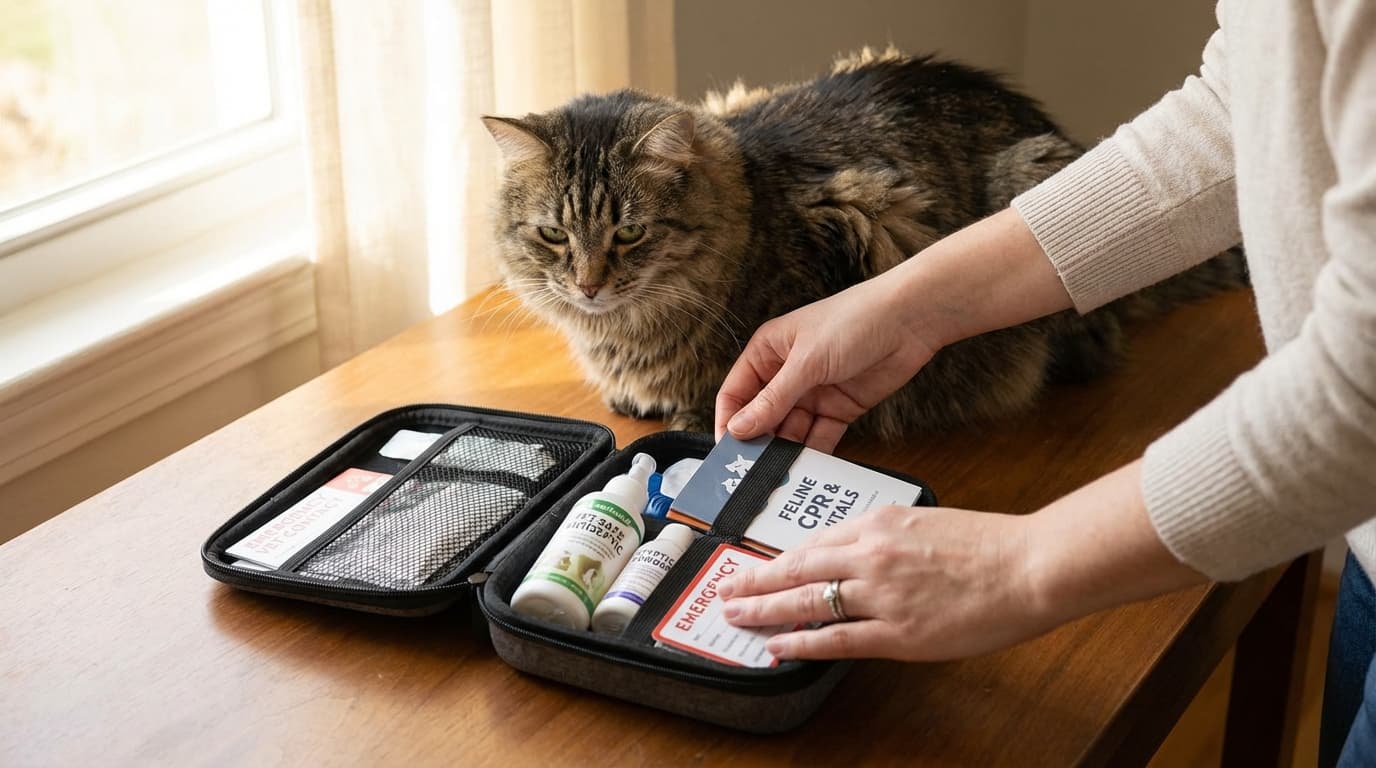
Most people think a human first aid kit is enough, but cats have very specific needs. You cannot just grab the rubbing alcohol or a random bandage and hope for the best. We are going to look at why you need a pet-safe antiseptic and how a little bit of styptic powder for cats can stop a bleeding nail in seconds.
This guide covers the essential gear you need and the life-saving skills you should practice now. We will walk through checking cat vital signs, the basics of feline CPR, and how to keep your emergency vet contact info where you can actually find it. Let's make sure you are the hero your cat already thinks you are.
The 'Golden Five Minutes': Why Every Cat Owner Needs a Plan
Imagine your cat knocks over a glass vase and ends up with a deep cut. It happens more than you might think. In fact, lacerations from household items account for 43% of feline emergency room visits. This is where the "Golden Five Minutes" come in. Those first few moments after an injury often determine how well your pet will recover. Recent data shows that cats receiving immediate first aid have 60% better outcomes than those who do not.
But here is the catch: first aid is a bridge, not a replacement for a vet. Your goal is to preserve life and minimize pain until a professional can take over. It is also worth remembering that even the sweetest cat can lash out when they are hurting. Pain changes them. You need a plan that keeps both of you safe while you stabilize the situation. As the team at Rubyloo puts it, those first five minutes really do set the stage for everything that follows.
Key insights:
- Immediate action can improve recovery odds by 60%.
- First aid is meant to stabilize your pet for transport, not replace professional care.
- Always protect yourself because pain can make even gentle cats bite.
Building Your Kit: What Actually Belongs in a Cat Bag
Did you know there are over 94 million cats living in U.S. households? That is a lot of whiskers and, unfortunately, a lot of potential for accidents. Recent data shows that lacerations from broken household items make up 43% of feline emergency room visits. This is why a generic pet kit often fails cat owners. You need tools designed specifically for feline physiology. Think of it this way: cats receiving immediate first aid show 60% better outcomes compared to those who do not. Having a kit that you can find in the dark or use while you are stressed is not just a good idea, it is a necessity.
Your cat emergency kit list needs to go way beyond basic bandages. For starters, styptic powder is a non-negotiable for stopping bleeds from torn nails or skin nicks. You also need a digital rectal thermometer to monitor their health, because a cat's normal body temperature is actually between 101 and 102.5 degrees. If you ever suspect a fracture, do not just pick them up. Use a flat board or a makeshift stretcher to keep them stable during the trip to the vet. As the experts say, the first five minutes after an incident determine how severe the outcome will be.
Here is a reality check: your own medicine cabinet might be your cat's enemy. Many people reach for rubbing alcohol or hydrogen peroxide to clean a wound, but these can actually damage healthy tissue and slow down healing. Instead, switch to chlorhexidine, which is the gold standard for a pet-safe antiseptic. You should keep 3% hydrogen peroxide in your kit, but only use it to induce vomiting if you are under strict orders from a vet or the ASPCA Animal Poison Control at (888) 426-4435. If your cat is bleeding, apply steady pressure for at least three minutes before you even check to see if it is clotting.
Always remember that first aid is a temporary bridge, not a permanent fix. It is meant to preserve life and reduce pain until you can get to a professional. Also, keep in mind that even the sweetest cat can lash out or bite when they are in pain. It is a natural reflex, so be careful and use protective measures for yourself while you help them. It is always better to have these skills and never need them than to need them and not know what to do.
Key insights:
- Species-specific kits are vital because human antiseptics like peroxide can damage feline tissue.
- Immediate first aid can improve recovery outcomes by 60% for cats.
- A cat's normal temperature is higher than a human's, ranging from 101 to 102.5 degrees.
- Apply pressure to bleeding wounds for a full three minutes before checking for a clot.
Beyond Bandages: The Cat Emergency Kit List Essentials
Did you know that nearly half of all feline ER visits are caused by simple household cuts? It is a scary thought, but being ready makes a huge difference. Since cats who get immediate first aid have 60% better outcomes, your kit needs more than just a few basic bandages. Think of your kit as a life-saving bridge that keeps your cat stable until you can reach a professional vet.
One item you should never skip is styptic powder. If your cat breaks a nail or gets a small nick, this powder stops the bleeding almost instantly. For deeper cuts, apply steady pressure for at least three minutes before checking the wound. You also need a digital rectal thermometer. A healthy cat stays between 101 and 102.5 degrees, so knowing their temperature helps you spot trouble early.
If you suspect a broken bone, use a flat board or a stretcher to keep them still. Also, keep the ASPCA Poison Control number, 888-426-4435, taped right on your kit. Just remember that even the sweetest cat might lash out when they are in pain, so stay cautious and move slowly. Having these specific tools ready means you can handle those critical first five minutes with confidence and care.
Key insights:
- First aid is a temporary bridge to get your pet to help safely, not a replacement for a vet.
- Avoid using human antiseptics like rubbing alcohol because they can damage a cat's healthy tissue.
- The first five minutes after an injury are the most important for determining how well a cat recovers.
Why Your Medicine Cabinet Might Be Your Cat's Enemy
When your cat gets a cut, your first instinct is probably to grab the rubbing alcohol or hydrogen peroxide from the bathroom. It makes sense because that is what we use on ourselves. But for cats, these common household cleaners can actually do more harm than good. They are harsh enough to damage healthy tissue and slow down the healing process. Since lacerations from broken items make up about 43% of feline emergency room visits, knowing how to clean a wound properly is a big deal.
Instead of the stinging stuff, you should look for a pet-safe antiseptic called chlorhexidine. It is the gold standard for cleaning cat injuries because it kills germs without hurting the skin. Research shows that cats getting immediate, correct first aid have 60% better outcomes. This simple switch in your cat emergency kit list can make a massive difference in how fast they recover.
You might still keep a bottle of 3% hydrogen peroxide in your kit, but keep the cap on tight. It is mostly used to help a cat vomit if they ate something toxic, but you must never do this unless a vet tells you to. For everyday scrapes, stick to the gentle stuff and skip the human medicine cabinet.
Key insights:
- Human antiseptics like alcohol and peroxide can damage healthy feline tissue and delay healing.
- Chlorhexidine is the safest and most effective antiseptic for cleaning cat wounds.
- Hydrogen peroxide should only be used to induce vomiting under strict veterinary guidance.
Vital Signs: How to Tell if Your Cat Is in Real Trouble
Cats are masters at pretending everything is fine even when it really isn't. It is a survival instinct from the wild, but for us, it makes spotting a genuine emergency tricky. Recent data shows that cats receiving immediate first aid have 60% better outcomes compared to those who arrive at the vet without any intervention. To be that lifeline, you have to know what 'normal' looks like for your specific pet. For most cats, a healthy body temperature sits between 101°F and 102.5°F. Anything significantly higher or lower is a clear signal that your cat is in trouble.
Checking a heart rate can feel intense, but the trick is to stay calm so your cat doesn't feed off your anxiety. You can usually find the pulse by placing your hand on the left side of their chest, just behind the front leg. Beyond the numbers, watch for the quiet red flags. Are they breathing with an open mouth? Are they hiding in a dark corner they never usually visit? While lacerations from broken household items make up about 43% of feline emergency visits, internal issues often show up through these small behavioral shifts first.
When you need an exact temperature reading, a digital rectal thermometer is the most reliable tool. Use a small amount of water-based lubricant and gently insert the silver tip about an inch. It is rarely a fun process for either of you, but it gives you the hard data a vet needs. The most important rule here is to know when to quit. If your cat is fighting you or seems dangerously stressed, stop immediately. Sometimes the spike in blood pressure and heart rate from the struggle does more damage than the temperature reading is worth.
Remember that first aid is a temporary bridge, not a permanent fix. Whether you are checking cat vital signs or using items from your cat emergency kit list, the goal is to stabilize them for the trip to the clinic. Keep your emergency vet contact and the ASPCA Poison Control number at (888) 426-4435 saved in your phone. As the experts say, it is better to know these skills and never need them than to need them and not know them.
Key insights:
- A body temperature outside the 101°F to 102.5°F range is a primary indicator of feline distress.
- Open-mouthed breathing or panting in cats is a critical red flag that requires immediate veterinary attention.
- The stress of performing a health check can sometimes outweigh the benefit; stop if your cat becomes overly combative or panicked.
- Immediate first aid significantly improves survival rates, acting as a vital bridge to professional veterinary care.
The Right Way to Take a Temperature
Knowing your cat's temperature is one of those skills you hope you never need, but it can be a literal lifesaver. Since a normal reading for a cat falls between 101°F and 102.5°F, even a small spike can signal trouble. While it might feel intimidating, checking vital signs at home provides the data your vet needs to act fast.
To get an accurate reading, you will need a digital rectal thermometer. Use a water-based lubricant on the tip, gently lift the tail, and insert the probe about an inch. It is not the most glamorous part of pet parenthood, but since cats receiving immediate first aid see 60% better outcomes, it is worth the momentary awkwardness. If you are unsure about your technique, ask your vet to demonstrate it during your next checkup.
But here is the thing: your cat's stress levels matter just as much as the numbers. If they are struggling, hissing, or panicking, stop immediately. Forcing a rectal check on a terrified pet can actually spike their temperature further or cause an injury, making a bad situation worse. If you cannot get a reading safely, skip the thermometer and head straight to the emergency clinic.
Key insights:
- Normal feline body temperature is between 101°F and 102.5°F.
- Prioritize safety over data; stop if the cat becomes overly stressed or aggressive.
- Using a digital rectal thermometer is the only reliable way to monitor vital signs at home.
Wound Care and Feline CPR: The Skills That Save Lives
With over 94 million cats living in U.S. households, medical emergencies are more common than most of us want to admit. In fact, lacerations from everyday household items make up about 43% of all feline emergency room visits. It is a frightening statistic, but there is a major silver lining: cats that receive immediate first aid show 60% better outcomes than those who arrive at the clinic without intervention. The first five minutes truly determine the severity of the situation. You are not trying to replace a professional; you are acting as the vital link between the accident and the surgery table.
If you find your cat bleeding, the most important thing to remember is the three-minute rule. It sounds simple, but in a panic, three minutes feels like an hour. You must apply firm, steady pressure to the wound for at least three full minutes before checking to see if the blood is clotting. This is not the time for human remedies like rubbing alcohol or hydrogen peroxide, which can actually damage healthy tissue. Instead, pull from your cat emergency kit list and use a pet-safe antiseptic or even a little styptic powder for cats to handle smaller nicks and keep the area clean.
While you are helping, keep your own safety in mind. Even the most affectionate lap cat can bite or scratch when they are in pain. It is a survival instinct, not a lack of love. To stabilize them for transport, use a thick blanket to create a snug wrap or place them on a flat board if you suspect a broken bone. This keeps them still and prevents further injury during the drive. Think of it as creating a portable safety zone for a pet that is likely terrified and confused.
Then there is the topic nobody wants to think about: feline CPR. As the professionals at Shoreland Animal Hospital put it, it is better to know it and not need it than to need it and not know it. If your cat stops breathing, every second counts. Start by safely checking for an airway obstruction, being careful not to get bitten in the process. If the path is clear, move into chest compressions with a steady, rhythmic pulse. The goal here is not to be a miracle worker; it is to maintain a basic life-support bridge until you reach the emergency vet contact you have saved in your phone.
While you are stabilizing your cat, try to keep an eye on the basics. Knowing how to go about checking cat vital signs, like a normal body temperature between 101°F and 102.5°F, can provide the vet with crucial data the moment you walk through the door. First aid is always a temporary solution meant to preserve life and reduce pain. By acting quickly and staying calm, you are giving your cat the best possible head start on a full recovery.
Key insights:
- Immediate first aid increases positive medical outcomes for cats by 60%.
- Pressure must be held on a wound for three full minutes without peeking to allow clotting.
- Pain significantly changes animal behavior, making protective restraint necessary even for gentle pets.
- Feline CPR is a temporary bridge to keep oxygen moving, not a replacement for veterinary stabilization.
- Standard human antiseptics like rubbing alcohol can be harmful to feline tissue health.
Feline CPR: Better to Know It and Not Need It
Imagine your heart dropping as you realize your cat isn't breathing. It is the nightmare every owner fears, but being prepared changes the math. Shoreland Animal Hospital puts it perfectly: it is better to know it and not need it than to need it and not know it. Recent data shows that cats receiving immediate first aid have 60% better outcomes than those who arrive at the vet without any help. That is a massive difference. Your job in those first few minutes is not to replace a surgeon, but to act as a life-saving bridge until you reach the clinic.
Before starting compressions, you need to check the airway. Gently open the mouth to look for anything stuck, but stay alert. Even the sweetest lap cat can lash out or bite when they are hurting or panicked. If the path is clear, begin chest compressions with a steady, fast rhythm. Think of it as keeping the engine idling while you rush to the shop. You are not trying to fix the problem yourself; you are just keeping oxygen moving.
While you are heading to the vet, your main goal is stabilization. This is why having a plan matters so much. Whether you are managing the rhythm of compressions or just keeping them still on a flat surface, your actions buy the medical team the time they need. It is intense and scary, but those few minutes of effort are often exactly what brings your cat back home.
Key insights:
- Immediate first aid can improve a cat's recovery odds by 60%.
- Pain changes behavior, so always be cautious of bites during emergency checks.
- The primary goal of feline CPR is stabilization during transport, not permanent treatment.
Handling the Pain: Why Sweet Cats Bite During Emergencies
You know your cat better than anyone, but when they are in pain, that bond can temporarily vanish. Even the most affectionate lap cat can suddenly hiss or bite when they are hurting. They have not turned on you. It is just a primal survival instinct. When a cat is injured, their brain sees everything, including your reaching hand, as a potential threat.
Safety is not just about the cat. It is about keeping you out of the human emergency room too. Since lacerations from broken items account for 43% of feline emergency visits and cats receiving immediate first aid show 60% better outcomes, you must step in smartly. Before looking at a wound, grab a thick towel. This is the foundation of the purrito method. By snugly wrapping your cat like a burrito, you limit their ability to lash out. It is the safest way to stabilize them before you start checking cat vital signs.
Think of restraint as an act of love and not a punishment. While you are working, remember that a cat’s normal body temperature sits between 101°F and 102.5°F. If you need to check a bleeding wound, apply firm pressure for at least three full minutes before checking the clot. Staying calm helps them stay calm. You are the bridge to the vet. By protecting yourself first, you ensure you can get them the professional help they need.
Key insights:
- Pain triggers a survival instinct that can make even the gentlest cats aggressive.
- The purrito towel wrap is the best way to safely restrain a cat during an emergency.
- Caregiver safety is a priority because an injured owner cannot help their pet.
Your Digital Safety Net: Who to Call and When
When your cat gets into something they shouldn't, your brain might freeze. It's a scary moment, especially since there are over 94 million cats in U.S. homes, and many will face an emergency at some point. The first five minutes after an accident often determine how well your cat recovers, so you can't afford to waste time searching for a phone number. Stick the ASPCA Poison Control line (888-426-4435) right on your fridge. It's the fastest way to get expert help when you suspect your cat ate a toxic plant or a stray pill.
Think of your first aid skills as a temporary bridge to the clinic, not a replacement for a vet. While you're applying pressure to a bleeding wound - which you should do for at least three full minutes before checking for a clot - you need to know exactly where you're headed next. Pre-program your local emergency vet's contact info into every phone in the house. This saves precious seconds when you're stressed. Many owners are also turning to 24/7 vet telehealth services as a digital first-aid guide to help stabilize their pets before the car ride.
Remember that even the sweetest cat might lash out when they're hurting. Pain changes their behavior, making protective measures for you just as important as the care for them. Whether you're checking cat vital signs or using a pet-safe antiseptic, having a professional on the line can keep you calm. As the experts at Shoreland Animal Hospital say, it's always better to know these steps and never need them than to need them and be left guessing.
Key insights:
- Keep the ASPCA Poison Control number (888-426-4435) visible on your fridge for instant access.
- First aid is a bridge to professional care, not a permanent fix for injuries.
- Apply pressure to bleeding wounds for at least three minutes before checking for a clot.
- Pain can make even gentle cats aggressive, so handle injured pets with extreme caution.
Frequently Asked Questions
You should probably skip the Neosporin for your cat. While it is a staple in our own medicine cabinets, cats have a habit of licking their wounds, and ingesting those ingredients can lead to an upset stomach. Also, some cats can have bad reactions to specific antibiotics found in human ointments.
It is much safer to use a pet-safe antiseptic like chlorhexidine solution to clean the area. It gets the job done without the risks that come with human meds. Remember that your cat's skin is different from yours, so what works for you might actually cause them more trouble.
It really is better to leave the hydrogen peroxide on the shelf when dealing with a cut. It might look like it is working because of all that fizzing, but that reaction actually damages the healthy skin cells your cat needs to heal. Using it can actually slow down the whole recovery process.
Vets usually only suggest keeping it in a cat emergency kit for one specific reason, which is inducing vomiting if they eat something toxic. For cleaning a scratch, stick to warm water or a vet-approved cleanser instead. Keeping the tissue healthy is the fastest way to get your cat back on their feet.
You should take a look at your cat's emergency kit every six months to swap out anything that's expired or used up. It's easy to forget about those ointments and medications until you actually need them, but they do lose their punch over time.
A simple way to remember is to check the kit whenever you change your smoke detector batteries or when the seasons shift. You'll want to make sure your pet-safe antiseptic is still liquid and that your styptic powder hasn't clumped up. It only takes a few minutes, but it makes a huge difference when every second counts.
Most people think indoor cats are totally safe, but lacerations from broken household items actually cause 43% of feline emergency room visits. Cats are famous for knocking things over, and those broken shards can lead to some pretty nasty cuts.
Since bleeding is so common, your kit should always have plenty of gauze and a way to apply pressure. Remember that you need to hold pressure on a wound for at least three minutes before you even check if the blood is clotting. It's also a good idea to have your emergency vet contact info taped right to the kit so you aren't scrambling while you're stressed.
Conclusion
Having a cat emergency kit list is a great start, but the real power comes when you pair those tools with the confidence to use them. Whether you are reaching for a pet-safe antiseptic or checking cat vital signs during a stressful moment, your preparation is what turns a scary situation into a manageable one. It is all about bridging that gap between the first sign of trouble and getting professional help.
The bottom line is that you do not need to be a vet to save a life. You just need to be ready. Take a few minutes today to program that emergency vet contact into your phone and maybe practice a towel wrap with your cat while they are calm. These small habits make a world of difference when every second counts and panic starts to set in.
Your cat already thinks you are the center of the universe. By keeping your skills sharp and your kit stocked with essentials like styptic powder for cats, you are simply proving them right. Stay prepared, stay calm, and keep being the hero your feline friend knows you are.
Send it to someone who should read it next.

PurrScript Editorial Team
Editorial Team
PurrScript's in-house editorial team. We research, write, and review every guide using established veterinary and behavioral resources, and update articles as best practices evolve.
View all articles