Signs of Separation Anxiety in Cats: Is Your Kitty Just Lonely?
Common signs of separation anxiety in cats include non-stop meowing, destructive scratching, and even peeing on your bed when you leave the house.

PurrScript Editorial Team
Editorial Team
Signs of Separation Anxiety in Cats: Is Your Kitty Just Lonely?
Common signs of separation anxiety in cats include non-stop meowing, destructive scratching, and even peeing on your bed when you leave the house.
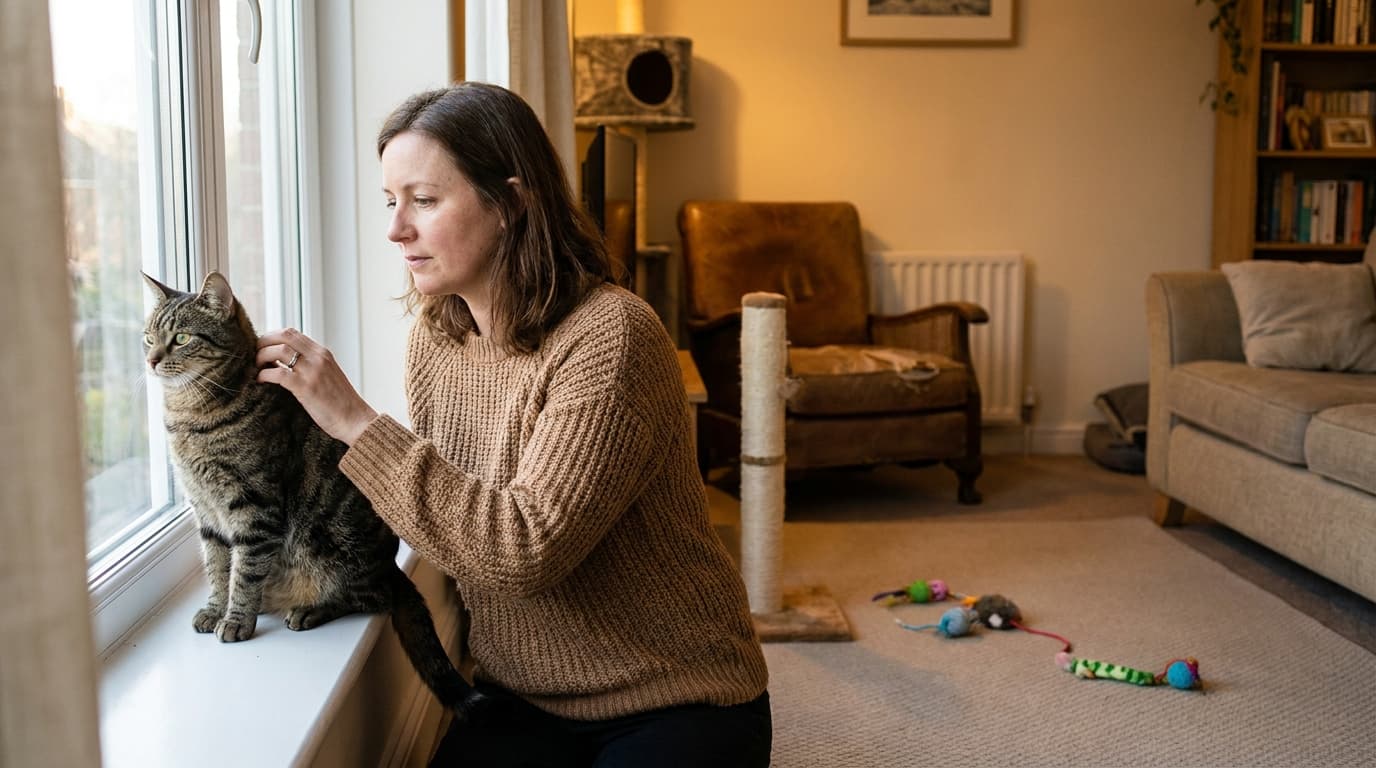
While we often think of cats as aloof loners, many form deep bonds with their humans and feel genuine distress when left alone. It's not about your cat being naughty or seeking revenge; it's about them feeling vulnerable and lonely while you're away at work.
In this guide, you'll learn how to spot these red flags and discover simple ways to turn your home into a stress-free sanctuary for your favorite feline friend.
Why Does My Cat Meow at Night and When I Leave?
Cats meow at night or when you head out because they are trying to tell you they feel vulnerable. While we often think of them as loners, research shows that 64% of cats are actually securely attached to their owners. When that bond feels threatened by your absence or the quiet of the night, their meowing becomes a distress signal rather than just a habit. They are basically calling out to make sure you are still there and that everything is okay.
It is also helpful to know that stress does not look the same for every kitty. Male cats often show their anxiety through destructive behavior, like scratching up the sofa, while females are more likely to over-groom until they have bald spots. If you have a Siamese or Burmese, you might notice this even more. These breeds are genetically prone to separation anxiety and tend to be much more vocal about their feelings than others. Identifying these specific stress styles is the first step in helping them feel safe again.
Imagine your Siamese cat starts a mournful yowl the second your car pulls out of the driveway. Or maybe you are tucked in at 3 AM and hear that same crying sound echoing through the hallway. They are not trying to be annoying. They are looking for reassurance because their routine has shifted or they feel isolated in the dark. It is a plea for connection, not a demand for food or attention for the sake of it.
Sometimes this stress leads to behavior that looks like revenge, but it is actually a cry for help. For instance, in one study, 75% of cats that had accidents outside the litter box did so exclusively on their owner’s bed. They are seeking out your scent to self-soothe when they feel most alone. However, always check with a vet first. Things like UTIs, hyperthyroidism, or even intestinal disease can cause similar symptoms, so you want to rule out medical issues before focusing purely on behavior.
Key insights:
- Set up a pet camera to track exactly when the vocalization starts after you leave the house.
- Schedule a vigorous 10-minute play session right before your own bedtime to burn off extra energy and help them sleep.
- Identify your cat’s specific stress style, whether it is grooming or scratching, to give your vet a clear picture.
- Leave a radio or TV on a familiar station to provide comforting background noise while you are away.
- Try using food puzzles to simulate hunting behavior, which keeps their mind busy and reduces boredom.
Breed and Gender Differences in Feline Stress
Not all cats handle being alone the same way. While most felines are independent, Siamese and Burmese breeds are genetically more prone to separation anxiety. Gender also plays a role in how they act out. Boys usually get destructive, while girls tend to focus their stress inward by over-grooming.
Imagine a male Siamese named Jasper. When you leave, he shreds curtains or knocks plants over to vent his frustration. Compare him to a female cat who might sit in a corner and lick her fur until she develops a bald patch. Both are stressed, but their habits look totally different to a worried owner.
Key insights:
- Identify your cat's specific stress style before talking to a vet.
- Watch for bald spots or skin irritation in female cats.
- Look for shredded furniture or tipped items as a sign of male anxiety.
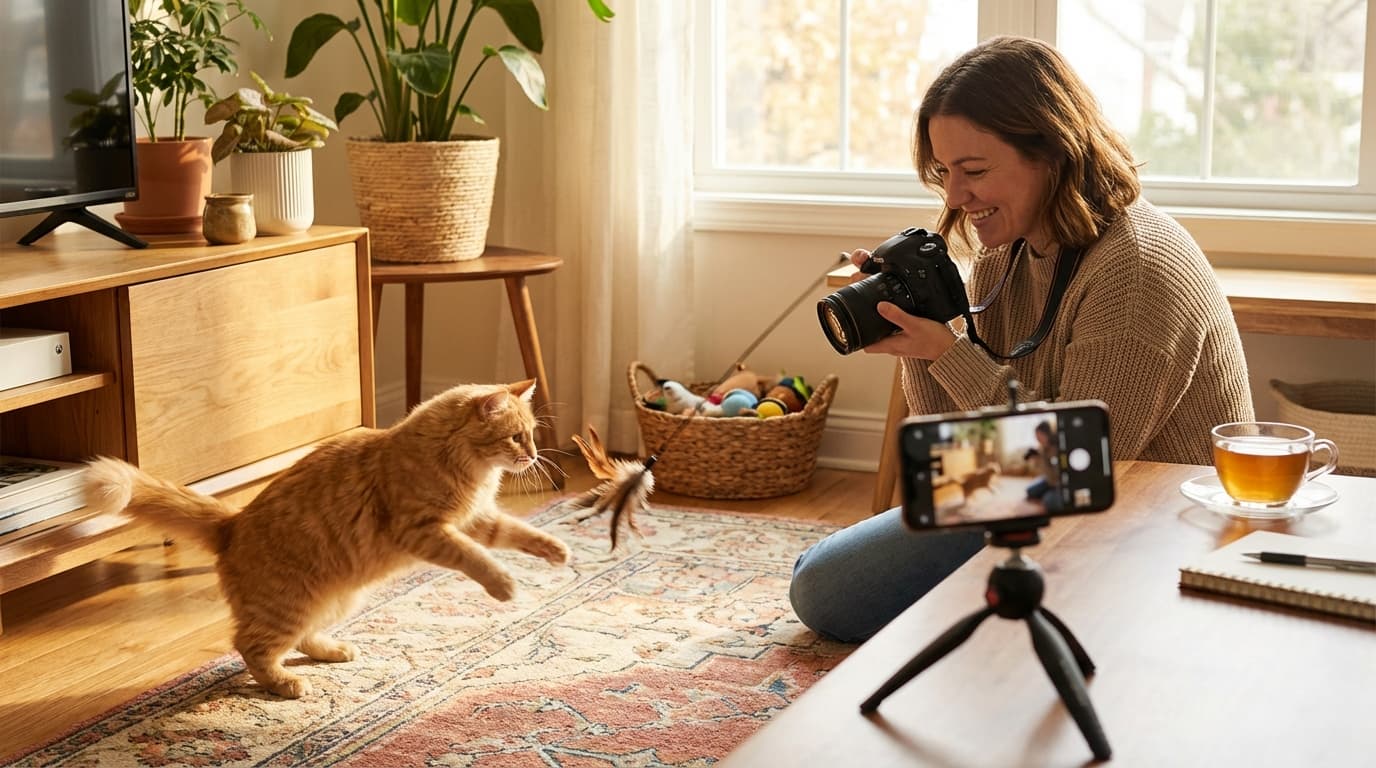
- Record a video of your cat while you are away to see their true behavior.
The Truth About 'Revenge' Peeing on Your Bed
It is a common myth that cats pee on your bed to get back at you for staying out late. In reality, your cat is likely feeling anxious and trying to mix their scent with yours to feel safe. One study found that 75% of cats that urinated outside the litter box chose their owner's bed specifically because it carries the strongest scent of their favorite human. This is not about spite. It is about seeking security.
This behavior often stems from a deep bond rather than a grudge. Since about 64% of cats are securely attached to their caregivers, they can feel overwhelmed when that connection is broken by a long workday or a sudden change in routine. Instead of acting out of anger, they use your bed as a tool to cope with the stress of being alone.
Imagine coming home after a long day, ready to dive into your favorite sweater, only to find a wet spot on the sleeve. It feels like a targeted attack. For an owner of a Siamese, a breed more prone to anxiety, it is easy to assume the cat is mad. But they are likely just looking for the one place that smells most like you to find relief.
Key insights:
- Use enzymatic cleaners to fully break down smells so the cat is not drawn back to the same spot.
- Avoid punishing your cat for accidents, as this only increases the anxiety that caused the behavior.
- Schedule a vet visit to rule out medical issues like a UTI or hyperthyroidism before assuming it is behavioral.
- Provide food puzzles and vertical perches to keep them busy and mentally stimulated while you are away.
- Try leaving a radio on a familiar station to provide comfort through consistent background noise.
How to Clean Cat Urine From Carpet and Furniture Fast
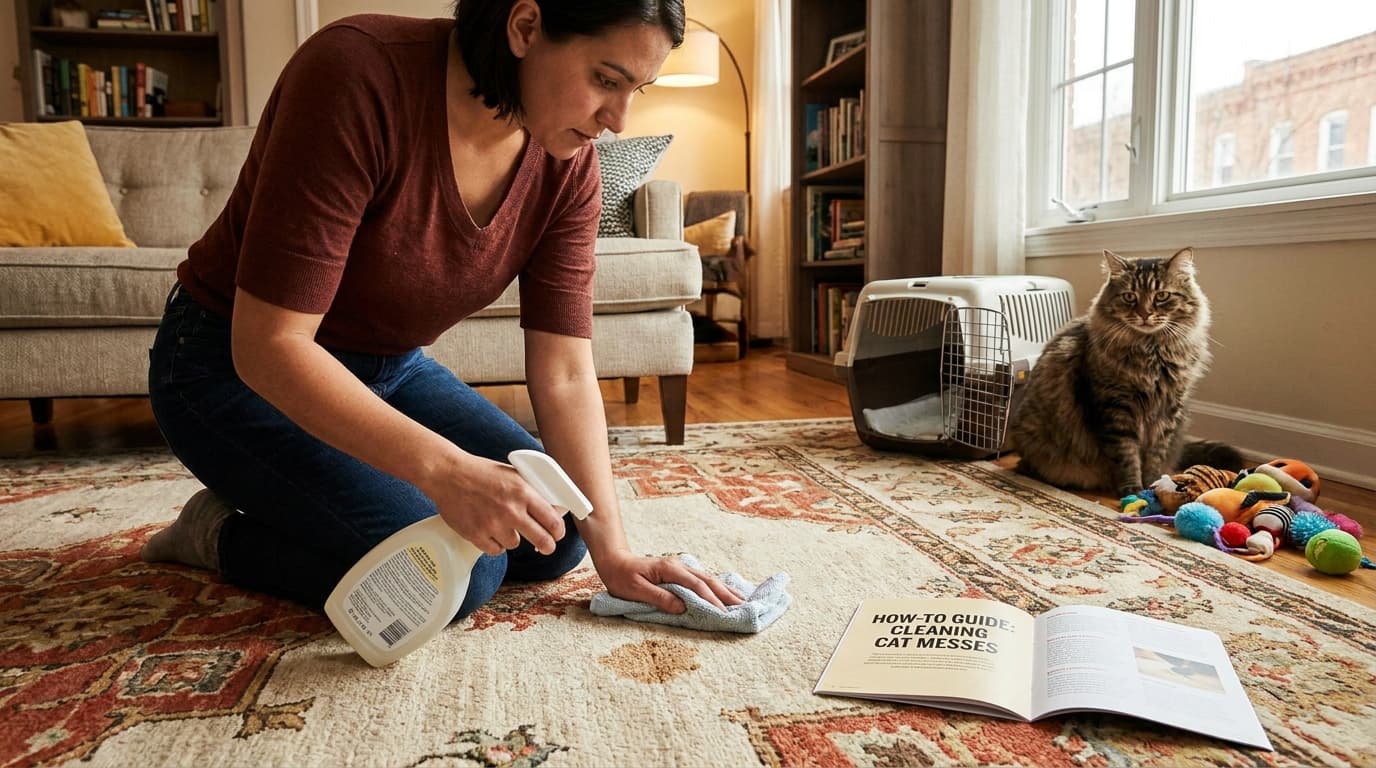
When your cat starts using the living room rug instead of the litter box, it is usually a cry for help rather than a spiteful act. It turns out that 75% of cats that urinate outside the box choose their owner's bed or personal items because they are trying to find comfort in a familiar scent. To stop the smell and the habit, you have to neutralize the odor quickly with an enzymatic cleaner before the scent becomes a permanent fixture in your home.
Imagine a stressed Siamese cat named Luna who misses her owner during long work shifts. Because Siamese and Burmese breeds are genetically more prone to separation anxiety, Luna starts wetting the same corner of the living room carpet every Tuesday afternoon. She isn't trying to get back at her family. She is actually trying to self-soothe by mixing her scent with the environment. If that spot isn't cleaned with specific enzymes, Luna will keep returning to it simply because it smells like a bathroom to her.
Standard household cleaners just won't cut it for cat pee. They might mask the smell for humans, but a cat's nose will still find the pheromones left behind. You must break the chemical bond of the urine while also changing how your cat feels about that specific corner of the house to prevent a repeat performance.
Key insights:
- Blot the area immediately with paper towels to soak up as much liquid as possible, but avoid scrubbing because that pushes the urine deeper into the fibers.
- Apply a high-quality enzymatic cleaner and let it air dry completely so the enzymes have time to eat away the uric acid.
- Cover the soiled area with a heavy plastic mat or aluminum foil to break the habit by making the surface feel unpleasant under their paws.
- Schedule at least 10 minutes of interactive play every day to help burn off the anxious energy that leads to these accidents.
- Check in with your vet to rule out medical issues like UTIs, which can often look exactly like behavioral house-soiling.
The Best Cat Toys for Bored Indoor Cats to Fight Anxiety
Environmental enrichment is not just about fun; it actually lowers cortisol levels in anxious cats. Since 64% of cats are securely attached to their owners, they feel the stress of your absence deeply. Giving them a job to do keeps their minds off the empty house and provides a healthy outlet for their energy.
Imagine a cat like Oliver, who usually spends his day pacing the hallway or crying by the door until you return. Instead, he spends his morning solving a food puzzle to earn his breakfast. For example, when you provide a Siamese cat - a breed genetically prone to anxiety - with a vertical perch, they can watch the world from a safe height. This mental workout tires them out and mimics natural hunting behaviors so they stay calm.
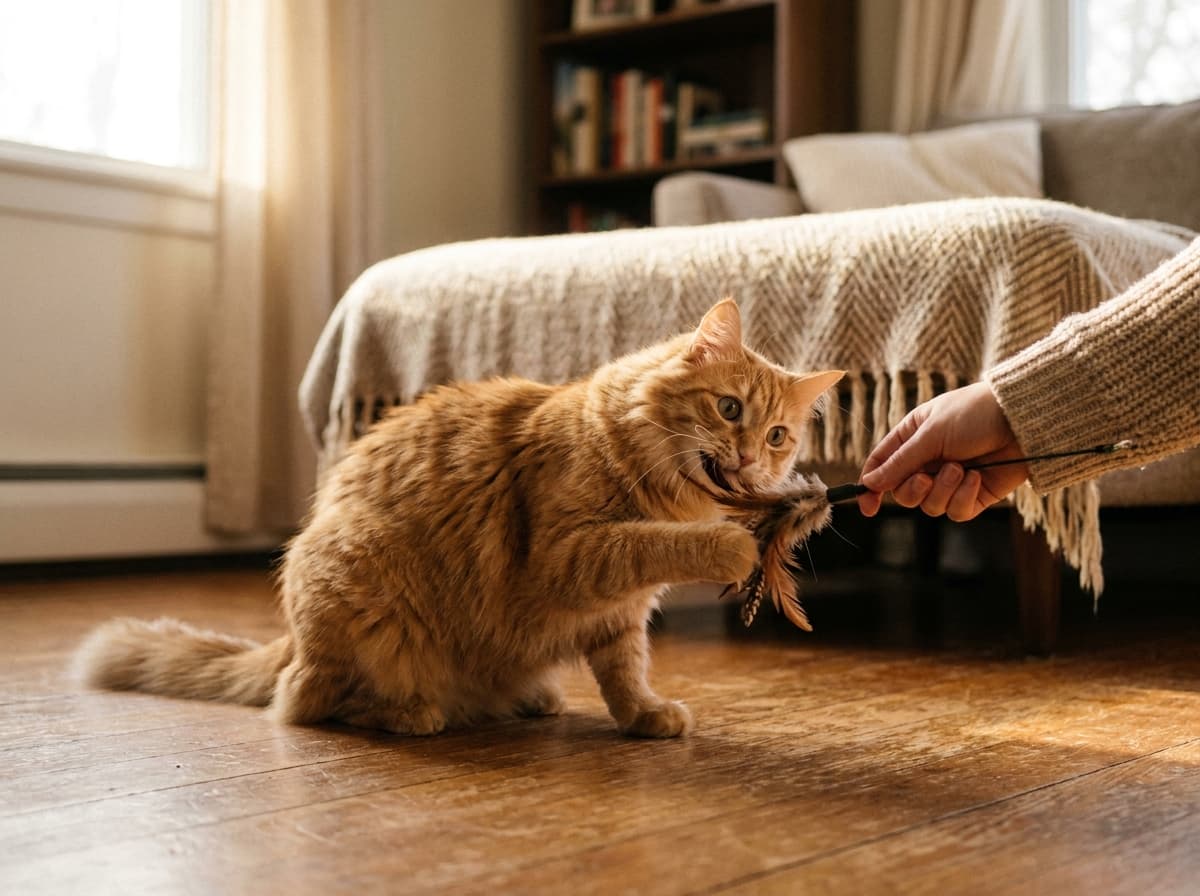
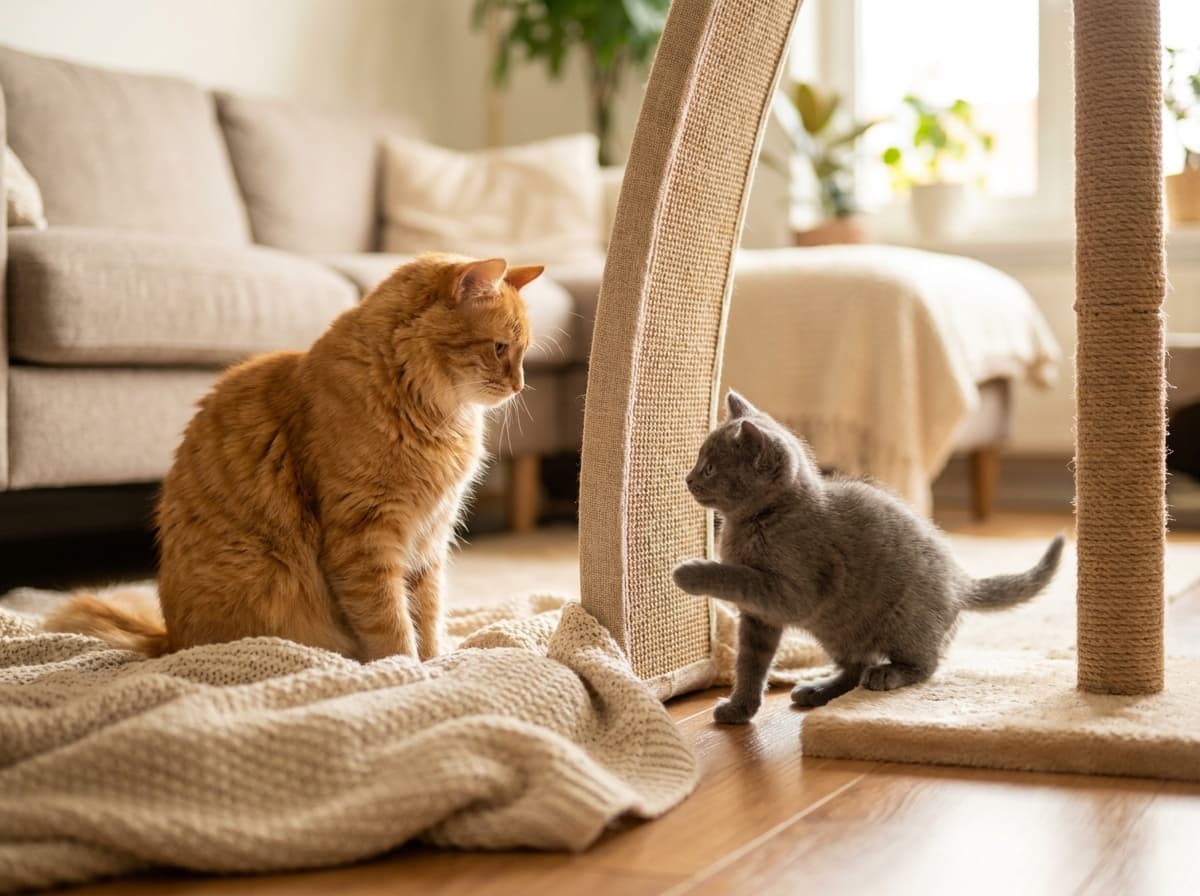
If your cat is currently shredding the side of your sofa, they are likely trying to self-soothe rather than being spiteful. To fix this, place a new scratching post directly in front of the spot they usually target. Using catnip or silvervine can help entice an anxious cat toward their new post, making the transition from your furniture much smoother and more inviting.
Key insights:
- Rotate toys every week so they always feel like a fresh discovery.
- Install vertical perches or cat trees to give them a safe high ground.
- Use food puzzles to simulate hunting while you are away from home.
- Place scratching posts near the spots they already try to scratch.
- Spend at least 10 minutes daily on interactive play with your cat.
Getting Your Cat to Use a Scratching Post
Cats don't scratch your sofa to be spiteful; they do it to mark territory and get a good stretch. To save your furniture, you have to offer an alternative that feels even better. Because many cats are securely attached to their owners, they often pick scratching spots where your scent is strongest, like the side of your favorite armchair.
Imagine a cat owner who finds their Siamese clawing the rug right by the bedroom door every morning. Instead of shooing the cat away, they put a tall, sturdy scratching post directly over that exact spot. By meeting the cat where they already feel comfortable, the rug stays intact and the kitty gets a designated place to play.
Key insights:
- Place the post directly in front of the furniture they currently target to make the switch easy.
- Rub catnip or silvervine on the post to lure an anxious cat to the new surface.
- Give a treat or praise the moment you see them using the post correctly.
- Pick a sturdy post that is tall enough for a full-body stretch so it feels satisfying.
When to Call the Vet: Medical vs. Behavioral Issues
It is easy to assume your cat is just being dramatic when they start acting up while you are gone. But before you label it as separation anxiety, you have to make sure they are actually healthy. Cats are experts at hiding pain, and often, what looks like a behavioral quirk is actually a cry for medical help. For example, if a cat starts peeing on your duvet, they might not be mad at you; they could be dealing with a painful urinary tract infection.
Medical issues must be ruled out before you dive into behavioral therapy or medication. Symptoms like loud crying or bathroom accidents can stem from things like hyperthyroidism or intestinal disease. PetMD experts point out that many owners mistake physical distress for emotional stress. Getting a clean bill of health first ensures you are treating the right problem and not ignoring a condition that needs medicine.
Imagine you have a senior cat who has always been quiet but suddenly starts yowling at the walls every night at midnight. It is tempting to think they are just feeling lonely or confused as they age. However, that nighttime meowing is a textbook sign of an overactive thyroid. If you just tried to cuddle them more or give them toys, you would miss the fact that their body is physically revved up and needs professional care.
Key insights:
- Schedule a 'rule-out' exam with your vet to check for physical causes first.
- Request specific bloodwork and urine tests to look for infections or thyroid issues.
- Take a video of the behavior to show your vet exactly what is happening when you are not there.
- Look for patterns in where they go to the bathroom, as peeing on the bed is often a sign of physical discomfort.
Summary: Creating a Safe Space for Your Feline Friend
Helping your cat feel safe starts with spotting red flags like loud meowing or grooming themselves until they have bald spots. It is a common myth that cats are just aloof loners who do not care if we are gone. In reality, most cats form deep bonds with their owners and feel genuine stress when the house goes quiet.
Imagine coming home to find your cat has urinated right on your pillow. It feels like they are getting back at you for leaving, but they are actually just trying to self-soothe with your scent. This often happens with breeds like Siamese or Burmese cats that are genetically more prone to feeling lonely when their favorite person is away.
The good news is that you can build your cat's confidence by focusing on routine and enrichment. By turning your home into a playground and sticking to a schedule, you can help your feline friend feel secure even when they are solo.
Key insights:
- Rule out medical issues like UTIs with a vet visit before assuming it is just a behavioral problem.
- Start a 10-minute daily play ritual to burn off nervous energy and strengthen your bond.
- Keep a steady routine because cats are highly sensitive to even small changes in the house.
- Try using food puzzles or vertical perches to keep them busy while you are away.
Frequently Asked Questions
Actually, no. Your cat isn't trying to get back at you or acting out of spite. While it feels really personal when you find a wet spot on your duvet, it is usually a sign of stress or a health issue. In fact, a study found that 75% of cats that urinated outside their litter box chose to do it exclusively on their owner's bed.
Here is the thing: they are likely trying to self-soothe. By mixing their scent with yours, they feel safer and more connected to you when they are feeling anxious. But before you assume it is just a behavior quirk, you should definitely talk to a vet. Medical issues like UTIs or kidney problems can often look like a house-soiling habit when it is really a physical cry for help.
They definitely can. While any cat can feel lonely, some breeds are more social and prone to it because of their genetics. You will find that Siamese and Burmese breeds are much more likely to develop separation anxiety because they are naturally more attached to their humans.
But breed is only one part of the puzzle. How a kitten is raised also matters a lot. The critical socialization period happens between three and nine weeks of age. If a kitten is separated from their mother too early, like before they are eight weeks old, they might grow up to be more anxious. So while genetics set the stage, early life experiences and your daily routine also play a huge role in how they handle being alone.
It usually comes down to when the behavior happens and what it looks like. A bored cat might knock things off a shelf while you're watching just to get a reaction, but a cat with separation anxiety often saves their biggest 'protests' for when you're actually gone. If you come home to shredded curtains or find out they've been meowing for hours, it's likely stress-related.
Here is a surprising fact: in one study, 75% of cats that urinated outside the litter box did so right on their owner's bed. While it feels like they're mad at you, they are actually trying to self-soothe by mixing their scent with yours. If the behavior only happens when the house is empty, you're likely looking at anxiety rather than just a cat who needs a new toy.
They can definitely help, but they aren't a magic fix on their own. Think of pheromone diffusers like a calming background scent that makes the environment feel a bit safer. They are great for taking the edge off, especially since cats are so sensitive to tiny routine changes like moving furniture or a new work schedule.
To see real results, you'll want to pair those diffusers with some changes to their space. Experts suggest using food puzzles to simulate hunting and making sure you get in at least 10 minutes of interactive play every day. When you combine a calm environment with a tired, happy brain, your cat will have a much easier time relaxing while you're away.
Conclusion
Understanding the signs of separation anxiety in cats changes how we see our feline friends. They aren't being spiteful when they meow at night or have accidents on the bed; they are just looking for a way to feel safe while you're away. Whether it is getting a cat to use a scratching post or learning how to clean cat urine from carpet properly, every small change helps build a more secure environment for them.
The best cat toys for bored indoor cats can do wonders for their mental health, but the real secret is consistency. When you combine environmental enrichment with a solid routine, you help your cat realize that your departure isn't a permanent goodbye. If things don't improve, a quick chat with your vet is always a smart move to rule out any underlying health issues.
Your next step could be as simple as a ten-minute play session before you head out the door. Taking these small steps shows your kitty that they are loved and protected. After all, a confident cat is a happy cat, and there is nothing better than coming home to a purring friend who feels totally at ease.
Send it to someone who should read it next.

PurrScript Editorial Team
Editorial Team
PurrScript's in-house editorial team. We research, write, and review every guide using established veterinary and behavioral resources, and update articles as best practices evolve.
View all articles