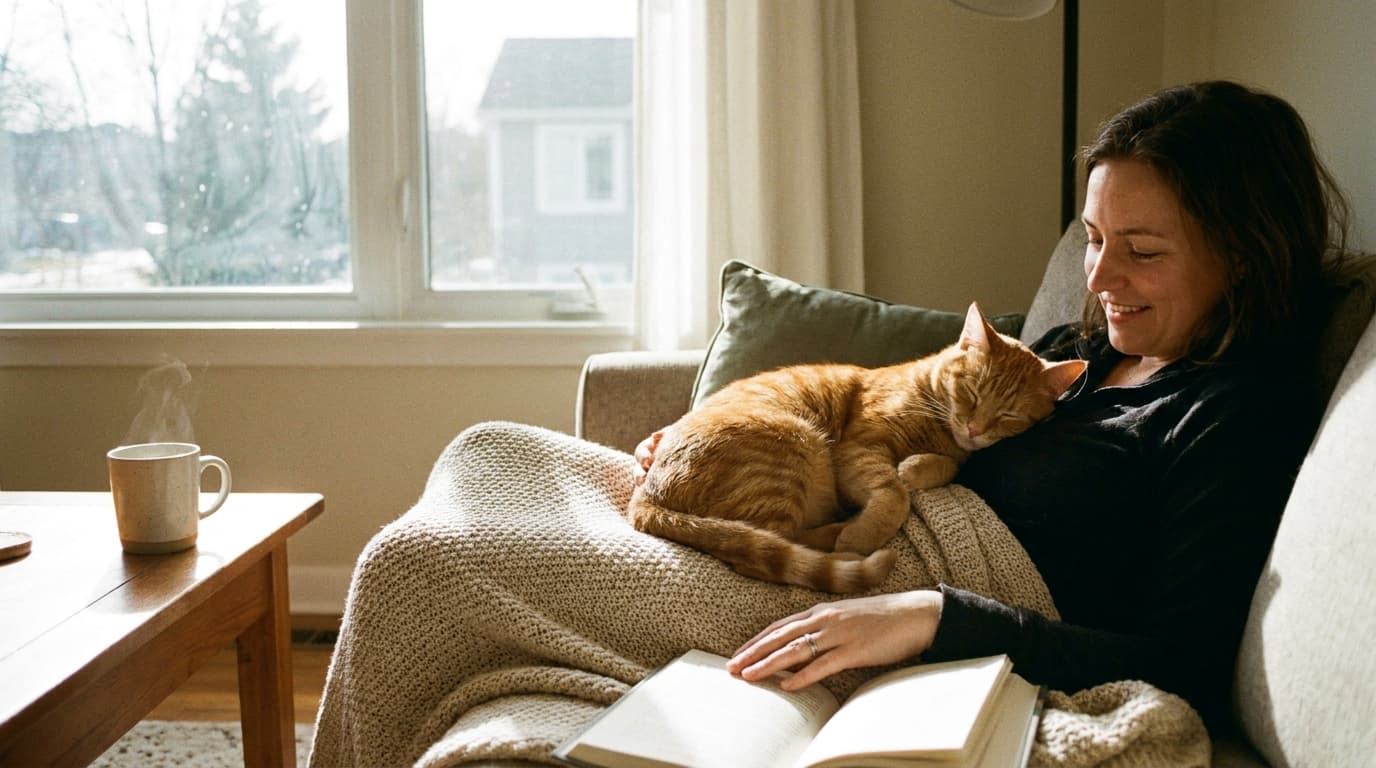
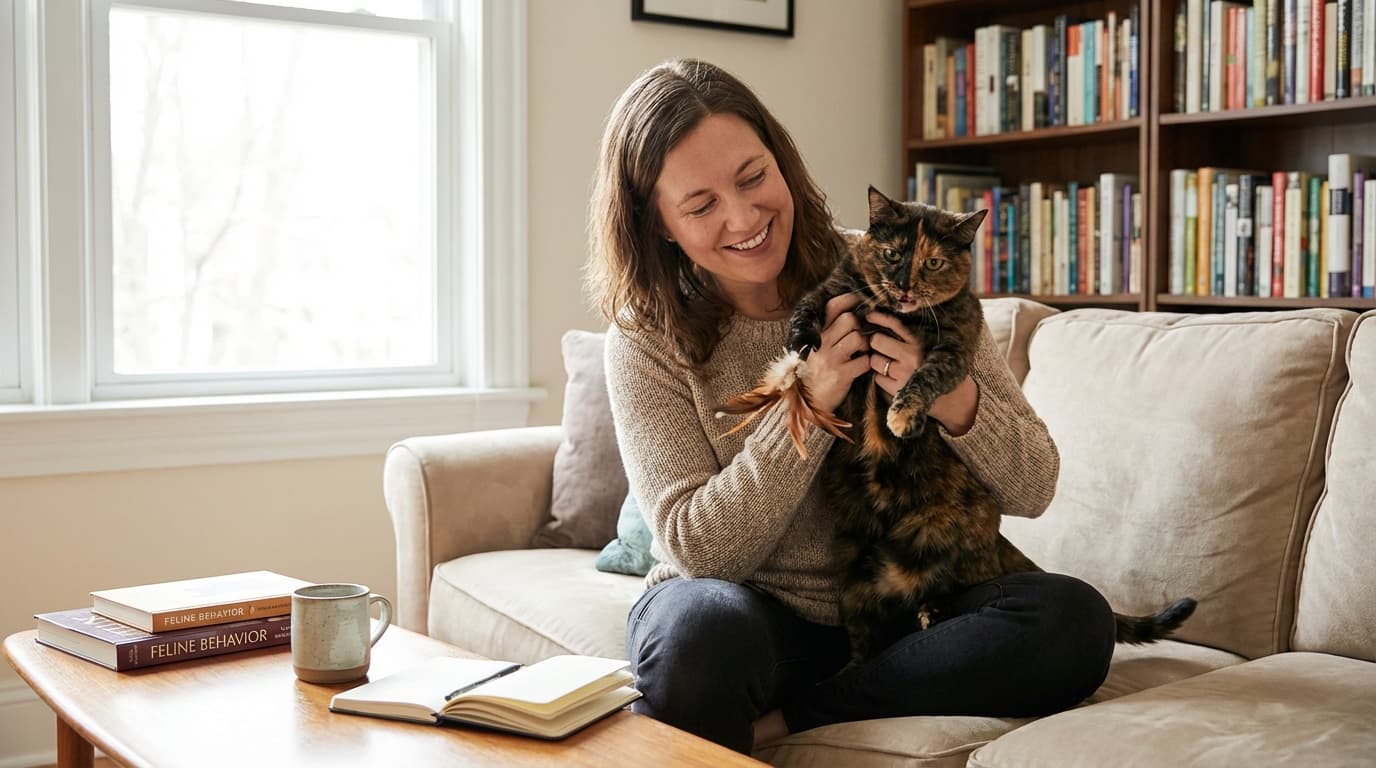
The Secret Language of Cat Cheek Rubs: Why Your Kitty Bunts You
Have you ever been sitting on the couch when your cat suddenly marches up and smashes their face against your shin? It feels like a tiny, furry collision, but this...

PurrScript Editorial Team
Editorial Team
The Secret Language of Cat Cheek Rubs: Why Your Kitty Bunts You
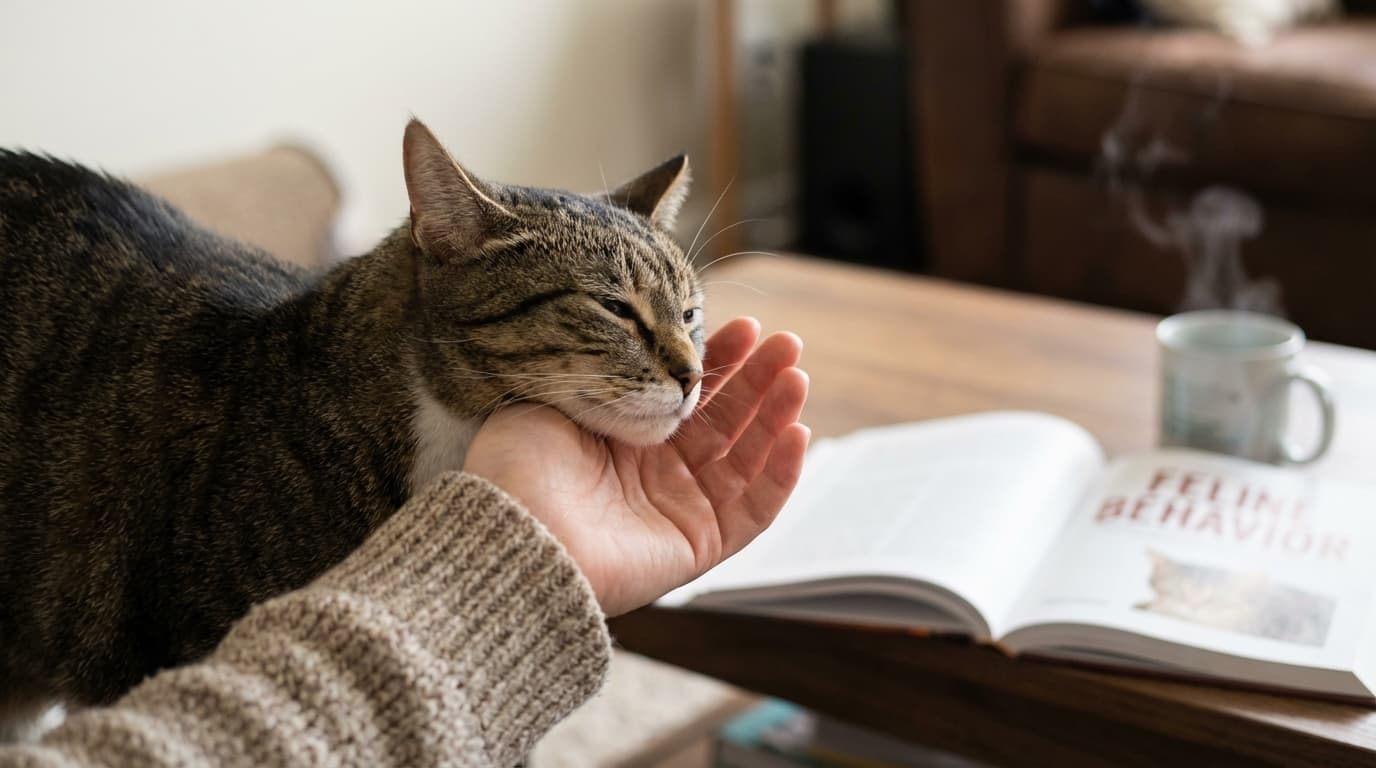
Have you ever been sitting on the couch when your cat suddenly marches up and smashes their face against your shin? It feels like a tiny, furry collision, but this behavior is actually a complex social ritual known as bunting. Understanding the cat cheek rubbing meaning is the best way to finally start speaking your pet's silent language and recognizing their unique way of saying hello.
Those head-butts and face-swipes are not just about finding a good scratch or asking for dinner. Your cat is actually a walking scent factory, using specialized glands to leave behind invisible chemical messages that signal safety and trust. This behavior helps them feel secure in their environment and strengthens the bond they share with you as part of their family unit.
We are going to explore the science of feline pheromones and the difference between a loving rub and territorial marking. You will also learn about a vital health warning regarding head pressing so you can tell when a rub is a hug and when it is a sign to call the vet.
Ever had your cat walk up and firmly smack their forehead against yours? It is not a random clumsy move. This behavior, called bunting, is a sophisticated social ritual. While it feels like a simple hello, your cat is actually busy exchanging complex chemical messages. They are using specialized scent glands on their cheeks and forehead to claim you as part of their inner circle.
This habit comes straight from their ancestor, the African wildcat. In the wild, marking territory with pheromones helps cats avoid physical fights. By rubbing their face on you, your cat is using specific pheromone fractions to create a colony scent. It is a sign of total trust. They are essentially saying you are safe and belong in their world.
Just keep an eye on how they do it. A friendly bunt is a soft, active gesture. But if you see a cat pressing their head flat against a wall and staying there, that is a different story. That is called head pressing, and it is a medical emergency, not a greeting. Knowing the difference helps you truly speak your cat's language as we look at how these scents turn your home into a feline sanctuary.
Key insights:
- Bunting is a positive social gesture used to create a communal family scent.
- Cats use different glands based on the height of the object they are marking.
- True head pressing against a wall is a neurological warning sign, unlike friendly bunting.
More Than an Itch: The Hidden World of Feline Scent Glands
Ever wonder why your cat acts like a tiny, furry interior designer, constantly rubbing against every corner of your home? It is not just an itch they cannot scratch. Your cat is actually a walking scent factory. While we might think of them as pampered house pets, they are still very much tied to their ancestor, the African wildcat. In the wild, leaving a scent is like putting up a no-trespassing sign. It tells other cats who is in charge without anyone having to get into a real fight. Dr. Aisling O'Keeffe points out that domesticated cats have not changed all that much from their wild cousins, which explains why these territorial instincts are still so strong today.
Think of these scent marks as a detailed messaging system. Cats use specific glands to produce pheromones, which are basically chemical signals. These signals come in different parts labeled F1 through F5. The ones labeled F2, F3, and F4 are the big players for social and territorial marking. When a cat rubs their face on something, they are leaving behind a safe zone marker or a this is mine note. This helps them move through their world and feel secure in their space. It is a smart way to avoid trouble by letting everyone know the boundaries before a physical scrap ever happens.
So, where exactly are these factories located? They are mostly clustered around the head. You will find them on the cheeks, the forehead, the base of the ears, and right under the chin. But here is the cool part: your cat chooses which gland to use based on how high the object is. The height of your coffee table or your favorite chair actually dictates their technique. It is not just random rubbing but a calculated way to distribute their unique scent profile.
If they are marking the low legs of a table, they will likely use their chin or throat. But if they are walking past a taller surface or standing up to greet your hand, they will switch to their forehead or temples. This behavior, often called bunting, is almost always a positive sign of trust and affection. Just be careful not to confuse this with head pressing. If your cat is pressing their head flat against a wall and seems stuck, that is a sign of a neurological issue and needs a vet immediately. For the everyday cheek rub, though, it is just your cat saying you are part of the family.
Key insights:
- Scent marking acts as a conflict-avoidance strategy to prevent physical fights.
- The height of an object determines whether a cat uses their chin, cheeks, or forehead to mark it.
- Bunting is a positive social gesture, whereas head pressing against walls is a medical emergency.
- Domestic cats retain the strong territorial instincts of the African wildcat.
Where the Glands Are (And Why It Matters)
Ever notice how your cat has a specific move for different pieces of furniture? It isn't random. They are navigating your home using a built-in map of scent glands located on their cheeks, forehead, chin, and at the base of their ears. These spots release pheromones that turn your living room into a safe zone, a behavior passed down from their wildcat ancestors to help avoid conflict and keep the peace.
The height of your furniture actually dictates which gland they use. For lower objects like coffee table legs, they will usually lead with their chin and throat. If they are rubbing against your leg or a tall chair, they switch to their temples and forehead. It is a tactical way to spread specific pheromone fractions that manage the colony scent and signal that everything is secure.
Just keep an eye out for the difference between a friendly rub and a medical red flag. While bunting is a confident, happy gesture, something called head pressing - where a cat stays stuck with their head flat against a wall - is a sign of neurological damage that needs a vet right away. If it is just a standard cheek rub, though, take it as a compliment. They are officially claiming you as part of the family.
Key insights:
- The chin and throat glands are the primary tools for marking lower objects like table legs and floor corners.
- Forehead and temple glands are reserved for taller surfaces or social interactions with humans.
- Bunting is a sign of a confident cat managing the social scent of their environment, not an act of submission.
Bunting 101: Why Your Cat Is 'Head-Butting' You
Have you ever been sitting on the couch when your cat suddenly marches over and delivers a firm, furry thwack to your forehead? This behavior is called bunting, and it is one of the highest compliments a cat can pay you. While it might feel like a tiny head-butt, it is actually a deeply friendly gesture. Cats have specialized scent glands tucked away on their cheeks, forehead, chin, and at the base of their ears. When they rub these areas against you, they are essentially leaving a digital like on your skin using facial pheromones. It is a sign of a confident cat who feels totally secure in your presence.
It is important to know the difference between a playful bunt and something more serious. If you see a cat pressing their head flat against a wall or furniture and staying there like they are stuck, that is not bunting. That is called head pressing, and it can be a sign of neurological damage. If that happens, you should get them to a vet right away. But for the standard rub-fest, you can breathe easy. It is just your cat being social and marking you as their favorite person.
So, is your cat showing love or just marking their territory? The truth is that for a cat, those two things are the same. By rubbing on you, they are claiming you as part of their safe family unit. This behavior is rooted in their history, as domestic cats share strong territorial traits with their ancestor, the African wildcat. Interestingly, the most confident or boss cats are usually the ones in charge of managing this communal smell. When your cat bunts you, they are not bowing down to you. They are inviting you into their inner circle because they trust you completely.
This social marking gets even more interesting when cats live together. They engage in something called allorubbing, which is basically a group hug via scent. They use specific pheromone fractions, specifically the F4 fraction, to create a family smell that reduces tension in the house. Think of it as a chemical peace treaty. This communal scent helps everyone recognize each other as friends rather than intruders. It is a brilliant way to keep the peace without having to fight, which is a big deal for a species that prefers to avoid physical conflict whenever possible.
The height of the object usually determines which gland they use. If you are standing up, they might use their forehead or temples. If they are rubbing against a chair leg, they might use their chin or throat. Each rub is a deliberate act of communication. By sharing their scent, they are turning your house into a home where everyone smells like they belong together. It is a beautiful, invisible way of saying you are one of them.
Key insights:
- Bunting is a positive social gesture usually initiated by confident cats to manage the group scent.
- Cats use different glands depending on the height of the object, such as the forehead for tall humans and the chin for low furniture.
- Distinguish between bunting and head pressing, as the latter is a serious medical emergency involving neurological issues.
- Allorubbing creates a communal family smell that acts as a conflict-avoidance strategy in multi-cat homes.
Is It Love or Territory? (Hint: It’s Both)
When your cat gives you a firm head-butt, it feels like a tiny hug. This is called bunting, and it is a huge compliment. Your cat is labeling you as safe by rubbing their cheeks and forehead against you. They are using specialized glands to deposit pheromones that weave you into the family unit. It is a social all-clear signal that tells everyone in the house that you belong together.
Surprisingly, bunting is not about submission. In many households, the most confident cat actually handles the most rubbing. They act as a scent manager to keep the colony smelling consistent. This behavior helps avoid tension and fights by creating a shared group identity. It is a strategy inherited from their wild ancestors to keep their territory peaceful without needing to use claws.
The height of the object usually dictates which gland they use. They might use their temples for your knees but their chin for a low coffee table. Just watch out for head pressing where a cat stays stuck with their head against a wall. That is a neurological red flag that needs a vet. Normal bunting is always a moving, friendly gesture rooted in deep trust and affection.
Key insights:
- Bunting is usually initiated by the more confident cat to manage the communal group scent.
- Cats use different glands like the forehead or chin depending on how high the object is.
- Scent marking acts as a conflict-avoidance tool to prevent physical fights between cats.
Allorubbing: How Cats Create a 'Family' Smell
Ever notice your cats walking past each other and doing a full-body side-swipe? That is allorubbing. It is not just a cute hello. It is how they build a group scent. Think of it as a shared family uniform made entirely of pheromones. By rubbing their cheeks and bodies together, they mix their individual smells into one communal aroma.
This behavior is actually a clever way to keep the peace. Cats use specific pheromones, like the F4 fraction, to signal that they belong to the same social circle. Also, it is often the most confident cat in the house who starts this process. They act like a scent manager to make sure everyone smells like they are on the same team. This shared scent reduces tension and helps prevent fights before they even start.
It is fascinating how much our pets still act like their wild ancestors. Even though they live in our living rooms, they use these ancient tools to avoid conflict. But keep an eye out for head pressing. If a cat stays stuck against a wall, that is a medical emergency and not a friendly rub. For the normal stuff, just enjoy the fact that your cats are literally weaving themselves into a family.
Key insights:
- Allorubbing uses F4 pheromones to create a group scent that lowers group tension.
- Dominant or confident cats usually lead these scent-sharing sessions to manage group cohesion.
- This behavior is an ancient conflict-avoidance strategy inherited from wildcat ancestors.
The Secret Chemistry of a Cheek Rub
Ever wonder what is actually happening when your cat bumps their face against yours? It is not just a fuzzy hug. They are essentially painting you with a complex chemical cocktail. Cats have these tiny, specialized scent glands tucked away on their cheeks, forehead, chin, and even at the base of their ears. When they rub against you, they are releasing pheromones. These are invisible chemical signals that tell a specific story about who they are and how they feel about their home. It is a deeply rooted behavior inherited from their ancestor, the African wildcat, who used scent to communicate without needing to fight.
These facial pheromones are surprisingly sophisticated, categorized into five different fractions labeled F1 through F5. While some are used for marking territory, others are all about social bonding. If you have ever seen your cat stop mid-sniff with their mouth slightly open, looking a bit dazed, you have witnessed the Flehmen response. They are not just being silly. They are using their tongue to direct scent particles toward the vomeronasal organ in the roof of their mouth. This allows them to taste the air and decode the pheromones left by other animals.
Within this chemical language, the F3 and F4 fractions are the heavy hitters for a happy home. F3 is the spatial orientation marker. Cats rub this on furniture and doorways to label them as safe zones. It is their way of saying, 'I know this place, and I am secure here.' F4, however, is the social glue. This fraction is used during allorubbing, which is when cats rub against each other or their favorite humans to create a communal colony scent. This shared smell reduces aggression and makes everyone feel like they belong to the same team.
This chemistry is so reliable that synthetic versions of these pheromones have become a massive help for pet owners. Products that mimic F3 and F4 are now widely used to calm anxious cats or introduce new pets to each other. By faking the scent of safety and friendship, these tools can stop territorial spraying and help a stressed cat feel at ease. It is a simple way to speak your cat's language and turn a tense house into a peaceful one.
Key insights:
- Bunting is usually initiated by the more confident cat to manage the communal colony scent and keep the group cohesive.
- The height of an object determines which gland a cat uses. They will use their forehead for high spots and their chin for lower ones.
- Head pressing, where a cat pushes their head flat against a wall and stays there, is a medical emergency and not a friendly cheek rub.
F3 and F4: The 'Safe' and 'Friend' Chemicals
Ever wonder why your cat seems to have a favorite corner or a specific chair leg they always hit? They are actually using a pheromone called F3 to create a mental map of safe zones. Think of it as leaving little invisible sticky notes that say I have been here and it is totally fine. This behavior goes way back to their wild ancestors who needed to know exactly where their territory started to stay out of trouble. By marking these spots, your cat feels secure and oriented in their own home.
Then there is F4, which is more about the we than the me. When cats rub against each other or even your legs, they are using this specific pheromone to build social bonds. This creates a communal scent that tells everyone in the house they belong to the same team. It is a strictly friendly gesture rooted in trust and affection. In many cases, the most confident cat in the house acts as the scent manager to make sure the whole group smells like family and stays calm.
But what happens when things get tense? This is where synthetic pheromones come in. Products that mimic these chemicals have become a huge help for owners dealing with inter-cat aggression or spraying. By releasing these safe and friend signals into the air, you can effectively lower the stress levels in your home. It is a simple way to help your pets feel like they are in a secure environment without needing complex behavioral training or stressful interventions.
Key insights:
- F3 acts as a spatial anchor that helps cats feel safe and oriented in their environment.
- F4 is the social glue that helps different cats in a household accept each other as part of a group.
- Synthetic pheromones can reduce territorial marking by signaling that a space is already safe.
When Scent Marking Becomes a Problem
We all love those sweet cheek rubs, but what happens when the love turns into shredded curtains or a pungent smell on the rug? It is a jarring shift. One minute your cat is bunting your shins to say hello, and the next, they are treating your favorite armchair like a territorial battleground. This change usually happens when a cat feels their safe zone is under threat. It is not about being spiteful; it is about communication. When the friendly facial marking stops and the spraying or scratching starts, your cat is telling you they no longer feel secure in their own home.
To understand this, we have to look at where cats come from. Dr. Aisling O’Keeffe points out that domesticated cats are not that different from their ancestor, the African wildcat. They have kept those strong territorial instincts. In the wild, a physical fight is a huge risk because an injury could mean they cannot hunt. This is why scent marking is such a brilliant conflict-avoidance strategy. By leaving a scent message, cats can tell others to back off without ever having to throw a paw. It is a way of saying this spot is taken so they do not have to risk a costly injury.
When cats mark, they use specific pheromone fractions. For example, F3 is used to mark safe zones, while F2 and F4 are more about social and territorial boundaries. If your home feels crowded or short on supplies, your cat might stop feeling safe and start feeling defensive. This is why experts recommend the n+1 rule: one litter box per cat, plus one extra. Without enough resources, even the friendliest cat might feel forced to claim their spot more aggressively to manage the communal colony scent.
Ever wonder why it is always the sofa? Scratching is a double whammy of a message. It leaves a clear visible mark and a scent from the glands in their paws. Think of it as a keep out sign posted right in the middle of the living room. It is often a sign of inter-cat tension that has not quite boiled over into a physical fight yet. Cats use these signs to manage their hierarchy and avoid direct confrontation. As Simon Lu notes, while bunting is a positive gesture of trust, scratching is a more serious way of drawing a line in the sand when resources feel scarce.
Just a quick heads-up: if you ever see your cat pressing their head flat against a wall and appearing stuck, that is not bunting. It is called head pressing, and it is a sign of neurological damage that requires a vet visit right away. But for the usual scratching and spraying? It is usually just a sign that your little wildcat needs a bit more personal space or a few more resources to feel secure again. Sometimes, just adding an extra scratching post or a second water bowl can turn a territorial nightmare back into a purring companion.
Key insights:
- Scent marking is a way for cats to avoid physical fights that could lead to dangerous injuries.
- The n+1 rule for resources like litter boxes is the best way to reduce territorial tension.
- Scratching the sofa provides both a visual and an olfactory warning to other cats.
- Head pressing against a wall is a medical emergency, not a social marking behavior.
The Real Reason Your Cat Is Scratching the Sofa
Ever wonder why your cat ignores that expensive scratching post to shred your favorite sofa? It is not just a manicure. It is a billboard. Cats use scratching as a visual and olfactory keep out sign to claim their space. This behavior is a direct link to their ancestor, the African wildcat. By leaving a mark, they signal their presence to other cats without ever having to throw a punch.
Think of it as a smart conflict avoidance strategy. In the wild, getting into a physical scrap is risky because injuries are costly since a hurt cat cannot hunt. If you notice your cats scratching more often, it might be a sign of hidden inter-cat tension. They are essentially shouting through scent and scratches to manage the social hierarchy and keep the peace.
Here is the thing: while we see shredded fabric, they see a map of pheromones. Using glands in their paws and faces, they manage the communal scent of the home. If things seem tense, look at your resources. Dr. Aisling O'Keeffe notes that domestic cats are not that different from wildcats, so providing enough space and litter boxes - the n+1 rule - helps lower the stakes of these territorial standoffs.
Key insights:
- Scratching serves as a visual and scent-based warning to other cats to stay away.
- Cats prioritize marking over fighting because physical injuries are too dangerous for their survival.
- Increased scratching often signals social tension that can be managed by adding more resources like litter boxes.
A Vital Warning: Bunting vs. Head Pressing
Most of the time, when your cat leans their head into your hand, it is a lovely sign of trust. They use specialized scent glands on their forehead and cheeks to claim you as part of the family. It feels like a tiny, furry hug. But there is one specific behavior that looks similar at first but signals a major medical emergency. If your cat isn't rubbing but is instead pushing their head firmly against a flat surface like a wall, you need to pay close attention right away.
This is called head pressing. While bunting is a fluid movement where a cat weaves and rubs, head pressing is static and heavy. The cat might look like they are staring at the wall or getting stuck in a corner for long periods. They aren't trying to leave a scent or get your attention. Instead, this behavior often points to serious neurological damage. It is a world away from the friendly pheromones they use to mark their safe zones and social groups.
What should you look for specifically? Watch their eyes and their body language. A cat who is bunting is usually alert or happily squinting. A cat who is head pressing often has a blank, glazed-over stare and stays in that one spot. They might also show other signs like pacing aimlessly or sudden changes in their vision. Since domestic cats share so many traits with their wild ancestors, they are experts at hiding pain. By the time they are pressing their head against a wall, they are in distress.
If you see this happen, skip the wait and see approach and head straight to the emergency vet. Think of it this way: a head butt is a hello, but a head press is a cry for medical help. Understanding this distinction is one of the most important things you can do as a cat parent. It turns a scary, confusing moment into a quick reaction that could save your kitty's life.
Key insights:
- Bunting is a social and fluid movement used to mark safe zones, while head pressing is a static and forceful push.
- Head pressing is a sign of neurological damage and requires an immediate trip to the veterinarian.
- A cat that appears stuck against a wall or has a glazed-over stare is likely experiencing a medical emergency.
How to Keep Your Multi-Cat Home Peaceful
Ever feel like your living room is a feline boxing ring? Most owners think they need to train their cats to be friends, but the real solution is usually found in how you set up your home. Domestic cats are essentially tiny versions of the African wildcat. As Dr. Aisling O'Keeffe notes, they have changed very little through domestication, meaning their territorial instincts remain sharp. Instead of trying to fix behavior, manage the environment. Lower the household tension using synthetic pheromones and provide plenty of vertical space. When cats have high perches, they use glands on their forehead and temples to mark their territory, helping them feel secure rather than cornered on the floor.
Know the difference between a friendly rub and a health crisis. While bunting is a sign of affection, head pressing - where a cat pushes their head flat against a wall and seems stuck - is a serious neurological warning sign that requires a vet. For healthy cats, scent marking is how they map out safe zones. They use specific pheromone fractions, like F3 for orientation and F4 for social bonding, to leave little 'I am safe here' notes. The height of an object even determines which part of their head they use; they might use their chin for a chair leg but their forehead for your hand.
The most effective way to stop territorial spats is the N+1 rule. This simple math says you should have one resource for every cat, plus one extra. If you have two cats, you need three litter boxes and three feeding stations. It works because resource competition is the fastest way to trigger aggression. When a cat knows there is always another bowl or box available, they do not feel the need to guard what they have. This reduction in stress makes room for more positive social behaviors like allorubbing.
In the feline world, bunting is a strictly positive gesture rooted in trust. Simon Lu from Lady N US points out that it is never an act of aggression. The more confident or dominant cat often initiates these rubs to manage the colony scent. By rubbing against each other and their environment, your cats create a shared family smell that promotes group cohesion. When you provide enough resources and space, you are not just stopping fights. You are helping your cats build a peaceful, shared identity.
Key insights:
- Environmental management is more effective than behavioral training for multi-cat peace.
- The N+1 rule for resources like litter boxes and bowls eliminates the need for territorial guarding.
- Head pressing against walls is a neurological emergency, unlike the friendly gesture of bunting.
- Confident cats act as scent managers to create a communal colony smell that reduces tension.
The Magic of the N+1 Rule
Ever feel like your living room is a tiny battlefield? If your cats are hissing instead of hanging out, the problem might be their floor plan rather than their personalities. Domestic cats share deep territorial traits with their ancestor, the African wildcat. Because of this history, they take their personal space and resources very seriously. When things feel scarce, tension naturally rises.
This is where the N+1 rule works its magic. The math is simple: take the number of cats you have and add one. That is how many litter boxes and food bowls you should provide. If you have two cats, you need three setups. This stops cats from feeling like they have to guard their gear. Veterinary experts now say managing resources is the most effective way to stop territorial bullying.
When the competition stops, the friendly bunting starts. Cats use specific pheromone fractions to mark safe zones and build a communal colony scent. By giving them enough stuff to go around, you allow your cats to stop being rivals and start being scent managers. It is a simple way to help them feel secure enough to show affection instead of teeth.
Key insights:
- The N+1 rule (one resource per cat plus one extra) is the standard for reducing household tension.
- Reducing competition for food and litter encourages cats to shift from defensive marking to social bunting and group bonding.
- Scent marking serves as a conflict-avoidance strategy that prevents physical fights and costly injuries.
Wrapping Up: The Compliment of the Cheek Rub
When your cat walks up and delivers a firm thud against your shin, they are giving you a massive compliment. This behavior, called bunting, is how a secure cat says you belong. By rubbing glands on their cheeks and forehead against you, they release pheromones that mark you as safe. It is a scent-based hug that helps build a shared family identity and keeps the household feeling peaceful.
It is wild to think our pets still act much like their ancestor, the African wildcat. They use these rubs to manage their territory and avoid conflict by creating a map of familiar smells. Just be careful not to confuse a friendly bunt with head pressing. If a cat leans their head against a wall and seems stuck, they need a vet immediately. But a standard, playful head-butt? That is a strictly positive gesture rooted in trust.
So, what should you do when your cat offers a nudge? Simply lean in or offer a soft scratch behind the ears. When you accept a bunt, you are participating in a social ritual that dates back thousands of years. It is a simple, invisible connection that proves your cat does not just live with you. They have claimed you as their own.
Key insights:
- Bunting is rarely an act of submission. Instead, confident cats often act as scent managers to promote group harmony.
- The height of an object determines the gland used. Cats use their foreheads for higher spots and their chins for lower objects like chair legs.
Frequently Asked Questions
Your cat is essentially claiming your phone as a safe part of their world. They have specialized scent glands under their chin, known as submandibular glands, that release pheromones to mark objects as familiar and secure.
Because your phone is often at a lower height when you are holding it or resting it on a table, the chin is the most convenient tool for the job. It is their way of putting a 'this is safe' stamp on your favorite gadget.
It is actually a very friendly gesture. While the more confident or dominant cat in a home usually starts the bunting to help manage the group's communal scent, it is not a sign of aggression. Experts like Simon Lu point out that bunting is strictly positive and rooted in trust.
Think of it as your cat including you in their inner circle. They are not trying to boss you around; they are just making sure you smell like family to keep the whole colony feeling calm and connected.
It is easy to mix these up because they both involve your cat using their head, but they are actually total opposites. Bunting is that sweet move where your cat nudges you or the furniture with their forehead or cheeks. It is a friendly way for them to leave their scent and say you belong to the family. In the feline world, this is a strictly positive gesture rooted in affection and trust.
Head pressing is a different story and a real medical emergency. This is when a cat pushes their head firmly against a wall or corner and stays there, often looking confused or stuck. While bunting is a happy social habit used to mark territory with glands on the face, head pressing usually points to a serious neurological issue that needs a vet visit right away.
This is your cats' way of catching up and refreshing their group scent. When they have been apart, their individual smells might change a bit, so they rub their cheeks and temples together to create a communal colony scent. Experts call this behavior allorubbing, and it is a huge sign of trust between friends.
By mixing their pheromones, they are basically confirming that everyone is still part of the same team. It is a clever strategy that helps them feel safe and reduces tension in the house. You will often see the most confident cat in the group start the rubbing to keep the social vibes in check and manage the communal smell.
Conclusion
So, what does that head butt really mean? It is much more than just a greeting or a way to get your attention. When your cat rubs their face against you, they are using their scent glands to label you as part of their safe and trusted inner circle. It is a complex mix of claiming territory and showing deep affection that turns a house into a shared home.
Now that you know the science behind those feline facial pheromones, you can look at your cat's behavior with fresh eyes. If you see them bunting against the furniture or other pets, take it as a sign of a happy and secure environment. If things ever seem tense in a home with multiple cats, think about how scent management and extra resources can help keep the peace.
The next time your kitty leans in for a firm cheek rub, remember it is one of the highest compliments they can give. They are not just saying hello. They are telling the world that you belong to them and they feel perfectly safe by your side.
Send it to someone who should read it next.
PurrScript Editorial Team
Editorial Team
PurrScript's in-house editorial team. We research, write, and review every guide using established veterinary and behavioral resources, and update articles as best practices evolve.
View all articles