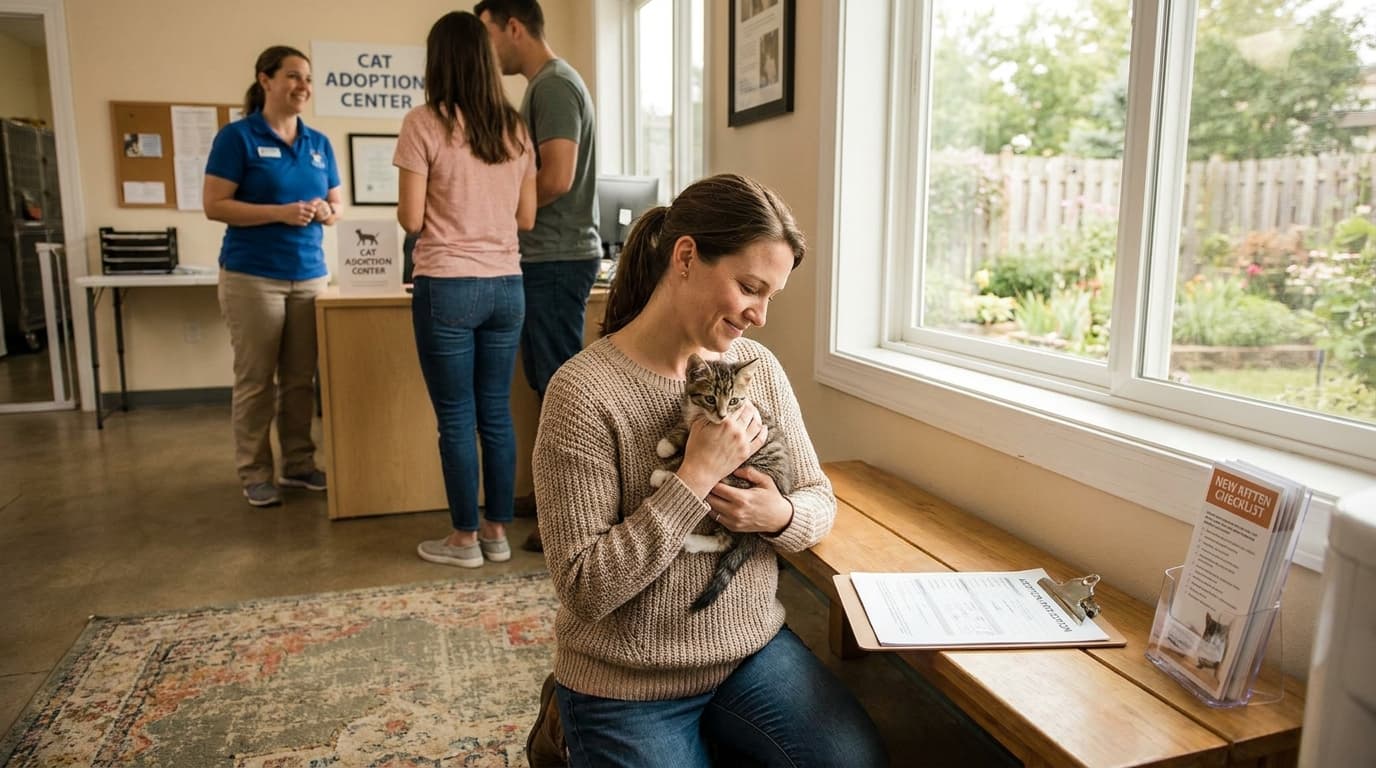
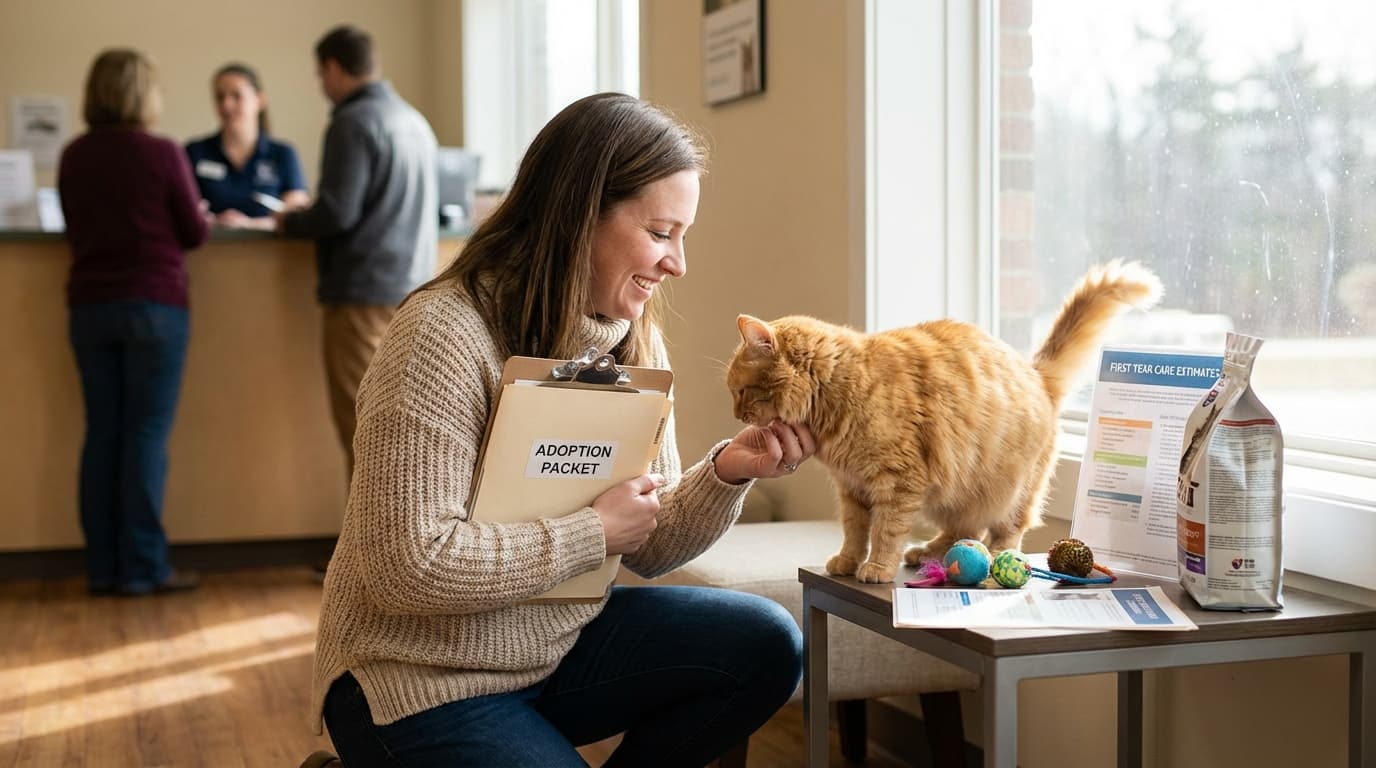
The Truth About Adopting an Older Cat: Why These Golden Oldies Are Shelter Superstars
While kittens get all the social media likes, senior cats are the ones waiting the longest for a home. Did you know that older cats often sit in shelters for...

PurrScript Editorial Team
Editorial Team
The Truth About Adopting an Older Cat: Why These Golden Oldies Are Shelter Superstars
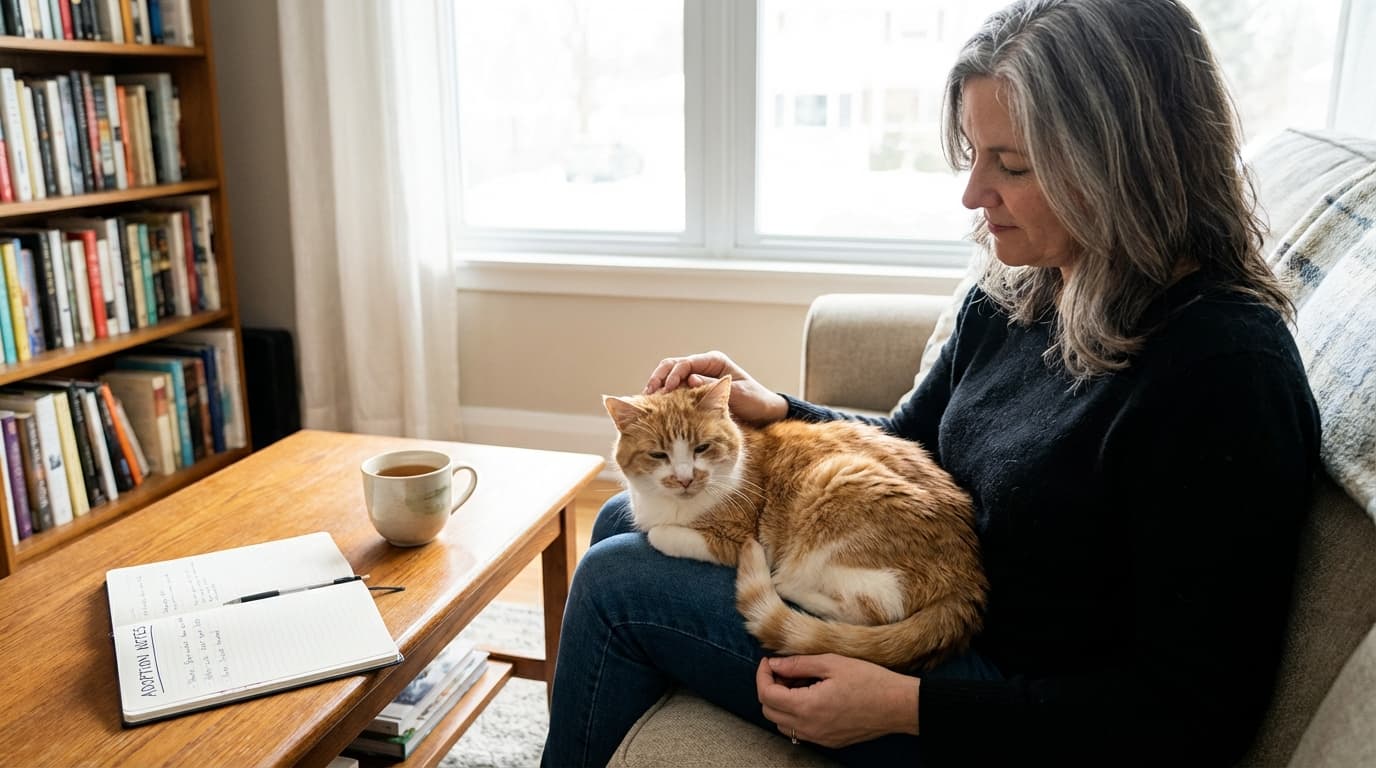
While kittens get all the social media likes, senior cats are the ones waiting the longest for a home. Did you know that older cats often sit in shelters for up to a year while kittens find families in just weeks? It is a heartbreaking gap, but choosing a golden oldie is actually a total life hack for pet parents. If you are looking into adoption: why adopt an older cat? Because you get to skip the shredded curtains and 3 AM zoomies for a friend who already knows how to be a great roommate.
Many people worry about senior cat health myths or think they won't have enough time together, but that is rarely the case. Most cats over seven are just hitting their prime and can live well into their twenties. You are not just getting a pet. You are getting a calm adult cat for adoption that comes with a fully formed personality and a massive amount of gratitude.
This guide walks through the real life expectancy of senior cats and why the personality of older felines makes them the perfect match for busy professionals or quiet homes. We will debunk the old and broken labels and show you why your next best friend might already have a few grey whiskers.
The Golden Age of Feline Friendship: Why Your Next Best Friend Might Be a Senior
Ever thought about skipping the kitten chaos phase? While kittens are cute, they are also tiny whirlwinds of shredded curtains and midnight zoomies. If you are looking for a calm adult cat for adoption, older cats are the real superstars. These pets, usually over age seven, already know the house rules. In fact, 85% of adopted seniors need no extra training compared to only 40% of kittens. They have already figured out the litter box and the quiet rhythm of a home.
Of the 3.2 million cats entering U.S. shelters every year, seniors wait the longest. A kitten might leave in weeks, but an older cat often waits a full year for a family. This usually happens because people believe myths about their health or worry they will not bond. But recent studies show that older cats show just as much affection as kittens through purring and kneading. They are not distant; they are just waiting for a consistent lap to claim.
A seven-year-old cat is roughly in their human 40s. Dr. Emily Weiss points out that these cats are perfect for a low-maintenance lifestyle because they are past their high-energy phase. You get a friend with a set personality, so there are no surprises about how they will behave. Why wait for a kitten to grow up when you can adopt a best friend who is already a pro at being a companion?
Key insights:
- Seniors spend an average of 6 to 12 months in shelters while kittens typically leave within 3 months.
- A 2024 study confirms that bonding behaviors like kneading are just as strong in older cats as in kittens.
- Predictable personalities make senior cats ideal for urban living and smaller spaces where energy levels matter.
The Kitten Myth vs. The Senior Reality
Ever wonder why kittens get all the attention while older cats sit in shelters for up to a year? It is a mystery because seniors are often much easier to live with. While kittens are a surprise package where you never really know what you are going to get, a senior cat is a finished product. They already know who they are. Also, 85% of adopted seniors need zero extra training. Compare that to only 40% of kittens, and you see why these older cats are actually the easy choice.
If you live in an apartment or value your sleep, an older cat is your best friend. Dr. Emily Weiss notes these cats are past their wild phase, making them great low-maintenance companions. You can say goodbye to 3 AM zoomies or shredded curtains. Since their energy is lower, they do not need huge spaces or constant play to stay happy. They are content to just hang out with you instead of climbing the walls. It is a much more relaxed way to live for both of you.
Some worry that an older cat won't bond as well as a kitten. But science says that is not true. Research from 2024 shows senior cats show just as much affection through purring and kneading as younger ones. Many owners even notice a sense of gratitude. These cats have often lost homes before, so they truly appreciate a warm lap and a steady meal. They do not need to grow up with you to become your best friend. They are ready to love you from day one.
Adopting a cat over age seven is a smart move. With many cats living into their 20s, you are looking at a decade of predictable, calm companionship. Why guess what a kitten might turn into when you can pick the perfect personality right now? These cats wait in shelters for up to a year, just waiting for someone to notice they are already the perfect pet. They are not just old cats, they are superstars that have already passed the hardest parts of growing up.
Key insights:
- Senior cats stay in shelters up to four times longer than kittens despite being much easier to care for.
- Personality predictability is the biggest benefit because what you see at the shelter is exactly what you get at home.
- Scientific research confirms that older cats form deep, lasting bonds with new owners just as easily as kittens do.
No More Shredded Curtains: The Calm Energy of Adult Cats
Ever woken up at 3 AM to the sound of your curtains being scaled like a rock wall? Kittens are adorable, but their energy is a whirlwind that small apartments often cannot handle. Adult cats, specifically those over age seven, bring a totally different vibe. They have already figured out the how-to-be-a-cat part of life. In fact, 85% of adopted seniors require no additional training, while only 40% of kittens can say the same. They know the litter box, they know the furniture is not a scratching post, and they are ready to just hang out.
This predictability is why Dr. Emily Weiss, a veterinary behaviorist, calls them the ideal low-maintenance companions. They are past that frantic high-energy phase and perfectly happy in smaller urban spaces. While a kitten might spend only a month in a shelter, these golden oldies often wait up to a year for a home. It is a bit heartbreaking when you realize they are often the most adaptable roommates you could ask for. Because they have lower energy levels, they do not need huge areas to roam or climb to feel satisfied.
Think of it this way: you are skipping the destructive teenager phase and going straight to the best friend who just wants to binge-watch shows with you. No more shredded fabric or midnight marathons across your face. You get a calm, grateful presence that fits your lifestyle from day one. What does this mean for you? It means coming home to a relaxed companion instead of a living room that looks like a crime scene.
Key insights:
- Senior cats are 45% more likely to be house-trained than kittens upon adoption.
- Older felines are highly adaptable to small apartment living due to lower roaming needs.
- Adopting a senior saves a cat that typically waits four times longer for a home than a kitten.
Instant Connection: The Science of Senior Bonding
Have you ever heard that you can't teach an old dog new tricks? People often assume the same for cats, thinking an older feline won't form a deep bond with a new family. But that is just a myth. Recent 2024 research found that senior cats exhibit the exact same attachment behaviors as kittens. When a ten year old cat curls up on your lap to purr and knead, it isn't just a habit. It is a genuine, active connection.
The reality in shelters is a bit heartbreaking. While kittens usually get scooped up in a few weeks, senior cats often wait up to a year for a home. This long wait seems to create what many rescuers call a gratitude bond. While scientists might describe it as social adaptation, anyone who has adopted a senior knows that look of pure relief. These cats have often lost everything they knew, so when you step in, they lean into that security with everything they have.
Also, 85% of these older cats need zero extra training. They already know how to be a pet. Instead of chasing a hyper kitten away from your curtains, you get to skip straight to the best part. You get the friendship immediately. They aren't just living in your house. They are actively choosing to be your companion. What could be more rewarding than that?
Key insights:
- 2024 studies prove that seniors purr and knead just as much as kittens to show affection.
- The gratitude bond is real; older cats often show heightened loyalty after being rescued.
- Skip the training phase because most seniors are already house-trained and ready for a quiet life.
Debunking the 'Old and Broken' Health Myth
Walk into any shelter and you will see rows of gorgeous, calm adult cats for adoption. Many people walk right past them because they think a seven year old cat is past their prime. But here is the truth: a cat at seven is often just reaching their best years. The idea that senior means broken is one of the biggest senior cat health myths out there. While the ASPCA officially labels cats as seniors once they hit seven, that is just a classification for care, not an expiration date. It just means they have graduated from the chaotic kitten phase into a more predictable and loving life stage where they actually want to hang out with you.
The statistics tell a bit of a heartbreaking story. About 3.2 million cats enter U.S. shelters every single year. While kittens get scooped up in a month or two, these seasoned pros often wait six months to a year for a home. Why? Because we worry about the life expectancy of senior cats. But with better food and indoor living, many cats are now reaching their early twenties. Adopting a ten year old cat might seem like a short term commitment, but you could easily have another decade of head bumps and purrs ahead of you. These cats spend five times longer in shelters than kittens, yet they are often the most grateful companions.
So how old is your cat in human years? Think of it this way. A ten year old cat is roughly equivalent to a human in their late fifties. They are not elderly. They are just middle aged and probably looking forward to a nice retirement on your sofa. Once they hit fifteen, they move into the geriatric category, which is like being seventy plus. Even then, these cats still have plenty of life in them. The trend of feline longevity is real. Seeing a cat reach twenty is becoming the new normal, not a rare miracle. This means that senior label at age seven is really just the start of a very long and happy second act.
Instead of worrying about a number on a chart, focus on what your cat is actually showing you. Aging is not a disease, but it does come with specific signs. You might notice their nails getting a bit brittle or a slight decrease in muscle mass along their back. Maybe they take a second longer to jump onto the counter or they seem a little stiff after a nap. These are the real health markers to watch for. Managing common issues like hyperthyroidism or kidney health is much easier than people think. It often just involves a simple change in diet or a daily pill. Senior vet visits are not just about fixing problems. They are a smart investment in more happy years together. Think of it as a tune up for a classic car that still has plenty of miles left on the odometer.
It is also worth noting that eighty five percent of senior cats require no extra training. Compare that to kittens, where only forty percent come ready to go. When you bring home an older cat, you know exactly who they are. The personality of older felines is already set. You are not guessing if they will be a lap cat or a high energy explorer. They have already figured that out, and usually, they just want to be your best friend. The rewarding pet adoption stories you hear often come from people who took a chance on a golden oldie and found a soulmate who was already perfectly socialized to household life.
Key insights:
- A seven year old cat is middle aged, not elderly, and can easily live another fifteen years with proper care.
- Senior cats often wait up to a year in shelters despite being more likely to be litter box trained than kittens.
- Physical changes like muscle loss or stiff joints are manageable health markers rather than signs of a cat being broken.
- The geriatric phase officially begins at fifteen, which is roughly equivalent to a human in their seventies.
How Old is Your Cat in Human Years?
Have you ever looked at your seven-year-old cat and thought they were still a kitten? While they might still chase a laser pointer, the ASPCA actually labels cats as senior once they hit age seven. It is a bit like hitting your 40s. You are seasoned and perhaps a little slower to jump, but you still have plenty of energy. By the time a cat reaches ten, they are basically a human in their late 50s. They are relaxed, wise, and definitely over the chaotic drama of youth.
Once a cat crosses the fifteen-year mark, they move into the geriatric category. This is roughly like being a person in their 70s. But do not let those labels fool you. We are seeing a major trend where cats live well into their 20s because of better nutrition and vet care. This means adopting a senior is not just a short-term favor. It is often the start of a decade-long relationship where you get a calm companion without the kitten-related furniture damage.
Think about it this way. A senior cat already knows who they are. Their personality is set, and they are usually just looking for a warm lap and a steady routine. When you realize that a ten-year-old cat might have another ten years of life left, the idea of adopting an older pet feels less like a rescue and more like finding a long-term best friend who finally matches your energy level.
Key insights:
- The ASPCA classifies cats as senior at age 7 and geriatric at age 15.
- A 10-year-old cat is roughly equivalent to a human in their late 50s.
- Modern health care allows many cats to live into their 20s, making senior adoption a long-term commitment.
What to Actually Watch For: Real Health Markers
Did you know the ASPCA considers a cat a senior once they hit age seven? It sounds early, but it is just the start of a new chapter. By the time they reach fifteen, they are basically the feline version of a 70-year-old human. You might notice they aren't jumping onto the high shelves as much, or maybe their back legs look a bit thinner. This is often just muscle mass changing or a bit of joint stiffness. It is not just getting old. Instead, it is a sign to adjust how we care for them so they stay comfortable and active.
Keeping an eye on the water bowl and litter box is also key. Changes in how much they drink or eat can point toward common senior issues like hyperthyroidism or kidney health. While that might sound scary, catching these things early makes a massive difference. Think of those senior vet visits as an investment in more happy years together. You are essentially buying more time for head bunts and quiet naps on the couch. It is much easier to manage a condition than to treat a crisis later on.
The best part is that an older cat's personality is already set. You won't get the kitten surprise where a sweet baby grows into a chaotic teenager. They are predictable, grateful, and usually just want a warm lap. When you know what markers to watch for, aging isn't a hurdle. It is just a different, slower way to enjoy their company. These golden years can be some of the most rewarding times you will ever spend with a pet.
Key insights:
- Cats over fifteen years old are roughly equivalent to humans over seventy.
- Early detection of muscle loss and joint stiffness helps maintain quality of life.
- Routine senior vet checkups are proactive investments in longevity.
- Behavioral predictability makes senior cats ideal for low-stress households.
The Shelter Crisis: Why Your Choice Matters Now More Than Ever
Imagine walking into a shelter and seeing two faces: a tiny kitten and a dignified eight-year-old cat. Most people reach for the kitten, and they are usually in a new home within four weeks. But for that older cat? They are often looking at a six to twelve-month wait just to find a couch to nap on. It is a heartbreaking gap that defines the current shelter experience. While kittens are undeniably cute, senior cats - which the ASPCA defines as any cat over age seven - are frequently overlooked despite being the true superstars of the rescue world.
The timing of your choice matters more than you might think. Right now, a massive shelter overcrowding crisis is hitting its peak through 2024 and 2025, putting older felines at a much higher risk. When space runs out, the cats who have been there the longest are often the most vulnerable. It is a tough reality to face, especially when you consider that a cat in their early senior years is essentially only in their late 40s or 50s in human terms. With modern care, many of these cats live well into their 20s, meaning an adoption today could still lead to a decade of companionship.
So, how can we change the narrative? Every November, the Adopt a Senior Pet Month movement works to debunk the myths that keep these animals behind bars. Dr. Emily Weiss notes that because these cats are past their high-energy kitten phase, they are actually the ideal low-maintenance companions for busy professionals or city dwellers. Think about it this way: 85% of adopted seniors require no additional training, while only 40% of kittens can say the same. When you choose an older cat, you are not just skipping the shredded curtains phase - you are literally saving a life that everyone else passed by.
Key insights:
- Senior cats often wait ten times longer for adoption than kittens, averaging nearly a year in shelter care.
- A cat aged 15 is roughly equivalent to a 70-year-old human, yet many remain active and healthy for years longer.
- Older felines are highly predictable because their personalities are already fully developed, eliminating the 'behavioral surprises' of kittenhood.
Creating a Senior-Friendly Sanctuary
Think about your home from a cat's perspective. For a senior, comfort is more than a luxury, it is a basic need. While kittens are busy climbing your curtains, an older cat is looking for a sunbeam and a soft place to land. It is a common myth that these felines are high maintenance. In reality, they are often the easiest roommates you will ever have because their personalities are already fully developed.
Setting up a senior-friendly space is simple. Small changes like a low-entry litter box make a world of difference for joints that might be stiff. Since cats over 15 are the feline equivalent of a 70-year-old human, a heated bed is more than just a treat. It is a way to soothe aging bones. The best part? You will not be teaching them the ropes. Statistics show that 85% of adopted senior cats need no extra training. They already know how a home works.
Why are these calm adult cats for adoption such a great match for busy people? They value routine. While a kitten might spend only a month in a shelter, a senior cat often waits up to a year. When they finally reach your living room, they bring a predictable personality. Dr. Emily Weiss points out that since they are past that high-energy phase, they are the ideal low-maintenance companion.
It is a myth that older cats cannot bond. They are incredibly adaptable to smaller spaces and urban living. Plus, with modern health care, many cats live into their 20s. This means adopting a 7-year-old is the start of a decade-long friendship. These shelter superstars do not want much. They just want a quiet corner and a bit of love.
Key insights:
- Senior cats spend up to 12 months in shelters, nearly four times longer than kittens.
- Low-entry litter boxes and heated beds provide essential support for aging feline joints.
- Adopting a senior cat offers behavioral predictability that kittens cannot match.
- Older cats are highly adaptable to smaller apartments and urban lifestyles.
A Love Story That Starts at Seven
When a cat hits seven, the ASPCA officially calls them a senior. But for you? It is just the start of something special. While kittens usually fly out of shelters in a few weeks, these golden oldies often wait up to a full year for a lap to call their own. It is a bit heavy when you realize millions of cats enter shelters annually, yet the most calm and predictable ones are often left behind.
Adopting a senior isn't just about saving a life. It is about gaining a soulmate who already knows the ropes. Since 85% of these cats need no extra training, you skip the shredded curtains and go straight to the snuggles. You are trading kitten chaos for a deep, quiet gratitude. Think of it as skipping the difficult years and going right to the best part of the friendship.
Their golden years might be shorter, but the legacy of love they leave behind stays with you forever. You are giving them a dignified final chapter. In return, they give you a level of companionship that only comes with age and experience.
Key insights:
- Senior cats (7+) often wait 6-12 months for adoption, significantly longer than kittens.
- Most adopted seniors require no additional training, making them perfect for busy households.
- The bond with an older cat is rooted in behavioral predictability and mutual gratitude.
Frequently Asked Questions
Not at all. In fact, you might find it even easier because their personalities are already set. While kittens are adorable, they are also unpredictable. With an older cat, you know exactly who you are getting from day one.
A 2024 study showed that senior cats show the same loving behaviors like purring and kneading as younger ones do. Many owners also feel that rescued seniors show a special kind of gratitude. They often settle into your lap and your heart much faster than you would expect.
It depends on their age when you bring them home, but you could easily have another decade of friendship. The ASPCA considers a cat a senior once they hit age 7, but many cats are now living well into their 20s because of better vet care and food.
So, adopting a ten year old cat is not just a short commitment. It is often the start of a long term relationship. While they might face some health issues like stiff joints as they get older, many stay happy and active for a long time.
It usually depends on the specific cat's history, but older cats are often a great fit for homes that already have pets. One big advantage is that their personalities are already set. Unlike kittens, where you have to guess how they will act when they grow up, shelter staff can tell you if a senior cat is a social butterfly or prefers to be the only king of the castle.
Since about 85% of senior cats are already socialized and trained, they tend to respect boundaries much better than a high-energy kitten would. Their lower energy levels mean they are less likely to pester your older resident pets for constant play. Just remember that a slow and steady introduction is always the best way to help everyone feel comfortable.
Once cats reach their double digits, the most common things to watch for are arthritis, kidney disease, hyperthyroidism, and diabetes. You might also notice physical signs like thinner muscles, brittle nails, or changes in how much they eat and drink. It is a lot like humans getting a bit stiffer and needing more checkups as they age.
The good news is that feline medicine has come a long way. Many cats now live well into their 20s because these conditions are so manageable with the right diet or simple medications. Catching things early during a routine vet visit is the real secret to keeping a senior cat happy and active for a long time.
Conclusion
So what does this all mean for your next pet? Choosing a senior isn't just a charitable act. It is a shortcut to a deep bond with a friend who already knows who they are. You get to skip the shredded curtains and go straight to the snuggles. When you look past the myths about health and age, you see a companion who is ready to settle in from day one.
With shelters facing more pressure than ever, your choice to bring home an older feline makes a massive difference. These cats often wait the longest, yet they have so much left to give. Many seniors live well into their teens or twenties, meaning a seven-year-old cat is really just starting their best chapters with you.
If you are looking for a roommate who values a good nap as much as you do, head to your local rescue and ask about their longest residents. You might go in looking to save a life but end up finding your new best friend. Sometimes the best love stories start with a cat who has already seen it all.
Send it to someone who should read it next.

PurrScript Editorial Team
Editorial Team
PurrScript's in-house editorial team. We research, write, and review every guide using established veterinary and behavioral resources, and update articles as best practices evolve.
View all articles