Urgent Care for Cats: Why Your Cat is Lethargic or Breathing Heavy
Knowing when a cat needs emergency care versus a same-day vet call can be the difference between a manageable situation and a fatal one. This guide provides the specific clinical thresholds for every urgent presentation — from open-mouth breathing to food refusal.

PurrScript Editorial Team
Editorial Team

Urgent Care for Cats: Why Your Cat is Lethargic or Breathing Heavy
Knowing when to find urgent care for cats requires knowing what constitutes an emergency rather than a symptom worth monitoring overnight. Cats conceal illness through an evolved survival behavior — a visibly sick animal in the wild is a vulnerable one — which means that by the time behavioral changes become obvious, the underlying condition has usually been developing for hours or days. The presentations that appear suddenly and dramatically, like open-mouth breathing or inability to stand, are almost always late-stage signals of conditions that had earlier, subtler signs.
The practical challenge is triage: distinguishing the presentations that are true emergencies requiring immediate transport to a 24-hour clinic from those that can safely wait for a same-day appointment, and those that warrant monitoring with a scheduled call to your regular vet. Getting this wrong in either direction has consequences — waiting too long on a cat in respiratory distress, or making an emergency run for normal post-vaccine lethargy. This guide provides the specific clinical thresholds for each category.
The topics covered here — hiding and lethargy, open-mouth breathing, persistent sneezing, sudden nighttime yowling, and the food and water refusal timeline — are the presentations most commonly driving urgent care searches for cats. Each section explains the mechanism behind the symptom, the specific signs that escalate it from concerning to emergency, and what to do during transport to avoid making the situation worse.
One principle applies across all presentations in this guide: when a cat shows signs of respiratory distress — open-mouth breathing, blue or gray gums, orthopneic posture, or labored breathing at rest — the correct response is immediate transport to the nearest emergency clinic, not calling ahead for an appointment, not monitoring to see if it resolves, and not attempting any home intervention. Respiratory emergencies in cats are time-critical in a way that other urgent presentations are not.
When to Find Urgent Care for Cats Near Me
The presentations that require immediate emergency veterinary care — meaning transport to a 24-hour clinic now, not a morning appointment — are a specific and manageable list. Open-mouth breathing at rest is the most critical: cats are obligate nasal breathers and the use of mouth breathing indicates that nasal airway is insufficient to meet oxygen demand, which is a physiological emergency. Blue, gray, or lavender gum color indicates inadequate oxygenation of the blood — cyanosis — and is an immediate life-threat. Inability to walk or stand, full-body collapse, or hind limb paralysis with cold back legs indicates aortic thromboembolism — a clot blocking blood flow to the hind limbs — a painful and rapidly fatal condition if untreated. Seizure activity in a cat that has not previously had seizures. Suspected ingestion of a toxin.
The presentations that are urgent but can be addressed within a few hours at an emergency clinic or first thing at a regular clinic if symptoms are stable: lethargy with normal gum color and no breathing changes, persistent sneezing with thick discharge but maintained appetite, and abnormal behavior without the emergency signs listed above. The distinction is whether oxygen delivery and circulation appear intact — if gums are pink and moist, capillary refill is normal, and the cat is breathing nasally, the immediate threat to life is lower and transport time is somewhat more flexible.
The food and water refusal threshold deserves specific treatment because it differs from most other species. A healthy adult human or dog can tolerate multi-day food restriction without acute organ consequence. A cat cannot, and the specific reason is hepatic lipidosis — fatty liver disease. When a cat stops eating, the body mobilizes fat reserves to meet caloric needs. The feline liver is not equipped to process large amounts of mobilized fat efficiently, and lipid accumulation in hepatocytes (liver cells) produces hepatic dysfunction within 24 to 72 hours in susceptible cats — particularly overweight cats, who have more fat to mobilize. A cat that has not eaten for 24 hours warrants a same-day veterinary call. A cat that has not eaten for 48 hours or more, particularly one that is also lethargic, warrants urgent care regardless of other symptoms.
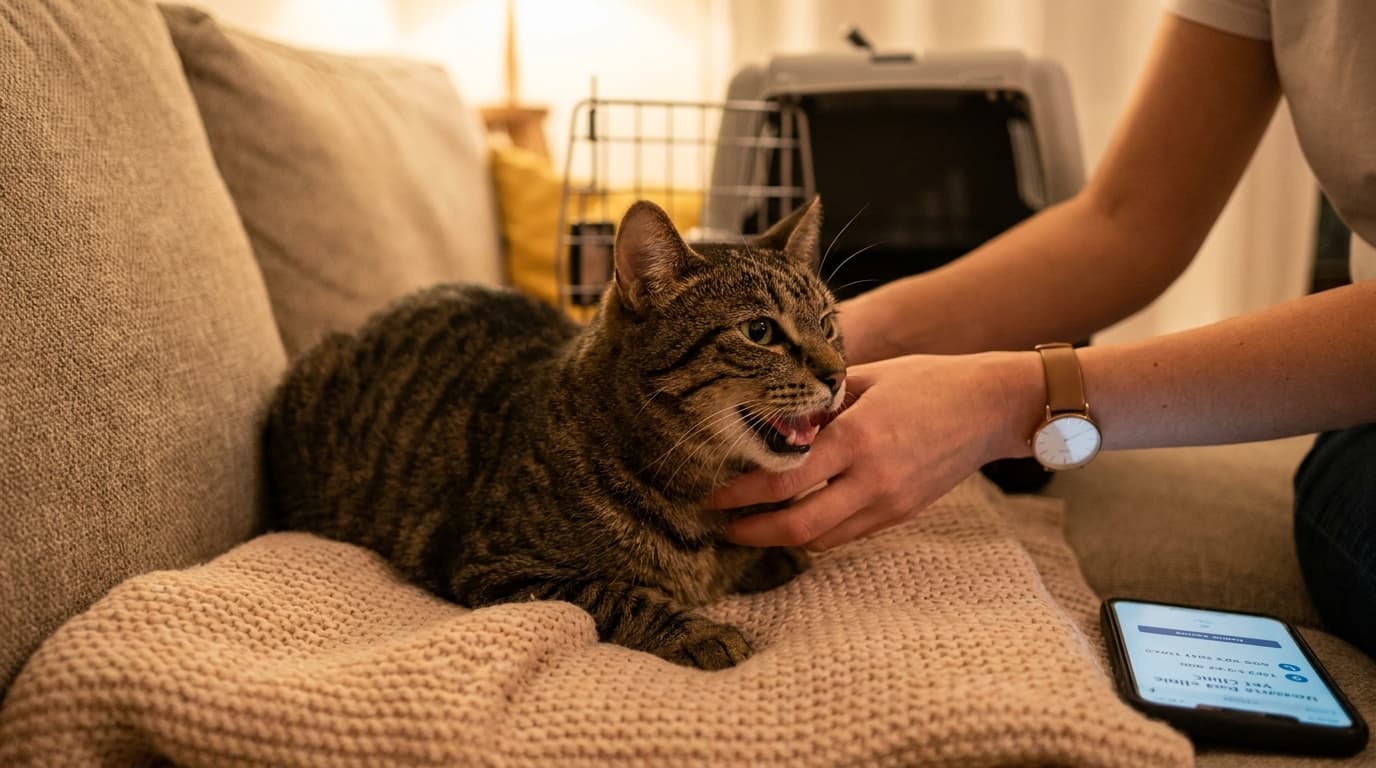
Gum color assessment is the single most valuable physical check an owner can perform at home to assess circulatory and oxygenation status. Press two fingers firmly against the gum surface and release — the white blanched area should return to pink within one to two seconds (capillary refill time). Pink, moist gums with normal capillary refill: circulation is adequate. Pale white or very pale pink gums: anemia or shock. Blue, gray, or lavender gums: cyanosis, severe oxygen deficit, immediate emergency. Bright red gums: possible early sepsis or carbon monoxide exposure. Dry, tacky gums with any color abnormality: dehydration combined with circulatory compromise.
**Key insights:
- Transport immediately for open-mouth breathing at rest, blue or gray gums, hind limb paralysis with cold legs, collapse, or seizure — these are minutes-matter presentations.
- Seek urgent care within a few hours for lethargy without breathing changes, persistent sneezing with discharge, or abnormal behavior where gum color and breathing are normal.
- Contact your vet same-day for food refusal at 24 hours — do not wait for 48 hours to become the threshold in an overweight cat.
- Learn gum color assessment now, before an emergency — pink and moist is normal; blue, gray, or very pale warrants immediate action.
- Save the nearest 24-hour emergency clinic number in your phone independently of your regular vet's number — regular vet offices are not always open when emergencies occur.
The Hepatic Lipidosis Risk: Why 24 Hours Without Food Matters
Hepatic lipidosis — sometimes called fatty liver syndrome — is the mechanism that makes feline food refusal medically urgent in a way that does not apply to most other companion animals. When a cat stops eating, the body's response is to mobilize stored fat from adipose tissue and transport it to the liver for conversion to energy. The feline liver has limited capacity to process fat at this rate, and lipid accumulates within liver cells (hepatocytes), impairing their function. In severe cases, this produces jaundice, neurological signs, and hepatic failure.
The condition develops faster in overweight cats — who have more fat to mobilize — and in cats that were already eating less than usual before stopping completely. The 24-hour threshold for veterinary contact reflects the beginning of the risk window, not the point of no return. Early intervention — appetite stimulants, assisted feeding, or intravenous nutrition — interrupts the cycle before significant liver dysfunction develops. Waiting for additional symptoms to appear before contacting a vet costs the intervention window that makes treatment straightforward rather than complex.
**Key insights:
- Contact your vet at 24 hours of food refusal, not 48 — early intervention in hepatic lipidosis is dramatically more effective than late intervention.
- Overweight cats are higher risk for rapid hepatic lipidosis development — apply the threshold more conservatively for any cat carrying excess weight.
- Note the last time the cat ate and report it specifically to the vet — the exact duration of food refusal affects urgency assessment.
Why Is My Cat Lethargic and Hiding Under the Bed?
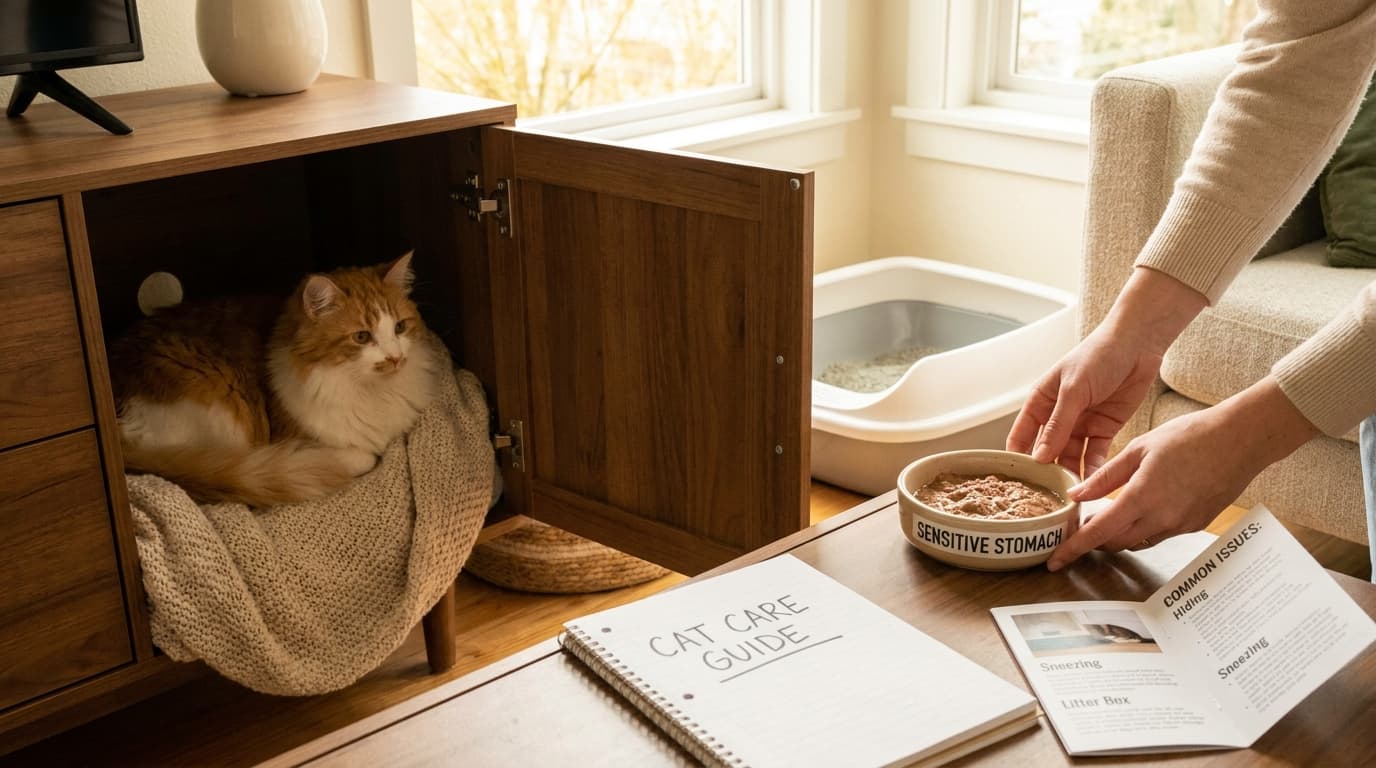
Hiding in cats is a behavioral response to feeling physiologically vulnerable, not a mood or personality expression. The instinct to conceal vulnerability when unwell is evolutionarily conserved — a sick or injured cat in the wild that remains visible in its normal social locations becomes a target for predators and rival animals. Indoor cats retain this instinct, and withdrawal to an enclosed, dark, elevated, or otherwise protected location is one of the most consistent early behavioral indicators of systemic illness. The clinical significance of hiding is proportional to its deviation from the individual cat's baseline — a cat that occasionally seeks quiet space is different from a cat that has not emerged from under the bed in 18 hours.
Lethargy in cats — reduced responsiveness, reluctance to move, decreased interest in environmental stimuli that normally produce a response — has a broad differential that includes essentially every category of serious illness: infectious disease, metabolic dysfunction (kidney disease, hyperthyroidism, diabetes), cardiac disease, neurological compromise, and pain from any source including dental, joint, abdominal, and musculoskeletal. This breadth is why lethargy combined with hiding is a high-priority indicator that veterinarians take seriously even in the absence of more specific symptoms — it indicates that something systemic is affecting the cat's functional state.
The physical signs that accompany hiding and lethargy and indicate elevated urgency are: the third eyelid (nictitating membrane) visible at the inner corner of the eye — this appears when the cat is in pain, febrile, or has significant systemic illness; a hunched, protective body posture with the back arched and abdomen tucked, suggesting abdominal pain; coat that looks unkempt or flat against the body (cats stop grooming when acutely unwell); and any abnormality in gum color as described above. None of these individually confirm a specific diagnosis, but their combination with hiding and lethargy indicates a cat that needs assessment, not monitoring.
The distinction that matters most when a cat is hiding and lethargic is whether the respiratory system is involved. A lethargic cat with normal gum color and nasal breathing is urgent but not immediately life-threatening in the same way as a lethargic cat with labored breathing or open-mouth breathing. Assess gum color and breathing first, and let that assessment determine whether you are driving to emergency care now or calling your regular vet for the earliest available appointment.
**Key insights:
- Treat hiding combined with lethargy as a clinical signal requiring veterinary assessment within the day — do not wait to see if it improves overnight.
- Check for the third eyelid (visible at the inner eye corner), hunched posture, and unkempt coat as physical signs that accompany systemic illness.
- Assess gum color and breathing first — these determine whether the situation is an immediate emergency transport or an urgent same-day call.
- Note when the cat last ate, drank, used the litter box, and appeared normal — specific timing information is what allows a vet to assess urgency over the phone.
- Do not attempt to coax a severely lethargic cat out of a hiding spot with food or handling — allow the vet examination to be the first assessment.
Cat Breathing Heavy with Mouth Open: A Critical Emergency
Open-mouth breathing at rest in a cat is an unconditional emergency. This is not a presentation where context or other factors change the urgency — there is no version of a cat breathing with its mouth open while resting that is normal or can safely wait. Cats are obligate nasal breathers, meaning the nasal passage is the only intended airway for all circumstances except extreme post-exertional panting, which is itself uncommon and brief. When a cat uses mouth breathing at rest, the nasal airway has become insufficient to meet oxygen demand, and the cat's body has activated the emergency secondary airway. This occurs when lung capacity is severely compromised, the airway is obstructed, or oxygen delivery to tissues is failing.
The clinical conditions that produce this presentation are primarily cardiac and pleural in cats. Hypertrophic cardiomyopathy (HCM) — the most common cardiac disease in cats — produces left-sided heart failure in advanced stages, with pulmonary edema (fluid in lung tissue) or pleural effusion (fluid in the pleural space surrounding the lungs). Both conditions reduce functional lung capacity and drive the escalating respiratory effort that terminates in open-mouth breathing. Feline asthma produces bronchospasm — airway constriction — that produces a similar presentation with a characteristic crouching posture and sometimes an audible wheeze. Pyothorax (infection in the pleural space), chylothorax (lymphatic fluid in the pleural space), and thoracic masses are less common causes with the same emergency presentation.
The orthopneic posture is the physical position a cat assumes when breathing is maximally labored: elbows held away from the body (abducted), neck extended forward and downward, mouth open, and the cat typically refuses to lie down because the recumbent position further compromises respiratory mechanics. Identifying this posture is important because it indicates the cat is compensating at maximum capacity — there is no buffer remaining between current function and respiratory arrest. This is the presentation where minutes of delay have meaningful consequences.
During transport to emergency care, the single most important intervention is minimizing the cat's stress level. Stress increases metabolic oxygen demand, which worsens the mismatch between oxygen supply and demand in a cat already at the limit of respiratory compensation. Keep the carrier in the coolest part of the car, avoid handling the cat beyond what is necessary for safe transport, do not attempt any oral administration of water or medication (aspiration risk in a cat with compromised airways), and keep the environment as quiet as possible. Your own visible calm is a meaningful variable — cats are highly attuned to owner anxiety and respond to it with their own.
**Key insights:
- Transport to the nearest emergency clinic immediately for any open-mouth breathing at rest — there is no threshold consideration, this is always an emergency.
- Recognize the orthopneic posture (elbows out, neck extended, reluctance to lie down) as maximum respiratory compensation — do not wait for additional deterioration.
- Check gum color during transport if safely possible — blue or gray gums indicate cyanosis and should be reported immediately on arrival.
- Minimize handling and stress during transport — a calm environment reduces oxygen demand in a cat whose oxygen supply is already compromised.
- Do not administer water, food, or any medication by mouth to a cat in respiratory distress — the aspiration risk in an animal with compromised airways is significant.
Asthma vs. Pleural Effusion: Why Only a Vet Can Tell the Difference
Feline asthma and pleural effusion (or pulmonary edema) present with overlapping signs — labored breathing, open-mouth breathing in severe cases, and significant distress — but they have different causes, different treatments, and different prognoses. Asthma is airway inflammation and bronchospasm; treatment involves bronchodilators and corticosteroids. Pleural effusion requires fluid drainage (thoracocentesis) as the primary intervention. Administering a bronchodilator to a cat with pleural effusion, or delaying drainage in a cat with asthma-driven respiratory failure, produces different but both potentially harmful outcomes.
The practical implication for owners is that distinguishing between these conditions at home is not possible and should not be attempted. Both presentations require the same owner response: immediate transport to emergency care. The differentiation happens through X-ray, which distinguishes the air-trapping and hyperinflation pattern of asthma from the fluid opacity and compressed lung lobes of pleural effusion. This is the reason emergency veterinary assessment is indispensable for respiratory presentations — not because the conditions are equally urgent (they are both very urgent), but because the treatments are different and early correct treatment is what affects outcome.
**Key insights:
- Do not attempt to distinguish asthma from pleural effusion at home — both require immediate transport and only imaging can differentiate them.
- Report any sounds associated with breathing to the emergency vet — a wheeze suggests airway involvement, a wet-sounding breath suggests fluid, but only X-ray confirms.
- Inform the emergency clinic on arrival that the presentation involves open-mouth breathing — this ensures oxygen therapy is initiated immediately rather than after intake procedures.
Why Is My Cat Sneezing So Much?
Occasional sneezing in cats is normal and benign — dust, strong scents, and mild nasal irritation all produce sneezing as a clearing reflex. Frequent, repetitive sneezing — particularly sneezing in clusters of three or more — combined with nasal discharge indicates upper respiratory infection rather than simple irritation. Feline herpesvirus (FHV-1) and feline calicivirus (FCV) account for approximately 90 percent of upper respiratory infections in cats. Both are highly contagious between cats and are the primary pathogens controlled by the FVRCP core vaccine series.
The clinical trajectory of feline upper respiratory infection matters for triage. Mild infection — sneezing, clear nasal discharge, mild lethargy — often resolves with supportive care and monitoring in previously vaccinated, otherwise healthy adult cats. The presentations that indicate progression requiring veterinary assessment are: purulent (yellow or green) nasal or eye discharge, indicating secondary bacterial infection; appetite loss severe enough that the cat stops eating, which in cats creates the hepatic lipidosis risk already described; progression to lower respiratory signs (labored breathing, open-mouth breathing, cough); or any worsening of neurological signs.
The connection between nasal congestion and appetite loss in cats is mechanistically important and frequently misunderstood. Cats rely primarily on olfactory signals to identify food — they need to smell food before they will eat it. A cat with significantly congested nasal passages cannot smell their food and frequently refuses to eat even when offered palatable, normally accepted meals. This is not pickiness; it is anosmia (loss of smell) produced by nasal congestion. The intervention — warming food to increase aromatic volatility, using strong-smelling foods like tuna or warmed wet food — is specifically designed to maximize the olfactory signal the cat can detect through a congested nasal passage, not to change the food itself.
The progression from upper respiratory infection to lower respiratory involvement is most rapid in kittens, elderly cats, and immunocompromised individuals. In these populations, what begins as sneezing can progress to pneumonia within 24 to 48 hours. A sneezing kitten or elderly cat with any respiratory signs warrants more aggressive monitoring and a lower threshold for same-day veterinary contact than a healthy adult cat with the same initial presentation.
**Key insights:
- Distinguish occasional sneezing (normal) from cluster sneezing with discharge (upper respiratory infection) — the combination of both warrants monitoring.
- Seek veterinary assessment for purulent (yellow or green) discharge, appetite loss lasting more than 24 hours, or any lower respiratory signs regardless of how the presentation started.
- Warm food to body temperature or offer strong-smelling options to stimulate appetite in a congested cat — the goal is maximizing olfactory signal, not changing the food.
- Apply a more conservative urgency threshold for kittens and elderly cats with respiratory signs — these populations can deteriorate faster than healthy adults.
- Transport immediately if sneezing progresses to labored breathing or open-mouth breathing — upper respiratory infection can advance to lower respiratory compromise and this transition is an emergency.
Cat Meowing Loudly at Night Suddenly
Sudden onset of loud, distressed nighttime vocalization in cats — particularly in cats over 8 to 10 years old who have not previously shown this behavior — is a clinical signal that warrants prompt veterinary assessment rather than behavioral management. The differential diagnosis for this presentation in senior cats includes Feline Cognitive Dysfunction Syndrome (FCDS), systemic hypertension (high blood pressure), hyperthyroidism, pain, and deafness-associated anxiety. These are medical conditions, not behavioral problems, and they respond to medical treatment rather than behavioral modification.
Systemic hypertension in cats is associated with hyperthyroidism (the most common cause), chronic kidney disease, and cardiac disease. Severely elevated blood pressure produces neurological symptoms including disorientation, sudden behavioral change, acute vision loss (hypertensive retinopathy producing sudden blindness), and the distressed vocalization pattern that owners describe as yowling. A cat that suddenly cannot see in a familiar environment, particularly at night when ambient light is reduced, will vocalize in distress. This presentation has a specific urgency because very high blood pressure also risks hypertensive crisis affecting the heart, kidneys, and brain.
Feline Cognitive Dysfunction Syndrome produces a different but overlapping presentation: disorientation in familiar spaces, apparent failure to recognize familiar people or locations, altered sleep-wake cycles (increased nighttime wakefulness and activity), and the sundowning pattern in which confusion worsens as ambient light decreases. Cats with FCDS are not in acute medical crisis in the way a hypertensive cat may be, but the condition is progressive and quality of life management — environmental modification, routine stabilization, and in some cases medication — is significantly more effective when initiated early.
The urgency distinction for sudden nighttime vocalization hinges on the accompanying signs. Sudden onset in a previously normal cat with no prior history, combined with apparent disorientation, bumping into objects, or dilated pupils that do not respond normally to light, suggests acute hypertensive retinopathy and warrants same-day or emergency veterinary assessment. Gradual onset over weeks in an aging cat without specific disorientation signs is more consistent with FCDS and warrants prompt but non-emergency scheduling.
**Key insights:
- Treat sudden-onset yowling in a previously normal senior cat as a medical presentation requiring veterinary assessment within 24 hours — do not assume behavioral cause.
- Check whether the cat is bumping into objects or showing abnormal pupil responses — these suggest sudden vision loss from hypertensive retinopathy, which is an urgent presentation.
- Request blood pressure measurement at the veterinary appointment specifically — systemic hypertension is a common and treatable cause that requires specific testing to diagnose.
- Rule out hyperthyroidism with bloodwork — this is among the most common causes of systemic hypertension in cats over 8 and is directly treatable.
- Do not rearrange furniture or make significant environmental changes for a disoriented cat — spatial predictability reduces the disorientation-driven anxiety driving the behavior.
Staying Calm During a Cat Emergency: A Practical Guide
Emergency preparedness for cat owners involves three specific actions that are best taken before an emergency occurs rather than during one. First: identify the nearest 24-hour emergency veterinary clinic to your home and save the number separately from your regular vet. These are different facilities and regular vet offices are closed for most of the hours when veterinary emergencies actually occur. Second: keep a soft-sided carrier accessible and already containing a familiar-smelling item — a worn T-shirt or the cat's own blanket. A carrier that must be assembled or located during an emergency adds time and stress to a situation that already has both. Third: know the emergency presentations by memory so the decision to go is immediate rather than deliberated.
During transport of a cat in distress, the owner's emotional state is a measurable variable. Cats are physiologically responsive to their owner's stress — elevated heart rate, vocalizations, and the stress hormones that accompany human anxiety are all detected by a cat through olfactory, auditory, and behavioral cues. A visibly panicked owner in a car creates an environment of elevated arousal for a cat that is already physiologically compromised. This is not an argument for suppressing appropriate concern; it is a practical note that the deliberate choice to project calm — measured voice, slow movements, minimal unnecessary handling — directly benefits the animal during transport.
The information to have ready when arriving at an emergency clinic or calling ahead: the cat's approximate age, the specific presenting sign (open-mouth breathing, hind limb paralysis, collapse), how long the symptom has been present, when the cat last ate and drank, any known medical history or current medications, and your gum color assessment if you performed one. This information allows the emergency team to triage the case before the cat arrives and prepare the appropriate initial interventions — oxygen supplementation for respiratory presentations, catheter placement for suspected toxin cases.
**Key insights:
- Save the nearest 24-hour emergency clinic number in your phone today, separately from your regular vet — do this before you need it.
- Keep a carrier accessible with a familiar-smelling item already inside — assembly time and a panicked cat-catching session add stress to an already urgent situation.
- Know the immediate-transport presentations by memory: open-mouth breathing, blue gums, hind limb paralysis, collapse, seizure — the decision to go should take seconds, not minutes.
- Project calm during transport — your emotional state is detectable by the cat and affects its stress level, which affects oxygen demand.
- Have specific information ready: presenting sign, duration, last food and water intake, any known medical history — this enables phone triage and pre-arrival preparation at the emergency clinic.
Frequently Asked Questions
The clearest indicator is open-mouth breathing at rest. Cats are obligate nasal breathers — they breathe exclusively through the nose except during brief post-exertional panting, which is uncommon and short-lived. Any open-mouth breathing while resting, sitting, or in normal activity indicates that nasal airway is insufficient and represents an emergency. This is unconditional — there is no context in which resting open-mouth breathing in a cat is normal or can safely wait.
Supporting indicators that increase urgency: gum color that is blue, gray, or lavender rather than pink (cyanosis — oxygen deficit); the orthopneic posture with elbows abducted and neck extended; visible heaving of the flanks with each breath; and a cat that refuses to lie down. Any single one of these in combination with respiratory effort warrants immediate transport. Count resting respiratory rate if you can do so without stressing the cat — consistently above 30 breaths per minute while resting is abnormal, and above 40 is an emergency threshold.
Hiding is a physiologically driven behavior in unwell cats, not a mood or choice. The evolutionary basis is direct: a visibly compromised animal attracts predation and competitive displacement. This instinct persists in domestic cats despite the absence of predators in most indoor environments. When a cat is febrile, in pain, or experiencing systemic illness, the withdrawal to an enclosed, dark, and protected location is an automatic behavioral response to felt physiological vulnerability.
The diagnostic significance is proportional to the deviation from the individual cat's baseline and the accompanying signs. A cat that hides occasionally is not alarming. A cat that has not emerged from a hiding spot for 12 or more hours, is not responsive to normal stimuli that would produce a response, or has stopped eating and drinking has moved from normal shy behavior to a clinical presentation. The assessment that matters is gum color and breathing — these determine whether the situation requires emergency transport or an urgent scheduled call to your vet.
Brief, mild open-mouth breathing immediately after intense play — lasting under a minute and resolving quickly — can occur in healthy cats, particularly during hot weather or after genuinely strenuous activity. This is the only context in which open-mouth breathing in a cat does not automatically indicate emergency, and the qualifier is important: it resolves within one to two minutes of stopping the activity. Open-mouth breathing that persists after the cat has stopped playing and is at rest, that occurs with minimal exertion, or that is accompanied by any other sign of distress is not a normal exertional response and warrants assessment.
The practical guidance: if your cat is panting after play and it resolves within a minute of stopping, observe and ensure it does not recur at lower exertion levels. If panting persists after rest, if gum color is abnormal, if the cat shows any distress or orthopneic posturing, or if this is a new behavior in a cat that previously exercised without panting — contact your vet. Feline asthma and early cardiac disease can present as exercise intolerance before producing resting respiratory distress, and catching these conditions before they reach emergency presentation is significantly better for outcome.
Contact your veterinarian at 24 hours of food refusal for a phone consultation about urgency. The 24-hour threshold is not the point at which hepatic lipidosis begins — it is the beginning of the risk window where early assessment allows intervention before significant liver dysfunction develops. Waiting for 48 hours to be the threshold, or for other symptoms to appear, allows the condition to progress to a stage where treatment is more complex and outcomes are less reliable.
While preparing for or waiting for the veterinary call, note when the cat last ate normally, whether water intake has also stopped, whether any environmental change or stressor preceded the appetite loss, and whether any other symptoms are present. This information enables phone triage. Do not attempt to force-feed or syringe-feed a cat that has refused food without veterinary guidance — force feeding can cause aspiration, stress, and food aversion that complicates voluntary appetite restoration later. The vet call determines the appropriate next step, which ranges from monitoring to urgent assessment depending on the full clinical picture.
Conclusion
The core skill this guide is trying to build is rapid, accurate triage — the ability to look at a symptomatic cat and determine within seconds whether the situation requires immediate emergency transport, a same-day call to your regular vet, or monitoring with a scheduled appointment. That determination is primarily based on two assessments: gum color and breathing. Pink, moist gums and nasal breathing indicate adequate oxygenation and circulation, which means the situation, while potentially serious, is not immediately life-threatening. Blue gums or open-mouth breathing at rest indicate the opposite, and no other factor changes the response — immediate transport.
The other presentations covered in this guide — hiding and lethargy, sneezing and respiratory infection, nighttime yowling, food refusal — each have their own urgency thresholds and those are worth learning because they produce better outcomes than either waiting too long or making emergency runs for non-emergency presentations. But none of them override the respiratory triage. If a lethargic hiding cat is also breathing with its mouth open, the respiratory presentation determines the response regardless of what else is happening.
Two preparations to make today: save your nearest 24-hour emergency clinic number in your phone, and practice finding your cat's gum color once when they are calm and well — so you have a baseline reference and the physical practice of accessing the gums before you need to do it quickly under stress. These take under five minutes and are the two most practically useful emergency preparations available to any cat owner.

Send it to someone who should read it next.

PurrScript Editorial Team
Editorial Team
PurrScript's in-house editorial team. We research, write, and review every guide using established veterinary and behavioral resources, and update articles as best practices evolve.
View all articles