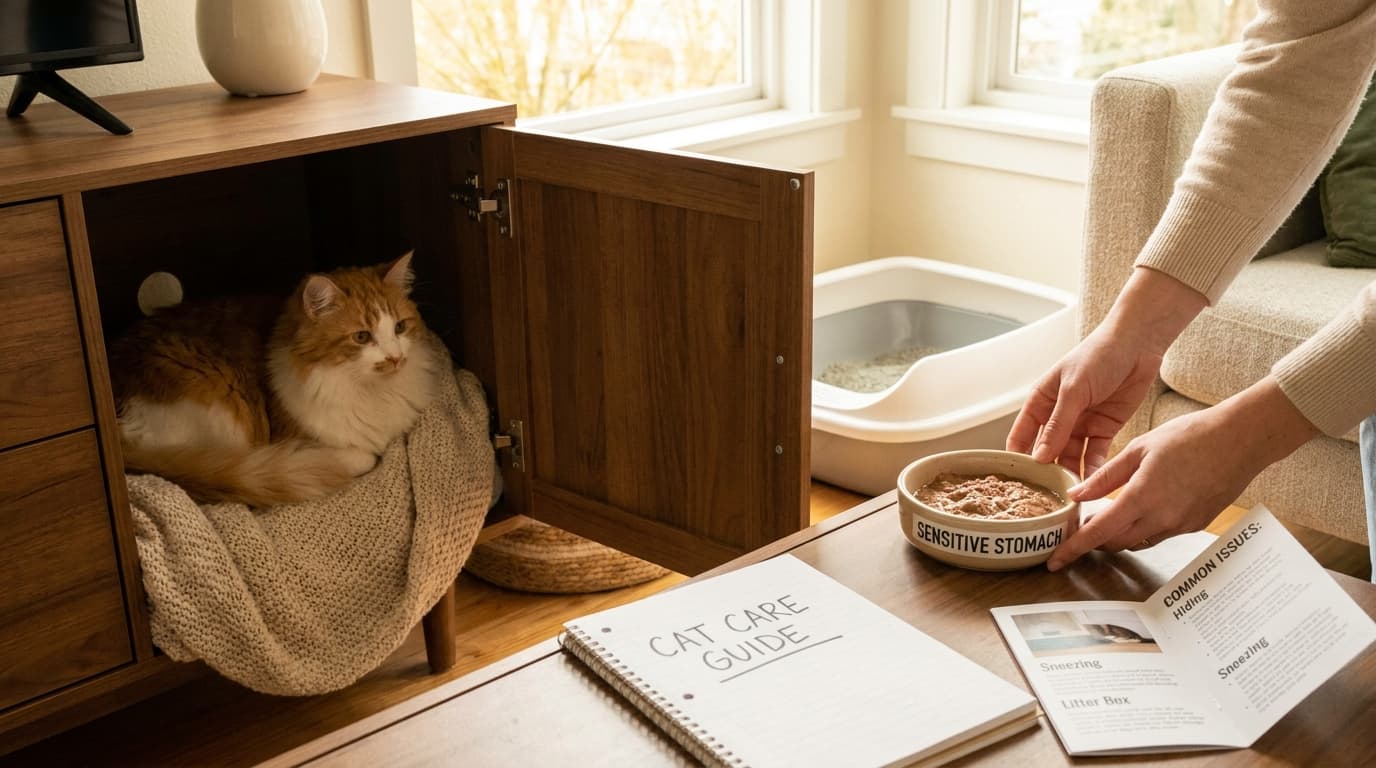
Cat Care for Urinary Health and Signs of Kidney Failure
Chronic kidney disease affects a staggering 80% of cats over the age of 15, and it usually stays hidden until it is dangerously advanced. Getting proactive with Cat Care for...

James Miller
Certified Cat Behaviorist
Cat Care for Urinary Health and Signs of Kidney Failure
Chronic kidney disease affects a staggering 80% of cats over the age of 15, and it usually stays hidden until it is dangerously advanced. Getting proactive with Cat Care for Urinary Health and Kidney Issues isn't just about reacting to problems when they pop up, but staying one step ahead of a silent condition that changes how your pet processes waste.
The stakes are incredibly high because standard blood tests often miss the early warning signs until a cat has already lost more than 75% of their kidney function. By the time you notice your senior cat is drinking more water or looking a bit thinner, their organs are already struggling to keep up. Missing these subtle shifts or ignoring a simple urinary blockage can turn a manageable health journey into a sudden and scary emergency.
While many guides just list symptoms, we're looking at the latest veterinary breakthroughs like the SDMA test for cats, which catches issues years earlier than traditional blood work. This guide combines nutritional science with practical advice for everything from choosing the best cat food for urinary health issues to knowing what to do if a cat ate string or if your cat has a deep cut on a paw.
You'll walk away with a clear plan to protect your cat's renal health and the confidence to handle common feline emergencies with ease.
Choosing the Best Cat Food for Urinary Health Issues
To keep your cat's bladder healthy and prevent painful crystals, you need a diet that prioritizes high moisture and a precise mineral balance. While many owners look for specific brands, the real secret is the moisture-first philosophy. Wet food is almost always the MVP for urinary health because it naturally dilutes the urine, making it much harder for minerals to clump together into stones. When a cat eats dry kibble, they often live in a state of mild, chronic dehydration, which makes their urine more concentrated and 'gritty.'
What this actually means is that the physical form of the food is just as important as the ingredients inside. Most people overlook the fact that cats have a naturally low thirst drive. In the wild, they get most of their water from their prey. When we feed them dry food, we are asking their bodies to work against their biology. The pattern here is clear: higher moisture leads to more frequent urination, which essentially 'flushes' the bladder. This is critical because standard blood tests often don't show kidney changes until 75% of function is already gone, so proactive hydration is your best defense.
Take the case of a cat named Max, for example. Max was a typical indoor cat who loved his dry food but struggled with three scary and expensive urinary blockages in just two years. His owner was terrified every time he spent too long in the litter box. After the last emergency visit, they transitioned Max to a high-moisture, low-magnesium diet. They even started stirring a tablespoon of warm water into his canned food to make a 'soup.' Since making the switch, Max hasn't had a single flare-up, and his energy levels have actually improved because his system isn't constantly struggling with concentrated waste.
One thing most guides get wrong here is the idea that 'grain-free' automatically means a food is urinary-friendly. In reality, some grain-free foods are actually quite high in minerals like magnesium and phosphorus, which can contribute to stone formation. It is the mineral balance and the resulting urine pH that truly matters. Some foods are designed to keep the urine slightly acidic to dissolve struvite crystals, but if your cat has a different type of stone, that acidity could actually be harmful. Because every cat is different, it is worth checking with your vet for advice specific to your cat's history before switching to a therapeutic S/O diet.
When you are looking at a pet food label, the phosphorus and magnesium levels are your most important metrics. These specific minerals are the primary building blocks for stones. High phosphorus is especially dangerous for older cats, as it puts extra strain on the kidneys. Since chronic kidney disease affects 80% of cats over age 15, keeping these minerals in check early on can significantly extend your pet's life. This is why many cat health guides emphasize specialized renal diets that find the balance between restricted minerals and high-quality protein.
To read a label like an expert, look for the 'guaranteed analysis' section and try to find the magnesium percentage. You want to see levels below 0.02% for wet food. If the label doesn't list it, that's often a sign the food isn't formulated with urinary health in mind. You should also look for foods that mention maintaining a slightly acidic urine pH. This is a delicate balancing act, as you also need to ensure your cat is getting enough high-quality protein to prevent muscle wasting while their kidneys process these nutrients.
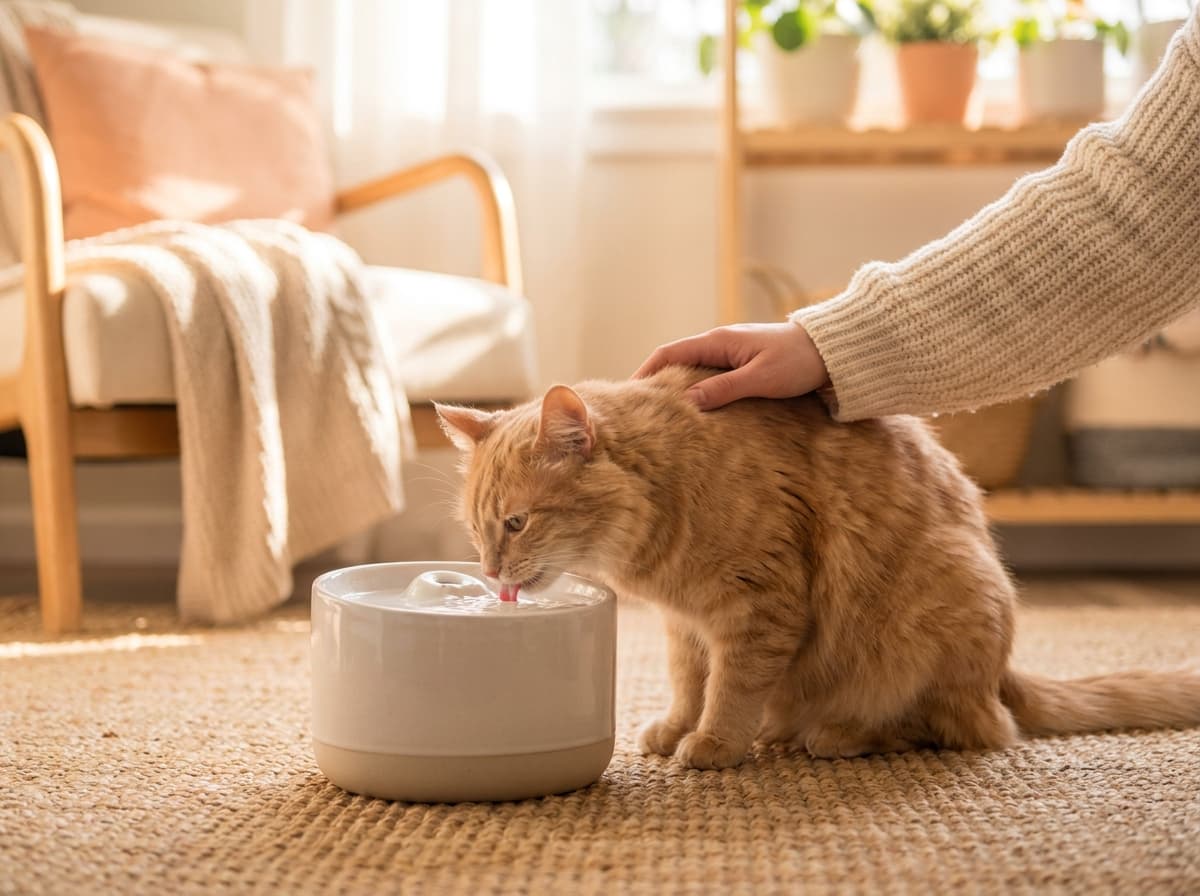
Finally, remember that hydration is as much about the 'how' as the 'what.' Many indoor cats have specific hydration needs and prefer moving water over a still bowl. Combining a high-moisture diet with a ceramic water fountain can make a world of difference. If you notice your cat spending more time at the water bowl than usual, don't just assume they are hydrated - it could be an early sign of kidney issues, and you should ask your vet about the SDMA blood test, which catches function loss much earlier than traditional tests.
Key insights:
- Prioritize canned food over dry kibble to ensure your cat gets enough moisture to naturally dilute their urine.
- Check labels for magnesium levels below 0.02% and avoid foods that don't clearly state their mineral content.
- Add a tablespoon of warm water or unsalted tuna juice to wet meals to encourage extra fluid intake.
- Consult your veterinarian before switching to a therapeutic diet to ensure the formula matches your cat's specific crystal type.
- Ask for an SDMA test during annual checkups to detect potential kidney issues when only 40% of function is lost.
The Role of Phosphorus and Magnesium
Phosphorus and magnesium are the primary building blocks for feline urinary crystals and stones. While these minerals are necessary for basic health, any excess is filtered by the kidneys and sent to the bladder. In many cats, especially those on high-mineral dry diets, these elements can clump together to form painful 'sand' or solid stones that lead to life-threatening blockages. For senior cats, high phosphorus is particularly taxing because it forces the kidneys to work harder, which can accelerate the progression of chronic kidney disease.
The real danger lies in the chemical environment of the bladder. Magnesium thrives in alkaline urine, leading to struvite crystals, which are the most common cause of feline lower urinary tract issues. What most owners miss is that managing this is a delicate balancing act between restricting minerals and preventing muscle wasting. If you cut protein too drastically to lower phosphorus, the cat's body will start breaking down its own muscle tissue for energy, creating a new set of health problems.
Think of a cat like Oliver, an older male who suddenly starts making frequent, unproductive trips to the litter box. If Oliver is eating a budget kibble high in bone meal, he is likely ingesting far more phosphorus and magnesium than his system can process. By switching to a high-moisture diet that maintains a slightly acidic urine pH, those minerals stay dissolved in the liquid rather than turning into the sharp grit that causes him pain.
One thing many guides get wrong is the idea that 'low mineral' is always better. The catch is that a diet designed to prevent struvite stones by acidifying the urine might actually increase the risk of calcium oxalate stones if the pH drops too low. This is why professional guidance is vital. Individual circumstances vary, so it is worth checking with your vet to ensure you are not solving one urinary issue while accidentally creating another.
Reading a pet food label like a pro means looking past the marketing and heading straight for the 'guaranteed analysis' section. You want to see magnesium listed below 0.02% for wet food. If a brand does not list these specific mineral percentages, it is often a sign they are not formulating for urinary safety.
Key insights:
- Look for foods specifically formulated to maintain a slightly acidic urine pH to keep minerals from crystallizing.
- Check the guaranteed analysis for magnesium levels below 0.02% to reduce the building blocks of stones.
- Avoid foods that use generic 'bone meal' as a primary ingredient, as this is often a hidden source of high phosphorus.
- Prioritize wet food over dry kibble to naturally dilute the concentration of minerals in the bladder.
Spotting the Early Signs of Kidney Failure in Older Cats
You can catch kidney failure long before your cat starts acting truly sick, but you have to look past the standard blood tests. Most traditional screenings measure creatinine, which doesn't actually flag a problem until a staggering 75% of kidney function is already gone. By then, you are playing catch-up with a disease that has been silently progressing for years. The real trick to early detection is the SDMA test, which can spot issues when only 40% of function is lost, giving you a massive head start on treatment. This test has become a game-changer in the last decade, moving the diagnostic goalposts years earlier than we ever thought possible.
What this actually means is that we need to stop waiting for symptoms and start looking at the hidden numbers. Kidney disease is a master of disguise because cats are biologically programmed to hide weakness until they physically can't anymore. While CKD affects up to 80% of cats over age 15, many owners miss the window for early intervention because they rely on behavior rather than biology. The pattern here is clear: the earlier you identify azotemia - that buildup of waste in the blood - the more likely you are to double your cat's remaining lifespan through specialized nutrition. Individual circumstances vary, so it is always worth checking with your vet for advice specific to your situation.
Imagine an 11-year-old cat named Luna. She still greets you at the door and chases the occasional laser pointer, so she seems fine to the casual observer. But lately, you’ve noticed she’s spending a bit more time hovering over her water bowl and her coat looks slightly spiked or unkempt because she’s grooming less than she used to. These aren't just signs of her getting lazy in her golden years; they are classic red flags that her kidneys are struggling to concentrate urine. At this stage, her Urine Specific Gravity (USG) would likely show that her kidneys are essentially leaking water rather than filtering it, making her constantly thirsty even if she’s drinking more than ever.
One thing most guides get wrong is focusing only on the kidneys themselves while ignoring the rest of the body’s systems. About 60% of cats with kidney disease also develop hypertension, or high blood pressure, which acts like a silent accelerator for the disease. It’s a vicious cycle: failing kidneys cause blood pressure to spike, and that high pressure then causes further damage to the delicate kidney tissues. If your vet isn't checking your senior cat's blood pressure during their checkup, they are missing half the picture. Catching this early is vital because managing blood pressure is one of the easiest ways to slow down the progression of Urgent Care For Cats Why Your Cat Is Lethargic Or Breathing Heavy.
The catch is that not every elevated blood reading means the end of the road. Vets use the IRIS Staging System to categorize how far the disease has progressed, ranging from Stage 1 (early) to Stage 4 (end-stage). Even if your cat is diagnosed, it isn't a death sentence. There is a huge trend right now toward Early Support renal diets that help manage phosphorus without restricting protein so much that the cat loses muscle mass. This is a big shift from the old way of doing things, where all kidney cats were put on the same restrictive food. Now, we know that Why Some Cats Live To 20 And Which Breeds Are Best For Your Lifestyle often comes down to tailoring the diet to the specific stage of the disease.
Keeping a close eye on these subtle shifts can feel overwhelming, but it's the best way to ensure your feline friend stays comfortable. By shifting your focus from 'is my cat acting sick?' to 'what do the labs say?', you take the guesswork out of senior care. It’s about being proactive rather than reactive, which is the cornerstone of modern feline medicine.
Key insights:
- Schedule twice-yearly bloodwork for cats over 10 to monitor changes in SDMA and creatinine levels.
- Request a blood pressure check during every senior wellness exam to catch silent hypertension.
- Monitor your cat's water intake and litter box volume, as increased thirst is often the first visible sign of decline.
- Look for subtle changes in grooming habits or a 'staring at the water bowl' posture that indicates nausea or dehydration.
- Discuss early-stage renal diets with your vet before your cat reaches advanced IRIS stages to help preserve muscle mass.
What Causes Digestive Problems and What to Do if a Cat Ate String
Vomiting in cats is often dismissed as just a hairball, but when your cat swallows string, it transforms from a minor mess into a surgical emergency known as a linear foreign body. If your cat ate string and is now vomiting, hiding, or acting lethargic, you aren't dealing with a simple digestive upset; you're dealing with a ticking clock that requires an immediate trip to the emergency vet. String can get anchored under the tongue or in the stomach, while the rest of the strand tries to move through the intestines, creating a mechanical failure that home remedies cannot fix.
The real danger isn't just a simple blockage; it is the accordion effect. Because one end of the string is usually stuck or anchored, the rhythmic contractions of the intestines try to push the other end along. This causes the intestines to bunch up and slide into themselves like a folded sleeve. What many owners overlook is that string acts like a saw blade under tension. As the gut tries to move the anchored string, the thread can actually slice through the intestinal wall, leading to life-threatening peritonitis. While Chronic Kidney Disease (CKD) affects up to 40% of cats over age 10, a linear foreign body is an acute crisis that can kill a healthy kitten in less than 48 hours.
Imagine a playful kitten named Mochi who finds a stray piece of holiday ribbon under the sofa. She gulps it down, and for the first few hours, she seems totally fine. But by the next morning, Mochi is hunched over, refusing her favorite treats, and vomiting clear liquid. Her owner might think she just has a sensitive stomach, but inside, that festive ribbon is already starting to pleat her small intestine. This is where Urgent Care For Cats Why Your Cat Is Lethargic Or Breathing Heavy becomes vital knowledge - by the time the symptoms are obvious, the internal damage is often quite advanced.
There is one massive mistake owners make that can turn a treatable situation into a fatal one: pulling on a visible string. If you see a piece of yarn or dental floss hanging out of your cat’s mouth or rectum, do not pull it. It is incredibly tempting to help it along, but if that string is caught further up the digestive tract, pulling it creates a cheese-slicer effect on the delicate intestinal lining. You could cause an instant, massive internal tear. Instead, leave the string exactly where it is and get to a clinic immediately. Even if your cat seems okay for the moment, the internal tension is a silent killer.
Learning to spot these emergencies is a stressful part of being a pet parent, but being prepared makes all the difference. Understanding the difference between a routine hairball and a surgical crisis is a key part of the broader Cat Health Guide Signs Of Dental Disease Kidney Care And More. When in doubt, always treat a swallowed string as an emergency rather than a digestive fluke. Individual circumstances vary - it is worth checking with your vet for advice specific to your situation.
Key insights:
- Check under your cat's tongue if you suspect they swallowed string, as it often gets anchored there.
- Never pull on string protruding from the mouth or anus, as this can slice the intestines.
- Watch for productive versus unproductive vomiting; frequent retching without a hairball is a major red flag.
- Keep all sewing supplies, dental floss, and holiday ribbons in cat-proof containers.
- Seek emergency veterinary care immediately if your cat is lethargic or vomiting after playing with string.
Emergency First Aid for a Deep Cut on a Cat Paw
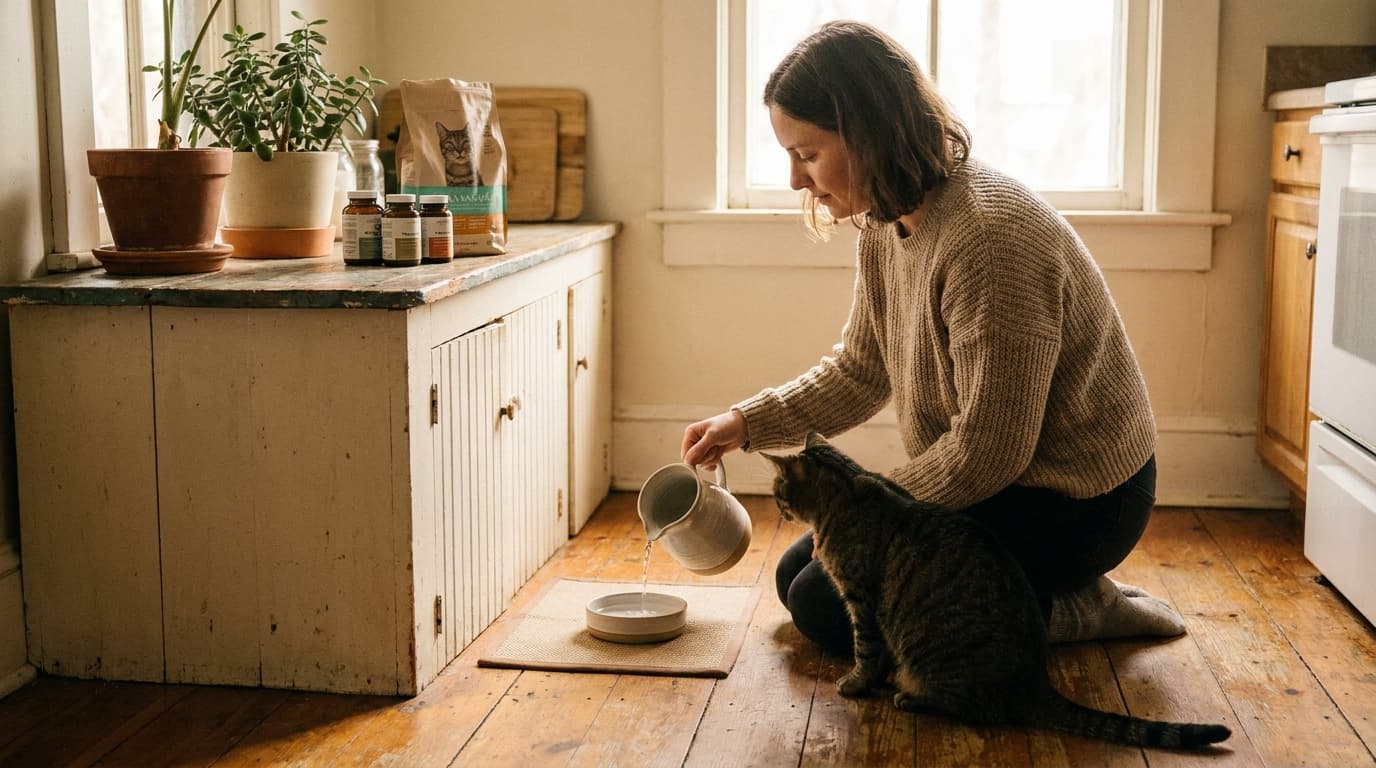
If your cat has a deep cut on their paw, your first priority is to stop the bleeding by applying steady, firm pressure with a clean cloth or gauze for at least five to ten minutes without peeking. Paw pads are full of blood vessels, meaning they bleed a lot even from minor nicks, so do not let the initial amount of blood send you into a panic. Once the bleeding slows down, you should gently clean the area with cool water or a very mild, pet-safe soap and apply a temporary bandage to keep the wound clean until you can get to a vet. Individual circumstances vary, and it is always worth checking with your vet for advice specific to your situation.
What most owners do not realize is that paw pads are unique anatomical structures designed for shock absorption and protection, but they have a notoriously poor blood supply for actual healing compared to other skin. This is why a simple cut on a leg might heal in days while a pad slice can take weeks or easily reopen. Because cats are constantly putting weight on these shocks, the wound edges are pulled apart every time they take a step. This mechanical stress, combined with the fact that paws are basically magnets for litter box bacteria, makes these injuries high-risk for deep-seated infections that can eventually affect the bone if not handled correctly.
Imagine you walk into the kitchen and see a trail of red polka dots across your white tile floor. You find your cat, Oliver, hiding under the table, frantically licking his front left paw after knocking over a glass vase. The scene looks like a horror movie because he has been tracking blood everywhere, and every time he shakes his foot, it splatters more. In this moment, you should not try to wash it under a running faucet immediately, as the water pressure can actually prevent a clot from forming. Instead, grab a clean kitchen towel, wrap the whole paw, and hold it firmly while you call your emergency clinic. This is a vital part of feline first aid, as we discuss in our guide on Urgent Care For Cats Why Your Cat Is Lethargic Or Breathing Heavy.
A very common mistake is reaching for the hydrogen peroxide or rubbing alcohol from your own first aid kit. While these are staples for humans, they are actually destructive to feline tissue and can delay healing by killing the very cells needed for repair. Another misconception is that a cat's tongue is antiseptic. In reality, a cat licking a deep wound is one of the fastest ways to introduce a soup of bacteria and cause a massive infection. If you cannot get to a vet for an hour, use a clean sock over the bandage to keep them from grooming the area. Understanding the sensitivity of these areas is part of why Why Your Cats Paws Need More Than Just A Cute High Five is such an important topic for owners to understand.
The pattern with paw injuries is that the visible damage is often just the beginning. Even if the bleeding stops, the depth of the cut matters because the pad is thick. If the cut goes through the entire leathery layer, it almost always requires professional care to prevent the pad from splitting open again later. While you wait for your appointment, keep your cat in a small, clean area like a bathroom to limit their movement and keep them off dirty surfaces. This prevents the wound from being contaminated by the dust and debris found in a typical household.
Key insights:
- Apply firm pressure with a clean cloth for 5 to 10 minutes to stop the bleeding.
- Avoid using hydrogen peroxide or alcohol as they damage healthy tissue and slow repair.
- Wrap the paw loosely with gauze or a clean sock to prevent licking and contamination.
- Check the wound for debris like glass but do not dig deep if something is embedded.
- Contact a veterinarian immediately because pad wounds often require professional cleaning or sutures.
Hydration Strategies to Protect Feline Kidney Function
To get a cat to drink more water, you have to work with their natural instincts by offering moving water and adding moisture directly to their meals. Cats are biologically designed to get most of their water from their prey, so they often have a very low drive to visit a standing water bowl. Helping them stay hydrated is one of the most important things you can do because Chronic Kidney Disease (CKD) affects up to 80% of cats over age 15. Since every cat is unique, it is always best to check with your vet to create a hydration plan specific to your pet's health.
The real secret to feline hydration is realizing that cats do not view a water bowl the same way we do. In the wild, still water is often a breeding ground for bacteria, while flowing water signals that it is safe and fresh. This is why your cat might ignore a clean bowl but try to drink from a leaky kitchen faucet. Most people also overlook the fact that bowl placement matters just as much as the water itself. If the bowl is tucked in a corner where the cat has to put their back to the room, they might feel too vulnerable to stay and drink. What this actually means is that you need to think like a decorator and a biologist at the same time to make hydration feel safe and rewarding for them.
Take a cat named Oliver who lives in a busy household. For years, his owner kept a single plastic bowl in the corner of the kitchen, right next to his loud food dispenser and a high-traffic doorway. Oliver rarely touched it and eventually started showing early signs of kidney decline. His owner decided to ditch the plastic and set up three ceramic fountains in quiet, low-traffic areas like the guest bedroom and a corner of the living room. Suddenly, Oliver was visiting his water stations multiple times a day. By adding a little warm water to his wet food to make a cat soup, his owner managed to double his daily fluid intake without Oliver even realizing he was being tricked into better health.
One thing most guides get wrong is the idea that a cat drinking a lot is always a good sign. The catch is that increased thirst is often one of the first visible red flags that the kidneys are struggling to concentrate urine. By the time you notice your cat spending way more time at the water bowl, they might have already lost a huge chunk of their kidney function. This is why being proactive in Stage 1 and 2 of CKD is so critical. You want to boost their moisture intake before their body starts overcompensating. For more tips on managing the golden years, take a look at this Cat Health Guide Signs Of Dental Disease Kidney Care And More to stay ahead of common senior issues.
The material of the bowl also plays a big role. Plastic bowls can develop tiny scratches that trap bacteria and create smells that cats hate. Switching to glass, stainless steel, or ceramic can make the water taste much better to a picky feline. Small adjustments like this are often the secret behind Why Some Cats Live To 20 And Which Breeds Are Best For Your Lifestyle because they reduce the daily strain on the kidneys. Keeping the water fresh and the containers clean ensures your cat always has a reason to take another sip.
Key insights:
- Invest in a ceramic or stainless steel water fountain to mimic the flowing water cats prefer in the wild.
- Mix a tablespoon of warm water or low-sodium broth into wet food to create a hydrating soup at every meal.
- Place multiple water sources in quiet areas of the house where your cat feels safe and unobserved.
- Wash water fountains and bowls at least once a week to prevent the buildup of slime and bacteria that ruins the taste.
- Avoid placing water bowls right next to food or litter boxes to respect your cat's natural instinct for clean water sources.
Frequently Asked Questions
Conclusion
Caring for a cat is a bit like being a detective. You have to piece together their diet, their hydration, and those subtle changes in behavior that signal something is off. When you look at the big picture, the best way to keep your kitty healthy is to be proactive rather than waiting for a crisis. Choosing the best cat food for urinary health issues and keeping a close eye on the early signs of kidney failure in older cats can literally add years to their lives. It is not just about one single habit. It is about creating an environment where they stay hydrated, eat the right minerals, and get the medical checkups they need before problems become obvious.
Beyond the chronic stuff, being a great cat owner means knowing how to handle the sudden accidents too. Whether you are figuring out what causes digestive problems in cats or reacting quickly because your cat ate string, having a plan saves lives. Even if it is just knowing how to bandage a deep cut on a paw, that readiness is part of the same care puzzle. We are moving toward a world where we catch health issues much earlier through things like IRIS staging and personalized nutrition. This means things that used to be scary are now just manageable parts of a long, happy life.
If you want to do one helpful thing right now, go check your cat's favorite lounging spot and make sure there is a fresh, clean water source nearby. Also, if your cat is getting older, call your vet to ask about a baseline blood panel to check those kidney numbers. It is a small step that gives you a huge amount of peace of mind. Your cat might not be able to tell you when they feel a little off, but by staying observant and prepared, you can be the advocate they need. A happy cat is a hydrated, well-fed, and very loved cat.
Send it to someone who should read it next.
About the author

James Miller
Certified Cat Behaviorist
Feline behavior consultant helping cat owners understand and strengthen their bond with their cats.
View all articles