What Your Cat Is Actually Saying With Those Stares (and How to Talk Back)
Have you ever woken up to find your cat sitting on your chest, staring directly into your soul? It feels a bit like a tiny, furry interrogation, leaving you wondering...

Dr. Emily Hart
Veterinarian, DVM
What Your Cat Is Actually Saying With Those Stares (and How to Talk Back)
Have you ever woken up to find your cat sitting on your chest, staring directly into your soul? It feels a bit like a tiny, furry interrogation, leaving you wondering if they want breakfast or if they're planning your demise. Understanding the true cat eye contact meaning is the first step to figuring out what is actually going on in that mysterious feline brain.
Learning these cat communication techniques changes everything about how you live with your pet. It isn't just about the eyes, though. From the twitch of a tail to the 'kitty kiss' of a slow blink, your cat is constantly sending signals. When you learn to speak their cat love language, you can finally bond with a shy cat or turn a cautious roommate into a loyal best friend.
This guide breaks down the science of the stare and shows you how to use feline trust signs to talk back. We will look at why you should always lose a staring contest, how to read tail wags, and the best ways to make a nervous cat feel safe. Here is how to move from confused owner to a person your cat truly trusts.
The Secret Language of Feline Eye Contact
Ever felt like your cat is trying to read your soul? One minute they’re looking at you with soft, sleepy eyes, and the next, they’re pinned on a moth with a gaze so intense it could burn a hole in the wall. Understanding this secret language is about more than just curiosity; it’s the key to knowing if your cat feels safe or if they’re currently in predator mode. Context is the secret sauce here. When a cat stares at a feather wand, their pupils often dilate and their focus becomes laser-sharp. They aren't being mean; they're just following their biological programming to hunt. But when that same unblinking stare is directed at a person they don’t know, it’s usually a sign of suspicion or a territorial warning.
In the wild, direct eye contact is a challenge. That’s why a cat will almost always look away from a stranger - it’s a way to say they aren't looking for a fight. This behavior stems from their ancestors who had to constantly balance being hunters and being hunted. Even though your cat lives indoors, those instincts are still very much alive. They require mental stimulation from observing the world, which is why having a clear view out a window is so helpful for their mental health. When they stare out at a bird, they are engaging that same predatory focus, but the context is purely observational. This matters because it helps them burn off mental energy without the stress of a real encounter.
You might wonder why your cat stares at you while you're just sitting on the couch. Often, they are looking for cues about what happens next. Cats thrive on predictability and routine. By keeping things consistent, you give them a sense of safety. Their gaze is a tool for gathering data. Are you about to get up and get the treats? Is it time for a lap nap? If you're a familiar face, that stare is usually a sign of affection or a request for attention. But if you're a guest in the house, that same look might be a way for the cat to gauge if you're a threat. They are essentially waiting for you to make the first move.
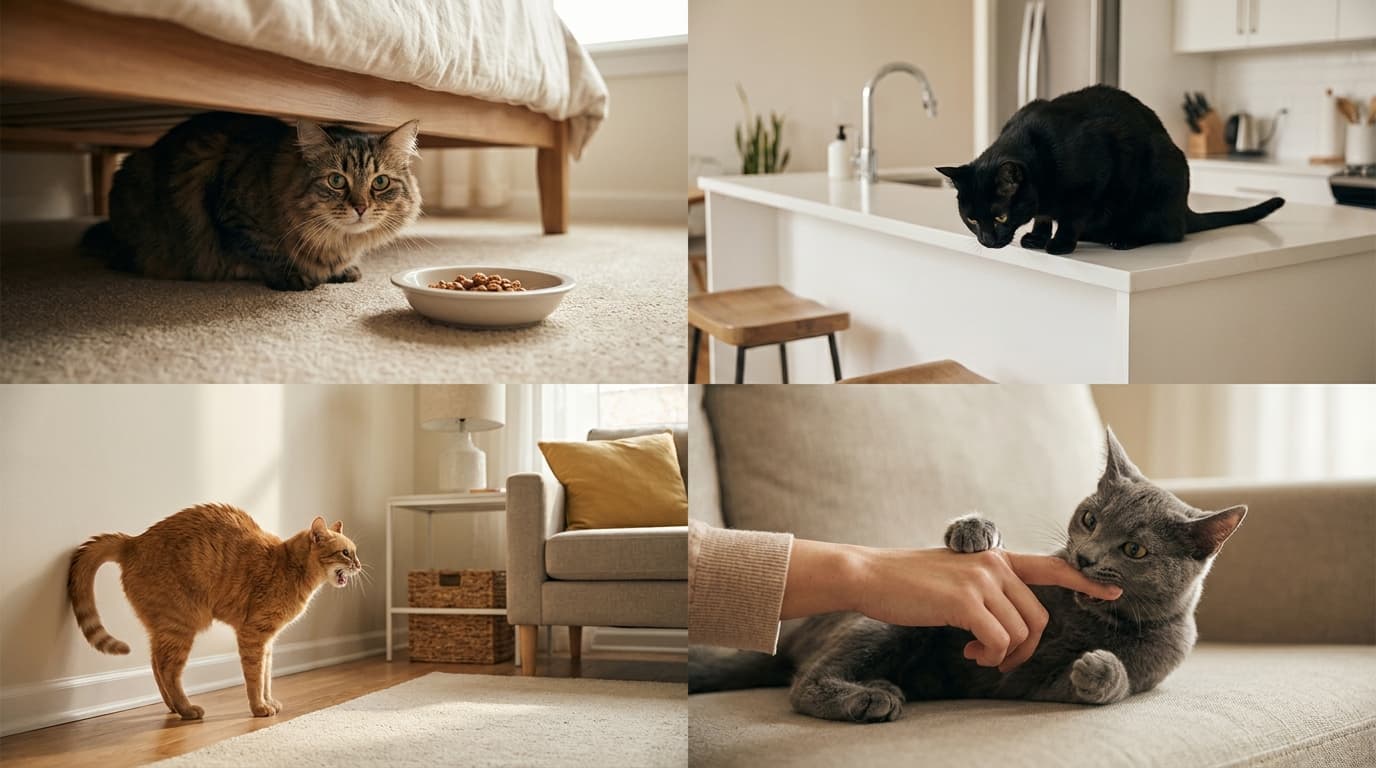
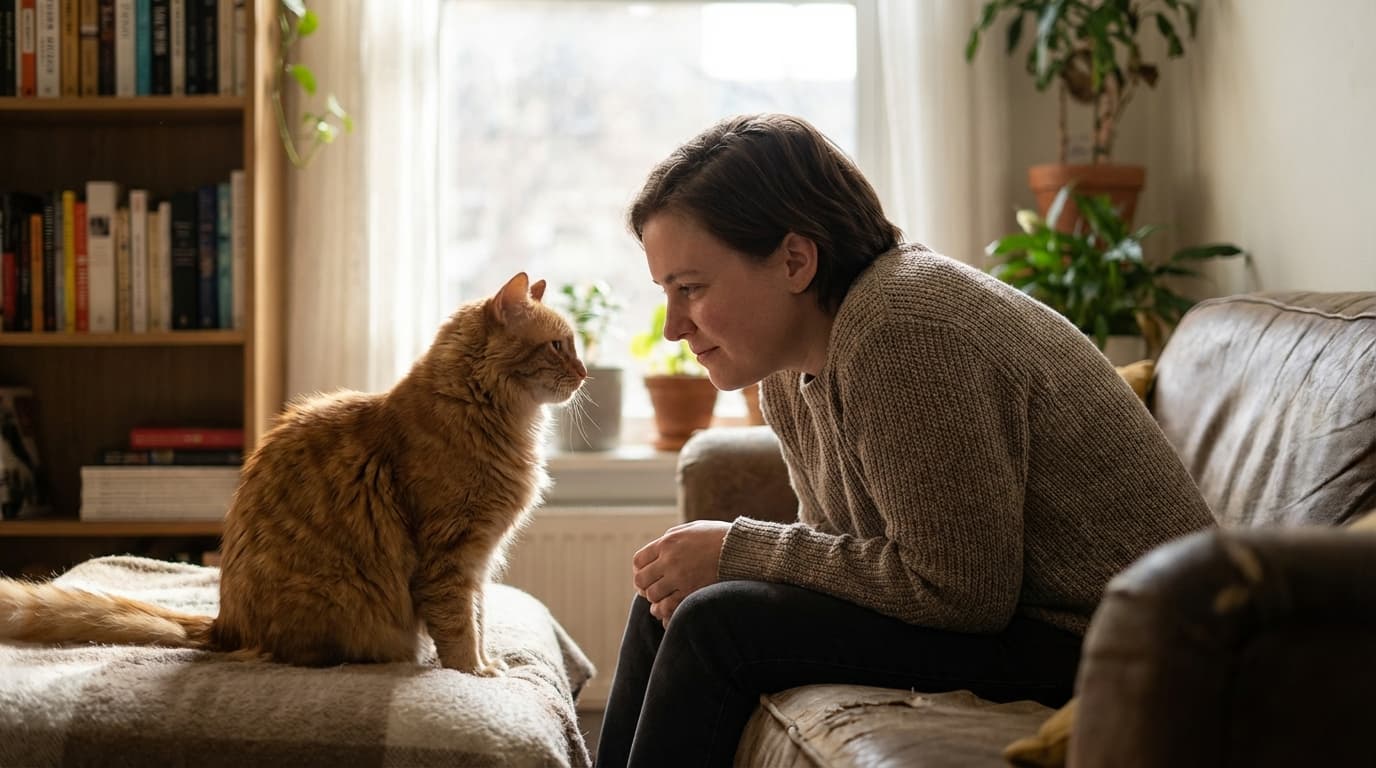
If you've ever tried to win a staring contest with your cat, you’ve probably noticed they don’t find it very funny. To a feline, a wide-eyed, unblinking look is a massive red flag. It feels like a threat or a prelude to an attack. This is especially true if their tail is held high and stiff, which can sometimes indicate a willingness to defend their territory. If your cat is staring you down and their body seems tense, the best thing you can do is actually lose the contest. It might feel counterintuitive to us, but in the cat world, backing down is a sign of peace and respect.
By breaking eye contact and looking away, you’re signaling that you aren't a predator and you aren't looking for trouble. It’s a simple move that immediately lowers the room's tension. If your cat won't stop staring at you while you're just trying to relax, don't stare back. Instead, try the look away technique. Yawn, blink, or slowly turn your head to the side. This tells them everything is fine and they can go back to napping. It’s about being purposely predictable. As cat behavior consultant Joey Lusvardi explains, providing this sense of safety by being consistent is the best way to build a real bond with your pet.
Then there’s the magic of the slow blink, often called kitty kisses. This is the gold standard of cat communication and a method cats use to communicate trust and relaxation. If you want to tell your cat you love them in a way they actually understand, this is how you do it. First, catch their eye with a relaxed expression. Slowly close your eyes halfway, hold it for a second, and then let them drift shut before opening them again very gradually. It’s a deliberate, calm motion that stands in stark contrast to the sharp, fast movements of a hunt. It signals that you are completely at ease.
This gesture is powerful because it shows total vulnerability. By closing your eyes, you’re telling the cat you trust them enough to stop watching for threats. When a cat blinks back at you, they’re returning that sentiment. It’s a sign of deep relaxation and a clear message that they feel secure in your presence. Recent guides, like the one reviewed by Dr. Veronica Higgs in early 2024, emphasize that communicating using cat language means you’re talking to them in a way they truly get. It’s a simple, biological hack to make even the shyest cat feel like they’ve finally found a friend they can trust. Think of it as the ultimate sign of feline respect.
Key insights:
- Direct, unblinking eye contact is perceived as a threat or a challenge in feline social structures.
- The 'slow blink' mimics a cat's natural sign of trust and can be used by humans to signal affection.
- A cat's stare must be interpreted through context - predatory focus on a toy is different from a territorial stare at a stranger.
- Predictability and routine are the primary drivers for a cat feeling safe enough to engage in relaxed eye contact.
Why You Should Always Lose a Staring Contest
Ever found yourself locked in a silent battle of wills with your cat? While it might seem like a fun game, to a feline, an unblinking stare is actually a confrontation. In the wild, direct eye contact is often a way to assert dominance or signal a threat. When you stare back without breaking your gaze, you might be accidentally telling your cat that you are looking for a fight rather than a cuddle.
What should you do when those big eyes are fixed on you? The best move is to lose the contest on purpose. Speaking cat language means communicating in a way they actually understand. By breaking eye contact, you signal that you aren't a challenger. Try the slow blink: gaze at them, slowly close your eyes halfway, and then gradually open them again. It is a method cats use to show they are relaxed, often called a kitty kiss.
This simple shift lowers tension immediately. Think of it as a peace treaty. It is a great way to bond with a shy cat who needs to know you are a friend. Behavior experts like Joey Lusvardi note that cats feel safest when their world is predictable. By choosing to look away, you are being a consistent, non-threatening presence. Next time they stare, just blink and turn your head. They will appreciate the gesture.
Key insights:
- Direct, unblinking eye contact is perceived as a territorial threat or a challenge in feline communication.
- The slow blink technique involves closing eyes halfway and opening them slowly to signal trust and non-aggression.
- Predictable behavior from humans helps cats feel safe and reduces environmental stress.
The Magic of the 'Slow Blink'
Ever caught your cat staring at you from across the room and wondered if they were plotting something? Sometimes, that intense gaze is actually an invitation to connect. When cats feel safe, they use a specific move called the slow blink to show they are not a threat. It is basically the feline version of a warm smile. Think of it as a way to use cat language to bridge the gap between you and your pet.
To give your cat a kitty kiss, you just need to follow a simple rhythm. First, look at them with soft eyes. Do not stare too hard, because that can feel like a challenge in the wild. Slowly close your eyes halfway, hold it for a second, and then let them open again. It is a way of saying you trust them enough to close your eyes in their presence. By doing this, you are making their environment feel predictable and safe, which helps them relax.
When your cat blinks back, it is a huge win for your bond. It means they feel relaxed and totally comfortable in your company. Since cats are naturally both hunters and prey, they are almost always on high alert. Choosing to close their eyes around you shows they have dropped their guard completely. It is not just a cute habit. It is one of the most honest signs of feline trust you can get.
Key insights:
- Slow blinking signals non-aggression and safety.
- Mimicking this behavior helps build a predictable environment for shy cats.
- A return blink is a conscious choice by a cat to show they feel secure.
Beyond the Eyes: Reading the Whole Cat
Ever caught yourself in a staring contest with your cat? While those slow blinks are a great way to show trust, focusing only on the face is like trying to understand a movie by only looking at the actors' eyebrows. To really get what your cat is saying, you have to look at the whole package. Their body language is a full-body broadcast, and the tail is often the loudest part of the signal. If you want to master cat communication techniques, you have to look past the eyes.
Take the High Tail rule, for instance. Generally, a tail held high and proud means your cat is feeling confident and is open to a little one-on-one time. But here is the thing: context is everything. If your cat is at the window staring down a neighborhood stray with that same high tail, they are not looking for a friend. They are signaling that they are ready to defend their territory. Behavioral cues are not absolute rules; they are clues that change based on what is happening around them.
Then there are the ears. If you see those ears start to rotate outward or flatten against the head, it is your cue to back off. This is their way of saying they have had enough. Cat behavior consultant Joey Lusvardi points out that cats thrive when their world is predictable. By learning these physical stop signs, you are making yourself a predictable, safe partner for them. You are showing that you respect their boundaries, which is the fastest way to bond with even the shyest cat.
When we zoom in on the tail specifically, it is practically a mood ring. A vertical tail with a little curve at the tip, often called the happy hook, is basically a feline hello. It is a clear invitation to come over and interact. But you have to watch out for the twitch. A gentle flick of the tip usually means they are curious about a bug or a bird outside. However, if the whole tail starts thumping or lashing, that curiosity has quickly turned into overstimulation or annoyance.
Spotting a confident cat from across the room is easy once you know what to look for. They move with a fluid, relaxed gait, their tail is up, and their ears are forward. They are not hiding or making themselves small. To keep them this happy, remember that indoor cats need a bit of the wild life. Simple things like window perches for bird watching or hunt and catch play sessions with wand toys release endorphins that keep that tail held high and that bond strong.
Key insights:
- A high tail signals confidence in a friendly home but can signal territorial aggression if a strange cat is nearby.
- Predictability is the biggest driver of feline trust; respecting ear and tail signals makes you a safer person in your cat's eyes.
- The 'happy hook' tail is a direct invitation for human interaction and a sign of a relaxed pet.
- Overstimulation is often broadcast through tail thumping or ear flattening before a cat ever resorts to hissing or biting.
Tail Talk: From Happy Hooks to Angry Puffs
Imagine your cat trotting toward you with their tail held high like a furry antenna. It looks like a simple greeting, right? Most of the time, a vertical tail is a clear invitation to come over and say hello. It shows you have a confident cat who feels totally at ease in their space. But context is everything because that same high tail can signal a territorial mood if there is a strange cat nearby.
Watch for the subtle movements at the very tip. A gentle twitch often means your cat is curious about a sound or a bird outside the window. However, if that twitch turns into a thrashing motion, it is time to back off. This is a classic sign of overstimulation. Knowing when to stop petting is just as important as knowing when to start. As behavior expert Joey Lusvardi points out, cats thrive when their world feels predictable. By reading these signs, you make their environment feel safe.
Spotting a confident cat from across the room is easy once you know what to look for. They move with a relaxed flow and keep that tail hooked at the top like a question mark. This happy hook is often a green light for affection. To keep that confidence high, make sure they have plenty of window access. Seeing the outside world provides the mental stimulation they need to stay sharp and happy indoors. It is all about learning their unique language so you can talk back without saying a single word.
Key insights:
- A vertical tail usually signals confidence but check the surroundings for potential stressors.
- Interpret tail twitches based on the situation to avoid overstimulating your pet.
- Predictable routines and environmental enrichment like window perches build long-term trust.
Winning Over a Shy or Nervous Cat
Ever feel like you are sharing your home with a furry ghost? Winning over a shy cat is not about grand gestures or constant petting. Actually, the best thing you can do is become the most boring person in the house. This might sound strange, but for a nervous cat, a predictable human is a safe human. You are playing the long game here. Patience is your most valuable tool because trust is not something you can force. It grows in the quiet moments when you are just hanging out in the same room without making any demands.
Creating a safe home starts with a rock-solid routine. When your cat knows exactly when the food bowl hits the floor, their anxiety starts to fade. Joey Lusvardi, a certified cat behavior consultant, explains that cats thrive when their world is predictable. This consistency provides a sense of safety that is hard to build any other way. It also means everyone in the house needs to be on the same page. If one person is quiet and another is loud or constantly chasing the cat for hugs, it sends mixed signals. Those contradictions cause big setbacks in your bonding journey.
You can also use 'cat language' to show you are a friend. Try the slow blink. This involves gazing at your cat, slowly closing your eyes halfway, and then gradually opening them. It is basically a way of saying 'I love you' in their native tongue. These 'kitty kisses' are expert-approved ways to communicate trust, as noted in guides reviewed by veterinarians like Veronica Higgs. Pair these quiet moments with ritual play sessions. Use wand toys that flutter like birds to mimic a hunt. When they finally catch the toy, give them a treat. This completes their biological 'kill' cycle and releases happy hormones that build their confidence.
Bringing the wild indoors is another huge step for a shy cat's mental health. Window perches are not just luxury furniture. They are essential tools for observation. Cats come from wild ancestors and need to watch the world go by to feel secure in their territory. It is also smart to use vertical space like cat trees or wall shelves. This gives a nervous feline a clear escape route and a high vantage point to watch the room. When a cat can look down on their surroundings, they feel much less like prey and much more like the boss of the living room.
Pay attention to the tail to see how you are doing. A tail lifted high in the air usually means you have a confident cat who is open to interacting with you. Just remember that context matters. A high tail could also mean they are feeling territorial if a strange cat is outside. Look for those slow blinks and relaxed ears. If you stay consistent and respect their space, your wallflower feline will eventually decide that you are worth the risk. Before you know it, that nervous stare will turn into a happy head bump.
Key insights:
- Predictability is the primary driver of feline trust.
- Vertical space provides a necessary escape route for nervous cats.
- Slow blinking signals non-aggression and builds a bond.
- Completing the 'hunt and catch' cycle with treats boosts confidence.
The Power of a Predictable Routine
Imagine living in a house where the furniture moves every night and dinner shows up at random hours. You’d be on edge, right? Cats feel the same way. For a nervous pet, predictability is the best way to show you care. Consistent mealtimes act as anchors, helping them relax because they know exactly what to expect. This sense of safety is a fundamental step in learning how to bond with a shy cat and build lasting trust.
Ritual play sessions are also vital for reducing anxiety. Use a wand toy to mimic a natural hunt and catch cycle - let them stalk, pounce, and finally kill a treat at the end. This process releases endorphins and satisfies their biological instincts. By making this a daily habit at the same time, your cat stops worrying about the when and starts looking forward to the who - which is you. It is a simple but powerful cat communication technique.
But here is the thing: a routine only works if everyone follows it. If you let the cat on the counter but your partner shooes them away, those mixed signals cause major setbacks. As expert Joey Lusvardi says, cats thrive when their world is predictable. When the whole family uses the same rules, your pet does not have to guess. This clarity turns a chaotic house into a sanctuary where your cat finally feels comfortable opening up.
Key insights:
- Consistent mealtimes lower cortisol levels by removing the stress of resource uncertainty.
- The hunt-catch-eat cycle provides a biological 'win' that boosts a shy cat's confidence.
- Household-wide consistency prevents the confusion that leads to behavioral regressions.
Bringing the 'Wild' Indoors for Mental Health
Ever wonder why your cat treats the window like a high-stakes cinema? It is because indoor cats still have wild instincts buzzing inside them. A window perch is not just a seat. It is a portal to the world they were born to watch. When they track birds or rustling leaves, they are satisfying a deep-seated need to observe territory from a safe distance. This matters because it keeps their minds active and sharp.
This visual access is essential for mental health. Since cats originate from the wild, vertical space also offers a vital escape route for shy cats. If a room feels too busy, climbing high lets them look down and feel in control. Expert Joey Lusvardi notes that cats thrive when their world is predictable. A dedicated high spot provides that sense of safety they crave, letting them relax without feeling cornered.
It is all about perspective. A cat on a high shelf feels untouchable. By mimicking a natural habitat with towers and window seats, you are helping them manage stress naturally. Next time you see that intense stare out the glass, know they are just connecting with their inner predator to stay happy. Providing these 'wild' outlets is one of the best ways to bond with a shy cat and build lasting trust.
Key insights:
- Window perches provide necessary visual stimulation that mimics a cat's natural hunting environment.
- Vertical territory acts as a safety valve for shy cats, giving them a predictable way to escape social pressure.
The 'Hunt and Catch' Play Method
Ever watched your cat crouch low, butt wiggling, eyes locked on a stray string? That is not just random fun; it is a deep biological drive. To really bond with a shy cat, you need to speak their language through the 'Hunt and Catch' method. This is about more than just waving a stick around. You are simulating a real-life hunting sequence that ends with a flood of happy endorphins in their brain. When you get this right, you stop being just a roommate and become a provider of the best kind of feline thrill.
Start with a wand toy that flutters like a bird or skitters like a bug. The trick is to move the toy away from them, hiding it behind furniture or under a rug. This mimics prey trying to escape and triggers their natural instincts. As your cat engages, watch for that tail lifted high in the air. While this can sometimes mean a cat is ready to defend territory, in the context of play, it usually shows a confident, comfortable cat who is loving the interaction. If they pause and give you a slow blink, they are sending you 'kitty kisses' to show they trust you even while they are in hunting mode.
But here is the critical step most people miss: you must let them 'kill' the toy and then give them a snack. If the hunt never ends, your cat stays in a state of high-alert frustration. Tossing them a treat at the end completes the biological cycle. They hunted, they caught, and now they are eating the 'prey.' This sequence releases chemicals that signal safety and satisfaction. It builds a bridge of trust because you are the one making this rewarding experience happen.
Predictability is the primary driver of feline safety. As behavior consultant Joey Lusvardi says, cats thrive when their world is consistent. By making these play sessions a regular part of your routine, your cat learns exactly what to expect from you. Pair this active play with a nice window perch so they can observe the outside world, and you satisfy their need for 'wild' simulation. This combination of mental stimulation and a predictable routine is the fastest way to turn a nervous cat into a confident companion.
Key insights:
- Completing the 'kill cycle' with a treat prevents play-induced frustration.
- A high tail during play signals a confident cat who is enjoying the bond.
- Predictable play routines create a sense of safety and trust in the home.
5 Signs Your Cat Finally Trusts You
Ever walk into a room and have your cat flop over to show you their fluffy stomach? It feels like an invitation for a belly rub, but for a cat, it is actually a significant compliment. In the wild, the belly is the most vulnerable spot. By exposing it, your cat is saying they feel completely safe around you. They are not always asking for a scratch. Sometimes they just want you to see that they trust you enough to let their guard down.
You might also notice them bumping their forehead against your shins or rubbing their cheeks on your clothes. This is called head bunting. They are essentially marking you as part of their family by sharing their scent. It is a way of saying you belong to them. If they follow this up by wrapping their tail around your leg, take it as a feline hug. A tail lifted high usually means a cat is confident, but the way they use it to hook onto you shows a deeper level of comfort.
Building this bond takes time because cats thrive when their world is predictable. Joey Lusvardi, a certified cat behavior consultant, explains that consistency provides a sense of safety. Think about the last time you sat on the sofa and your cat jumped up, not necessarily to sit on your lap, but just to be within reach. By choosing to nap in the same room, they are choosing your company over being alone. They know your routine and feel relaxed enough to let go of their survival instincts while you are nearby.
Watch their face during these quiet moments. A cat that trusts you will have soft, relaxed facial muscles rather than a tense or staring expression. This is often when you will see the famous slow blink, which many people call kitty kisses. Medical reviews of cat behavior show that this is a deliberate method cats use to communicate trust and relaxation. To do it back, just gaze at your cat, slowly close your eyes halfway, and then gradually open them again. It is a simple way to speak their language and show them that you are not a threat.
These signs represent a huge shift in how your cat sees you. Whether it is a tail wrap or a shared nap, these behaviors show that your cat has moved past survival mode and into a real relationship. It is all about context. A high tail is great, but a high tail combined with a soft gaze is the sign of a cat that finally feels at home with you.
Key insights:
- Trust in cats is built on predictability and a consistent daily routine.
- Physical gestures like head bunting and tail wrapping are ways cats claim humans as part of their social group.
- The slow blink is a scientifically recognized tool for communicating non-aggression and affection.
- Exposing the belly is a sign of extreme vulnerability and safety, not always a request for physical touch.
Frequently Asked Questions
Conclusion
So where does this leave us? It turns out that decoding cat eye contact meaning is about much more than just winning a staring contest. When you combine those slow blinks with an understanding of tail positions and play habits, you start to see the full picture of what your pet is trying to say. It is a shift from just living together to actually communicating in a language they finally understand.
The real secret to how to bond with a shy cat or even a confident one is simply being a predictable, observant friend. Once you recognize those subtle feline trust signs, like a soft facial expression or a tail wrapped around your leg, you know you have made it into their inner circle. It is a slow process, but every small breakthrough makes the relationship much deeper and more rewarding for both of you.
Your next move is easy: just watch and wait. Try out these cat communication techniques during your next quiet moment together and see how they respond. Learning this cat love language takes a little patience, but the first time they blink back at you, you will know it was all worth it. Happy chatting.
Send it to someone who should read it next.
About the author

Dr. Emily Hart
Veterinarian, DVM
Small animal veterinarian with 12 years of clinical experience specializing in feline health and preventive care.
View all articles