Why Black Cats Are the Best-Kept Secret in Animal Shelters
Have you ever walked through an animal shelter and noticed a pair of glowing amber eyes peering out from the back of a cage? These little voids are often the...

PurrScript Editorial Team
Editorial Team
Why Black Cats Are the Best-Kept Secret in Animal Shelters
Have you ever walked through an animal shelter and noticed a pair of glowing amber eyes peering out from the back of a cage? These little voids are often the most misunderstood residents in the building, but they might also be the most loyal friends you will ever meet.
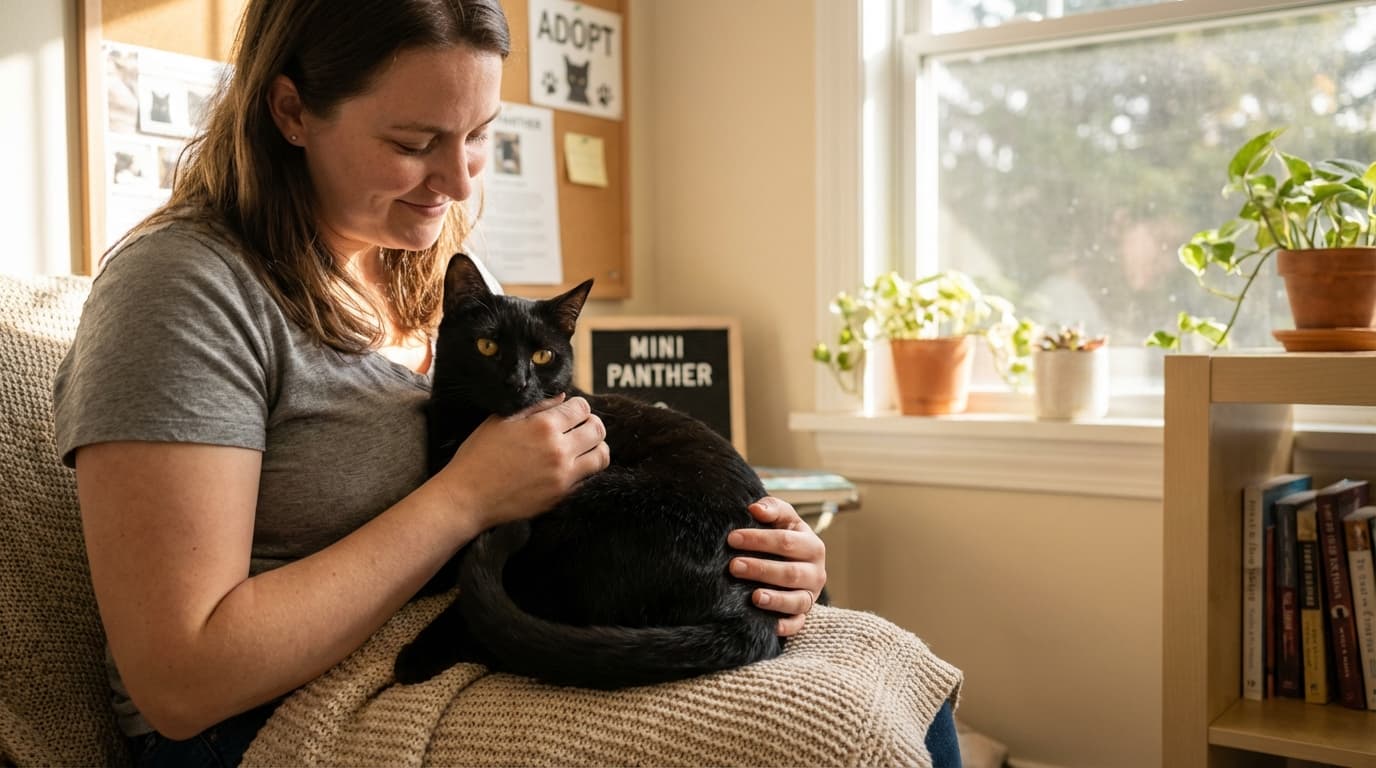
Even though black cat adoption is sometimes slowed down by old myths, these cats are famous among owners for their bold Mini Panther personality and velcro-like affection. We are looking past the silly black cat superstitions to show you what life is really like with a shadow-furred companion.
This guide covers everything from the royal history of black cats to practical black cat photography tips so your new friend does not look like a dark blob in your phone gallery. You will soon see why choosing a black cat is actually the luckiest choice a pet lover can make.
The 'Void' Looking Back: Why We Love the Dark Side
Imagine walking through a quiet animal shelter and seeing two bright, amber eyes peering from a dark corner. This is the classic 'void' look that black cat lovers adore. These sleek mini panthers have a way of looking right through you with incredible intensity. But here is the sad part. Despite their beauty, these cats often wait the longest for a forever home.
Why does this happen? Sometimes it is old myths, and other times they just do not stand out in a dim cage. In this article, we are going to celebrate everything that makes them special. We will talk about their history, debunk those silly superstitions, and even share photography tips to help their inner spark shine. It is time to see why these dark-coated friends are actually the best-kept secret in the rescue world.
Where Did the Spooky Reputation Come From?
Long ago, if you lived in Egypt, having a black cat wasn't just a choice - it was a status symbol. They weren't just pets; they were physical stand-ins for the goddess Bastet. Think of her as a guardian of the home, keeping away bad energy and literal pests. Because of this, harming a cat was a massive crime. It wasn't just a social mistake; it carried heavy legal and spiritual penalties. People actually went into mourning when a household cat passed away. It’s a far cry from the bad luck labels we see today. Back then, they were literal royalty, seen as a direct line to divine protection and good fortune. If a black cat crossed your path in Cairo three thousand years ago, you wouldn't worry about luck. You would probably feel blessed.
So, how did things take such a sharp turn? Fast forward to the Middle Ages in Europe, and the vibe shifted from divine protector to witch's sidekick. This is where the history of black cats gets a bit dark. During this time, fear and superstition were everywhere. Because black cats are stealthy and blend into the shadows, people started telling stories about them being shapeshifters or spies for witches. It sounds silly now, but it had real-world consequences. Cat populations were decimated because of these fears, which actually made things worse for humans when the plague arrived. That deep-seated fear stuck around for centuries, turning a beautiful coat color into a symbol of misfortune.
Even though we know better now, these old stories still linger in the back of our minds. You see it every October when the decorations go up. This long history is exactly why black cat adoption rates can sometimes struggle compared to their colorful friends. We are still untangling centuries of folklore from the reality of these animals. But here is the secret: once you look past the old myths, you realize they are just the same loving, goofy companions they were in ancient times. The spooky reputation is just a tall tale that has lasted a few centuries too long. What does this mean for you? It means you get to be the one to see past the myth and find a companion that others might overlook.
Key insights:
- In Ancient Egypt, harming a black cat was a serious crime because they were considered sacred.
- The Middle Ages turned black cats into symbols of fear through folklore about witches.
- Modern adoption struggles are often a direct result of these centuries-old superstitions.
- Black cats are actually the same playful pets they have always been, despite the myths.
Ancient Egypt: When Black Cats Were Literal Royalty
Imagine walking through a city where everyone stops to bow at your pet. That was the reality for black cats in ancient Egypt. Back then, these sleek animals weren't seen as bad luck. They were treated like living charms. The goddess Bastet, who protected the home and family, was often shown as a woman with the head of a black cat. Because of her, having a dark-furred feline in your house was basically like having a divine security guard.
But it wasn't just about respect. It was the law. Harming a cat, especially a black one, carried heavy penalties. In some cases, the punishment for killing a cat was death. People would go into deep mourning when their cats passed away, often shaving their eyebrows to show their grief. It makes you wonder how we went from royalty to worrying about superstitions. These mini panthers have always been symbols of protection and luck.
Key insights:
- Ancient Egyptians viewed black cats as earthly representatives of the goddess Bastet.
- Harming a cat was a serious crime in the past that could lead to the death penalty.
- The history of black cats is rooted in being lucky protectors rather than symbols of bad luck.
The Middle Ages and the 'Witch' Connection
Imagine going from being worshipped like a god in Egypt to being public enemy number one. That is exactly what happened to black cats during the Middle Ages. It all started when a few powerful people decided that these sleek animals were actually 'familiars' or spies for witches. Suddenly, having a black cat wasn't just a choice; it was a liability.
This superstition grew into a massive problem across Europe. Because people were scared, they started getting rid of cats in huge numbers. But here is the twist: by removing the cats, people accidentally invited a much bigger threat into their homes. With fewer cats around to hunt, the rat population exploded, which helped spread the bubonic plague.
It is a classic case of a misunderstanding leading to a historical disaster. We are still dealing with the leftover 'bad luck' vibes today, even though the history shows that the cats were actually the ones keeping us safe all along. What does this mean for us now? It means we have a lot of lost time to make up for when it comes to loving these mini panthers.
Key insights:
- The 'witch' connection was a PR disaster that turned a helpful hunter into a symbol of fear.
- Mass cat removals in Europe likely contributed to the severity of the Black Death by allowing rats to thrive.
- Modern superstitions are mostly echoes of these centuries-old misunderstandings.
The Mini Panther Personality: What It's Really Like
Ever wonder why people call black cats mini panthers? It isn't just because of their sleek fur. It is about the way they carry themselves. These cats often move with a confidence that feels much bigger than their actual size. While some people still worry about old bad luck stories, anyone who lives with a black cat knows the truth. They are often the most outgoing and bold members of the family.
If you bring one home, get ready for a shadow. Many owners call them velcro cats because they simply refuse to be left alone. Whether you are folding laundry or trying to work on a laptop, your black cat will likely be right there under your chin. They don't just want to be in the same room as you. They want to be part of whatever you are doing. This social energy makes them incredible companions for people who want a pet that actually interacts.
There is a common idea that a cat’s coat color tells you how they will behave. Some think orange cats are chaotic or calicos are feisty. But the reality is that personality comes from a mix of genetics and how they were raised as kittens. Even so, many shelter workers notice that black cats tend to be more resilient and adaptable. They handle the stress of a busy home with a calm and cool attitude that matches their sleek look.
You might also notice that these cats are surprisingly chatty. They have a lot to say, especially when it is time to play. That mini panther nickname really comes to life when they start hunting a feather wand or a stray hair tie. Their hunting instinct is sharp, and they love to show off their athletic side. It is almost like they are trying to prove they really are related to the big cats in the wild.
Living with a black cat usually means having a very vocal partner in your daily routine. They will chirp, meow, and purr to tell you exactly what they need. Owners often find themselves talking back to their cats as if they are having a real conversation. It is a unique bond that feels very different from owning a more independent or shy pet. If you want a cat with a big personality and a lot of heart, these dark-furred friends are hard to beat.
Key insights:
- Black cats are known for a bold and confident personality that earns them the mini panther nickname.
- The velcro cat label comes from their tendency to follow owners from room to room and stay closely involved in daily tasks.
- Scientific evidence suggests coat color does not dictate behavior, yet many owners report black cats are exceptionally social and vocal.
- Their high play drive and vocal nature make them ideal for owners who want an interactive and engaging pet.
Why They Are So Vocal and Playful
Ever wonder why your black cat acts like a tiny jungle predator at three in the morning? It is because they really are Mini Panthers in disguise. That hunting instinct is strong, turning a simple feather wand into a life and death chase across your rug. They are often more vocal because they want you to notice their skills. They do not just play. They perform for their favorite humans.
People who adopt black cats usually share a few traits too. We tend to look past silly superstitions and see the personality underneath the dark fur. You probably appreciate a cat that has a bit of an edge but also a huge heart. It takes a certain kind of person to love a pet that is basically a shadow with eyes. The reward is a chatty, loyal companion who keeps life interesting.
Key insights:
- The Mini Panther persona comes from a high-energy hunting drive.
- Black cat owners often value personality over traditional looks or superstitions.
How to Take Photos of a Black Cat Without Losing the Face
Ever tried to photograph your mini panther only to end up with a shadow that has ears? It’s a common struggle for every black cat owner. Most cameras look at a dark coat and get confused, often overexposing the background while leaving your cat looking like a fuzzy void. This 'black blob' problem happens because the lens can't find enough detail to focus on. To fix this, stop looking at the fur and start looking for the features. If you can catch the light in those bright gold or green eyes, you give the photo a soul and a clear focal point that proves there is a real cat in there.
Timing is everything when you are dealing with dark fur. High-noon sun is usually your worst enemy because it creates harsh glares and deep shadows that hide your cat's shape. Instead, look for soft, indirect sunlight near a north-facing window or during the 'golden hour' just before sunset. This gentle light wraps around their silhouette, revealing the subtle textures and waves of their coat without washing them out. It is about finding a balance where the light is bright enough to show detail but soft enough to avoid those annoying white 'hot spots' on the fur.
Also, think about what is behind your cat. A black cat on a dark navy sofa is basically invisible to a lens. To make that fur really pop, you need high contrast. Try tossing a bright yellow blanket on the chair or lure them toward a light-colored hardwood floor. When there is a clear difference between the backdrop and the cat, the camera can finally 'see' the edges of your pet. Using colorful props or bright environments turns that mysterious silhouette back into a crisp, clear portrait of your favorite companion.
The secret is simply helping the camera distinguish your cat from the rest of the room. By focusing on the eyes and choosing the right background, you stop fighting the shadows and start using them to your advantage. It takes a little extra patience, but once you capture that perfect shot where every whisker is visible, you will see why black cats are actually some of the most photogenic pets around.
Key insights:
- Focus on the eyes to provide a clear focal point and avoid the 'black blob' effect.
- Use indirect sunlight to reveal coat texture without creating harsh glares.
- Place your cat against light-colored or vibrant backgrounds to create necessary contrast.
- Avoid mid-day sun which flattens the appearance of dark fur.
The Secret of Indirect Sunlight
Have you ever tried to snap a photo of your black cat only to end up with a dark, blurry smudge? It happens to the best of us. Most people think more light is better, but mid-day sun is actually your worst enemy. Direct sunlight is too harsh. It creates deep shadows and bright glares that hide your cat's features instead of highlighting them.
To really capture that mini panther personality, you need the golden hour. This is that sweet spot right after sunrise or just before sunset when the light is soft and warm. If you are inside, move them near a window with a thin curtain to filter the rays. This indirect light reveals the subtle textures and mahogany tones in their fur. It makes them look as lucky and majestic as they truly are.
Key insights:
- Avoid direct overhead sun to prevent your cat from looking like a featureless silhouette.
- Soft, filtered light helps show off the beautiful details in a black cat's coat.
Contrast Is Your Best Friend
Ever tried taking a photo of your black cat only to realize they look like a mysterious, shadowy blob? It happens to the best of us. The secret to a great shot is all about contrast. If you put a dark cat on a dark sofa, they basically disappear. Instead, look for backdrops that make that sleek fur really pop.
Think about tossing a bright yellow or teal blanket on the couch before they settle in for a nap. Light-colored hardwood or white tile floors work wonders too. These bright surfaces reflect light back onto their coat, showing off subtle highlights and shiny textures. It is the simplest way to turn a void into a great photo. What is the brightest spot in your house?
Key insights:
- High contrast prevents your cat from looking like a featureless silhouette in photos.
- Light-colored surfaces naturally reflect light back onto dark fur to reveal texture and detail.
The Adoption Numbers: Is 'Black Cat Syndrome' Real?
Have you ever heard that black cats are the last ones picked at a shelter? It is a common belief that Black Cat Syndrome keeps these dark-furred friends behind bars longer than their colorful counterparts. But when we look at the actual numbers, the story gets a bit more complicated. Is it really about bad luck or just a simple numbers game? You might be surprised to find that the data does not always back up the spooky myths we have heard for years.
Here is the thing: black is one of the most common coat colors in the cat world. Because there are simply more black cats out there, they naturally make up a bigger chunk of the shelter population. If a shelter has ten black cats and two calicos, and they adopt out five black cats and one calico, it looks like the black ones are stuck. In reality, their adoption rates are often quite high, but the sheer volume makes it feel like they are being overlooked by visitors.
There is also a very modern hurdle to consider: the blob factor. Think about the last time you scrolled through a rescue website looking for a pet. A bright orange tabby or a patterned tortoiseshell pops on screen, but a black cat often looks like a dark shadow without eyes in a dim cage. Since most people start their search online, a bad photo can make a sweet Mini Panther invisible to a potential family. It is hard to fall in love with a silhouette when you are looking for a best friend.
So, does the syndrome exist? Maybe, but it is likely less about superstition and more about simple lighting. When shelters use better photography tips, like using natural light or colorful backgrounds, those adoption numbers jump. It turns out that once you can actually see their faces, these sleek beauties are just as hard to resist as any other kitten. It is not that people do not want them, it is just that we need to see that sparkle in their eyes first.
Key insights:
- Black cats often have high adoption numbers but appear overrepresented because they are genetically common.
- Poor lighting in shelter photos can make black cats look like shadows, making them harder to market online.
- Modern data suggests that personality and visibility matter much more than old superstitions.
Why a Black Cat Is Actually the Luckiest Choice You'll Make
Have you ever wondered why black cats get such a bad rap? While some people still cross the street to avoid them, they are missing out on one of the best companions a person can have. Choosing a mini panther is not just about debunking old myths. It is about bringing home a cat that is often the most loyal and resilient friend you will ever find. Think of it as finding a hidden gem that everyone else was too distracted to notice.
In many parts of the world, these sleek felines are seen as total magnets for good fortune. In Japan, for example, owning a black cat is thought to attract suitors and bring wealth. In the UK, they are often considered lucky wedding gifts that ensure a happy marriage. But the luck goes deeper than folklore. Some researchers believe the same genetic mutations that create that beautiful black fur might also make them more resistant to certain diseases. Their bodies are built to be tough and healthy, which is a huge win for you as an owner.
There is also the pure joy of adopting the underdog. Because of lingering superstitions and the fact that they can be harder to photograph, black cats often wait much longer in shelters than their tabby or calico friends. When you pick the one everyone else overlooked, the bond feels different. You are giving a chance to a cat that really needs it, and in return, you get a stunning, healthy pet that stands out in a crowd. It turns out the luckiest part of the deal is actually yours.
Key insights:
- In Japan and the UK, black cats are symbols of wealth and romantic luck.
- The genes responsible for black fur may provide increased resistance to certain illnesses.
- Adopting a black cat helps solve the issue where they stay in shelters longer than others.
Summary: Bringing Home Your Own Shadow
What happens when you bring home a mini panther? You aren't just getting a pet. You are gaining a loyal shadow that follows you everywhere. These cats weave themselves into your life in a special way. Despite the myths, anyone who lives with a void knows they are pure luck.
When you walk through the shelter, don't let the dark fur blend into the shadows. It is easy to overlook them for flashier patterns, but stop for a second. Look for the cat leaning against the bars or chirping for a head scratch. That spark is what really matters.
A coat color tells you nothing about a cat's heart. Their personality is what makes a house a home. So, go find your own shadow. You might find that the best-kept secret in the shelter was waiting for you all along.
Frequently Asked Questions
It is a bit of a mix. While some people believe they stay in shelters longer, it is often just a numbers game. Because the gene for black fur is so common, there are usually more black cats available for adoption than any other color. This can make it look like they are being ignored when they are actually just waiting their turn in a larger group.
Also, black cats are sometimes harder to photograph well. If a shelter photo is just a dark silhouette, it is harder for a potential owner to see their personality. But once you get them in the right light, their shiny coats and bright eyes are actually a huge selling point for a lot of adopters.
This whole idea mostly stems from European folklore during the Middle Ages. People back then started associating black cats with witches and bad omens. They believed that if a black cat crossed your path, it was a sign of bad luck or even a disguised spirit. It is a spooky story that has been kept alive by Halloween movies and old tall tales.
But it is interesting to note that this is not the case everywhere. In many cultures, they are actually seen as a lucky charm. In Japan, for example, they are thought to bring good luck and ward off evil. So, while the bad luck myth is famous, it is definitely not a universal truth.
You might hear people call them Mini Panthers because of their sleek look, but there isn't actually a scientific link between coat color and how a cat acts. That said, many black cat owners will tell you their pets are incredibly social, outgoing, and even a bit more talkative than other cats.
Here's the thing: while some studies suggest people perceive black cats as more friendly, it really comes down to the individual kitty. When you're looking to adopt, focus on how they interact with you rather than just the color of their fur. You'll find that a black cat's personality is as unique as any other, often full of charm and a little bit of mystery.
The trick is to stop relying on your camera's auto settings and find the right light. Since black fur absorbs light, a dark room will just turn your cat into a blurry shadow. Instead, try to snap your photos near a window with soft, indirect sunlight. This helps show off the texture of their coat and those beautiful highlights.
Also, always aim for the eyes. If your camera or phone focuses on their bright eyes, the rest of the face will look much sharper. To make them really stand out, put them against a bright or colorful background like a light gray couch or a vibrant rug. It makes their silhouette pop and keeps them from disappearing into the furniture.
Conclusion
So where does this leave us with the 'voids' waiting in shelters? It shows that the spooky stories and old superstitions are finally losing their grip, replaced by the fun reality of the Mini Panther personality. When you look past the myths and the tricky photography, you find a cat that is often the most loyal and playful companion in the room.
Choosing a black cat is not just about ignoring history or getting the lighting right for a picture. It is about realizing these cats have a special charm that people often miss at first glance. Whether they are bringing you good luck or just some extra 'velcro' snuggles, their dark coats are just a beautiful shell for some of the biggest personalities you will ever meet.
If you are thinking about black cat adoption, try visiting a shelter and looking for the ones that usually wait the longest. You might find that your new best friend has been hiding in the shadows all along. Life is just better with a tiny panther in the house.
Send it to someone who should read it next.

PurrScript Editorial Team
Editorial Team
PurrScript's in-house editorial team. We research, write, and review every guide using established veterinary and behavioral resources, and update articles as best practices evolve.
View all articles