Why Your Cat Craves High Places: The Secret Logic of Vertical Territory
Ever walked into your kitchen only to find your cat staring down from the fridge like a tiny furry gargoyle? It is a common sight but there is a deep...

James Miller
Certified Cat Behaviorist
Why Your Cat Craves High Places: The Secret Logic of Vertical Territory
Ever walked into your kitchen only to find your cat staring down from the fridge like a tiny furry gargoyle? It is a common sight but there is a deep reason why your cat chooses that high spot over their bed. This behavior isn't just a quirk. It is rooted in their wild history and provides actual cat tree benefits that keep your pet happy.
Understanding vertical territory for cats is the secret to solving behavioral issues like household stress or multi-pet drama. High perches allow your cat to feel like a protector because it gives them a 360-degree view of the room. By adding height, you are providing the security and safety in high perches that cats need to stay calm.
We will look at how height leads to peace of mind and why stress reduction for cats starts with a good climbing spot. You will also learn how to pick the right tree for your space and where to put it for the best results.
From Savannah to Sofa: The Evolution of the High Perch
Ever wonder why your cat treats the top of the refrigerator like a five-star penthouse? It isn't just because they enjoy looking down on us - though they probably do. This behavior actually goes back thousands of years to their ancestor, the African wildcat. In the vast savannah, staying low to the ground was a recipe for disaster. For these small cats, surviving meant finding a spot where they could see everything without being seen themselves. Today, your living room is their savannah, and that tall bookshelf is their lookout point.
This isn't a personality quirk or a choice your cat makes on a whim. It is a hardwired survival strategy. Dr. John Bradshaw, an expert on feline behavior, points out that cats are naturally ambush predators. To them, a high perch is a strategic vantage point. From up there, they can scan for prey or spot potential threats long before they arrive. It’s about having the upper hand in their environment. Even if the only thing they are hunting is a stray laser pointer dot, the instinct to stay elevated remains part of their DNA.
Here is the interesting part: cats occupy a unique middle ground in nature because they are both predators and prey. This dual nature is why height equals safety in their minds. Think of a high perch as a 360-degree security camera system. When a cat is elevated, they feel much less vulnerable. Dr. Mikel Delgado explains that being up high significantly reduces the startle factor. If a loud vacuum cleaner starts up or a toddler comes charging into the room, a cat on a perch can watch the chaos from a safe distance rather than panicking.
The science backs this up, too. A 2017 study found that cats living with other pets often choose these high spots specifically to avoid unwanted interactions and keep their stress levels down. Even in stressful environments like animal shelters, research from 2020 showed that simply giving cats vertical space made them significantly calmer. It turns out that a cat tree isn't just furniture; it’s a mental health tool that lets your cat time-share the living room without feeling crowded or defensive.
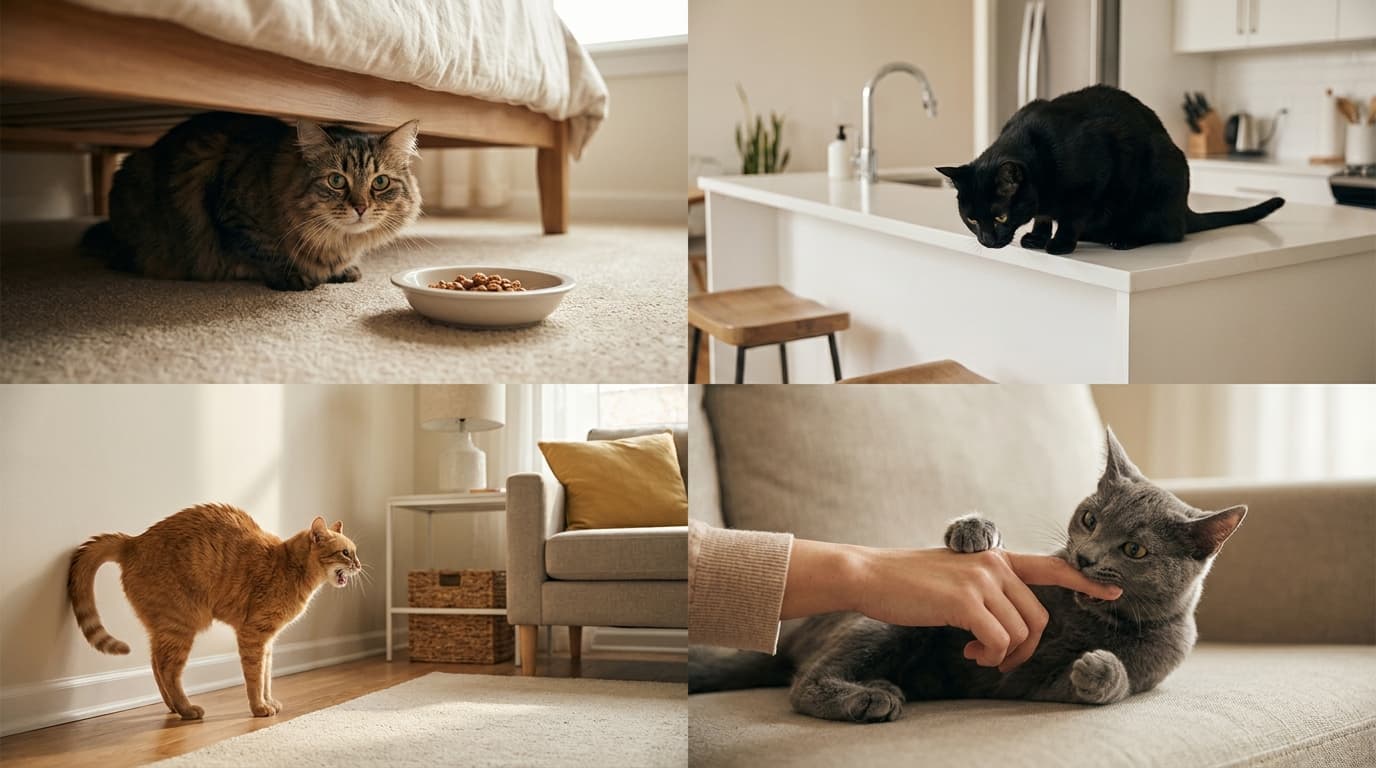
So, the next time you see your cat balancing on a narrow ledge, remember they are just channeling their inner wildcat. By providing these high spots, you are giving them more than just a place to sleep. You are giving them a sense of control over their world. What does this mean for you? A cat that feels safe is a cat that is more relaxed, more affectionate, and much less likely to hide under the bed when guests arrive.
Key insights:
- Vertical territory effectively increases your home's square footage from a cat's perspective.
- Height is a primary tool for conflict resolution in multi-pet households.
- Providing elevated spots is a proven way to reduce feline anxiety and stress-related behaviors.
- The instinct to climb is an evolutionary leftover from the African wildcat's survival strategy.
The Dual Nature of Cats: Both Predator and Prey
Ever wonder why your cat acts like a tiny gargoyle on top of the fridge? It is because they are descended from African wildcats who had to be both smart hunters and careful hiders. For a cat, being up high is like having a 360-degree security camera. From a tall perch, they can spot a threat, like a loud vacuum or a zooming toddler, long before it gets close. This view reduces that sudden startle factor that often sends them bolting under the bed in a panic.
Dr. Mikel Delgado explains that for cats, height equals safety. It is a psychological shield. In busy homes, vertical space is a total game-changer for their mental health. A 2017 study found that cats in multi-pet houses choose these high spots specifically to avoid unwanted run-ins. It is their natural way of staying out of the drama and keeping their stress levels low.
Think of it this way: a cat tree is not just furniture, it is a strategic lookout post. By giving them a place to climb, you are letting them satisfy a deep-rooted need to see everything without being noticed. It turns a chaotic living room into a manageable territory where they feel secure and in control of their environment.
Key insights:
- Height provides a 360-degree view that helps cats spot potential threats like dogs or vacuums early.
- Vertical territory is a proven stress-reduction tool for cats living in multi-pet households.
- Psychologically, cats equate being up high with safety and territorial ownership.
Why High Ground Equals Peace of Mind
Have you ever noticed how your cat treats the top of the fridge like a VIP lounge? It isn’t just about being nosy. This behavior traces back to their ancestors, the African wildcats, who survived by staying out of reach while keeping an eye on everything below. For a modern cat, height is a shortcut to confidence. Think about it: when you are high up, nothing can sneak up on you. A 2020 study even showed that giving cats vertical space in shelters significantly dropped their stress levels. It turns out that a simple perch can be the difference between a frazzled pet and a calm one.
Adding a cat tree is basically like giving your home a secret second floor. If you live in a small apartment, you do not need a remodel to make your cat happier. By using vertical space, you are effectively increasing their usable square footage. They can move away from a loud vacuum or a busy hallway without ever leaving the room. It is a smart way to let them time-share the living room while still feeling safe. As Dr. Mikel Delgado explains, being up high reduces the chance of being surprised by a dog or a sudden noise, making that vertical territory feel like a security blanket.
Then there is the social side of things. Dr. Carlo Siracusa, a behaviorist at the University of Pennsylvania, points out that a high perch is a major power move. He says a cat up high is essentially saying, 'I own this room.' In a house with multiple pets, this visual hierarchy is vital. It is a peaceful way for a confident cat to communicate their status without starting a fight. Instead of a physical scuffle, they just take the top bunk. This clear statement helps keep the peace, letting every pet know exactly where they stand in the room's social ladder.
Key insights:
- Vertical space acts as a stress management tool by allowing cats to observe their environment without feeling vulnerable.
- A high perch serves as a non-verbal communication tool to establish territorial status in multi-pet households.
- Increasing vertical territory effectively expands a home's usable square footage for a cat without physical renovations.
The 'I Own This Room' Statement
Ever wonder why your cat looks down from the top of the fridge with such satisfaction? It isn't just a quirk. Dr. Carlo Siracusa explains that a cat on a high perch is basically telling everyone, "I own this room." This vertical territory acts as a clear status symbol. When a cat sits above the rest of the household, they feel a surge of territorial confidence. It is their way of claiming the space without needing to start a fight.
This is a big deal in homes with multiple pets. Research from 2017 shows that cats often pick high spots to avoid stressful interactions. By staying up high, they can watch the dog or other cats from a safe distance. It is a tactical lookout point that keeps them feeling secure. Providing that height lets your cat feel like the boss of their own domain while keeping the peace.
Key insights:
- High perches serve as a visual signal of status and confidence to other pets.
- Elevated spaces help cats avoid unwanted interactions and reduce household stress.
Solving Roommate Drama in Multi-Cat Homes
Ever walked into a room and felt the tension between your cats? It usually happens in those tight spots like doorways or narrow halls. When one cat blocks the path, the other feels trapped, and that is when the fur starts flying. But there is a clever way to fix this without knocking down walls. By adding vertical territory, you are basically building a bypass. It lets a cat move through the room at a different level, staying safe and out of reach from their roommate on the floor. This simple change turns a high-traffic bottleneck into a peaceful multi-lane highway.
This is not just a hunch from cat owners. A 2017 study in Applied Animal Behaviour Science looked into this exact thing. Researchers found that cats in homes with other pets actually choose high spots specifically to avoid unwanted run-ins. It is a smart survival move inherited from their wild ancestors. Being up high lowers their stress because they can see everything coming without being forced into a face-to-face confrontation. What does this mean for you? It means fewer hissing matches and a much calmer living room.
Then there is the time-share aspect of cat furniture. Think of a cat tree as more than just a ladder. It is a communication hub. When a cat scratches the sisal on a tree, they are not just sharpening claws. They are using scent glands in their paws to leave a chemical post-it note for the other cats. This tells everyone else who was there and when. It allows them to use the same favorite spots at different times of the day without ever having to meet. It is the feline version of checking a shared calendar to avoid a meeting you do not want to attend.
Using cat trees to create distinct zones helps your pets coexist without constant contact. Expert behaviorists note that a cat on a high perch is basically claiming ownership of the room. In a multi-cat house, this territorial confidence is a good thing. It gives the top cat a place to feel secure and the more timid cat a way to move around the house without fear. Instead of fighting over the rug, they each get their own level. This makes the whole home feel much bigger and a lot more peaceful for everyone involved.
Key insights:
- Vertical space effectively increases the usable square footage of your home without changing the floor plan.
- Scratching acts as a chemical communication tool that lets cats share space without direct conflict.
- Elevated paths act as a bypass to prevent fights in narrow areas like hallways and doorways.
The 'Time-Share' Strategy: How Scratching Prevents Fights
Have you ever noticed your cats swapping spots on the cat tree like they’re working shifts? It’s not a coincidence; it’s a brilliant survival strategy called time-sharing. By scratching, your cats leave behind chemical messages from scent glands in their paws. This tells the other cats exactly who was there and when, allowing them to use the same prime real estate without ever having to cross paths or start a fight.
Think of a cat tree as a way to expand your home’s square footage without knocking down any walls. A 2017 study found that cats in multi-pet households specifically choose these elevated zones to avoid unwanted interactions. It creates a sense of safety and status. As Dr. Carlo Siracusa puts it, a cat on a high perch is essentially saying, 'I own this room.' This vertical territory lets them coexist peacefully by keeping their zones separate and their stress levels low.
Key insights:
- Scratching acts as a chemical post-it note, letting cats claim space at different times of the day.
- Adding vertical territory effectively increases your living space from a cat's perspective, reducing territorial friction.
More Than a Nap Spot: The Physical Perks of Climbing
Think about your cat’s daily routine for a second. We often see them curled up on a high perch and assume it is just a cozy bed, but that vertical tower is actually a high-performance gym in disguise. While floor-level toys are great for a quick pounce, they do not offer the same range of motion that climbing does. When a cat scales a tree, they are engaging muscle groups and joints that rarely get a workout during a standard living room sprint.
It is not just about the climb; it is about the reach. Have you ever noticed your cat digging their claws in and leaning back for a massive stretch? This full-body stretch is vital for spinal health and keeping their back flexible. Since domestic cats are direct descendants of the African wildcat, their bodies are built for this kind of strategic movement. For an indoor feline, a sturdy tree provides a safe, low-impact way to keep their core strong and their limbs limber without the risks of the great outdoors.
Beyond the physical workout, these elevated spots serve as a clever tool for household peace. Recent findings show that in homes with multiple pets, having these high-up options significantly lowers stress levels. It even allows cats to time-share the room, using scent glands in their paws to mark territory on the scratching posts. This lets them communicate and claim space without needing a direct confrontation. So, that cat tree is much more than a nap spot - it is a health hub that keeps your cat feeling like the agile hunter they were born to be.
Key insights:
- Climbing engages deep muscle groups that floor play often misses.
- Vertical stretching is a natural way for cats to maintain spinal alignment.
- High perches act as a low-impact gym specifically designed for indoor lifestyles.
Picking the Perfect Tree (Without Ruining Your Living Room)
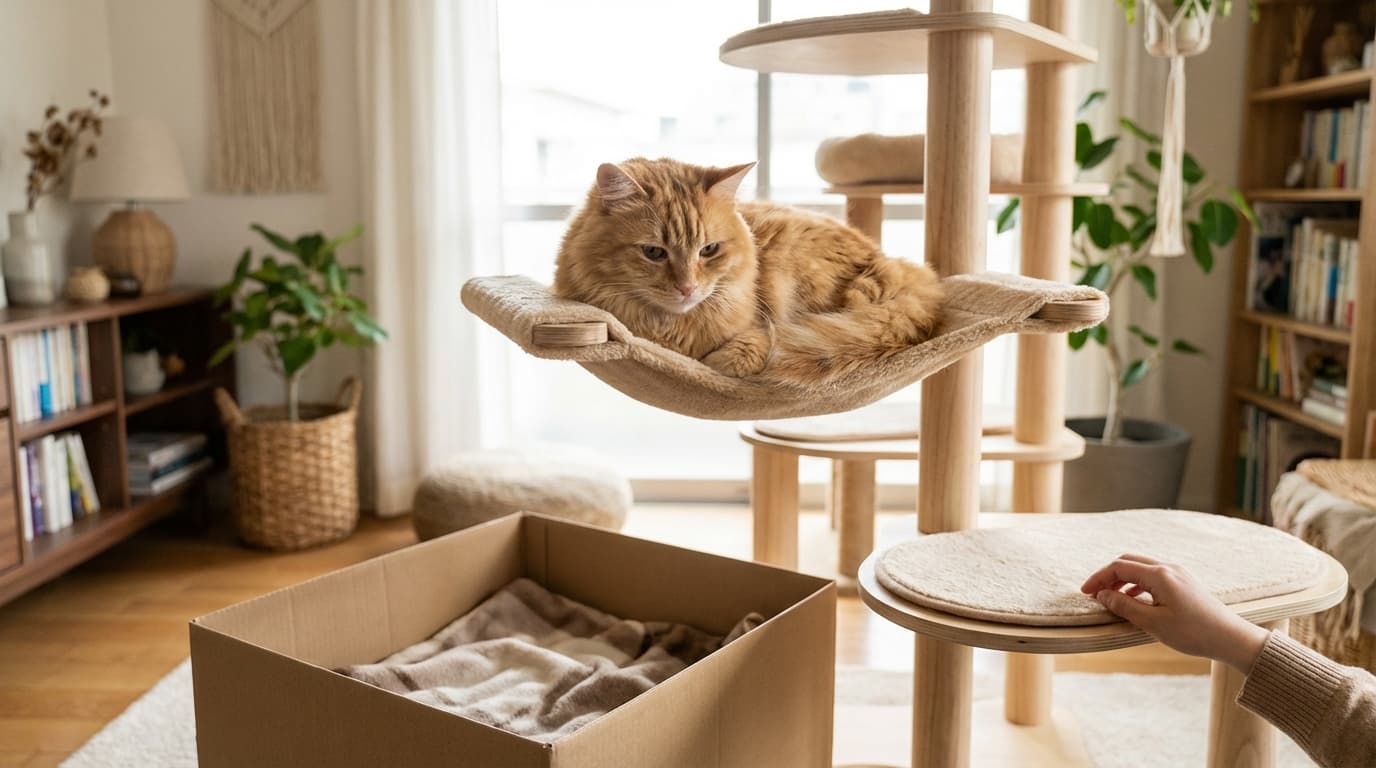
You have likely seen them in the corner of pet stores: those beige, carpet-covered towers that look like they belong in a 1970s basement. But picking the right tree is about more than just matching your curtains. The first thing you should do is the 'Wobble Test.' If you give the top a nudge and it sways like a palm tree in a hurricane, keep looking. Stability is the most important safety factor because a cat who feels a tree shake once might never trust it again. Your cat’s ancestors, the African wildcat, relied on rock-solid vantage points for survival, and your modern pet needs that same sense of security to feel at home.
Then there is the debate over texture. While we might think plush carpet looks cozy, your cat's claws usually have a different opinion. Sisal rope is often the better choice. Why? Because scratching is a sophisticated communication tool. Cats have scent glands in their paws that allow them to 'time-share' their territory by leaving behind chemical messages. Sisal holds that scent well and provides the resistance their muscles need for a full-body stretch. As Dr. John Bradshaw explains, being in an elevated position allows these natural ambush predators to observe their world without being noticed.
The good news is that we are moving past the era of pet furniture being an eyesore. The 'cat-as-decor' trend means you can now find sleek, wooden structures that look like modern art. Manufacturers are finally creating designs that owners can actually tolerate looking at for years. This shift allows you to provide the psychological benefits of height - which Dr. Mikel Delgado says reduces the chance of a cat being surprised by a dog or a loud noise - without turning your living room into a cluttered mess.
If you are living in a small studio, do not think you are counted out. You can give your cat a vertical win without losing any floor space. Floor-to-ceiling tension poles are a massive help because they have a tiny footprint. You can also look at 'dead space' that is already there, like the tops of bookshelves or the empty wall above your doors. Wall-mounted shelves allow you to create a 'cat highway' that effectively increases your home's usable square footage without requiring a larger floor plan. It turns a cramped room into a multi-level penthouse.
This vertical expansion is a literal lifesaver in multi-pet homes. A 2017 study found that cats in these households choose high spots specifically to avoid interactions and reduce stress. As Dr. Carlo Siracusa puts it, a cat on a high perch is basically saying, 'I own this room.' It is a peaceful way to reinforce status and settle territorial disputes without any actual fighting. Plus, the climbing and jumping involved give their joints a workout they simply cannot get from walking across a flat floor.
Key insights:
- The 'Wobble Test' is the most important check for safety and ensuring your cat actually uses the furniture.
- Sisal is superior to carpet for scent marking and providing the physical resistance cats need for muscle health.
- Vertical territory allows cats to 'time-share' space, which is the primary way they avoid conflict in multi-pet homes.
- Wall-mounted shelves and tension poles can double a cat's living space in small apartments without cluttering the floor.
Small Space Hacks: Living Large in a Studio
Living in a studio doesn't mean your cat has to stay grounded. If floor space is tight, just look up. Using floor-to-ceiling tension poles or wall-mounted shelves effectively increases your cat’s usable square footage without cramping your style. It’s a smart way to expand their world vertically when you can't expand yours horizontally.
Don't ignore the dead space above doors or bookshelves. These high spots act as a psychological safety valve. Research shows that cats in multi-pet homes choose elevated spots to avoid stress and direct conflict. By placing a simple perch near a window, you're giving your pet a high-security lookout that satisfies their ancient instinct to observe the world from a safe, strategic distance.
Key insights:
- Vertical furniture adds invisible square footage to small apartments.
- High perches allow cats to time-share space and avoid social stress.
Is Your Cat Tree in the Wrong Spot?
You finally bought that expensive cat tree, but your cat still prefers the top of the fridge. Why? It usually comes down to location. Think about the Window Effect. For a cat, a window is basically high-definition TV. Since they descended from the African wildcat, they are hardwired to watch and wait. Placing the tree by a window turns a simple piece of furniture into a prime hunting blind for birdwatching. This isn't just fun. It is vital enrichment that keeps their minds sharp.
Many owners tuck cat trees into a quiet back bedroom or a hidden corner to keep the living room looking tidy. This is often a mistake. Cats usually want to be where the action is. They use scratching as a way to time-share space and spread their scent to avoid conflict. If you put the tree in a social hub like the living room, your cat feels like they truly own the space. Research shows that having this vertical territory actually lowers stress in multi-pet homes because it gives them a way to back off without leaving the room.
The reality is that a cat tree in a closet is a waste of money. Height equals safety for your pet. When they are up high, they can spot a threat like the vacuum or a rambunctious dog before it gets close. It makes them feel secure because they can see everything without being seen. If you want your cat to actually use the tree, put it where they can watch the family and the birds at the same time. This turns a piece of carpeted wood into a true sanctuary.
Key insights:
- Positioning a tree near a window provides the best mental stimulation for indoor cats through birdwatching.
- Placing trees in social areas helps cats feel secure and territorial without causing conflict with other pets.
- Height is a psychological tool that helps cats manage stress by observing their surroundings from a safe distance.
Frequently Asked Questions
Conclusion
Understanding why your cat craves high places changes how you see your living room. It is not just about a quirky habit; it is about honoring their wild history as both hunters and hiders. When you provide vertical territory for cats, you are giving them a sense of security and a front-row seat to their own kingdom. It turns a cramped apartment into a spacious playground where they can stretch, climb, and relax without a care.
Your next move is simple: look at your home from your cat’s eye level. You might realize that a single wall shelf or a sturdy tree near a window is all it takes to boost their confidence. These spots are more than just nap areas. They are essential tools for stress reduction for cats, especially if they share space with energetic dogs or curious kids.
Providing these high perches is one of the easiest ways to make your cat feel truly at home. Once they have a place to look down on the world, you will likely see a happier, calmer version of your favorite feline. After all, life is always a little better when you have the best view in the house.
Send it to someone who should read it next.
About the author

James Miller
Certified Cat Behaviorist
Feline behavior consultant helping cat owners understand and strengthen their bond with their cats.
View all articles