Why Your Cat Ignores Catnip (And the Secret Plants They’ll Actually Love)
Did you know that one in three cats couldn't care less about catnip? If your feline friend walks past a fresh pile of the green stuff without a second glance,...

PurrScript Editorial Team
Editorial Team
Why Your Cat Ignores Catnip (And the Secret Plants They’ll Actually Love)
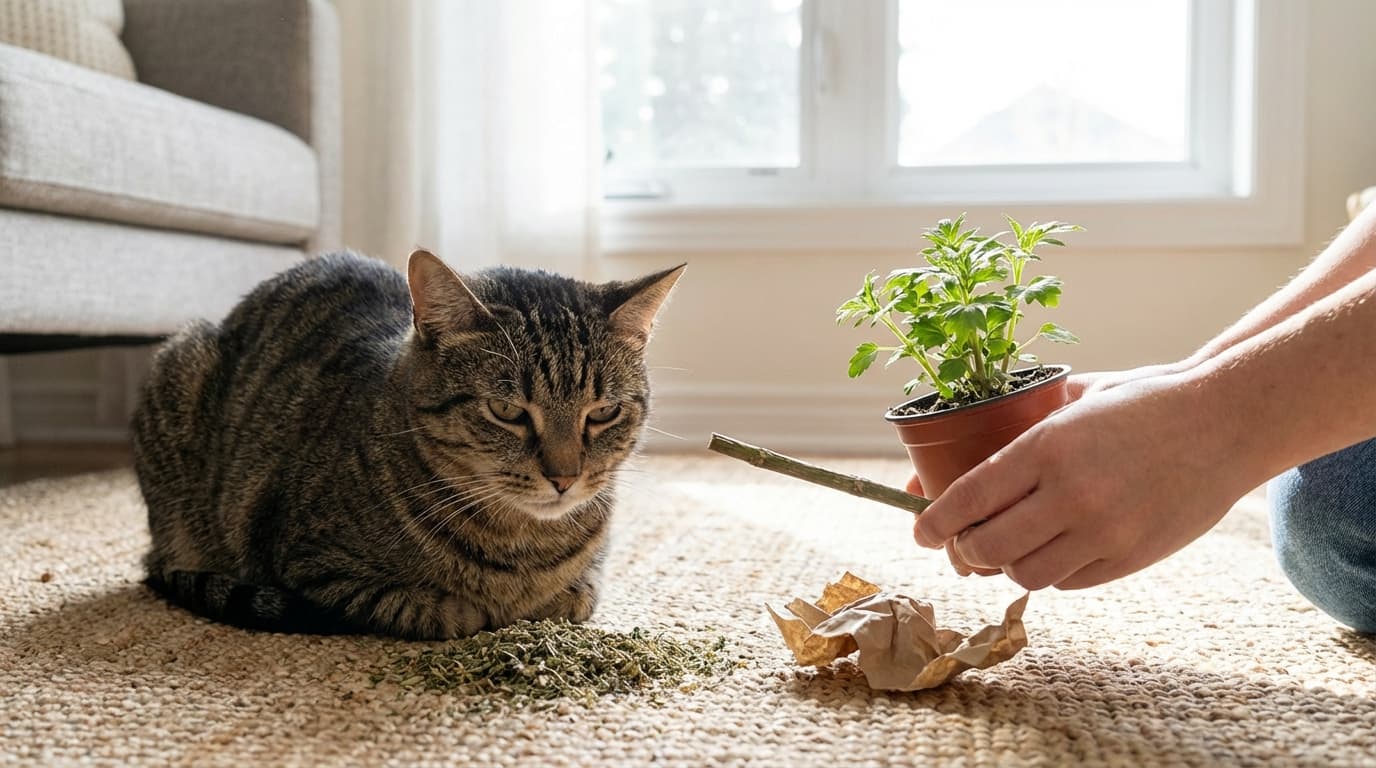
Did you know that one in three cats couldn't care less about catnip? If your feline friend walks past a fresh pile of the green stuff without a second glance, they aren't being stubborn. It turns out the catnip response in cats is actually a genetic lottery, and millions of pets simply didn't win the prize.
Just because catnip fails doesn't mean your kitty has to miss out on the fun of feline sensory enrichment. There are secret plants like silvervine for cats and valerian root that often trigger those famous zoomies when nothing else works. We are going to look at the science behind these natural stimulants and why some cats prefer the sound of crinkly paper over expensive toys.
You will discover how to build a sensory buffet that keeps your indoor cat happy and why understanding cat pica is vital for their safety. We'll also cover the best ways to rotate scents so your cat never gets bored. Let's find out which botanical magic will finally get your cat moving.
Ever feel like your cat is broken because they ignore that expensive catnip toy? You are not alone. About one in three cats simply lacks the genetic trait to care about catnip. But here is the thing: scent enrichment is not just a party trick. It is a vital health requirement for indoor hunters. If your kitty is part of that 32% who shrug at the green stuff, they are not being difficult. They just have not met the Big Four feline botanicals yet.
The real superstar is silver vine, a member of the kiwi family that actually outperforms catnip in every major study. While 68% of cats enjoy catnip, nearly 79% respond to silver vine with pure joy. Most importantly, 71% of cats who ignore catnip entirely will still go wild for this potent alternative. When you include valerian root and Tatarian honeysuckle, a massive 94% of cats find a botanical match that works for them. These scents trigger up to 30 minutes of healthy, stress-relieving euphoria.
Why does this matter for your daily routine? Providing these scents helps prevent boredom and mimics the sensory variety cats find in the wild. It is not just about the high. It is about giving your cat a mental workout for their nose. If the catnip stays on the floor untouched, do not give up on enrichment. Your cat’s perfect match is likely just a different leaf away.
Key insights:
- Silver vine is more inclusive, reaching 71% of cats who are immune to catnip.
- Olfactory enrichment is a fundamental health need for indoor felines, not just an optional treat.
- 94% of cats will respond to at least one of the four major feline botanicals.
The Science of the Zoomies: Why Certain Plants Make Cats Crazy
Have you ever watched your cat go from a nap to a full-speed sprint after one sniff of a toy? We call it the zoomies, but for your cat, it is a brief trip to another dimension. This happens because plants like catnip contain nepetalactone, a compound that flips a switch in the feline brain. When a cat breathes in these scents, the molecules bind to receptors in their nose, sending a signal to the parts of the brain that handle emotions. It is a natural high that triggers playfulness, hunting instincts, or even total relaxation.
This reaction is a total genetic lottery. You cannot teach a cat to love catnip because the response is written in their DNA. While about 68% of domestic cats roll around in a frenzy, the rest might just look at you with confusion. If your cat is a fan, you probably noticed the party does not last forever. Most cats experience a window of euphoria for about 30 minutes before their brain hits a reset button. This is a refractory period, a time when they become temporarily immune to the scent before they can enjoy the magic again.
But what if your cat ignores catnip? That is where silver vine comes in. This plant from the kiwi family packs a punch with actinidine, which mimics feline pheromones more effectively than catnip. Research shows that 79% of cats respond to silver vine, making it a more inclusive choice. Interestingly, 71% of cats that show zero interest in catnip will actually have a blast with silver vine. In Japan, the plant is called Matatabi, which means travel again.
The best part is that personality does not matter. Whether your cat is shy or bold, these scents offer a simple way to enrich their life. Silver vine was first introduced to the West in 1906, yet it remains a secret weapon for many owners today. Using these plants is not just about fun because it provides vital mental stimulation. It helps indoor cats stay active and engaged with their environment in a way that feels completely natural to them.
Key insights:
- Silver vine has a 79% response rate, making it more effective than catnip.
- Over 70% of cats that do not like catnip will respond positively to silver vine.
- The euphoric effect is genetic and typically lasts for a 30-minute window.
Nepetalactone vs. Actinidine: The Chemical Magic
Ever wonder why your cat ignores that expensive catnip toy? It is not because they are being snobby. Catnip relies on a compound called nepetalactone to trigger that famous feline high, but nearly a third of cats simply aren't genetically wired to feel its effects. This is where the chemistry of silver vine - often called Matatabi - changes the game for pet owners.
While catnip has one primary active ingredient, silver vine packs a punch with actinidine and dihydroactinidiolide. These compounds mimic feline pheromones even more effectively than catnip does. The numbers back this up: research shows that 71% of cats who snub catnip will actually have a positive reaction to silver vine. It is a much more inclusive stimulant, with about 79% of all domestic cats responding to this member of the kiwi family with pure bliss.
Think of it as a backup key to your cat’s brain. Because silver vine uses different chemical pathways, it offers a second chance for sensory enrichment that lasts up to 30 minutes. It is the perfect secret weapon for the non-responders in your home, proving that almost every cat has a botanical trigger if you just find the right scent.
Key insights:
- Silver vine contains actinidine, which triggers a response in 71% of cats who are immune to catnip.
- The euphoric effects of silver vine are more potent and inclusive, typically lasting about 30 minutes.
- Matatabi is a member of the kiwi family that mimics feline pheromones through multiple chemical compounds.
Silver Vine: The Heavyweight Champion Your Cat Probably Prefers
Ever wondered why your cat looks at a pile of premium catnip like it is just boring laundry? You are not alone. While catnip is the famous choice, it actually fails to impress about a third of all cats. Enter silver vine. This plant is the true heavyweight champion of the feline world, boasting a massive 79% success rate in recent studies. That means nearly eight out of ten cats will have a blast with it, making it a much more reliable way to provide your pet with some mental excitement compared to the traditional green stuff.
The science behind this is pretty clear. While only about 68% of cats react to catnip, silver vine reaches a much wider audience because it contains a broader range of active compounds like actinidine. This creates a happy, euphoric state that can last up to 30 minutes. It is essentially a more inclusive party for felines. If you have ever felt like your kitty was missing out because they did not care about a catnip toy, this is the game-changer you have been looking for.
In Japan and China, people have known this secret for centuries. They call the plant Matatabi, which translates to travel again. The nickname comes from an old legend about tired travelers using the plant to find the strength to finish their journeys. While it has been a staple in Asia for ages, it only really caught the attention of Western scientists around 1906. We now know it is a member of the kiwi family that grows in the mountains of Eastern Asia, and it is far more potent than the catnip most of us grew up using.
When you are shopping for silver vine, you will usually find it as natural sticks or a fine powder. The sticks are a great choice because they double as a dental chew, helping to scrape off plaque while your cat gnaws away in bliss. If you want a more intense reaction, the powder is usually the way to go. Just a tiny pinch on a scratching post or an old toy is enough to start the show. Just make sure you are buying 100% natural Actinidia polygama without any weird fillers or additives.
Here is the most exciting part for the catnip quitters: a major study found that 71% of cats who had zero reaction to catnip actually went wild for silver vine. This proves that a lack of interest in catnip is not a broken nose; it is just a preference for a different chemical key. If your cat has been a total non-responder in the past, there is a very high chance they just had not met their perfect match yet.
You might think a shy or anxious cat would be too nervous to enjoy a botanical high, but the data says otherwise. A cat's personality, whether they are bold and affectionate or scared and hiding under the bed, does not change how they react to silver vine. They all enjoy the enrichment equally. The only real variable is age. While younger cats usually get the full experience, cats older than five years might show a slightly milder response. Think of it as the difference between a double espresso and a calm cup of tea; it is still enjoyable, just a bit more mellow.
Key insights:
- Silver vine has a 79% response rate, significantly higher than catnip's 68%.
- Over 70% of cats that ignore catnip will respond positively to silver vine.
- A cat's personality does not affect their likelihood of enjoying silver vine.
- Silver vine sticks can improve dental health by encouraging natural gnawing behaviors.
- The euphoric effects of silver vine typically last for about 30 minutes.
The 71% Rule for Catnip 'Quitters'
Ever bought a fancy catnip toy only to have your cat stare at it like it is a piece of junk? You are not alone. While about 68% of cats enjoy the nip, a huge chunk of the feline population just does not have the genes for it. But here is the exciting part. Researchers found that 71% of those catnip quitters actually go wild for silver vine. This plant, also called Matatabi or travel again in Japanese, is a cousin of the kiwi fruit. It contains different active compounds that trigger a happy, euphoric state for up to 30 minutes.
You might think your cat is too shy or grumpy for these herbal highs, but the data says otherwise. Whether your cat is a bold explorer or a scaredy cat hiding under the bed, their personality does not change how they react to these scents. It is all down to biology, not attitude. Just keep in mind that age plays a role too. Once cats pass the five year mark, their response often gets a bit milder. So, if your senior cat seems less impressed than they used to be, it is just a natural part of growing up.
Key insights:
- Silver vine works for 71% of cats who ignore catnip.
- A cat's personality, whether shy or bold, does not affect their reaction.
- Cats older than five years usually show a more subtle or partial response.
Beyond the High: How Scents Keep Your Indoor Cat Happy
Have you ever caught your cat staring at a blank wall for twenty minutes? While we often joke about cats being lazy, the truth is that indoor life can be pretty dull for a hunter designed to track complex scents across miles. Most owners reach for catnip to add some excitement, but here is a surprising fact: about 32% of cats do not even have the gene to enjoy it. If your cat ignores the nip, they are not being picky. They just need a different key to find their happy place. This is where olfactory enrichment comes in, using plants like silver vine and valerian root to turn a stagnant living room into a sensory playground.
Silver vine is the heavy hitter here. Known as Matatabi in Japan, which translates to 'travel again,' this plant is actually part of the kiwi family. Recent findings show that 79% of cats respond to silver vine with pure bliss, compared to only 68% for catnip. Even more impressive? About 71% of cats who are totally bored by catnip will have a blast with silver vine. It usually triggers about 30 minutes of euphoria, but it has a practical side too. In the wild, cats rub against it because it acts as a natural mosquito repellent. It is a built-in bug spray that happens to feel amazing.
But how do you know if your cat is actually relaxed or just suffering from sensory deprivation? Look for signs of boredom like over-grooming or a sudden interest in 'pica,' which is when they try to eat things that are not food. To keep their nose sharp, you should not leave these botanical toys out all the time. Think of it like your favorite candle; if you smell it every day, you eventually stop noticing it. By rotating between valerian, honeysuckle, and silver vine every few days, you keep their environment dynamic and prevent them from developing 'nose blindness.'
When you are ready to try this, start with a safe, dried silver vine stick or a small sachet of valerian root. Be prepared: valerian smells a bit like old gym socks to us, but to your cat, it is a five-star aromatic experience. By introducing these botanicals, you are not just giving them a temporary high. You are giving them a job to do and a way to interact with their world. It is a simple, natural way to ensure your indoor hunter stays sharp, engaged, and, most importantly, happy.
Key insights:
- Silver vine is more effective than catnip, reaching 79% of cats including many catnip non-responders.
- Rotating scents every few days prevents habituation and keeps the enrichment effective.
- Olfactory stimulation mimics natural hunting and foraging behaviors for indoor cats.
- Silver vine provides a dual benefit of behavioral euphoria and natural pest protection.
Is Your Cat Bored or Just Relaxed?
Is your cat truly chill or just understimulated? It is easy to mistake a lack of enrichment for a calm personality. If your kitty ignores toys or stares at blank walls, they might be sensory-deprived. This matters because cats need mental challenges to stay healthy and happy.
One way to wake up those instincts is through feline sensory enrichment. While many owners rely on catnip, 71% of cats who ignore it actually love silver vine. Since 94% of cats respond to at least one botanical like valerian root or silvervine for cats, variety is key. Rotating scents every few days prevents nose blindness and keeps their world exciting.
When introducing new botanicals, start with a small amount. The euphoria usually lasts about 30 minutes. Interestingly, shy cats respond just as strongly as social ones. Every cat deserves a little extra excitement regardless of their usual catnip response in cats.
Key insights:
- Rotating scents prevents nose blindness and keeps enrichment effective.
- Personality does not dictate a cat's reaction to botanical stimulants.
- Silver vine often works for cats that do not care about catnip.
Why is My Cat Eating That? Crinkly Paper and the Pica Puzzle
You are sitting on the couch when you hear it. It is that rhythmic, metallic crunching sound coming from the kitchen. You find your cat hunched over a discarded receipt or a plastic wrapper, eyes wide and jaw working fast. It is a common scene, but why the obsession? For most felines, the auditory allure is the primary trigger. That high pitched crinkling sound mimics the rustle of small prey in dry leaves or grass. It is an instinctive hunting response triggered by a simple piece of trash. But when the chewing turns into swallowing, we move from a quirky habit into the territory of feline pica.
Pica is the persistent craving to eat non food items. While it looks like a strange hobby, it often points to boredom or a lack of environmental enrichment. Common targets include wool, plastic, and most frequently, paper. While a little nibble might seem harmless, pica becomes dangerous when those items cause intestinal blockages. The reality is that your cat might be searching for a sensory high they are not getting elsewhere. Interesting research shows that 94 percent of domestic cats respond to at least one of four botanical stimulants, including catnip and silver vine. If your cat is a paper chewer, they might just be a sensory seeker looking for a better outlet.
Think of it this way. Your cat’s brain is wired for high intensity sensory input. If they are not getting it through play or scent, they will find it in the forbidden textures of your junk mail. This is where olfactory enrichment comes in. While many owners rely only on catnip, about 32 percent of cats do not even react to it. On the other hand, silver vine boasts a 79 percent response rate. Even 71 percent of cats who ignore catnip will react to silver vine. By introducing these natural stimulants, you can provide that 30 minute window of euphoria they crave, which naturally distracts them from the paper pile on your desk.
So, how do you stop the paper shredding madness? The first step is redirection. If your cat is a texture seeker, look for DIY crinkle toys that use safe, enclosed materials. You can sew a scrap of silver vine or valerian root into a sturdy fabric pouch along with a piece of loud, food grade cellophane. This gives them the sound and the scent without the risk of an expensive surgery bill. Silver vine is particularly effective here because it contains actinidine and dihydroactinidiolide. These compounds are often more enticing than the nepetalactone found in standard catnip.
It is also important to know when the DIY fixes are not enough. If your cat is lethargic, losing weight, or vomiting after their paper eating sessions, call the vet immediately. Pica can sometimes be linked to dietary deficiencies or underlying stress. However, for many cats, it is simply about the travel again feeling, which is the literal meaning of the Japanese name for silver vine, Matatabi. By swapping the dangerous paper for a silver vine stick or a valerian stuffed kicker, you are giving them a safe way to explore their instincts. Just keep in mind that as cats age, specifically past five years, their response might become milder, so keep the play sessions fresh and varied.
Key insights:
- Silver vine is a more potent and inclusive olfactory stimulant than catnip, with a 79 percent response rate.
- Approximately 71 percent of cats that do not respond to catnip will show a positive response to silver vine.
- Olfactory enrichment is an effective way to redirect pica behaviors like paper chewing into safe, healthy play.
- A cat's age can affect the intensity of their response to botanical stimulants, with older cats often showing milder reactions.
Safe Alternatives for Paper-Chewers
Does your cat treat your mail like a midnight snack? This shredding habit often means they are craving sensory stimulation. Instead of letting them chew on envelopes, try silver vine. While only 68% of cats care about catnip, 79% respond to silver vine with joy. Even if your cat ignores the green stuff, there is a 71% chance they will flip for this alternative.
You can make a safe toy by sewing silver vine into a scrap of sturdy fabric. This gives them that satisfying crinkle without the risk of a surgery bill from swallowing real paper. In Japan, this plant is called Matatabi, and the happy effects last about 30 minutes. It is a simple way to redirect their focus to something safe.
Just watch for pica, which is when they actually swallow non-food items. If your cat starts vomiting or stops eating, call your vet immediately. Usually, they just need a better outlet for their instincts and a few new smells to keep their brain busy.
Key insights:
- Silver vine attracts 79% of cats, making it more effective than catnip.
- 71% of cats that ignore catnip will respond positively to silver vine.
- DIY fabric toys provide a safe crinkle alternative to dangerous paper shredding.
Creating a Feline Sensory Buffet at Home
Ever wonder why your cat stares at a blank wall? They might just be bored with their nose. Creating a scent station is a simple way to wake up their instincts. Think of it as a sensory buffet where your cat explores different botanical highs. While catnip is the classic choice, only about 68% of cats actually care about it. If yours is in that indifferent group, do not worry. There is a world of plants like silver vine and valerian root waiting to be discovered.
To build your station, start with a low-sided tray. Sprinkle in some silver vine, also known as Matatabi, which means travel again in Japanese. This plant is a powerhouse. Research shows that 79% of cats respond to it with pure joy. Even better, 71% of cats who ignore catnip will go wild for silver vine. The euphoria usually lasts about 30 minutes, providing a perfect mental workout for a bored indoor hunter.
Do not stop at the smell. Cats love a mix of textures. This is why cats like crinkly paper, because it sounds like prey moving in the brush. Toss some crinkle tissue or a soft fleece scrap into the tray with the herbs. To keep the buffet fresh, store your herbs in airtight glass jars. This keeps the active chemicals potent. Since 94% of cats respond to at least one of these botanicals, your cat is almost certain to find a new favorite hobby here.
Key insights:
- Silver vine has a higher success rate than catnip, reaching 79% of cats.
- Mixing auditory triggers like crinkly paper with olfactory stimulants creates a more engaging environment.
- Airtight storage is essential to prevent the degradation of active compounds like actinidine.
Common Myths About Cat Stimulants
If you have ever watched your cat go wild over a pinch of dried leaves, you might wonder if you are fueling a tiny addiction. It is a common worry, but the science is clear. These plants are not addictive. Unlike human drugs, cat stimulants like silver vine and catnip trigger a natural sensory response rather than a chemical dependency. Your cat is just having a very intense and very fun sensory experience that naturally wears off without any withdrawal or craving.
Wait, can they have too much? You might worry about an overdose when your cat starts rolling around like they have lost their mind. In reality, cats are great at self-regulating. A typical silver vine high lasts about 30 minutes before the cat simply loses interest and walks away. Recent studies show that 79% of domestic cats respond to silver vine with pure enjoyment, which is actually higher than the 68% who react to catnip. Even if your cat is one of the 71% who ignores catnip, they will likely still love this member of the kiwi family.
The most amazing part is that this is not just a pet thing. Research involving nine tigers found that big cats react with the same playful euphoria as your tabby. Whether it is a 10-pound house cat or a 400-pound predator, the reaction to these botanical compounds is a deep-rooted feline trait. It turns out that 94% of cats respond to at least one of the four major plant stimulants, proving that almost every feline has a favorite way to party.
Key insights:
- Silver vine is non-addictive and acts as a safe olfactory enrichment tool.
- Cats naturally stop responding to the stimulant after about 30 minutes, preventing any risk of overdose.
- Response to botanical stimulants is a universal feline trait shared by domestic cats and wild tigers alike.
Final Thoughts: A Happier Cat Through Their Nose
If your cat has ever walked away from a pile of catnip with a bored yawn, don't worry because they aren't broken. It turns out that variety really is the secret to a happy feline home. While catnip is the famous choice, nearly 94% of cats actually respond to at least one of the four main botanical stimulants. If the standard green flakes fail to impress, silver vine or valerian root might be the magic key you have been looking for.
Silver vine is a potent relative of the kiwi plant and it works for 71% of cats who ignore catnip entirely. The best part is that a cat's personality doesn't dictate their reaction. Even a shy wallflower can experience a 30 minute burst of euphoria, proving that this type of enrichment is for every cat regardless of their temperament. It is all about finding the specific chemical trigger that works for their unique nose.
Watching your cat rediscover their wild side through these scents is pure joy. It is a simple and low cost way to respect their natural instincts while keeping their minds sharp. Go ahead and experiment with different plants like Matatabi or valerian. A happier and more engaged cat is often just one good sniff away.
Key insights:
- Silver vine is a highly effective alternative for the 32% of cats that do not react to catnip.
- Olfactory enrichment works regardless of whether a cat is shy or outgoing.
- Providing a variety of botanical stimulants ensures almost every domestic cat can enjoy sensory play.
Frequently Asked Questions
It might feel like your cat is just being picky, but ignoring catnip is actually a genetic trait. About 32 percent of domestic cats don't have the specific receptors needed to react to nepetalactone, which is the active stuff in catnip. If your cat didn't inherit the right genes, catnip is basically just a boring pile of dried leaves to them.
But here is the thing: your cat can still join the party. Research shows that 71 percent of cats who don't care about catnip will actually have a great time with silver vine instead. This is because silver vine uses different chemical triggers like actinidine that work on a much wider range of cats. It's worth trying a few different plants because almost 94 percent of cats will respond to at least one type of botanical stimulant.
Both are very safe for your cat to enjoy, but silver vine is often considered the more effective choice. It isn't that catnip is dangerous, it's just that silver vine is more inclusive and potent. While catnip only works for about 68 percent of cats, silver vine hits a much higher mark at 79 percent. It's a natural member of the kiwi family and has been used for feline enrichment in places like Japan and Russia for a long time.
You'll find that the euphoria from silver vine lasts about 30 minutes, which is a perfect window for some intense play. It's also a great way to keep your cat's mind sharp, especially as they get older. Just keep in mind that while it's safe, cats over five years old might have a slightly milder reaction than younger kittens. It's all about finding what makes your specific cat happy and active.
You can usually offer these botanical treats a few times a week to keep things exciting. Since the happy, euphoric feeling usually lasts about 30 minutes, it is a great way to give your cat a quick burst of exercise and mental fun. If you do it every single day, you might find that the novelty wears off and they stop reacting as strongly to the scent.
It is also worth noting that silver vine is actually more potent than catnip. While only about 68% of cats care about catnip, nearly 80% of cats respond to silver vine. If your cat is older than five, they might have a slightly milder reaction, so do not be surprised if they just give it a polite sniff instead of rolling around like a kitten.
It mostly comes down to their deep rooted hunting instincts. That high pitched crinkling and rustling sound is very similar to the noise a mouse or a bird makes when moving through dry leaves. When your cat hears it, their brain immediately goes into predator mode because it sounds like a snack is nearby.
While it is great sensory enrichment, keep an eye on them to make sure they are just playing. Some cats can develop a habit called pica where they actually try to eat the plastic or paper. To stay safe, you can always use heavy packing paper or specific crinkle toys instead of grocery bags that could be a choking hazard.
Conclusion
Finding out your cat is a catnip quitter is not a dead end. It is actually an invitation to explore better options like silvervine for cats or valerian root. Since a huge number of felines prefer these alternatives, you are likely just one scent away from seeing a totally different side of your pet.
Beyond the plants, remember that feline sensory enrichment is about the whole experience. From the crinkle of a paper bag to the texture of a new toy, your cat is always looking for ways to engage their brain and body. Even weird habits like cat pica can often be managed by giving them safer, more exciting things to focus on.
Your next move is simple. Pick up a silver vine stick or a small pouch of valerian and see what happens. You might find that your lazy cat has just been waiting for the right smell to spark their curiosity. After all, a bored cat is just a cat who has not found their favorite hobby yet.
Send it to someone who should read it next.
PurrScript Editorial Team
Editorial Team
PurrScript's in-house editorial team. We research, write, and review every guide using established veterinary and behavioral resources, and update articles as best practices evolve.
View all articles