Why Your Cat Stopped Using the Litter Box (And How to Fix It)
Finding a wet spot on your favorite rug is enough to make any cat owner panic. But before you get too frustrated, remember that your cat isn't trying to get...

PurrScript Editorial Team
Editorial Team
Why Your Cat Stopped Using the Litter Box (And How to Fix It)
Finding a wet spot on your favorite rug is enough to make any cat owner panic. But before you get too frustrated, remember that your cat isn't trying to get revenge. House soiling is actually the most common behavior problem reported to vets, and it is often a cry for help. Your cat is likely communicating a physical or emotional need that isn't being met.
If you are dealing with a cat peeing outside the litter box, the first step is figuring out the why. Is it a health emergency or just a picky preference? This guide breaks down the difference between behavioral vs medical house soiling so you can act fast. We will also look at the tail-quiver tell to help you distinguish cat spraying vs peeing.
From the N+1 rule to the huge impact of litter box location importance, we have the fixes you need to restore peace to your home. You will also learn the right way to handle cleaning cat urine odors so your furniture stays fresh. Let’s get your cat back in the box and your house back to normal.
The Mystery of the Missing Litter Box Use
It happens to the best of us: you walk into the room and catch that sharp scent of cat urine where it definitely shouldn't be. While it feels like a personal affront, your cat is actually trying to tell you something important. House soiling is the top reason cats end up in shelters, which is heartbreaking because these issues are almost always fixable once you understand the "why" behind the mess.
Your cat isn't being "bad" - they are communicating a physical or emotional need. Medical issues like kidney disease or feline idiopathic cystitis (FIC) often trigger these accidents. Interestingly, even after a physical illness is cured, a cat might keep avoiding the box because they’ve linked it to past pain. Punishment only makes things worse by increasing their anxiety and damaging your bond.
We’re going to help you spot the medical red flags and set up a bathroom your cat genuinely likes. From the "number of cats plus one" rule for boxes to understanding substrate preferences, you'll learn how to make your home feel safe again. Let's look at how to solve the mystery of the missing litter box use together.
Key insights:
- Medical issues can transition into permanent behavioral habits even after the physical ailment is cured.
- The recommended number of litter boxes in a household is always the number of cats plus one (N+1).
Is Your Cat Sick or Just Stressed? Telling the Difference
It is a scene every cat owner dreads. You walk into the living room and catch that sharp, unmistakable scent of ammonia. Before you assume your cat is being spiteful or just 'mad' at you, keep this in mind: house soiling is the most common behavior problem owners report. It is also a major reason why cats are unfortunately given up to shelters. As veterinary specialist Sarah Heath points out, when a cat stops using the box, the strain on the bond between the pet and the owner can be massive. It is hard to feel cuddly when you are scrubbing the carpet for the third time this week, but your cat isn't trying to ruin your rug to get back at you. They are usually trying to tell you that something is wrong with their body or their world.
Many times, what looks like a behavior problem is actually a medical issue like feline idiopathic cystitis, also known as FIC. Other common culprits include diabetes, kidney disease, or even thyroid problems. These conditions can make it painful to go or make the urge so sudden that the cat simply cannot make it to the box in time. Because of this, your very first stop should always be the vet office rather than the cleaning aisle. When you treat the underlying illness, the bathroom issues often vanish. However, you have to act fast. If a cat stays in pain for too long, they might start to associate the litter box itself with that hurting feeling.
This leads to what experts call 'learned behavior.' Even after the vet cures the physical illness, the cat might still avoid the box because they remember it being a place of discomfort. They might decide that your soft bath mat or the corner of the guest room is a much safer, less painful spot to go. At that point, you are no longer just dealing with a medical recovery. You are dealing with a long-term habit that might require extra behavioral therapy to fix. Catching the problem early is the best way to prevent this transition from a temporary ache to a permanent habit that is much harder to break.
There are some specific red flags that mean a vet visit is mandatory right now. If you see your cat straining in the box, crying out while they try to go, or if you see even a small amount of blood in their urine, do not wait. These signs can point to a serious blockage or severe inflammation that needs immediate care. You should also watch their water intake. If your cat is suddenly acting like they are lost in a desert and drinking constantly, it could be a sign of diabetes or kidney issues. Their body is simply producing more urine than they are used to handling, leading to frequent accidents outside their usual spot.
For those with older cats, the issue might be as simple as creaky joints. An aging cat with arthritis might find it physically difficult to climb over the high sides of a traditional litter box. If it hurts their hips to get into the tray, they will eventually look for an easier, flatter spot on the floor. In these cases, switching to a low-entry box can make a world of difference. It is not that they forgot their training, but rather that their body can no longer keep up with the physical demands of their old setup. Think of it as needing a walk-in shower instead of a high-walled bathtub.
If the vet gives your cat a clean bill of health, it is time to look at the household environment. Cats are incredibly sensitive to change and crave stability. Something as exciting as a new baby, a recent move, or even a new piece of furniture can trigger enough stress to cause an accident. When a cat feels their territory is being threatened or changed, they might use urine to mark their space and help themselves feel more secure. It is their way of 'scenting' the area to make it feel like home again during a time of high anxiety.
You also need to know if your cat is actually peeing or just spraying. Spraying is a way of communicating. The cat stands up, backs into a wall, and shakes their tail while a small amount of urine hits a vertical surface. This is very different from finding a large puddle on the floor where they have squatted down. Knowing the difference helps you and your vet figure out if the issue is a medical bladder problem or a social anxiety problem related to how they feel about their territory.
Social tension between cats is another huge factor that often goes unnoticed. Even if your cats aren't actively fighting, one cat might be 'guarding' the hallway or the room where the litter box is kept. If the other cat feels like they have to run a gauntlet just to go to the bathroom, they will eventually find a quieter, safer spot elsewhere. This is why the N+1 rule is so important. You should always have one more litter box than you have cats. Spreading these boxes out in different locations ensures that every cat has a safe path to a private spot, no matter who is napping in the hallway.
Key insights:
- Punishment is counterproductive and only makes the problem worse by increasing feline anxiety.
- The N+1 rule (number of cats plus one) is essential for reducing social stress in multi-cat homes.
- Medical issues can transition into permanent behavioral habits even after the physical ailment is cured if not addressed quickly.
- Litter trays should be scooped at least twice daily and cleaned out completely once a week to prevent aversion.
Red Flags That Mean a Vet Visit is Mandatory
Is your cat suddenly acting like the litter box is a danger zone? Sometimes, thinking outside the box isn't a personality quirk - it’s a cry for help. If you see your cat straining, crying out in pain, or noticing a pinkish tint in their urine, stop what you are doing and call the vet. These aren't just messy accidents; they are red flags for serious conditions like feline idiopathic cystitis or even a life-threatening blockage. What looks like a behavior problem is often a medical emergency in disguise.
You should also keep an eye on the water bowl. If you are refilling it more than usual and finding large puddles on the rug, your cat might be struggling with increased thirst from kidney disease, diabetes, or thyroid issues. In these cases, the urge to go is simply too strong to wait. It is a physical breakdown, not a choice. This matters because house soiling is one of the most common reasons cats are given up to shelters, yet many of these cases start with a treatable health issue.
For the seniors in the house, the problem is often about accessibility rather than attitude. Imagine trying to climb over a high wall with stiff, aching knees. That is what a high-sided litter box feels like to a cat with arthritis. They might want to be clean, but their body won't let them. Remember, house soiling is a health indicator, not a sign of spite. If you don't catch the medical root early, a temporary illness can quickly turn into a permanent behavioral habit that is much harder to break later on.
Key insights:
- Punishment is counterproductive and only increases feline anxiety.
- Medical issues can transition into permanent behavioral habits if not resolved quickly.
- Veterinary professionals now view house soiling as a symptom of illness rather than defiance.
When the Problem is All in Their Head (and Environment)
Imagine coming home to a ruined rug right after a big move or bringing home a new baby. It feels like your cat is getting back at you, but cats don't actually do revenge. For a sensitive feline, a change in house layout or a new family member can turn their whole world upside down. These life shifts often trigger house soiling, which is the most common behavior problem reported by owners. They aren't being spiteful. They are just overwhelmed and trying to find a place that feels safe.
Social stress is another huge factor, especially in homes with more than one cat. If one cat likes to guard the hallway, the other might be too scared to even try reaching the litter tray. This is why the N+1 rule is so important. You should always have one more box than you have cats. Keeping these boxes in separate spots ensures no one feels trapped by a bully roommate. It also helps to keep things tidy by scooping at least twice a day. A dirty box makes the bathroom feel like a high-stress zone.
Punishment only makes the problem worse by increasing your cat's anxiety. If they are skipping the box, they are communicating stress, not looking for a fight. Sometimes a medical issue can even turn into a permanent habit if the environment isn't fixed quickly. By managing the social peace between your pets and keeping their space predictable, you can help your cat feel secure enough to return to their normal routine.
Key insights:
- Household changes like new babies or moving are major stress triggers for accidents.
- The N+1 rule (number of cats plus one) prevents bathroom-related bullying.
- Punishing a cat for accidents backfires and usually increases their anxiety.
- Dirty litter boxes are a top reason cats seek out alternative spots like rugs or beds.
Peeing vs. Spraying: The 'Tail-Quiver' Tell
Ever walked into a room and found a wet spot, only to wonder if your cat is sick or just sending a message? There is a huge difference between a cat who simply needs to go and one who is marking territory. The easiest way to tell is by watching their body language. When a cat pees normally, they usually squat low on a flat surface like the floor or inside their box. But spraying looks totally different. A spraying cat stays standing, backs up toward a wall or a piece of furniture, and lifts their tail high. If you see that tail start to quiver or shake while they tread their back feet, they are definitely marking.
This tail-quiver is a classic sign of urine spraying. Unlike a regular bathroom break where a cat empties their whole bladder, spraying is mostly about communication. It is how cats leave a scent post to tell other animals who owns the space. Because it is a social behavior, the volume of urine is often much smaller than what you would find after a full pee. It is helpful to remember that this isn't about your cat being spiteful. House soiling is actually the most common behavior problem reported by owners, and it is a major reason cats end up in shelters. It is usually a sign of stress or illness, not a lack of training.
The location of the mess tells a story of its own. If you are finding puddles on the rug or your favorite pile of laundry, your cat is likely dealing with inappropriate urination. This often happens because they don't like their litter, the box is dirty, or they have a medical issue like kidney disease or a bladder infection. Cats are naturally clean animals. If they stop using the box, something is usually wrong. Experts suggest having one more litter box than you have cats to prevent these horizontal accidents, as some cats prefer to urinate in one spot and defecate in another.
Spraying almost always hits vertical surfaces. Think curtains, the back of the sofa, or door frames. This is because a vertical spray travels further in the air, making the scent easier for other cats to pick up. It is basically a feline post-it note. Whether it is a stray cat outside or a new roommate, your cat uses these vertical markers to feel more secure. Understanding this distinction is the first step toward fixing the problem. Punishment only makes things worse by increasing their anxiety, so focus on the why instead of the what.
Key insights:
- Spraying is a standing behavior used for communication, while peeing is a squatting behavior for relief.
- Vertical surfaces like walls or curtains are prime targets for territorial marking.
- House soiling is a health or stress indicator, never a way for a cat to get revenge.
Vertical vs. Horizontal: Why the Surface Matters
Ever caught your cat backing up to the curtains with a quivering tail? That’s not just an accident; it’s a specific message. When a cat targets a vertical surface, they’re usually "spraying" to mark territory. Think of it as a feline status update or a "Keep Out" sign meant for other pets in the neighborhood or household.
But if you find a puddle on the laundry pile or a rug, that’s what experts call "inappropriate urination." In these cases, the cat squats on a horizontal surface to fully empty their bladder. This behavior usually signals a problem with the litter box setup - like it being too dirty - or a medical issue like kidney disease or FIC.
Telling these two apart is the first step to a happy home. While spraying is often about communication and social stress, horizontal soiling usually comes down to comfort, cleanliness, or health. Whatever the surface, remember that punishment only adds to their anxiety - focus on finding the root cause instead.
Key insights:
- Vertical spraying is a form of communication, while horizontal soiling often relates to health or box preference.
- A quivering tail and standing posture are tell-tale signs of territorial marking rather than simple elimination.
The Golden Rule of Litter Boxes: The N+1 Secret
Ever wonder why your cat suddenly treats your favorite rug like a bathroom? It is actually the most common behavior problem owners report, and unfortunately, it is a leading reason cats are given up to shelters. But there is a simple secret that changes everything: the N+1 rule. If you have one cat, you need two boxes. Two cats? You need three. It sounds like a lot of plastic, but for a cat, having options isn't a luxury - it is a survival strategy. Cats are naturally clean, but they are also territorial. Sometimes they just want a fresh spot that hasn't been used yet that morning, or they simply prefer to keep their business separate.
Where you put the box matters just as much as how many you have. Most of us tuck the litter tray into a dark corner of the laundry room because we want it out of sight. But for a cat, that feels like a trap. Imagine trying to go to the bathroom while a giant, noisy washing machine starts its spin cycle right next to your head. They need to feel safe and have a clear escape route. If you live in a multi-story home, you also need to spread the boxes across different floors. A cat on the third floor shouldn't have to run a marathon to the basement when nature calls, especially as they get older.
Then there is the snob factor. We might love the smell of mountain spring scented crystals, but your cat probably hates it. Their noses are incredibly sensitive, and those heavy perfumes can be totally overwhelming. Most cats prefer unscented, sandy textures that feel natural under their paws. Also, let's be real about the cleaning: you have to scoop at least twice a day. Think about it this way - would you want to use a toilet that hasn't been flushed in twenty-four hours? Probably not. Staying on top of maintenance is the easiest way to keep your cat using the box instead of your laundry pile.
The interesting part is that cats often distinguish between locations for urination and defecation. They might prefer to pee in one box and poop in another. This is why that extra box is so important. If you’re still seeing accidents, remember that punishment never works. It only makes your cat anxious and makes the problem worse. Most of the time, house soiling is just a stressed cat trying to tell you that their environment isn't quite right. By respecting the N+1 rule and keeping things clean, you can usually solve the issue and keep your bond strong.
Key insights:
- House soiling is often a cry for help or a sign of environmental stress rather than 'bad' behavior.
- The N+1 rule (number of cats plus one) provides the variety and security cats need to feel comfortable.
- Avoid placing boxes near noisy appliances like furnaces or washers, which can startle a cat and create a negative association.
- Twice-daily scooping and weekly deep cleans are non-negotiable for maintaining a cat's fastidious standards.
- Punishing a cat for accidents only increases anxiety and can turn a temporary issue into a permanent habit.
Location, Location, Location
Ever feel like you’re being watched while you’re in the bathroom? For a cat, the wrong litter box spot feels exactly like that, but with the added fear of a monster jumping out. We often tuck boxes away in laundry rooms or basements to hide the smell or sight, but placing a tray next to a loud, vibrating washing machine creates a literal trap. If the spin cycle kicks in while your cat is vulnerable, they might decide the living room rug is a much safer bet.
To keep the peace, follow the classic N+1 rule: always have one more box than you have cats. But here is the trick - don't just line them all up in a row like a bathroom stall. If you have a multi-story home, you need to spread those boxes across different floors. This simple move stops a more dominant cat from guarding the only hallway to the bathroom, which reduces social stress and competition in the house.
It might seem like overkill, but getting the location right is vital for your cat's mental health. House soiling is actually the most common behavior problem reported by owners and a major reason cats end up in shelters. Most of the time, your cat isn't trying to be difficult or seeking revenge. They are just looking for a spot where they feel safe. By moving the box to a quiet area with a clear view of the room, you make it easy for them to do the right thing.
The Snob Factor: Litter Type and Cleanliness
Think about the last time you stepped on something uncomfortable or smelly. That is exactly how your cat feels about a subpar litter box. Cats are famously fastidious, and their 'snob factor' usually comes down to what is under their paws. While we might pick out scented crystals because they smell like a fresh breeze to us, that heavy perfume can be a total dealbreaker for a cat. If the texture feels wrong or the scent is too strong, they will skip the box and head straight for your softest rug instead.
Maintenance is just as important as the litter type. You really need to scoop at least twice every single day. It sounds like a chore, but it is non-negotiable for a happy household. If a tray has even one deposit in it, some cats will refuse to step inside. This is why the N+1 rule is so helpful - having one more box than you have cats ensures there is always a clean spot available. A quick scoop in the morning and another before bed keeps the peace.
The stakes are higher than you might think. House soiling is a leading reason cats are surrendered to shelters, yet it is often a fixable communication issue. Sometimes a medical problem like kidney disease or a simple infection starts the habit, and the cat continues peeing outside the box even after they are healthy because they have formed a new preference. Keeping the substrate consistent and the boxes spotless is the easiest way to prevent a temporary protest from becoming a permanent headache.
Key insights:
- Cats often prefer unscented, fine-grained litter that feels natural under their paws.
- Twice-daily scooping and weekly deep cleans are the gold standard for preventing box aversion.
- The N+1 rule (number of cats + 1) provides necessary elimination options for picky felines.
Stop the Scrubbing: How to Actually Get Rid of the Smell
You have probably spent way too much time on your hands and knees scrubbing that one stubborn spot in the hallway, only to find the smell is still there a day later. It is incredibly frustrating. Here is the big secret: most of those flowery household sprays in your cabinet are actually making the problem worse. Many common cleaners contain ammonia. Because cat urine also contains ammonia, your cat smells your hard work and thinks a rival just moved in and marked the spot. You are essentially leaving a giant sign that says pee here again without even realizing it.
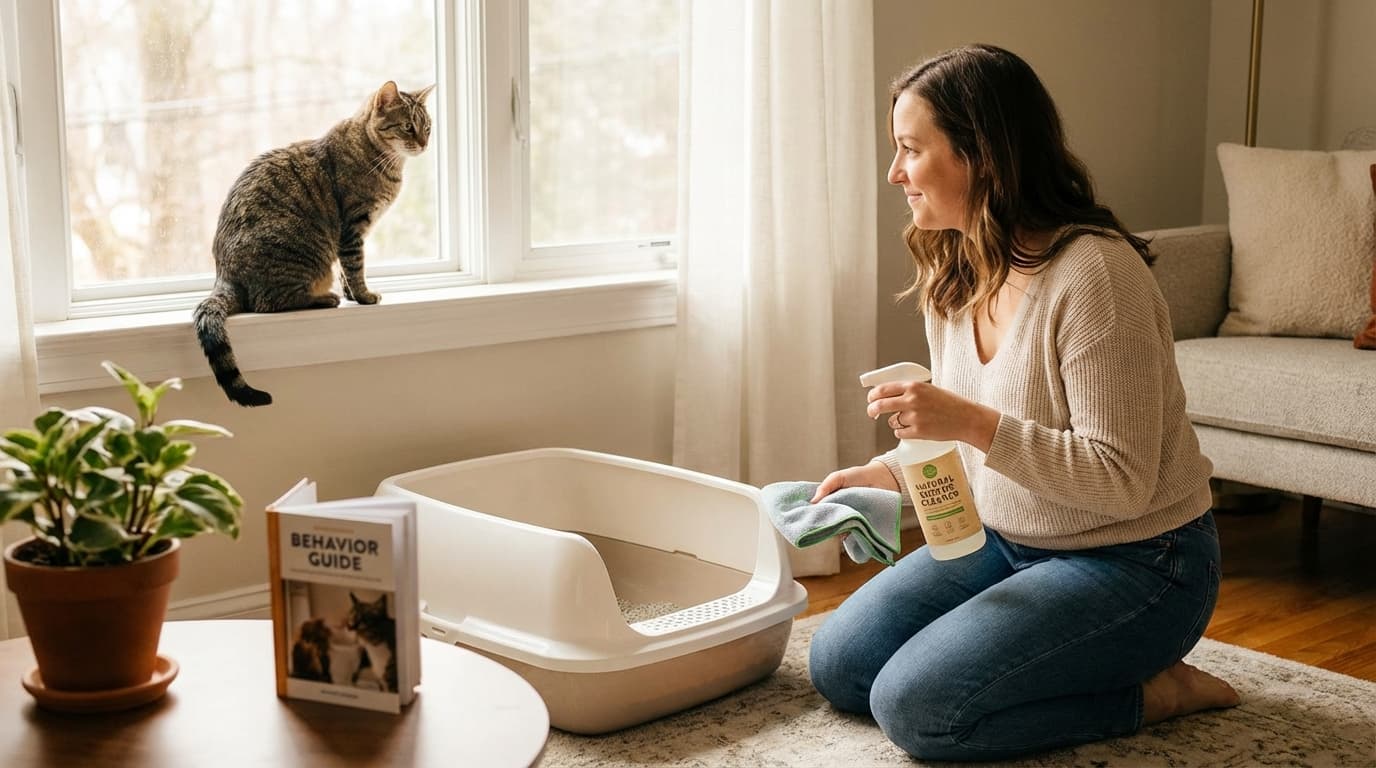
To truly get rid of the scent, you have to go molecular. Standard soap and water do not stand a chance against uric acid, which is the chemical responsible for that lingering, pungent odor. This is where enzymatic cleaners come in. These solutions use specific bacteria to literally eat the proteins and salts in the urine. It is the only way to fully erase the scent so your cat's sensitive nose cannot find it. While you are deep cleaning, remember that house soiling is the most common reason cats are taken to shelters, so getting this right is about more than just your carpet. It is about your bond with your pet.
After the area is clean, you need to change your cat's perspective on that specific patch of floor. Cats are fastidious and generally refuse to go to the bathroom where they eat or sleep. You can use this to your advantage by turning a former accident zone into a snack zone. Try placing a food bowl or a few treats right where they used to go. You can also use pheromone diffusers to lower their anxiety. If the cat starts viewing that corner as a kitchen or a bedroom, their natural instincts will tell them to keep it clean. It is a simple trick that works much better than any punishment ever could.
Key insights:
- Avoid ammonia-based cleaners because they mimic the scent of urine and encourage repeat accidents.
- Enzymatic cleaners are the only effective way to break down uric acid and remove odors permanently.
- Moving food bowls or beds to soiled areas uses a cat's natural instincts to prevent them from peeing there again.
Common Myths: Why Punishment Never Works
Have you ever come home to a puddle on the rug and thought your cat was getting back at you for that long weekend away? It feels personal. But here's the truth: cats don't do revenge. They lack the complex social spite we humans carry. When a cat pees outside the box, they aren't trying to make a point or hurt your feelings. They are actually signaling that something in their world is very wrong.
Reaching for a spray bottle or raising your voice might feel like a natural reaction, but it backfires every time. Punishment is counterproductive because it treats a cry for help as a behavioral defiance. Sarah Heath, a veterinary behavior specialist, points out that when this fastidious grooming behavior breaks down, the strain on the bond between you and your cat can be massive. If you scold them, you just add a layer of fear to their existing anxiety. This creates a cycle where the cat gets more stressed, leading to more accidents, which leads to more frustration for everyone.
The reality is that house soiling is a leading reason cats end up in shelters, but it is almost always fixable. Often, the root is a medical issue like kidney disease, diabetes, or painful feline idiopathic cystitis. Even after a vet clears up the physical problem, the habit can stick because the cat has learned to associate the litter box with past pain. Think of it this way: if a chair gave you an electric shock every time you sat down, you would start sitting on the floor too.
To break the cycle, we have to rebuild trust. Instead of fear, use positive reinforcement and tools like feline-appeasing pheromones to lower their stress levels. If your cat keeps returning to the same corner of the rug, try changing that area’s function. Turn it into a feeding or sleeping zone, as cats rarely soil where they eat or nap. It is about making them feel safe again, one small win at a time.
Key insights:
- Punishment increases feline anxiety and makes the original problem worse.
- Medical issues like FIC or kidney disease often trigger the initial house soiling.
- Once a medical issue is resolved, behavioral therapy may be needed to break the habit.
- Changing a soiled area into a feeding zone can naturally deter repeat accidents.
Frequently Asked Questions
It is really frustrating when a cat who has been a pro at using the litter box suddenly stops, but they are not doing it to be difficult. Usually, this is a big red flag that something is wrong physically or they are stressed out by a change in the house. Since cats are such creatures of habit, any break in their normal routine is their way of saying they need help.
First, you should check with your vet. Medical problems like kidney disease, thyroid issues, or bladder pain are very common culprits. Here is the thing: even if a medical issue gets fixed, your cat might have learned to avoid the box because they associated it with pain while they were sick. You might need to do a bit of retraining or try a different type of litter to get them back on track.
It is a common myth that cats pee on your rug or bed to get back at you, but that is just not how their brains work. Cats do not feel spite or revenge. When they go outside the box, they are actually trying to tell you they feel unwell or very anxious. It is a sign of distress, not a personality flaw or a sign that they are angry.
If you use punishment, you will find that it just makes the problem worse by adding more stress to their life. Instead of being mad, try to look at it as a health indicator. They might be spraying to mark their territory because they feel insecure, or they might just dislike the litter box location. Being a detective instead of a judge will help you solve the issue much faster.
For two cats, you really need three litter boxes. The standard rule is always the number of cats you have plus one extra. It might seem like overkill, but cats can be very particular about their bathroom space.
A lot of people miss the fact that many cats like to use one box for peeing and a totally different one for pooping. If they have to share too few boxes, they might get stressed or feel like the trays are too dirty. That is usually when they start looking for a spot on your carpet instead.
To really get rid of the scent, you have to use an enzymatic cleaner that actually breaks down the uric acid. Regular household cleaners might make it smell better to you, but your cat has a super-powered nose and will still detect those bathroom signals.
After you clean the spot, try changing how your cat feels about that area. Since cats hate to go where they eat, putting a food bowl or a bed in the old accident zone can help stop them from coming back. Just remember that scolding them won't help and usually just makes them more anxious.
Conclusion
So where does this leave you and your cat? Dealing with a cat peeing outside the litter box can feel like a constant battle with your laundry, but it is usually just a sign that something is not quite right. Once you rule out medical issues with a quick vet visit, the fix often comes down to the basics of feline comfort. By balancing a better litter box location with a substrate your cat actually likes, you stop the guesswork and start solving the problem for good.
Your best move right now is to perform a quick litter box audit. Check if you are following the N+1 rule and make sure you have an enzymatic cleaner on hand to fully remove those old odors. Small changes like moving a box to a quieter spot or switching to an unscented litter can make a big difference in how your cat feels about their bathroom routine.
Patience is your most valuable tool during this process. It takes a little time to rebuild trust and break old habits, but a dry house and a happy cat are well worth the effort. You have the facts now, so take a deep breath and start making those small tweaks today. Your rugs will stay clean, your house will smell fresh, and your cat will finally feel at home again.
Send it to someone who should read it next.

PurrScript Editorial Team
Editorial Team
PurrScript's in-house editorial team. We research, write, and review every guide using established veterinary and behavioral resources, and update articles as best practices evolve.
View all articles