Why Your Cat's Breath Smells Like Fish (and Other Dental Red Flags)
Did you know that between 50% and 90% of cats over four years old are living with some form of dental disease? It's a wild statistic because our feline friends...

Dr. Emily Hart
Veterinarian, DVM
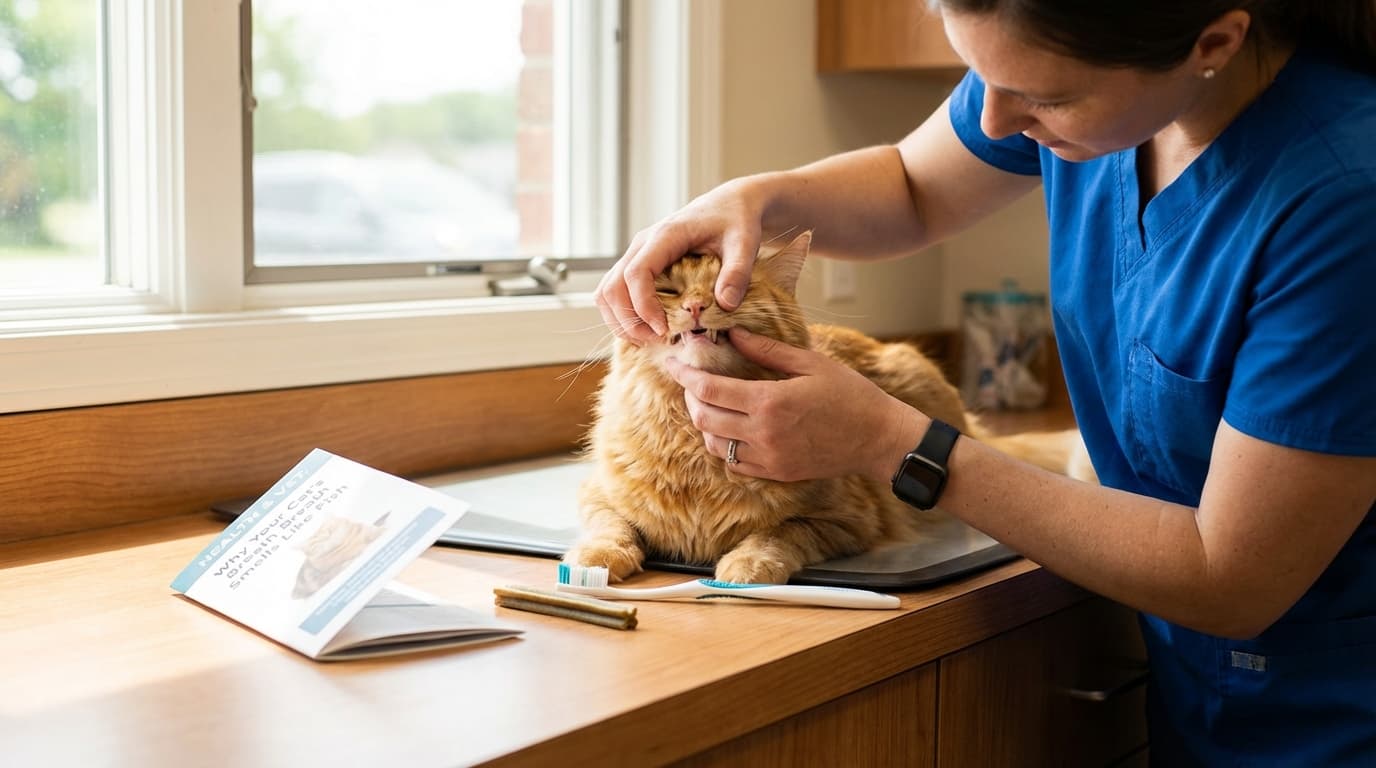
Why Your Cat's Breath Smells Like Fish (and Other Dental Red Flags)
Did you know that between 50% and 90% of cats over four years old are living with some form of dental disease? It's a wild statistic because our feline friends are such experts at hiding their discomfort from us. While you might think a cat breath smelling like fish is just a quirky part of being a pet owner, it's often a major red flag for serious issues like cat tooth resorption or hidden infections.
Understanding these signs is vital because a dirty mouth can eventually lead to heart and kidney problems. Whether you're looking for a feline gingivitis treatment or just want to know why your cat is suddenly a picky eater, getting the facts can save your pet from years of silent pain. It's about more than just a fresh smile, it's about their total well-being and happiness.
In this post, we break down what happens during a vet visit, the reality of stomatitis in cats, and the typical professional cat dental cleaning cost. You'll also find a stress-free brushing cat's teeth guide to help you start a home routine that actually works without the usual drama.
Why Your Cat Is a Master of Disguise
Ever wonder why your cat acts like everything is fine even when they are clearly hurting? It is not just them being stoic; it is a deep-seated survival instinct. In the wild, showing weakness makes you a target for predators, so our feline friends have become world-class experts at hiding discomfort. This is especially true for dental issues. Believe it or not, recent findings show that between 50% and 90% of cats over the age of four are dealing with some form of dental disease. Since they will not cry out in pain like a human might, you have to look for the tiny cracks in their tough guy act.
Maybe they start dropping pieces of kibble while eating, or they suddenly turn their nose up at crunchy treats in favor of wet food. You might notice them chewing awkwardly on just one side of their mouth or tilting their head at a strange angle. These are not just picky eating habits; they are serious red flags. The stakes are higher than just a sore tooth, too. A dirty mouth is a gateway for bacteria to enter the bloodstream. This systemic link means that untreated infections can eventually lead to heart and kidney issues. Think of their mouth as a window to their overall health. When that window gets cloudy, the rest of the body often follows suit. It is a connection that makes regular professional exams vital for their long-term survival.
We all know that kitty breath isn't exactly a field of roses, but there is a big difference between normal tuna-scented exhales and true halitosis. As experts often point out, a little tuna breath is fine, but if it smells more like a sewer, you have got a real problem. That sharp, foul odor usually indicates a bacterial infection is brewing under the gumline. This happens when plaque, that thin film of bacteria, hardens into tartar by absorbing minerals from saliva. If the smell makes you want to plug your nose from across the room, it is a clear sign that bacteria are winning the battle in your cat's mouth.
Sometimes the signs of oral pain are so quiet you will miss them if you aren't looking. Keep an eye out for excessive drooling or if your cat starts pawing at their mouth like they are trying to knock something loose. Another major clue is a scruffy coat. Cats are famous for being clean, but if their mouth hurts, they will stop grooming themselves entirely. If your usually sleek kitty starts looking unkempt or matted, their teeth might be the culprit. You should also be aware of tooth resorption, a painful condition where the tooth slowly dissolves. It is surprisingly common in felines, yet often goes unnoticed until a vet takes a closer look.
Key insights:
- Cats hide dental pain as a survival instinct, making regular vet checks essential.
- Dropping food or preferring wet food are often the first signs of a sore mouth.
- Oral bacteria can travel through the blood to damage the heart and kidneys.
- Foul breath that smells like a sewer indicates a serious bacterial infection.
- A scruffy, unkempt coat often means a cat is too sore to groom themselves.
The 'Fish Breath' Factor: When to Worry
Ever noticed your kitty has a bit of tuna breath after a meal? That is usually normal. But there is a big difference between a hint of fish and a smell that reminds you of a sewer. If your cat’s breath makes you wince, it is likely a sign of a bacterial infection rather than just a messy lunch.
The reality is that between 50% and 90% of cats older than four years suffer from dental disease. Since cats are experts at hiding pain, that funky smell is often the only warning you get. When plaque hardens into tartar, it traps bacteria that can eventually damage more than just their teeth.
Key insights:
- Normal breath smells mildly like their food, while halitosis smells like rot or sewage.
- Foul breath is often the first and only visible sign of dental pain in felines.
Signs of Oral Pain You Might Be Missing
Cats are experts at hiding when they hurt. It is a survival instinct, but it makes our jobs as pet parents harder. Since 50% to 90% of cats over four years old have dental disease, the odds are high that your pet is quietly struggling.
Have you noticed your cat looking scruffy lately? When their mouth hurts, they often stop grooming, leading to a dull coat. You might also see them pawing at their face or drooling. If their breath smells like a sewer rather than fish, there is a problem.
These signs often point to hidden issues like tooth resorption, where the tooth dissolves. Because this happens under the gumline, your cat might keep eating even while in significant pain.
Key insights:
- A scruffy coat often means a cat is too sore to groom themselves.
- Cats often continue to eat normally despite having advanced dental disease.
Common Mouth Troubles: From Gingivitis to Stomatitis
A little tuna breath is totally normal, but if your cat’s mouth starts smelling more like a sewer, you are likely looking at a real medical issue. It is a massive problem for our feline friends. Recent data shows that between 50% and 90% of cats over four years old suffer from some form of dental disease. In fact, tooth infections are one of the top reasons cats end up at the vet every year. It all starts with plaque, which is just a thin film of bacteria that sticks to the teeth. If that film is not cleaned off, it reacts with minerals in the saliva and hardens into tartar, also known as calculus. This tartar creates a rough surface that acts like a magnet for more bacteria to latch onto. Before long, this leads to bright red, inflamed gums. This is the early stage of periodontal disease, and if we catch it here, we can usually fix it before it turns into a lifelong struggle. The reality is that most owners do not realize how much their cats are suffering because cats have evolved to hide any sign of pain. They will keep eating even when their teeth are rotting because their survival instinct is so strong. By the time you see them drooling, the disease has often progressed quite far. This is why staying ahead of the plaque-to-tartar pipeline is so important. It is not just about keeping their breath fresh. It is about preventing the kind of deep-seated infection that can eventually spread through the bloodstream and impact their heart or kidneys.
One of the most frustrating conditions for both owners and vets is tooth resorption. Think of it as the mystery of the dissolving tooth. For reasons that still baffle the experts, the cat’s body essentially starts eating its own teeth. The tooth structure breaks down and is slowly replaced by bone-like tissue. Here is the scary part: it is often completely invisible to the naked eye because the process starts under the gumline or inside the tooth itself. Your cat might look perfectly fine, but they are likely in significant pain. Since cats are experts at hiding when they hurt, you might not notice a thing until they start drooling or tilting their head strangely while they eat. This is exactly why vets use dental X-rays. Without them, we are basically guessing about what is happening beneath the surface and missing the real source of the problem.
Then there is stomatitis, which is much more than just a bad case of gingivitis. This is a severe, widespread inflammation of the mouth that makes the simple act of eating feel like a nightmare. It is not just the gums that get red. The back of the throat and the insides of the cheeks can become raw and ulcerated. For these cats, the pain is so intense that they may stop eating entirely and lose weight fast. While we do not always know the exact cause, it is often an overreaction of the immune system. Because it is so painful and persistent, treatment usually has to be aggressive. In many cases, the best way to give a cat relief is to remove the affected teeth entirely. It sounds extreme, but living without teeth is much better than living in a constant state of oral agony. Taking fast action is the only way to get your cat back to their happy, hungry self.
Key insights:
- Cats are experts at disguising dental pain, so regular professional exams and X-rays are the only way to catch hidden issues like resorption.
- Untreated dental infections can lead to bacteria affecting other organs, making oral health a full-body priority for long-term wellness.
- Conditions like stomatitis often require aggressive treatments, such as full-mouth extractions, to provide a pain-free life for the cat.
The Mystery of the Dissolving Tooth
Imagine your cat’s body suddenly deciding a tooth is an intruder and trying to get rid of it. That is exactly what happens with tooth resorption, where the tooth literally starts dissolving from the inside out. It sounds like science fiction, but it is a very real and common problem for adult cats.
The tricky part? This process usually starts below the gumline, making it invisible to the naked eye. You might see a normal smile while the structure is actually crumbling underneath. Because cats are experts at hiding pain, they often won't show any signs of distress until the damage is severe.
This is why dental x-rays are so vital. Since we can't see through gums, vets use them to spot these dissolving teeth early. It is a hidden struggle, but catching it keeps your cat from suffering in silence and ensures their mouth stays healthy.
When It's More Than Gingivitis: Understanding Stomatitis
Imagine your cat sprinting to their food bowl, only to hiss at it and walk away. That’s often the first sign of stomatitis. Unlike basic gingivitis, this is a full-scale inflammatory revolt where the mouth becomes so sensitive that eating feels impossible. It’s heartbreaking to watch, and because the pain is so constant, the resulting weight loss can happen surprisingly fast.
This isn't a 'wait and see' situation because the immune system is essentially overreacting to the teeth. Vets often recommend aggressive treatments, including full-mouth extractions. It sounds intense, but for a cat in constant agony, it’s a life-changing relief. Once the source of inflammation is gone, they can finally get back to being their happy, hungry selves again.
Key insights:
- Stomatitis is an immune-mediated overreaction, not just a result of poor hygiene.
- Aggressive dental surgery is often the kindest way to restore a cat's quality of life.
- Rapid weight loss and food avoidance are major red flags for this condition.
What Happens During a Professional Cleaning?
If you have ever tried to peek inside your cat's mouth, you know it is usually a five-second window before they wiggle away. While checking for red gums at home is a great start, a professional cleaning is a completely different level of care. It is not just a quick brush; it is a deep medical procedure. Since stats show that between 50% and 90% of cats older than four years suffer from dental disease, these visits are more than just a luxury. They are a necessary part of keeping your cat comfortable and healthy for the long haul.
The biggest hurdle for most owners is the idea of anesthesia. It can feel scary to put your cat under, but it is actually the safest and most effective way to treat feline teeth. Think of it this way: a vet needs to use sharp scaling tools to remove tartar, which is just plaque that has hardened by absorbing minerals from saliva. You cannot ask a cat to sit still and 'open wide' for that. Anesthesia allows the vet to clean deep under the gumline where the real problems hide, all without causing your pet a second of stress or pain.
During the procedure, X-rays are a non-negotiable part of the process. Think of your cat's teeth like icebergs; most of the structure (and the potential trouble) is hidden below the surface. X-rays allow vets to find hidden decay and tooth resorption, a common condition where the tooth essentially dissolves from the inside out. Without these images, a vet might accidentally leave half a tooth or a painful root fragment behind during an extraction because they simply could not see the damage buried in the jawbone.
Now, let's be real about the bill. A professional dental cleaning is an investment, and the price tag reflects a lot of moving parts. You aren't just paying for a tooth scrub; you are paying for pre-op bloodwork to ensure your cat is healthy, the anesthesia itself, specialized monitoring equipment, and the expertise of the medical team. Factors like the age of your cat and whether they need extractions will influence the final cost. While it might seem expensive upfront, it is much cheaper than treating the systemic infections or organ damage that can happen when dental bacteria enter the bloodstream.
At the end of the day, your cat is a master at hiding pain. They might keep eating even with a mouth full of infections because their survival instinct is so strong. By the time you notice they are only chewing on one side or their breath smells like a sewer, the problem is likely advanced. Regular professional cleanings catch these issues early, turning what could be a major surgery into a routine maintenance visit. It is one of the best ways to ensure your cat stays happy, active, and vocal for years to come.
Key insights:
- Anesthesia is essential for a thorough cleaning and prevents physical and mental stress for the cat.
- Dental X-rays are the only way to detect resorption and decay hidden beneath the gumline.
- Professional costs include vital safety measures like bloodwork and constant vital sign monitoring.
- Preventative cleanings are significantly more affordable than treating advanced systemic diseases caused by oral bacteria.
Why X-Rays are Non-Negotiable
Your cat’s mouth might look okay during a quick peek, but looks are often deceiving. Since up to 90% of cats over four years old suffer from some form of dental disease, the real trouble usually hides where you can't see it. Conditions like tooth resorption actually dissolve the tooth from the inside out, starting deep under the gumline. Without dental x-rays, a vet is essentially flying blind, missing the specific decay that causes your pet the most pain.
These scans also act as a vital safety net during extractions. Without a clear view of the roots, it is surprisingly easy to leave a jagged tooth fragment behind. That 'hidden half' can lead to nasty infections or chronic inflammation that lingers long after the surgery. Using x-rays ensures the entire problem is removed the first time, so your cat can finally get back to their happy, tuna-loving self without a secret ache.
Key insights:
- X-rays turn a visual guess into a medical certainty by revealing what is happening beneath the gums.
- Identifying resorption early prevents cats from living with teeth that are slowly dissolving in their mouths.
- Proper imaging prevents the need for follow-up surgeries caused by leftover root fragments.
Let's Talk About the Bill
So, what does a professional cat dental cleaning cost? It is the big question every owner asks once that fishy breath becomes hard to ignore. You are paying for much more than a simple tooth scrub. A safe procedure requires general anesthesia because no cat will sit still for a scaler. This, along with pre-op bloodwork to check organ health, usually forms the base price of the visit.
The bill often grows if the vet finds hidden trouble. Since cats are masters at hiding pain, dental x-rays are necessary to spot issues like tooth resorption under the gumline. If extractions are needed, the price jumps quickly. While it feels like a lot up front, this investment prevents oral bacteria from spreading to the heart or kidneys later, saving you from much higher medical bills down the road.
Key insights:
- Anesthesia and bloodwork are essential safety costs for feline dental work.
- Dental x-rays are the only way to find painful issues hidden below the gums.
- Treating dental disease early prevents bacteria from damaging vital organs like the heart.
Brushing Your Cat's Teeth Without the Battle
Did you know that between 50% and 90% of cats over the age of four are living with some form of dental disease? It is a staggering number, especially when you realize that tooth infections are one of the top reasons for vet visits every single year. The real challenge is that our cats are experts at acting like everything is fine even when they are in significant pain. You might notice a little tuna breath and think nothing of it, but as the experts at PetSmart suggest, if that smell starts to remind you more of a sewer, there is a major problem. Brushing is the best way to stop plaque from absorbing minerals in the saliva and hardening into tartar, which eventually leads to conditions like tooth resorption where the tooth essentially starts to dissolve.
The goal of preventative care is to avoid those invasive and expensive procedures that require general anesthesia. When dental infections go untreated, they do not just stay in the mouth. Bacteria can actually travel through the bloodstream and affect other vital organs. By building a positive association with mouth handling now, you are doing more than just cleaning teeth; you are protecting your cat's long-term health. Think of it as a small daily investment that pays off in a much longer, pain-free life for your feline friend. It is about making the process feel like a bonding moment rather than a battle of wills.
Before you start, there is one non-negotiable rule: never use human toothpaste. It often contains fluoride and xylitol, which are dangerously toxic to cats since they cannot spit the foam out. Instead, pick up a cat-specific paste in a flavor they will actually enjoy, like poultry or fish. For the hardware, you have a few choices. You can use a small, soft-bristled brush designed for tiny mouths, a rubber finger brush that fits over your fingertip, or even simple dental wipes. If your cat is particularly sensitive about their face, wipes are often the easiest way to get them used to the sensation of you touching their teeth.
The secret to a stress-free session is the sniff and taste method. Start by letting your cat lick a bit of the flavored paste off your finger or the brush so they associate the flavor with a treat. Once they are comfortable, gently lift their lip and focus only on the outside surfaces of the teeth. This is where plaque builds up the fastest, and luckily, their tongue usually does a pretty good job of keeping the inside surfaces clean on its own. You do not need to be perfect or spend ten minutes on it; even a few quick swipes on each side makes a massive difference in preventing bacterial buildup.
Do not feel like you have to finish the whole mouth in one sitting at first. The key is to keep it short and sweet. Always follow up a brushing session with a high-value treat, a favorite toy, or some extra chin scratches. This positive reinforcement tells your cat that even though the brushing felt a bit weird, the reward at the end is totally worth it. Over time, you might find that your cat actually comes running when they see the toothbrush, especially if they really love the taste of the toothpaste. It turns a medical chore into just another part of your daily rhythm together.
Key insights:
- Most cats over four years old have dental disease, but they are masters at hiding the pain.
- Human toothpaste is toxic to cats because they swallow the fluoride and xylitol.
- Focusing on the outside surfaces of the teeth is enough to prevent the majority of plaque buildup.
- Daily brushing can prevent bacteria from spreading to the heart and kidneys.
Picking the Right Tools
You might be tempted to grab your own toothpaste when your cat's breath smells fishy. Stop right there. Human toothpaste contains xylitol and fluoride, which are dangerously toxic to felines. Instead, you need a kit designed specifically for cats. Since up to 90% of cats over four years old suffer from dental disease, having the right gear is a literal lifesaver.
You can choose between a tiny finger brush, soft bristles, or even dental wipes if your cat is extra fussy. The goal is simple. You want to stop plaque before it hardens into stubborn tartar. It is all about finding what works for both of you so that daily care feels like a bonding moment rather than a wrestling match.
Key insights:
- Human toothpaste is toxic due to ingredients like xylitol.
- Dental wipes or finger brushes are great alternatives for picky cats.
A Simple Step-by-Step Guide
Think of brushing your cat's teeth as a slow introduction instead of a chore. You can start with the sniff and taste method. Put a tiny bit of cat-specific toothpaste on your finger and let them explore it. This builds trust before you even bring out a brush. Since human toothpaste is toxic to cats because of fluoride, always stick to pet-safe options that taste like poultry or fish.
When you start brushing, focus on the outside surfaces of the teeth. This is where plaque builds up the fastest. Plaque starts as a thin film of bacteria. If you do not remove it, it absorbs minerals from saliva and hardens into stubborn tartar. By cleaning those outer edges, you are fighting the dental disease that affects up to 90% of adult cats. A little effort now prevents pain later.
Key insights:
- Human toothpaste contains fluoride and xylitol which are dangerous for felines.
- Targeting the outer tooth surfaces handles the areas most prone to rapid tartar buildup.
Frequently Asked Questions
Conclusion
So what does that fishy breath really tell us? It is usually the first sign that something is happening under the gumline where we cannot see it. Since most adult cats deal with some form of dental disease, from simple gingivitis to painful cat tooth resorption, paying attention to these small clues is the best way to keep them comfortable. It is not just about a stinky mouth but about protecting their heart and kidneys too.
Your next move is pretty simple: take a peek at those gums and book a vet visit if things look red or smell off. While the professional cat dental cleaning cost can feel like a lot upfront, it prevents much bigger problems and expensive surgeries later on. You can also start a brushing routine at home to keep things fresh. It might take some patience, but your cat will feel so much better for it.
At the end of the day, a healthy mouth means more head bumps and happy purrs for years to come. Your cat might never thank you for the toothbrush, but their healthy appetite will say it all. Keep those smiles bright and enjoy the extra snuggles.
Send it to someone who should read it next.
About the author

Dr. Emily Hart
Veterinarian, DVM
Small animal veterinarian with 12 years of clinical experience specializing in feline health and preventive care.
View all articles