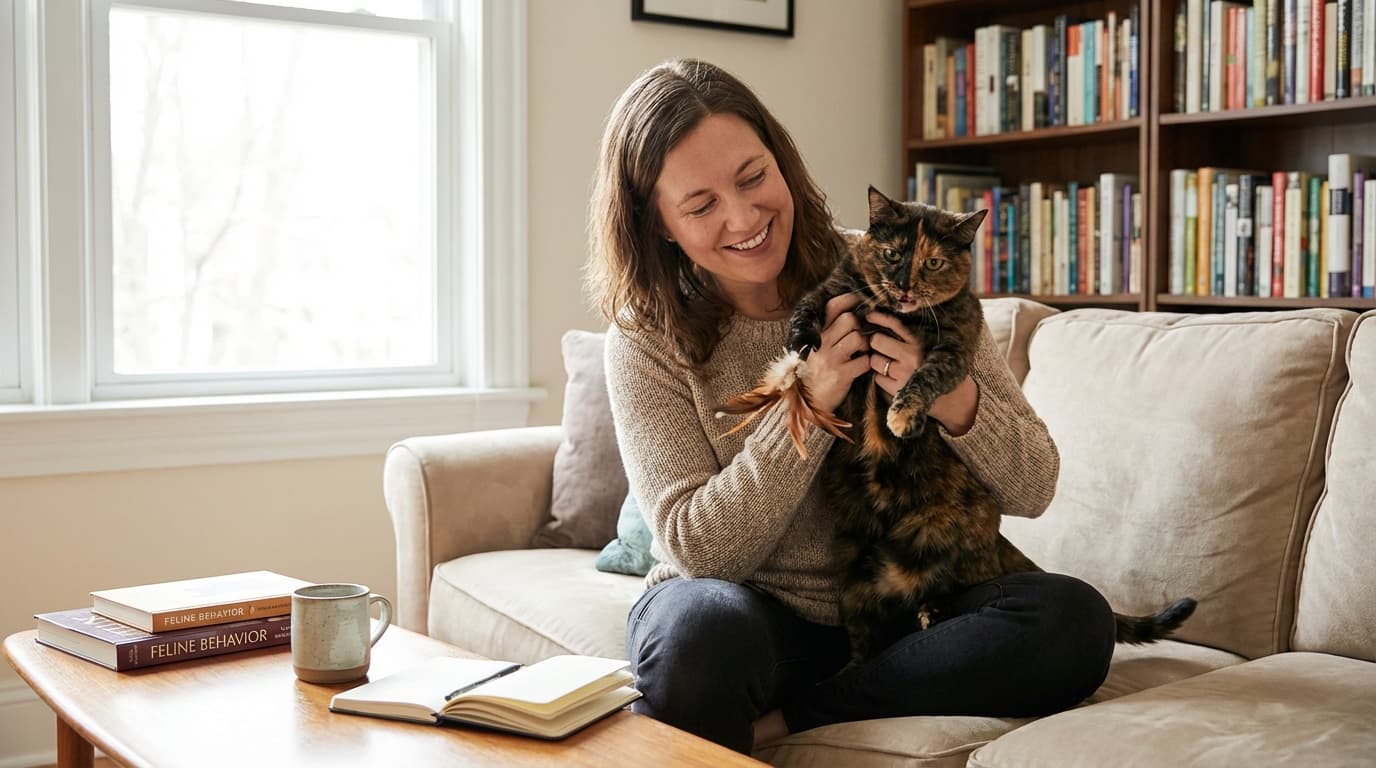
Why Your Cat’s Playtime Needs a “Kill” Phase to Be Truly Satisfying
Ever wonder why your sweet cat suddenly decides your ankles are prey at three in the morning? It is not just random mischief. It is a sign that their inner...

PurrScript Editorial Team
Editorial Team
Why Your Cat’s Playtime Needs a “Kill” Phase to Be Truly Satisfying
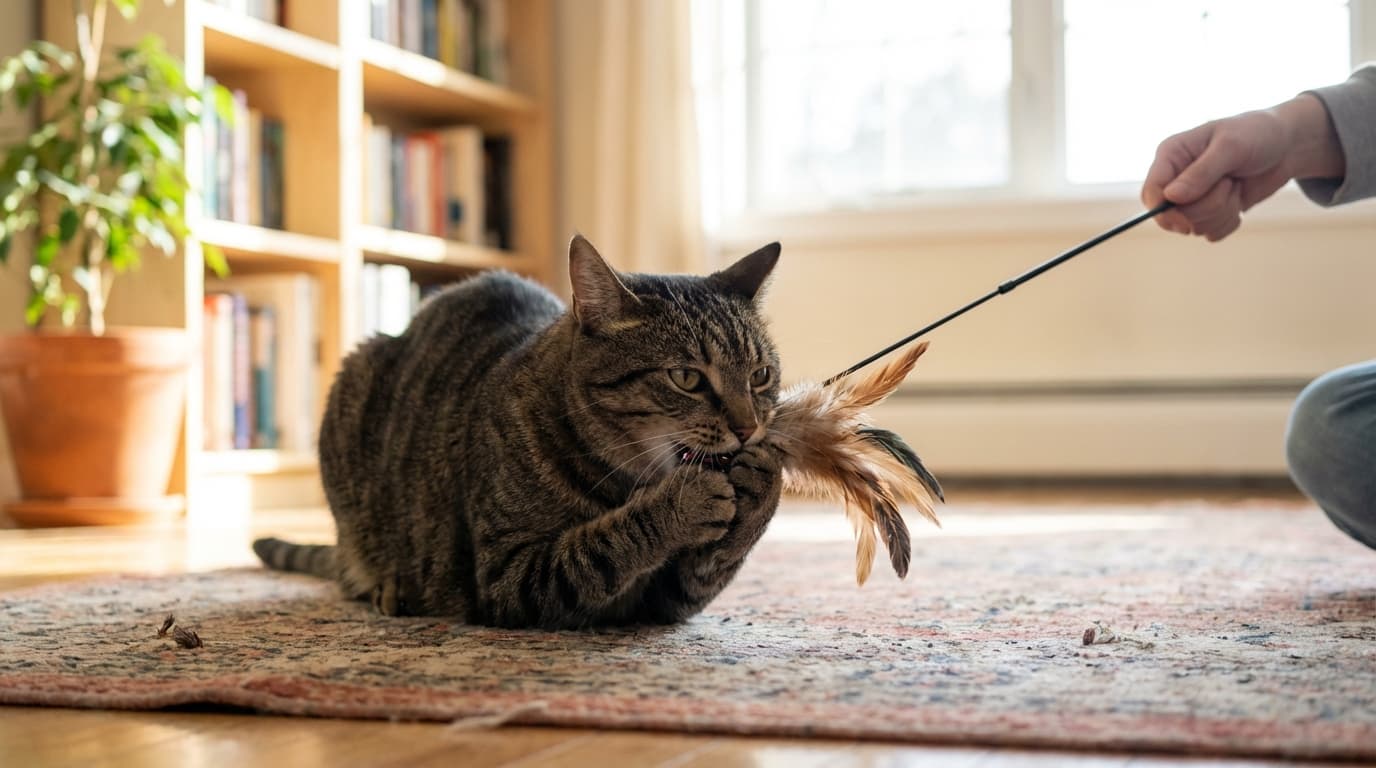
Ever wonder why your sweet cat suddenly decides your ankles are prey at three in the morning? It is not just random mischief. It is a sign that their inner hunter is frustrated. To a house cat, play isn't just a game. It is a job that requires a specific cat toy play sequence consisting of the stalk, pounce, and most importantly, the kill. Without that final catch, your cat stays in a high-alert state that often leads to shredded curtains or pounces on your toes.
We will look at why an indoor hunting simulation is the secret to a calm home and why some toys miss the mark. We will also break down the redirection of hunting behavior so those unwanted gifts on your carpet become a thing of the past. You will even find out why the feather wands vs laser pointers debate matters so much for your cat's mental health and overall happiness.
From the seven steps of the hunting dance to a five-minute routine you can start tonight, we have got you covered. You will soon know exactly how to turn your bored kitty into a satisfied and sleepy hunter.
Ever wonder why your cat attacks your feet at 3 AM? It is not just the zoomies. Your indoor predator is likely stuck in a cycle of frustration. While batting a plastic ball is okay, it does not satisfy the deep biological drive to actually catch and kill something. Without that final kill phase, your cat stays wired and looking for any moving target, which often ends up being your toes under the covers.
To fix this, we need to mimic the full hunting sequence: stalk, attack, catch, kill, eat, groom, and sleep. Experts recommend just five to ten minutes of this predatory play daily to keep your home peaceful. The secret is letting them sink their claws into a physical toy at the end. If you use a laser pointer, always transition to a plush toy or toss a few treats so they feel the win of the catch.
This simple shift does more than just save your ankles. It helps prevent stress behaviors like overgrooming or scratching the sofa. When your cat gets that physical reward, it triggers their natural cool-down. They will groom themselves, curl up, and finally let you get some sleep.
Key insights:
- Completing the hunt with a physical reward is necessary to prevent feline frustration.
- Predatory play is one of the five pillars of a healthy feline environment.
- A structured play sequence often leads directly to the groom and sleep phases.
The 7-Step Hunting Dance Every Cat Needs to Finish
Ever wonder why your cat suddenly zooms across the room or stares intensely at a dust mote? That is not just randomness; it is a biological drive turning your house pet into a tiny tiger. To keep them happy, you need to let them finish their natural hunting dance. This sequence has seven specific steps: stalk, attack, catch, kill, eat, groom, and sleep. If they skip even one part, they can end up feeling frustrated or stressed. Think of it as a story that needs an ending. Without that conclusion, your cat stays in a state of high alert instead of relaxing.
The catch and kill phase is where most indoor play sessions fall short. If you only use a laser pointer, your cat never actually feels anything under their claws. They need that physical resistance to release all that pent-up predatory energy. Behaviorist Mark Vette points out that completing this mock-hunt is essential for their mental health. Without a physical object to grab and bite, the hunt never truly ends. This is why some cats stay agitated or even get aggressive after you put the toys away. They need to feel the victory of the catch to let go of that intensity.
After the kill comes the reward. In the wild, a successful hunt ends with a meal, and your living room should be no different. This leads into the eat, groom, sleep finale. When you give your cat a treat or their dinner right after a vigorous play session, you are satisfying a deep biological clock. They eat, they clean themselves, and then they drift off into a peaceful nap. It is the perfect way to turn a high-energy predator back into a cuddly companion. Just five to ten minutes of this daily can even stop outdoor cats from bringing home unwanted gifts like mice or birds.
Missing these steps is more than just a minor oversight. Experts note that a lack of proper predatory play is a leading cause of behavioral issues like scratching furniture, overgrooming, or house-soiling. By simulating the full hunt, you are providing one of the five pillars of a healthy feline environment. It is not just about exercise; it is about psychological fulfillment. When you see your cat curled up and purring after a session, you will know the dance is finally complete and their instincts are satisfied.
Key insights:
- Completing the hunting sequence with a physical reward prevents feline frustration and stress.
- Daily predatory play for 5-10 minutes significantly reduces hunting behavior in outdoor cats.
- The 'Eat, Groom, Sleep' cycle is the natural biological conclusion to a successful hunt.
- Physical resistance during the 'Catch' phase is necessary to release predatory energy.
Why the “Catch and Kill” Phase is Non-Negotiable
Ever watched your cat frantically chase a laser pointer only to walk away looking grumpy? That’s because they need to feel something under their claws to truly finish the job. Without that physical catch, their brains stay stuck in high gear. Mark Vette, a well-known animal behaviorist, explains that for a cat to feel totally satisfied, they need to complete the full hunting sequence: Stalk, Attack, Catch, Kill, Eat, Groom, and Sleep. Skipping the catch is like running a marathon but being stopped ten feet before the finish line.
This catch and kill phase is vital because physical resistance helps release pent-up predatory energy. When your cat gets to sink their teeth into a kicker toy or bunny-kick a wand attachment, it provides a necessary outlet for their instincts. Just 5 to 10 minutes of this intense play daily can stop behavioral issues like overgrooming or furniture scratching before they start. It turns a simple game into a deep sense of accomplishment that lets your cat finally relax.
Key insights:
- Physical contact during play prevents the psychological frustration often caused by laser pointers.
- Completing the Catch and Kill steps allows cats to transition naturally into Eat, Groom, and Sleep mode.
- Daily predatory play significantly reduces the urge for indoor-outdoor cats to hunt local wildlife.
From Stalking to Sleeping: The Full Cycle Explained
Have you ever noticed how an intense play session ends with a long bath and a nap? That isn't an accident. It’s the natural end of the feline hunting sequence: Stalk, Attack, Catch, Kill, Eat, Groom, and Sleep. When we play with our cats, we are essentially guiding them through a mock hunt. Experts suggest five to ten minutes of this daily to keep their environment healthy and reduce the urge to hunt local wildlife.
The secret to a calm cat is the 'Eat' phase, which acts as the bridge to relaxation. If a cat 'kills' a toy but gets no physical reward, they often stay revved up and frustrated. Tossing a few pieces of kibble or offering a small meal right after play signals that the hunt is over. This mimics the biological reward of a real catch and satisfies their internal drive.
Once the belly is full, the 'Groom and Sleep' finale kicks in naturally. This transition is vital because it prevents the pent-up energy that leads to shredded curtains or midnight aggression. By closing the loop, you are not just tiring them out; you are providing the mental peace they need to truly settle down for the night.
Key insights:
- The complete sequence includes Stalk, Attack, Catch, Kill, Eat, Groom, and Sleep.
- Ending play with food prevents frustration and behavioral issues like furniture scratching.
- Just 5-10 minutes of structured predatory play daily can significantly improve indoor cat welfare.
Feather Wands vs. Laser Pointers: The Great Debate
Have you ever watched a cat go absolutely wild for a laser pointer? It looks like the peak of feline fun, but it is actually one of the most debated topics in the pet world. While it definitely gets your cat moving, that little red dot is essentially a ghost. Your cat stalks it and pounces on it, but their paws find nothing but the floor. This uncatchable nature breaks the natural hunting sequence that cats have relied on for thousands of years. Recent insights show that for a healthy environment, cats need five to ten minutes of predatory play every day. But when the hunt never ends in a catch, it can lead to genuine feline frustration.
This matters because cats are hardwired to finish what they start. When they cannot physically grab their prey, they might redirect that pent-up energy into behaviors you probably won't like, such as picking on the dog or shredding your favorite armchair. If you just cannot give up the laser, there is a way to use it safely. The secret is making the hunt feel real. Try leading the light toward a hidden treat or a plush mouse. When your cat catches the dot on top of a physical object, their brain finally gets the signal that the job is done. It is a simple fix that turns a tease into a win, keeping your living room peaceful and your cat's stress levels low.
The real issue with the red dot is that it skips the most important part of the hunt: the physical kill phase. Cats are biological machines designed for a specific sequence: stalk, attack, catch, kill, eat, groom, and then sleep. As behaviorist Mark Vette points out, getting that full sequence in is the key to maximum satisfaction. Feather wands usually win the great debate because they allow your cat to actually sink their claws into something. That tactile feedback is what tells their brain the hunt was a success.
If you want to stick with the laser, just make sure to point it at a physical toy or a treat at the very end of the session. This small change satisfies their predatory drive and prevents the behavioral issues, like overgrooming or house-soiling, that can come from a never-ending, unrewarded chase. Think of it this way: would you want to run a race if the finish line disappeared every time you got close? Probably not. By providing a physical reward at the end, you turn a frustrating game into a rewarding workout that keeps your cat mentally healthy and happy.
Key insights:
- Completing the hunt with a physical reward is necessary to prevent feline frustration.
- The full hunting sequence includes: Stalk, Attack, Catch, Kill, Eat, Groom, and Sleep.
- Feather wands are generally better for long-term behavioral health because they provide tactile feedback.
- If using a laser, lead the dot to a treat or physical toy to simulate a successful catch.
The Hidden Frustration of the Red Dot
Ever watched your cat go wild for that red dot? It looks like fun, but it is often just a tease. Cats need to feel something under their paws to feel successful. A real hunt follows a set path: stalk, attack, catch, and kill. When the dot vanishes, the cycle breaks and the cat never gets that win. This can lead to frustration or even behavior issues like scratching the sofa because they have nowhere to put that leftover energy.
You can fix this with a quick trick. Point the laser at a treat or a plush mouse so they finally catch something real. This matters because five to ten minutes of daily play helps indoor cats stay calm and happy. Feather wands are usually better for the long haul because they let your cat grab and bite. As expert Mark Vette says, completing that sequence from stalk to eat is the secret to a truly satisfied cat.
Key insights:
- Lasers can cause frustration because they lack a physical catch phase.
- Transitioning the laser to a physical toy or treat completes the hunting sequence.
- Daily predatory play for five to ten minutes reduces stress and unwanted behaviors.
Why Your Cat Brings You “Gifts” (And How to Redirect It)
Ever stepped outside to find a "gift" from your cat on the mat? It is gross, but for your cat, it is a natural behavior rooted in their predatory drive. While we see a mess, they see a job well done. The good news is you can cut down on these trophies easily. Recent findings show that just five to ten minutes of daily play can significantly reduce the number of wild animals an indoor-outdoor cat brings home. It gives them a safe outlet for that energy before they head out.
To satisfy that urge, you should mimic the full hunting sequence: stalk, attack, catch, kill, and eat. Many of us stop after the catch, but experts say finishing with a treat is what leads to real satisfaction. Think of it this way: if you spent all day hunting for a burger but never got to take a bite, you would be pretty frustrated. This is why laser pointers can be tricky. If there is nothing physical to kill at the end, your cat stays stressed and might look for trouble elsewhere.
Turn this instinct into a game by using wand toys or a simple kibble toss. Throwing pieces of dry food across the floor engages their senses of hearing and smell. By letting them catch and eat their prey, you trigger the final parts of their cycle: grooming and sleeping. This keeps wildlife safer and prevents common behavioral problems like furniture scratching or house-soiling. It is a simple way to make your cat happier and your doorstep cleaner.
Key insights:
- Completing the hunting sequence with a food reward prevents the frustration often caused by laser pointers.
- A short 5-10 minute play session daily is enough to noticeably decrease hunting behavior in outdoor cats.
- The full feline cycle ends with grooming and sleep, which helps reduce stress-related behavioral issues.
The 5-Minute Hunting Simulation You Can Do Tonight
Think about the last time your cat looked bored or started swatting at your ankles for no reason. They are probably looking for a job to do. You can satisfy that wild drive in just five to ten minutes tonight without needing a lot of space. The goal is to act like prey. Use a wand toy to mimic the jittery and unpredictable movements of a bird or a mouse. Experts recommend this short daily burst because it is one of the five pillars of a healthy feline environment. It is not just about physical exercise. It is about mental health. Without this outlet, cats often turn to frustrating behaviors like scratching furniture or overgrooming.
To make the game feel real, you need to follow the natural hunting sequence: stalk, attack, catch, and kill. If you use a laser pointer, your cat never gets that satisfying catch moment, which can lead to a lot of built-up stress. Instead, let them sink their claws into a physical toy at the end of the chase. Animal behaviorist Mark Vette suggests finishing the play session with a small treat or a meal. This completes the full cycle of hunting, eating, and grooming before they settle down for a deep sleep. It fits easily into a busy human schedule and keeps your living room from becoming a combat zone.
On nights when you are too tired to wave a wand, the kibble toss is a perfect shortcut. This method engages their ears and nose rather than just their eyes. Take about ten to fifteen pieces of crunchy dental kibble and toss them one by one across a hard floor. The skittering sound mimics a scurrying insect, and your cat has to use their sense of smell to track the prize down in the shadows. It is a low effort way to keep high energy cats busy while providing a physical reward every time they find a piece. This simple simulation feeds their foraging instincts and gives them a sense of accomplishment before bed.
Key insights:
- Daily play for five to ten minutes can actually reduce the amount of real wildlife that indoor-outdoor cats bring home.
- A successful hunt must end with a physical reward or food to prevent the cat from feeling frustrated.
- Cats need variety in their routine, including social, predatory, and object play to stay behaviorally healthy.
The Kibble Toss: Engaging the Nose and Ears
Ever notice how your cat perks up at the tiniest crinkle of a bag? That is their hunting brain switching on. The kibble toss is a simple trick where you flick pieces of dental kibble across the floor for them to chase. It mimics the skittering sound of scurrying prey and the tempting smell of a fresh catch. This low-effort game is a lifesaver when you are exhausted but your cat is still bouncing off the walls.
The reason this works so well is because it finally completes the full hunting sequence. Most toys stop at the catch, but tossing a treat lets them actually eat their prize. Experts suggest that just five to ten minutes of this predatory play every day helps prevent behavioral issues like furniture scratching. It is a win-win situation. You get a relaxed pet, and they get to feel like the successful little hunters they were born to be.
When Boredom Turns Into Bad Behavior
Ever wonder why your cat suddenly lunges at your ankles or decides the sofa is their personal confetti machine? It is usually not because they are being mean. Instead, it is often a sign that their environment is missing a vital outlet for their natural instincts. Without a daily way to burn off steam, that pent-up energy has to go somewhere. Often, it ends up as overgrooming, house-soiling, or shredded furniture.
Think of play as a primary tool for stress relief rather than just a way to pass the time. Experts suggest that just five to ten minutes of predatory play every day can make a massive difference. For indoor-outdoor cats, this small window of activity even reduces the amount of wildlife they bring home. It turns out that when we do not give them a proper hunt, they find their own ways to satisfy that drive, and you probably will not like their choices.
The goal is to mimic the full hunting sequence which starts with a stalk and ends with a nap. If you only use a laser pointer, your cat gets stuck in the pursuit and never gets the satisfaction of the catch. This leads to frustration and more behavior issues. By letting them sink their claws into a physical toy and following it up with a treat, you complete the cycle. This builds a better bond and leaves you with a much calmer, happier companion.
Key insights:
- Short 5-10 minute play sessions daily are enough to significantly lower stress.
- Aggression toward owners is often a misplaced hunting instinct that needs a better outlet.
- Completing the hunt with a physical reward or treat prevents feline frustration.
The Future of Feline Fun: AI Toys and Puzzles
We’re seeing a big shift in how we keep indoor cats busy. AI-driven toys are everywhere now, moving on their own to mimic prey and keep things interesting while you’re busy. It’s a handy way to hit that daily goal of five to ten minutes of predatory play that experts recommend for a healthy environment. But while these gadgets are clever, they do not always satisfy a cat's deepest instincts.
Take food puzzles as an example. They are great for mental exercise, but the link to hunting is actually quite complex. Some studies show that while puzzles keep cats busy, they might actually lead outdoor cats to bring home more wild prey. This happens because a cat's drive to hunt is about the ritual, not just the food. They need the full sequence: stalking, attacking, and finally catching.
This is why tech will likely never replace you. A robot cannot easily replicate the kill phase where a cat sinks its claws into a physical toy. Without that tangible win, cats often get frustrated, which can lead to problems like overgrooming or aggression. Use the high-tech toys for extra enrichment, but remember that nothing beats a human-led session that ends with a real treat or a toy they can actually catch.
Key insights:
- AI toys help meet the 5-10 minute daily play requirement but lack the physical satisfaction of a catch.
- The hunting sequence must end with a physical reward to prevent stress and behavioral issues.
- Food puzzles are excellent for enrichment but do not always reduce the drive to hunt live animals.
Final Thoughts: Turning Your Hunter Into a Happy House Cat
Think about your cat's wild roots. They do not just chase for fun; they hunt to finish the job. To keep your pet truly happy, you should mimic the full cycle of Stalk, Attack, Catch, Kill, and Eat. Completing this sequence leads to a satisfied cat who is ready to groom and sleep instead of one who is frustrated and looking for furniture to scratch.
Just five to ten minutes of daily predatory play can stop behavioral issues like overgrooming or house-soiling before they start. It also builds a better bond between you two. For cats that spend time outside, this daily ritual even reduces the number of birds or mice they might bring home as gifts.
Next time you play, try this: right as the game ends, toss a few treats or a physical toy for them to grab. This gives your cat the physical kill and eat moment they need to feel successful. It is a small change that makes a big impact on their daily well-being.
Key insights:
- Daily play sessions of 5-10 minutes are essential for preventing stress-related behaviors.
- Ending play with a physical reward or treat prevents the frustration often caused by laser pointers.
- A successful hunt always follows the sequence of stalking, catching, and finally eating.
Frequently Asked Questions
It usually happens because your cat's hunting instincts have taken over and they have stopped seeing the difference between a toy and your hand. When cats play, they are actually practicing their predatory skills, which include stalking, attacking, catching, and killing.
If you use your fingers or toes as playthings, you are essentially acting as the prey. When the excitement peaks, your cat naturally wants to finish the hunt with a bite. To stop this, always use a wand toy or something that puts distance between your skin and their teeth. It helps them focus their energy on the right target instead of you.
It is not necessarily mean, but it can be very frustrating for a cat to hunt something they can never actually touch. For a cat, the most satisfying part of the hunt is the catch and kill phases. When the light just vanishes, they are left with a lot of adrenaline and nowhere for it to go.
This lack of a physical reward can sometimes lead to stress or even behavior problems like scratching furniture or overgrooming. If you love using the laser, just make sure to end the game by pointing the light at a physical toy or a few treats. This lets them feel like they finally caught their prey, which leads to a much happier and calmer pet.
You should aim for at least 5 to 10 minutes of focused, predatory play every single day. While it might seem like a short window, these few minutes of intense activity are vital for keeping your cat's environment healthy and their mind sharp.
Think of it as a daily requirement for their well-being. When cats don't get this outlet, they often find other ways to spend that energy - which usually means behavior problems like scratching your furniture, house-soiling, or even acting aggressive. It’s also a great way to bond, and for cats that go outside, it actually makes them less likely to hunt and bring home wild animals.
If your cat is walking away mid-game, they might be feeling frustrated because they aren't getting to 'finish' the hunt. Cats need to feel the satisfaction of a catch. If you're using something like a laser pointer, they can never actually grab the light, which can lead to them giving up entirely.
To fix this, try to mimic a real hunting sequence: let them stalk and pounce, but always make sure they get to bite or kick a physical toy at the end. You can even toss a few treats or a meal right after a play session. This follows their natural rhythm of 'Stalk, Attack, Catch, Kill, Eat.' Once they eat that 'prey' reward, they'll usually settle down to groom and sleep, feeling much more satisfied with the game.
Conclusion
So what does this all mean for your favorite feline? It means that playtime is more than just a way to burn off steam. It is a biological requirement. When you help your cat complete their natural cat toy play sequence, you are not just entertaining them. You are giving them a way to satisfy an ancient drive that otherwise ends up directed at your ankles or the furniture. Moving from the stalk and pounce to that final, physical catch makes all the difference in their mental health.
Your next move is simple. Tonight, skip the uncatchable red dot and grab a feather wand instead. Let them really sink their claws into something at the end of the chase, then follow it up with a small treat or a meal. This indoor hunting simulation is the easiest way to turn a frustrated hunter into a relaxed house pet.
A little bit of intentional play goes a long way toward a calmer home. Once they have had their kill and a good snack, you will likely find them curled up and ready for a long nap. A happy cat is a tired cat, and a tired cat is a much better roommate.
Send it to someone who should read it next.

PurrScript Editorial Team
Editorial Team
PurrScript's in-house editorial team. We research, write, and review every guide using established veterinary and behavioral resources, and update articles as best practices evolve.
View all articles