Why Your Senior Cat is Eating Like a Lion but Losing Weight
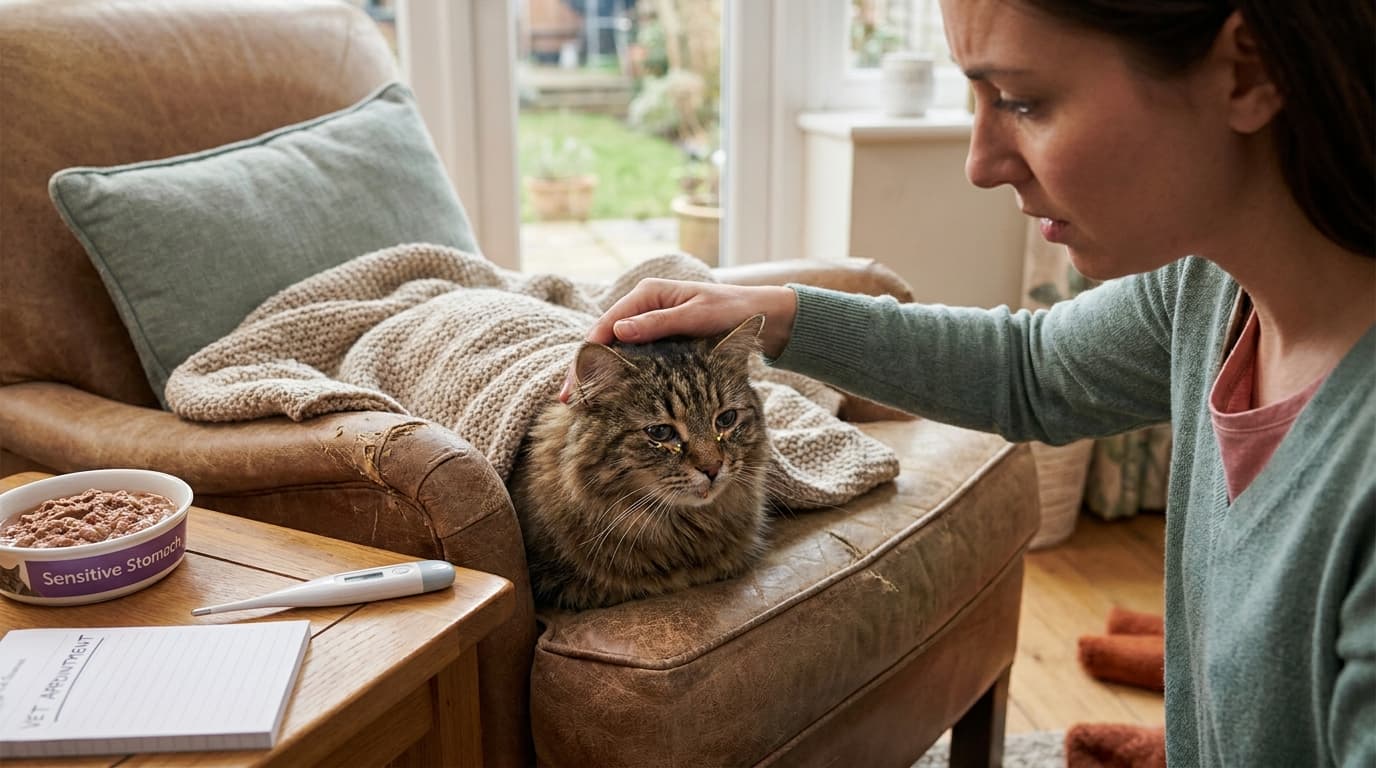
Have you noticed your senior cat suddenly acting like a hungry kitten again, raiding the food bowl but somehow getting skinnier by the day? It feels like a strange Benjamin...

PurrScript Editorial Team
Editorial Team
Why Your Senior Cat is Eating Like a Lion but Losing Weight
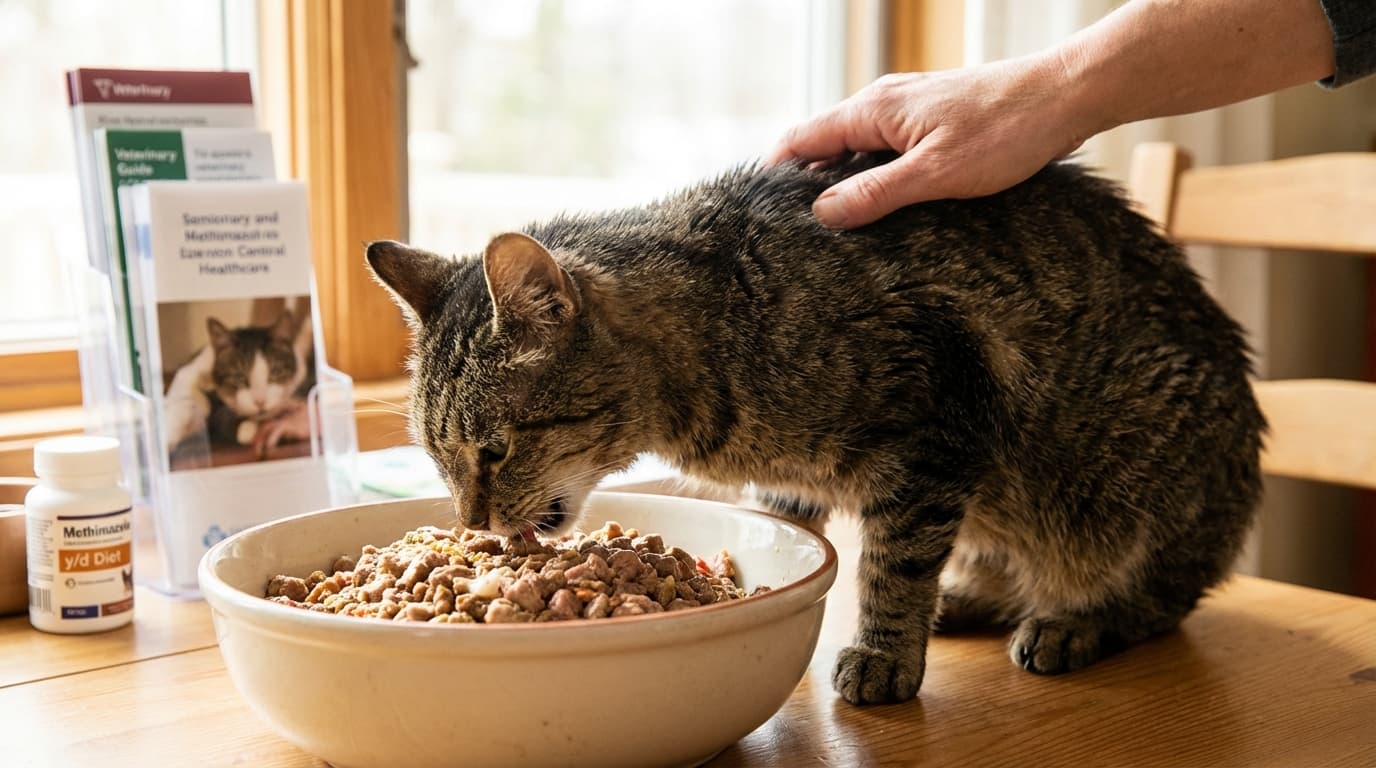
Have you noticed your senior cat suddenly acting like a hungry kitten again, raiding the food bowl but somehow getting skinnier by the day? It feels like a strange Benjamin Button trick, but that sudden burst of energy and appetite is actually a major red flag for their health.
This mystery is usually caused by an overactive thyroid in cats. It happens when a small growth sends their metabolism into high gear, making them feel constantly hungry even as they lose weight. While it is a common part of feline aging, it is also very treatable. You might have heard of daily meds like methimazole for cats, but there are also more permanent options like radioactive iodine therapy (I-131) or even a specialized y/d diet for cats.
This guide explains why weight loss with increased appetite happens and looks at the pros and cons of every treatment option. We will help you move past just managing the symptoms so you can find a real cure that gives your favorite feline a happy and healthy second act.
The Mystery of the Hungry, Skinny Cat
Imagine your senior cat is suddenly acting like a kitten again, sprinting through the hallways at midnight and begging for a third helping of dinner. It looks like they have found the fountain of youth, but there is a catch: despite the extra calories, their ribs are starting to show. This weight loss paired with a massive appetite is the classic red flag for feline hyperthyroidism. It is as if your cat’s internal thermostat is broken, forcing their body to burn fuel faster than they can possibly consume it.
Beyond the hunger, you might notice some odd behaviors that seem unrelated at first. Some cats develop greasy or unkempt fur because they are too restless to groom properly, while others start vocalizing loudly at night for no apparent reason. You might even see a sudden burst of 'zoomies' in a cat that usually naps all day. These aren't just quirks of aging; they are signs of a metabolism running at a frantic, unsustainable pace that puts immense strain on the heart and kidneys.
The history of this disease is surprisingly short. While doctors have known about thyroid issues in humans since 1913, the condition wasn’t even described in cats until 1979. This sudden jump has led researchers to look at our modern homes for answers. Many suspect environmental factors, such as fire retardants in furniture or specific ingredients in canned cat food, are behind the rise in cases. It is a relatively new challenge for the feline world, but one we are getting much better at catching early.
When a vet mentions a thyroid growth, the first thing most owners think of is cancer. Thankfully, the reality is much less scary. About 98% of these cases are caused by benign adenomas - simple enlargements of the gland - rather than aggressive carcinomas. Think of it as a factory that refuses to turn off the assembly line rather than a malicious invader. While it needs to be treated, it is rarely the terminal diagnosis that many people fear when they hear the word 'tumor.'
In about 70% of cases, both lobes of the thyroid gland are involved, which vets call bilateral disease. During a routine checkup, your vet will feel along the neck for what they call a 'thyroid slip.' This is a tell-tale sign where the enlarged gland actually slides under their fingers during a palpation. It is a simple physical clue that confirms the internal engine is idling way too high and helps guide the next steps toward getting your cat back to their healthy, normal self.
Key insights:
- Weight loss in the face of a ravenous appetite is the most reliable early warning sign of thyroid trouble.
- The disease is almost always treatable because the vast majority of cases involve non-cancerous growths.
- Modern environmental factors like indoor chemicals and diet are strongly linked to the sharp increase in feline cases since the late 1970s.
- A simple physical exam can often detect the 'thyroid slip' before blood tests even confirm the diagnosis.
It is Usually Not Cancer
Hearing that your cat has a growth in their neck is enough to make any pet parent's heart skip a beat. But here is the relief you need. It is almost never cancer. In fact, about 98% of these cases are just benign adenomas. These are non-spreading lumps that simply work too hard. Only a tiny 2% turn out to be actual thyroid carcinoma. So, while the symptoms look intense, the underlying cause is usually a fixable glitch rather than a scary malignancy.
Most of the time, this isn't just happening on one side. About 70% of affected cats have bilateral disease, which means both lobes of the thyroid gland are involved. You might wonder how a vet even finds this. During a checkup, they perform what is known as a thyroid slip. They gently feel along the windpipe for a tiny, firm bump that slides under their fingers. It is a quick move, but it is often the first real clue that your senior cat's metabolism has shifted into overdrive.
Key insights:
- 98% of cases are benign adenomas, making the condition very treatable.
- Bilateral involvement is common, affecting both thyroid lobes in 70% of cats.
- The thyroid slip is a simple physical exam technique vets use to detect enlargement.
Methimazole: The Daily Pill (or Gel) Routine
Imagine your senior cat is suddenly acting like a kitten again - racing around the house and eating everything in sight - but they are still getting skinnier by the day. That is the classic face of feline hyperthyroidism. To manage it, most vets reach for methimazole. Think of this drug as a sturdy band-aid on a leaky pipe. It does a great job of holding back the flood of thyroid hormones, but it doesn't actually fix the leak itself. This medication, which originally started as a human drug in the 1940s before moving to vet clinics in the 80s, is the go-to maintenance plan. It works by blocking the production of those extra hormones that are making your cat's metabolism run at 100 miles per hour.
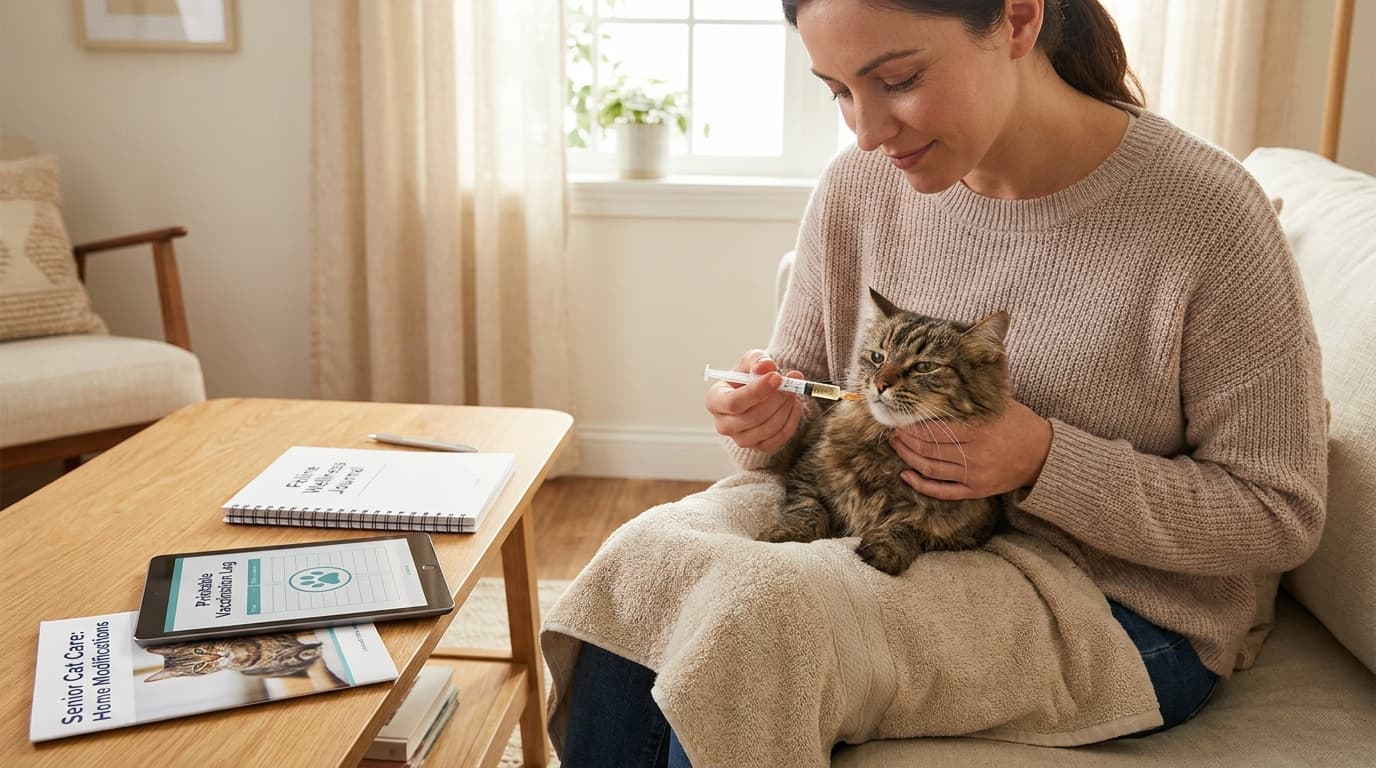
You generally have two ways to give it: a tiny pill or a transdermal gel you rub inside their ear. If your cat treats a pill pocket like a personal insult, the gel is a total lifesaver. But there is a hidden cost to this convenience. While it feels easier, you have to wear gloves and be incredibly careful not to get it on your own skin. Also, the price tag adds up faster than most owners realize. When you factor in the medication and the frequent lab work required to monitor liver enzymes and kidney function, you are looking at a recurring cost of $1,000 to $2,000 every single year. Over the life of a senior cat, that is a massive financial investment for a treatment that never actually solves the problem.
Here is the hard truth: the medicine hides the symptoms, but the underlying cause remains. In 98% of cases, this condition is caused by a benign tumor called an adenoma. Even while your cat is on their daily dose, that tumor continues to grow. This is why you might find yourself constantly heading back to the vet to increase the dosage. It is a moving target. What worked when your cat was twelve might not be enough by the time they are fourteen.
Beyond the fading effectiveness, some cats just do not handle the drug well. You might see vomiting or, more strangely, intense face scratching where the cat claws at their own head. Since about 70% of affected cats have both lobes of the thyroid involved, the disease is often more aggressive than a simple pill can handle. This is why long-term medical management is now often the second choice for owners who want a permanent fix.
Key insights:
- Methimazole manages symptoms by blocking hormone production but does not stop the growth of the underlying thyroid tumor.
- The annual cost of medication and monitoring often exceeds the one-time cost of curative treatments like radioactive iodine.
- Side effects such as severe facial itching and digestive upset can make long-term medical management difficult for many cats.
When Meds Stop Working
It’s a huge relief when the daily meds start working, but there’s a hidden reality: Methimazole is essentially a band-aid on a leaky pipe. It masks the symptoms while the underlying tumor - usually a benign growth - keeps right on expanding. Since 70% of affected cats have both thyroid lobes involved, the disease often quietly progresses even if your kitty seems better on the surface.
Eventually, the mask starts to slip. You might notice your cat scratching their face until it is sore or dealing with frequent stomach upsets. As that thyroid tissue grows, you will often need higher doses just to get the same results. When you factor in those rising dosages and the $1,000 to $2,000 annual cost for pills and lab work, it is easy to see why medical management is now often the second choice behind a permanent cure.
Key insights:
- Daily medication manages symptoms but does not stop the thyroid tumor from growing.
- Common side effects like skin irritation and digestive issues often emerge over time.
- The cumulative cost of medication and testing frequently exceeds the price of a one-time cure.
Radioactive Iodine (I-131): The One-and-Done Cure
Imagine a treatment so precise it acts like a heat-seeking missile for sick cells. That is the magic of Radioactive Iodine, or I-131. While daily pills feel like putting a band-aid on a leaky pipe, this is the actual fix. In about 98 percent of cats, hyperthyroidism is caused by a benign enlargement of the thyroid gland. A single injection of I-131 targets those overactive cells specifically, leaving the healthy tissue alone. It is incredibly effective, boasting a success rate between 95 and 98 percent. No scalpels, no stitches, and no daily struggle to hide pills in treats.
Since about 70 percent of cats have issues in both thyroid lobes, a systemic treatment like this is often smarter than trying to guess which side to operate on. Plus, it skips the scary parts of surgery. You do not have to worry about anesthesia or accidentally damaging the tiny parathyroid glands that control calcium. Instead, your cat gets a bit of a spa stay at a specialized clinic. They hang out in a quiet ward for a few days while the radiation levels in their body drop to a safe point. It sounds intense, but for most cats, the hardest part is just being away from their favorite nap spot for a weekend.
During the hospital stay, your cat is monitored by experts who ensure they are comfortable while the isotope does its work. This is a huge relief for owners who worry about the risks of surgical thyroidectomy, which can sometimes lead to life-threatening calcium issues. Instead of a surgical suite, your cat gets a cozy cage and plenty of quiet time. Most clinics even provide updates so you know how your radioactive kitty is doing. It is a short-term separation for a lifetime of health. This matters because it addresses the root cause, unlike medication which often needs higher doses as the cat ages and the tumor grows.
Getting ready for the big day requires a little bit of homework. You will need to stop any thyroid medications like Methimazole about 7 to 10 days before the appointment. If your kitty is on a special iodine-restricted diet, they will need to switch back to regular food about two weeks prior. This ensures their thyroid is hungry enough to soak up the I-131 treatment. It might feel weird to stop the very things keeping them stable, but it is a necessary step to make the cure stick.
Once your cat comes home, life gets a little glowy for about two weeks. You will need to follow some strict safety rules, mostly involving what we call the radioactive poop phase. Because the isotope leaves the body through waste, you will be double-bagging litter or using flushable options while keeping a bit of distance during snuggle time. It sounds like a hassle, but consider the alternative. Managing this condition with pills and bloodwork can cost up to 2,000 dollars every single year. When you do the math, I-131 is not just the kinder choice, and it is usually the cheaper one in the long run.
The safety protocols at home are mostly about common sense and keeping the hot waste away from humans. You might need to wear gloves when scooping or keep the litter box in a low-traffic area. It is a two-week commitment that replaces a lifetime of pilling a cat who likely hates being pilled. When you look at the big picture, the peace of mind is worth the temporary logistics. You are trading a daily struggle for a permanent solution that lets your cat get back to being a lion without the weight loss.
Key insights:
- I-131 is considered the only true cure because it destroys the underlying tumor rather than just managing symptoms.
- The treatment avoids the high risks associated with surgery, such as parathyroid damage and anesthesia complications.
- While the upfront cost is higher, I-131 is more cost-effective than a lifetime of medication and lab work which can exceed 2,000 dollars annually.
- Preparation is vital, as cats must be off all thyroid medications and special diets for up to 14 days to ensure the treatment is absorbed.
Preparing for the Big Day
Getting your cat ready for I-131 therapy feels a bit like preparing for a tiny science experiment. About 7 to 14 days before the big day, you will need to stop all methimazole or special thyroid diets. This is crucial because the thyroid gland needs to be active and 'hungry' enough to fully soak up the treatment. It might feel a little nerve-wracking to stop their medicine, but keep in mind that this single injection boasts a 95% to 98% cure rate.
Once your cat returns home, you start the two-week 'radioactive' phase. This mostly means being extra careful with the litter box. You will be flushing waste or double-bagging litter to stay safe while the isotope leaves their system. It sounds like a lot of work, but compare it to the alternative. Managing hyperthyroidism with daily pills and blood tests can cost up to $2,000 every year. Choosing the cure now usually saves you a lot of money and stress in the long run.
Key insights:
- Stopping meds 7-14 days early ensures the thyroid is active enough for the I-131 to work.
- The two-week home isolation period focuses mainly on specialized litter disposal.
- I-131 is often cheaper than the $1,000-$2,000 annual cost of lifelong medication and lab work.
Is Surgery or Diet Still an Option?
Can't we just cut the problem out? It sounds like a quick fix, but for a senior cat, surgery - or a thyroidectomy - is rarely the first choice anymore. Since about 70% of affected cats have issues in both thyroid lobes, the procedure is surprisingly complex. Most importantly, putting an older kitty under anesthesia is a big gamble that many vets aren't willing to take if they can avoid it.
There is also a hidden danger: the parathyroid glands. These tiny organs sit right next to the thyroid and control calcium. If they get damaged during surgery, it can lead to life-threatening complications. Compare that risk to radioactive iodine therapy, which has a 95% to 98% cure rate without a single incision, and you can see why the scalpel is losing its popularity.
But what about just changing their food? You might have heard of the y/d diet. It works by strictly limiting iodine, which the thyroid needs to make hormones. It sounds easy, but the 'no treats' rule is brutal. If your cat gets even one bite of regular food, a single stray treat, or even licks a bowl of milk, the entire treatment is reset. For most of us who love to spoil our cats, that level of perfection is almost impossible to maintain.
Key insights:
- Surgery is often avoided because anesthesia poses significant risks to senior cats with potential heart or kidney issues.
- The prescription y/d diet requires 100% compliance; even a tiny amount of iodine from a treat can make the diet ineffective.
- Damage to the parathyroid glands during surgery is a major concern that can cause permanent health problems.
Is it the Canned Food? Exploring the Causes
Ever wonder why feline hyperthyroidism seems to be everywhere lately? It is a relatively new problem in the veterinary world, first described in cats back in 1979. Since then, cases have skyrocketed. While 98% of these cases are caused by a non-cancerous growth on the thyroid, the real mystery is what triggers that growth in the first place. Many experts point toward our modern indoor lifestyle as the primary culprit.
Your cat's dinner bowl might hold some of the answers. Research suggests a strong link between thyroid issues and cats who mainly eat canned food, specifically fish or liver flavors. Even the packaging plays a role, as the liners in pop-top cans often contain chemicals that can mess with a cat's endocrine system. Managing this with daily medication is a bit like putting a band-aid on a leaky pipe. It might hold back the water for a while, but it does not fix the actual leak, and the underlying tumor often keeps growing anyway.
It is not just about the food, either. Our homes are full of hidden triggers like flame retardants found in household dust. Because cats are fastidious groomers, they lick these chemicals right off their fur. To help detox your kitty's environment, try switching away from pop-top cans and use a vacuum with a HEPA filter to clear out chemical-heavy dust. Small changes like these can help protect your senior cat from the environmental factors that seem to be driving this modern feline epidemic.
Key insights:
- Canned food, especially fish flavors and pop-top lids, is a major environmental suspect.
- Indoor chemicals like flame retardants accumulate in dust and are ingested during grooming.
- Simple changes like better air filtration and dietary shifts can reduce your cat's chemical load.
Frequently Asked Questions
It is tough to give an exact timeline, but most cats only survive six months to two years if the condition is ignored. The disease essentially puts their body into a permanent state of overdrive, which eventually wears out the heart and kidneys because they are working way too hard every single day.
Since about 98% of these cases are caused by a small growth that keeps getting bigger, the symptoms only get worse as time goes on. It is a bit like a leaky pipe that never gets fixed. Eventually, the severe weight loss and heart strain become too much for their system to handle.
Yes, it is actually often the safest path for senior cats. Because it is just a simple injection under the skin, your cat does not need to go under anesthesia like they would for a traditional surgery. This removes a lot of the big risks that usually come with treating an older pet with a sensitive heart.
The success rate is also incredibly high, sitting between 95% and 98% for a single treatment. It is much easier on an old cat than the daily stress of being pilled or the side effects of long term meds. Plus, it fixes the root cause so you do not have to worry about the thyroid tumor growing larger as they age.
It is super frustrating to see your kitty getting thinner when the bloodwork says everything is fine. One reason might be that while the medication is masking the symptoms, the thyroid tumor itself is still growing. Think of the medicine like a band-aid on a leaky pipe. It might stop the water for a bit, but it does not fix the actual leak.
Sometimes the dosage needs to go up as your cat gets older because the disease is still moving forward in the background. It is also possible that another issue like kidney disease or a stomach problem is hiding behind those thyroid numbers. If the weight keeps dropping, it is worth asking your vet if the current dose is truly enough for your specific cat's needs.
You can definitely give your cat some love, but you have to be a bit careful for about two weeks after they come home. Since the I-131 treatment uses radioactive iodine, your cat stays slightly radioactive for a short window. Most vets suggest keeping snuggling sessions very brief, maybe just a minute or two at a time.
You should avoid letting them sleep in your bed or sitting on your lap for long stretches during those first fourteen days. Also, make sure to wash your hands well after any petting and handle their litter box with extra care by using gloves and double-bagging the waste. It is all about playing it safe while the medicine finishes its job.
Conclusion
What does all this mean for your hungry but skinny senior? It means the kitten energy you are seeing is not a miracle of aging, but a signal that your cat's metabolism is running on overdrive. Whether you decide on the daily routine of methimazole for cats or the one-time fix of radioactive iodine therapy (I-131), you are choosing to give your friend their comfort back. Dealing with an overactive thyroid in cats is no longer about just managing a disease, it is about finding a solution that fits your lifestyle.
If you notice that classic weight loss with increased appetite, your next move is a quick trip to the vet for a blood test. It is one of the most treatable issues an older cat can face, and catching it early makes options like a feline thyroidectomy or a y/d diet for cats much more effective. You do not have to just accept things like greasy fur and midnight yowling as an unavoidable part of your cat getting old.
With the right plan, your cat can go back to being a happy, healthy lap warmer instead of a stressed, hungry lion. Your senior kitty has plenty of purrs left to give, and helping their thyroid is the best way to make sure those years are good ones.
Send it to someone who should read it next.
PurrScript Editorial Team
Editorial Team
PurrScript's in-house editorial team. We research, write, and review every guide using established veterinary and behavioral resources, and update articles as best practices evolve.
View all articles