Your Living Room Doesn't Have to Look Like a Giant Scratching Post
Ever feel like your living room is being held hostage by a tattered, beige carpet tower? It is a common struggle for cat owners who want a beautiful home but...

PurrScript Editorial Team
Editorial Team
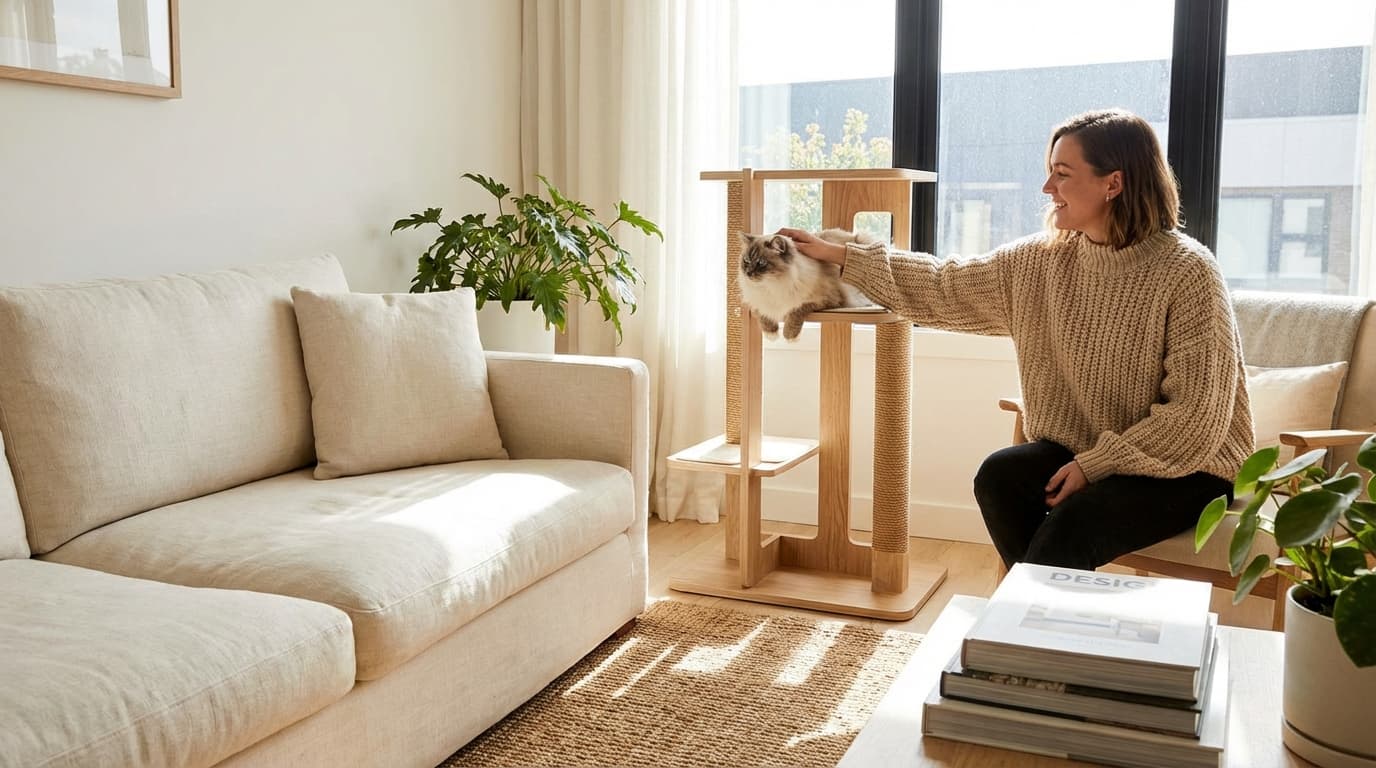
Your Living Room Doesn't Have to Look Like a Giant Scratching Post
Ever feel like your living room is being held hostage by a tattered, beige carpet tower? It is a common struggle for cat owners who want a beautiful home but also want their pets to be happy. You don't have to choose between a chic sofa and a satisfied cat anymore. By choosing the right cat-friendly upholstery fabric and pieces that actually match your style, you can reclaim your space without making your feline friend feel left out.
This guide is all about catification that actually looks good. We are moving past the days of bulky pet equipment and looking at a modern cat tree aesthetic that feels like functional art. You will find out which materials survive the zoomies, how to spot hidden toxins in furniture glues, and which rugs can handle a few stray claws.
We will also cover how to pick pet-safe plants and why investing in modular pieces saves you money in the long run. Whether you are living in a small apartment or a big house, it is time to stop settling for ugly gear. Let's look at how to create a home you and your cat both love.
The End of the Beige Carpet Cat Tree Era
Remember when having a cat meant sticking a massive, beige carpet tower in the middle of your living room? It felt like a constant trade-off between your personal style and your pet's happiness. But things are changing fast. The catification trend is all about merging high-end interior design with feline needs so you do not have to hide your pet's things when guests come over. Now, a modern cat tree aesthetic can actually look like a piece of art. Brands like Mau even design their products to elevate your space rather than clutter it.
Here is the thing you need to watch out for. Looks are great, but safety is non-negotiable. Some furniture, whether it is cheap or pricey, might be held together with toxic materials like formaldehyde glue. Animal behaviorist Russell Hartstein points out that these hidden chemicals are a real risk in many pet products. Also, think about longevity. Instead of buying disposable furniture that ends up in a landfill, look for modular systems. Many brands now offer replaceable parts so you can just swap out a scratcher pad when it gets worn down instead of tossing the whole tree.
This shift means you can finally start matching cat furniture to decor without any guilt. You can pick out cat-friendly upholstery fabric and pet-safe rug materials that can actually survive a case of the midnight zoomies. Even your greenery matters. Since 16 common house plants are toxic to cats, picking from the 20 identified safe varieties is a must for a healthy home. It is all about choosing the right fabrics, sturdy construction, and safe plants that keep your cat active and your living room looking sharp.
Key insights:
- High-end cat furniture is shifting from carpeted eyesores to sculptural pieces that function as home decor.
- Modular designs with replaceable wear-and-tear parts are better for the planet and your wallet.
- Safety standards like TSCA Title VI compliance are essential to avoid toxic glues in composite wood products.
- True catification involves balancing aesthetics with feline enrichment and non-toxic materials.
Choosing Fabrics That Survive the Zoomies
Ever watched your cat transform into a fuzzy blur at eleven PM? We call it the zoomies, but your sofa calls it a threat. If you want your living room to look like a home rather than a giant scratching post, the secret is in the weave. Loose loops, like those found in tweed or linen, are basically invitations for claws to snag and pull. Instead, look for tight weaves. Performance fabrics, specifically velvet and microfiber, are the real heroes here. Because they do not have a looped surface, cats usually find them remarkably boring to scratch. Plus, fur typically just slides right off rather than getting woven into the DNA of your cushions.
But it is not just about the texture. When you are shopping for that new armchair or a modern cat tree, keep an eye on what is holding it together. Animal behaviorist Russell Hartstein warns that some furniture, whether it is a budget find or a luxury splurge, might use toxic materials like formaldehyde glue. To stay safe, check if the manufacturer follows EPA TSCA Title VI standards for composite wood. Brands like Mau and Catit are leaning into this by offering modular pieces with replaceable parts. This means when your cat finally does get the best of a corner, you can just swap out a pad or a pillar instead of tossing the entire piece. It is better for your wallet and the planet, especially since brands like Mau even plant trees and donate five percent of their proceeds to charity.
Moving down to the floor, your choice of rug can make or break your cleaning routine. Shag rugs might feel nice on your toes, but they are essentially magnets for dander and dirt. Stick to low-pile options. They are much easier to vacuum and do not trap hair in a death grip. Washable rugs are also a huge win for multi-cat homes because you can just toss them in the machine after an accident. Just keep in mind that some washable options can be a bit thin, so you might need a good rug pad to keep it from sliding during a high-speed chase.
If you prefer natural fibers, choose wisely. Sisal is incredibly durable but it feels like a tree, which might actually encourage your cat to scratch the floor. Jute is softer on paws but can absorb moisture and smells more easily. Many modern owners are finding that a mix of synthetic performance rugs and strategically placed, stylish scratchers - like the Catit Vesper Box with its laminate finish - keeps the claws off the expensive decor. The reality is that your cats need love and a clean space more than a six hundred dollar litter box, so focus on materials that make your life easier.
Think of it this way: your furniture should work for you, not the other way around. By picking fabrics that resist snags and rugs that do not hide a mountain of fur, you can have a space that looks like an art gallery but functions like a playground. It is all about choosing pieces that are built to last and safe for your pets to climb on.
Key insights:
- Velvet and microfiber are ideal because the lack of loops discourages scratching behavior.
- Check for TSCA Title VI compliance to avoid toxic formaldehyde adhesives in pet furniture.
- Modular designs with replaceable parts, like those from Mau, extend the life of furniture significantly.
- Low-pile rugs are superior to shag for managing dander and making vacuuming more effective.
Pet-Safe Rug Materials That Are Easy to Clean
Ever feel like your rug is just a giant magnet for cat hair? We love our feline friends, but their fur and dander can turn a plush carpet into a cleaning nightmare in days. That is why low-pile options are a total game-changer for your living room. Because the fibers are short and tightly woven, hair sits on top instead of getting buried deep inside where vacuums cannot reach. This makes a quick cleaning session actually effective rather than a losing battle.
Then there is the washable rug trend. It sounds like a dream for a multi-cat household, right? Being able to toss a rug in the machine after a hairball incident is a huge win for your sanity. But wait, there is a catch. Some thinner washable rugs can bunch up during the zoomies or feel a bit flimsy underfoot. If you go this route, look for options with a sturdy, non-slip base. It keeps the rug in place when your cat decides to treat the hallway like a racetrack.
Natural fibers like sisal or seagrass are also great because they are tough against claws but still soft enough for a nap. However, safety matters just as much as durability. Just as we look for TSCA Title VI compliance in wood furniture to avoid formaldehyde, we should be mindful of the dyes and backings in our rugs. Choosing sustainable, non-toxic materials ensures your home stays a healthy space for everyone. After all, a stylish home is only great if it is also safe for the ones living in it.
Key insights:
- Low-pile rugs prevent dander and fur from becoming trapped deep in the fibers.
- Washable rugs offer convenience but require a high-quality rug pad to prevent slipping during active play.
- Natural fibers provide a durable texture that stands up to scratching while remaining pet-friendly.
- Material safety is vital; always check for non-toxic dyes and finishes to protect your cat's health.
The Secret to a Modern Cat Tree Aesthetic
Ever walk into a room and feel like the cat tree is the only thing you see? It doesn't have to be that way. We are moving away from those beige carpet towers that look like they belong in a basement from the nineties. Instead, brands like Mau are treating pet furniture like functional art. Their pieces use real wood finishes and minimalist lines that actually fit in a grown-up living room. It is about making your home look good while giving your cat a place to perch. Think of it as decor that your cat just happens to love.
When you invest in something like a Mau tree, you are not just buying a landing pad for your cat. You are getting a piece that elevates your space, which is exactly how the brand positions itself. They even plant trees and donate 5% of their proceeds to charity, which feels a lot better than buying a disposable plastic tower. Plus, they offer a one-year warranty and a 45-day return policy. This is great because we all know the struggle of buying something fancy only to have the cat decide they prefer the cardboard box it came in.
But let's be real: not everyone wants to drop half a paycheck on a cat tree. Medea Giordano from Wired hit the nail on the head when she said cats do not actually need a $600 setup to be happy. This is where the Catit Vesper line shines. For about $90, you get a sleek fiberboard look with a laminate finish that looks way more expensive than it is. Just a quick heads-up, though: when you are buying composite wood, check for TSCA Title VI compliance. Animal behaviorist Russell Hartstein warns that some furniture uses formaldehyde glue that can be toxic, so safety matters just as much as style.
If you are tight on floor space, look up. Wall-mounted systems are the perfect cat superhighway. They look like floating shelves to your guests but act as a playground for your cat. Brands like Catastrophicreations even offer free shipping on orders over $59, which is a nice perk when you are building a custom climbing wall. The trick is making sure you do not rip out your drywall. You really need to hit the studs or use heavy-duty anchors because a ten-pound cat jumping at full speed puts a massive amount of stress on those brackets.
The beauty of these modern systems is that they last. Instead of throwing away a whole tower when the carpet gets shredded, many of these brands now offer modular replacement parts. You can just swap out a scratching pillar or a felt pad when it gets worn down. You can even tuck a few cat-safe plants around the shelves to soften the look. Just stick to the 20 identified safe species and avoid the 16 toxic ones like lilies or sago palms. In the end, your living room should feel like your own space, not just a giant scratching post.
Key insights:
- High-end cat furniture is transitioning from carpeted eyesores to pieces that function as home decor and art.
- Longevity is now achieved through modular designs where you can replace individual wear-and-tear parts instead of the whole unit.
- Safety is a priority; look for TSCA Title VI compliance to avoid toxic formaldehyde glues in composite wood furniture.
- Wall-mounted systems provide feline enrichment without sacrificing floor space, provided they are anchored securely into wall studs.
Wall-Mounted Systems: Living Large in Small Spaces
Ever feel like your cat's gear is slowly evicting you from your own living room? If you are tight on square footage, floor-based trees are basically giant, carpeted roadblocks. This is where the cat superhighway comes in. By moving the action to the walls, you turn unused vertical space into a playground that doubles as floating shelving. It fits that minimalist cat accessories vibe perfectly because it keeps the floor clear and the room feeling open. It is about reclaiming your floor while giving your cat the high-ground advantage they naturally crave.
Safety is the big question here. You might worry about a cat bridge pulling out of the drywall during a midnight sprint. It is a valid fear, but good wall systems are built to handle the weight if you hit the studs. Beyond the physical build, there is a hidden safety layer to consider. Animal behaviorist Russell Hartstein points out that some furniture is held together with toxic materials like formaldehyde glue. Checking for TSCA Title VI compliance ensures those composite wood shelves aren't off-gassing in your home. It is one thing for a shelf to match a modern cat tree aesthetic, but it actually needs to be healthy for your pet to lounge on all day.
Think of these wall units as a long-term investment rather than disposable furniture. Brands like Mau and Catastrophicreations, who offers free shipping on orders over $59, are leaning into modularity. Instead of replacing a whole unit when the scratching surface gets shredded, you can often just swap out the pads or parts. Mau even includes a 45-day return policy and a warranty for functional defects. This shift toward sustainability means your home stays looking like a curated gallery instead of a pet store warehouse. You get your floor back, and your cat gets a view of the whole kingdom.
Key insights:
- Wall-mounted systems reduce floor clutter while satisfying a cat's natural instinct to climb.
- Safety involves both secure physical installation and verifying materials for formaldehyde emissions.
- Modular designs allow you to replace worn-out parts rather than buying entirely new furniture sets.
- High-end cat furniture now doubles as home decor, focusing on artful aesthetics and sustainability.
Is Your Cat Furniture Actually Safe?
When you are picking out a sleek new cat tree to match your minimalist decor, safety probably is not the first thing on your mind. You are likely thinking about how it fits in the corner or if the fabric matches your rug. But here is the thing: that stylish piece of furniture might be hiding a chemical secret. Animal behaviorist Russell Hartstein warns that both budget-friendly and luxury pet furniture can sometimes be held together with formaldehyde glue. It sounds intense because it is. These toxic adhesives can off-gas in your home, affecting the air you and your cat breathe every day.
So, how do you spot the good stuff? Look for a label or product description that mentions TSCA Title VI compliance. This is just a way of saying the composite wood meets the EPA standards for low formaldehyde emissions. Brands like Catit, which uses fiberboard with laminate finishes for their Vesper boxes, have to follow these safety standards to ensure their products are safe for your home. It is always worth a quick check of the fine print before you hit the buy button. Medea Giordano from Wired points out that while cats only truly need food, water, and love, if you are going to buy fancy furniture, it should at least be healthy.
Beyond the chemicals, think about the long game. We have all seen those carpeted towers that look like shredded wheat after six months. Instead of tossing the whole thing, look for brands like Mau that offer replaceable wear-and-tear parts. This approach is better for your wallet and the planet. It is a shift away from disposable furniture toward durable goods that you can actually refresh as your cat scratches them. This matters because most pet owners are tired of replacing an entire unit just because one pillar is frayed. Plus, with Mau sustainability mission, you are often supporting tree-planting initiatives with your purchase. They even offer a 45-day return policy and a one-year warranty, so you know the piece is built to last.
Adding greenery is the easiest way to breathe life into a room, but for cat owners, it can be a bit of a minefield. You might love the look of a structural Monstera or a trailing Pothos, but many of these popular plants are secretly toxic to cats. In fact, while there are about 20 common houseplants identified as perfectly safe, there are at least 16 popular varieties that can cause real trouble if your cat decides to take a nibble. It is not just about a stomach ache. Some can be genuinely dangerous for your pet's long-term health.
How do you keep your jungle vibes without the vet bills? Stick to cat-friendly options like Spider Plants or Calatheas. If you absolutely must have a plant that is on the risky list, get strategic with your styling. Use wall-mounted shelves or hanging planters to keep the leaves out of reach. Think of it as vertical decor that doubles as a safety measure. This fits right in with the current Catification trend, where we use wall space for climbing bridges and shelves to save floor space. You get the lush look you want, and your cat stays safe to climb their own furniture instead of your greenery. By choosing safe alternatives, you create a home that is beautiful for you and a sanctuary for them.
Key insights:
- Verify TSCA Title VI compliance to ensure wood furniture meets formaldehyde safety standards.
- Choose brands like Mau or Catit that offer replaceable parts to extend the life of your furniture.
- Stick to the 20 identified cat-safe plants to avoid common household toxicity risks.
- Use vertical styling and wall-mounted systems to keep greenery away from curious cats.
Plants That Play Nice With Cats
Ever feel like you have to choose between a Pinterest-worthy indoor jungle and your cat’s safety? It’s a common struggle. You might buy a beautiful plant only to realize it’s actually dangerous for your pet. The good news is that you don't have to live in a sterile house. There are 20 house plants identified as safe for cats, which means you can definitely find greenery that looks great without a midnight trip to the vet.
But here is the catch: 16 very common plants are secretly toxic to felines. Those 'aesthetic' plants you see in every home decor magazine aren't always pet-friendly. It’s not just about the leaves, either. Animal behaviorist Russell Hartstein points out that even expensive furniture can be held together with toxic materials like formaldehyde glue. When you're picking out new decor or greenery, looking for safety standards like TSCA Title VI compliance is just as important as checking the plant species.
How do you keep your lush vibes without the stress? Think about catification. By using wall-mounted systems, you can keep your safe plants high up and out of reach while still making the room look like art. Many modern brands are even leaning into sustainability now, planting trees or donating to charity with every sale. This way, your living room stays stylish, your cat stays safe, and you’re actually helping the environment at the same time.
Key insights:
- Stick to the 20 identified safe plants to avoid common toxicity risks.
- Check furniture for formaldehyde-free certifications like TSCA Title VI.
- Use vertical space to keep greenery visible but inaccessible to curious cats.
Why Buying Better Saves You Money in the Long Run
We have all been there. You buy a cheap, carpet-covered cat tree because it seems like a bargain, only to watch it turn into a pile of frayed strings and wobbly particle board within months. This is the trash furniture cycle. It feels like you are saving money upfront, but you end up back at the store sooner than you would like. Investing in modular pieces changes that. Instead of tossing the whole unit when your cat gets a bit too enthusiastic with their claws, you just swap out a single part.
Brands like Mau and Catit are leading this shift toward longevity. For instance, the Catit Vesper Box costs around $90 and uses a laminate finish that stays looking sharp. The real magic is in the details, like Velcro-attached pads you can replace whenever they get worn out. Mau even offers a one-year warranty and a 45-day return window, which takes the risk out of the higher price tag. This means you are buying a piece of furniture once and maintaining it, rather than treating pet gear as disposable junk.
There is also a hidden safety side to buying better. Cheaper furniture is often held together with formaldehyde glue, which animal behaviorist Russell Hartstein warns can be toxic. High-end brands usually stick to TSCA Title VI standards for their wood products to keep those emissions low. So, you are not just paying for a prettier look that matches your decor. You are paying for peace of mind and a healthier home environment for your cat.
Choosing quality also means your money goes further than just your own living room. When you pick a brand like Mau, they actually plant trees and donate 5% of their proceeds to animal charities. It turns a simple purchase into a way to give back. Think of it as a win-win. Your cat gets a sturdy, safe place to climb, your living room stays stylish, and you stop wasting money on temporary fixes that just end up in a landfill.
Key insights:
- Modular designs with replaceable parts prevent the need to replace entire units every year.
- Higher-end brands often comply with strict safety standards like TSCA Title VI to avoid toxic adhesives.
- Sustainable brands integrate charity and tree-planting into their business models, adding value beyond the product itself.
Bringing It All Together: Your Stylish Cat Home
Why choose between a chic living room and a happy cat when you can have both? The form meets function philosophy is all about treating your cat’s furniture like actual decor. Think of it this way: a cat tree can be a piece of art that doubles as a climbing spot. Brands like Mau even plant trees and donate 5% of proceeds to charity, so your purchase does some good while looking great in your corner.
But beauty should be more than skin deep. Animal behaviorist Russell Hartstein warns that some furniture is held together with toxic formaldehyde glue. To keep your home healthy, check for TSCA Title VI compliance on composite wood products. It is also smart to look for modular designs. Being able to replace just the scratched-up parts means your furniture lasts for years instead of becoming disposable trash after a few months of heavy use.
If you are feeling overwhelmed, just start with one statement piece and build from there. With Mau offering a 45-day return policy and a 1-year warranty, there is very little risk in trying something new. It is time to stop settling for ugly gear that you feel the need to hide when guests come over. Your cat deserves a playground, and you deserve a home that actually reflects your style.
Key insights:
- High-end cat furniture is shifting toward artistic designs that function as home decor.
- Modular parts and replaceable components extend the lifespan of pet furniture.
- Checking for TSCA Title VI compliance helps avoid toxic formaldehyde in composite wood.
Frequently Asked Questions
If you share your home with cats, you will want to look for fabrics with a very tight weave. Materials like microfiber or certain synthetic velvets are usually the winners because claws have a hard time snagging the threads. These fabrics also make it much easier to brush off cat hair, which is a huge plus for keeping your space clean.
But here is the thing that many people forget to check. You should also look into the safety of the materials used in the furniture construction. Some pieces use glues or finishes that release chemicals like formaldehyde. It is a good idea to look for products that meet TSCA Title VI standards to ensure your cat friendly fabrics are paired with a pet safe frame too.
It really depends on whether you are looking for a simple toy or a piece of decor that lasts. Brands like Mau are popular because they design trees that look like art and fit a modern aesthetic instead of just being carpet covered towers. They also offer a 45 day free return policy and a one year warranty, which makes the high price tag feel a bit safer.
One big benefit of these premium trees is that they often use modular parts. This means when your cat eventually shreds a scratching section, you can just replace that specific piece instead of buying a whole new tree. While some experts say cats only truly need the basics like food and love, these durable systems can actually save you money over time because they are not disposable items.
It is actually quite tricky because price does not always guarantee safety. Even expensive pieces can sometimes use formaldehyde glues to hold things together. Your best bet is to look for a label or product description that mentions EPA TSCA Title VI compliance. This standard specifically limits formaldehyde emissions in composite wood products.
If you are unsure, reach out to the brand and ask about their adhesives. Reliable companies are usually happy to share their safety standards. It is also a good sign if they use solid wood or high-quality laminates instead of raw, unfinished fiberboard which is more likely to off-gas.
The secret is all in the weave. You want to avoid looped rugs because cats love to hook their claws into those loops and pull. Instead, look for cut-pile rugs or tight, flat-weave options. Materials like sisal are very durable, but keep in mind that since many scratchers are made of sisal, your cat might think the rug is just a giant toy.
Synthetic fibers like nylon or polyester are also great because they are tough and easy to clean. If you are worried about longevity, look for brands that offer replaceable parts or modular designs. This shift toward durable goods means you can refresh specific sections as your cat wears them down rather than throwing the whole thing away.
Conclusion
So, what does this mean for your living room? It means the days of compromising your style for your cat’s comfort are finally over. By choosing cat-friendly upholstery fabric like velvet and investing in a modern cat tree aesthetic, you are creating a space where functional art and pet needs live together. It is about realizing that catification does not have to look like a cluttered pet store.
Your next move is to look at your home through a new lens. Instead of buying the first cheap tower you see, consider pieces with replaceable parts and safe, non-toxic materials that last for years. This shift not only saves you money but also keeps your home feeling like a grown-up space rather than a giant scratching post.
Start with one piece that fits your decor and watch how it changes the energy of the room. You deserve a beautiful home, and your cat deserves a place to climb. Luckily, you no longer have to pick just one.
Send it to someone who should read it next.

PurrScript Editorial Team
Editorial Team
PurrScript's in-house editorial team. We research, write, and review every guide using established veterinary and behavioral resources, and update articles as best practices evolve.
View all articles