Your Older Cat Isn't Mean—They're Just Territorial: A Stress-Free Introduction Guide
You finally brought home that tiny, fuzzy kitten only to find your sweet older cat transformed into a hissing, growling stranger. It is enough to make any pet parent panic,...

Mia Torres
Cat Lifestyle Writer
Your Older Cat Isn't Mean - They're Just Territorial: A Stress-Free Introduction Guide
You finally brought home that tiny, fuzzy kitten only to find your sweet older cat transformed into a hissing, growling stranger. It is enough to make any pet parent panic, but your resident cat isn't being mean because they are just protecting their turf.
Learning how to introduce a kitten to an older cat is more about chemistry than friendship at first. Since cats see a new arrival as a threat to their resources, you have to handle the transition with care to avoid resident cat jealousy and long-term stress.
This guide breaks down the essential cat introduction timeline, from the first day of scent swapping cats to feeding cats on opposite sides of a door. We also look at using Feliway for new cats and setting up your home so everyone feels safe. By the end, you will have a clear plan to turn those initial hisses into happy, quiet naps.
Imagine bringing home a fuzzy kitten only to have your sweet older cat turn into a hissing stranger. It is heartbreaking, but your cat isn't being mean. They are just protecting their turf. As behaviorist Dr. Sarah Bennett notes, a new kitten is a disruption to the social order, not a built-in playmate. To your older cat, this newcomer is an uninvited guest messing with their daily routine and sense of safety.
Since cats live through their noses, scent is the secret to peace. Rushing a face-to-face meeting usually backfires because it ignores their deep territorial instincts. Instead, try scent swapping by exchanging blankets daily. You can also feed them on opposite sides of a closed door to link that new smell with a tasty meal. It is about building a feeling of safety before they ever lock eyes.
Patience is key, as a real bond often takes weeks of slow steps. Stick to the 2+1 rule for litter boxes. That is one for each cat plus an extra to stop guarding behavior before it starts. You should also wait until around day eight for visual contact through a baby gate. Adding cat trees helps too, letting your older cat supervise the kitten from a safe, high distance.
Key insights:
- Scent swapping builds trust before physical contact occurs.
- The 2+1 litter box rule prevents territorial stress in shared spaces.
- Vertical territory like cat trees helps resident cats feel secure while observing newcomers.
Understanding the 'Green-Eyed Monster': Why Your Resident Cat Is Grumpy
Ever felt like your older cat is shooting daggers at you with their eyes since the new kitten arrived? It is easy to label this behavior as jealousy, but in the feline world, it is rarely about spite. To a cat, their home isn't just a place to sleep; it is a kingdom they have spent years securing. Dr. Sarah Bennett, a certified feline behaviorist, points out that cats rely heavily on routine and familiarity. A new kitten isn't just a cute playmate to them - it is a massive disruption to the established social order. When your resident cat hisses or retreats, they aren't being mean. They are reacting to a perceived threat to their safety and resources.
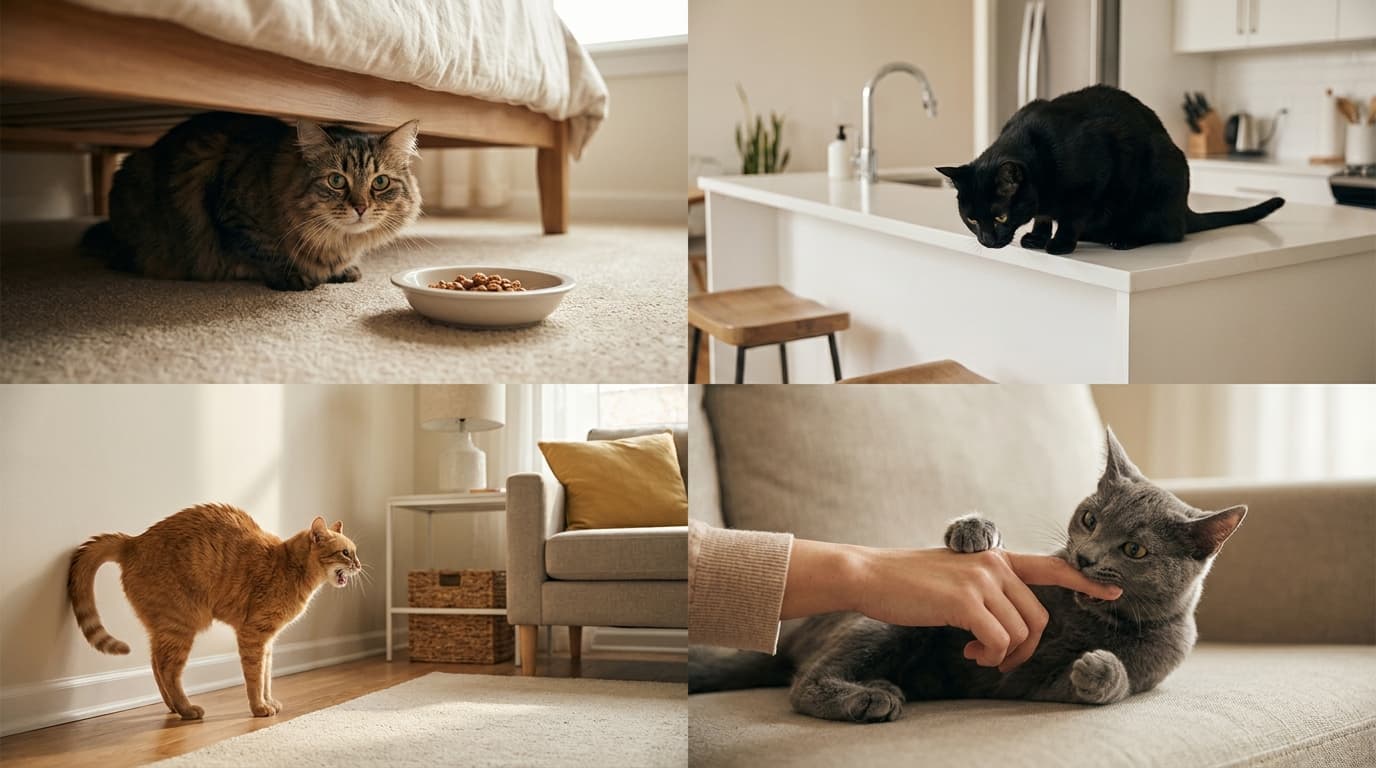
How do you know if your cat is struggling with the change? Stress shows up in ways that might seem odd at first. You might notice them hiding under the bed for hours, over-grooming until they have bald patches, or becoming unusually vocal. Some cats even start urinating outside the litter box. These aren't accidents meant to punish you; they are clear distress signals. Since cats are territorial by nature, any change in their environment can totally shake their sense of security. The goal is to show them that the new arrival doesn't mean their world is ending, but that takes time and a very specific plan.
Is it jealousy or just a bad routine? Here is the thing: cats thrive on predictability. When a kitten enters the mix, meal times might shift, or your lap might suddenly be occupied. This disruption triggers genuine anxiety because the resident cat no longer knows what to expect from their day. To help, stick to the 2+1 rule for litter boxes - having two boxes plus one extra ensures no one feels cornered or competitive over bathroom breaks. You should also consider vertical territory. Adding cat trees or wall shelves allows your older cat to monitor the newcomer from a safe distance, which is a huge confidence booster for a cat feeling a bit displaced.
The integration process is a marathon, not a sprint. Scent is the primary medium through which cats process social changes, so start with scent swapping - exchanging blankets or bedding daily - before they ever lock eyes. Think of it as an olfactory handshake. Most successful introductions follow a structured timeline where visual contact is only allowed around Day 8 or 10 through a cracked door or baby gate. Using tools like Feliway diffusers can also help by releasing synthetic pheromones that signal the environment is still secure. By focusing on these small, structured steps, you turn a stressful invasion into a manageable transition.
Key insights:
- Scent swapping is the most effective way to build olfactory recognition before cats ever meet face-to-face.
- The 2+1 rule for litter boxes prevents resource guarding and reduces territorial tension.
- Vertical space like cat trees allows resident cats to observe the new kitten without feeling threatened.
- Rushing the introduction timeline often leads to long-term behavioral setbacks or aggression.
Is It Jealousy or Just a Bad Routine?
Imagine your favorite coffee shop suddenly changed its layout, replaced the barista, and gave your usual seat to a stranger. That is exactly how a new kitten feels to an older cat. While we often call it jealousy, it is usually just a massive disruption to their sense of safety. Cats are territorial by nature, so when their environment changes, their anxiety spikes. It is less about hurt feelings and more about a lost sense of control.
How do you know if your resident cat is struggling? Look for signs like hiding, excessive grooming, or urinating outside the litter box. These are not acts of spite but clear stress reactions. Dr. Sarah Bennett explains that a new kitten is a disruption to the established social order rather than just a playmate. To help, use the 2+1 rule for litter boxes so they do not feel forced to share.
A successful integration takes weeks of slow steps. You can lower the tension by using Feliway and starting with scent swapping before any face-to-face meetings happen. By keeping the old routine as steady as possible, you show your resident cat that their home is still theirs. What matters most is patience because rushing the process usually backfires.
The Nose Knows: Starting with Scent Swapping
Imagine walking into your home and finding the furniture rearranged and a strange perfume hanging in the air. For a cat, that is not just a little annoying; it is a total security breach. Cats are territorial by nature, and their sense of safety is tied directly to the scent profile of their home. This is why scent swapping is the secret weapon for a peaceful introduction. Before your cats ever lock eyes, they need to get used to each other's unique smells in a way that feels safe and predictable.
Think of scent swapping as a low-pressure introduction. You are letting them meet without any of the physical tension that comes with a face-to-face encounter. The methodology is simple: grab a couple of small blankets or towels and let each cat sleep on one. The next day, swap them. Place the kitten-scented blanket near your older cat's food dish or favorite perch. This builds olfactory recognition in a neutral way. As Dr. Sarah Bennett, a feline behaviorist, points out, a new kitten is a disruption to the social order. By daily exchanging these items, you help your resident cat realize that this new scent is just a normal part of the house rather than an intruder.
If things feel a bit tense, you can also use pheromone diffusers like Feliway to help signal that the environment is secure. The goal is to make the new smell feel like home rather than an invasion. If your older cat starts sniffing the blanket calmly instead of hissing or hiding, you are winning. This phase is all about patience because rushing into a face-to-face meeting usually causes long-term behavioral setbacks or aggression. You are essentially building a friendship from the nose up.
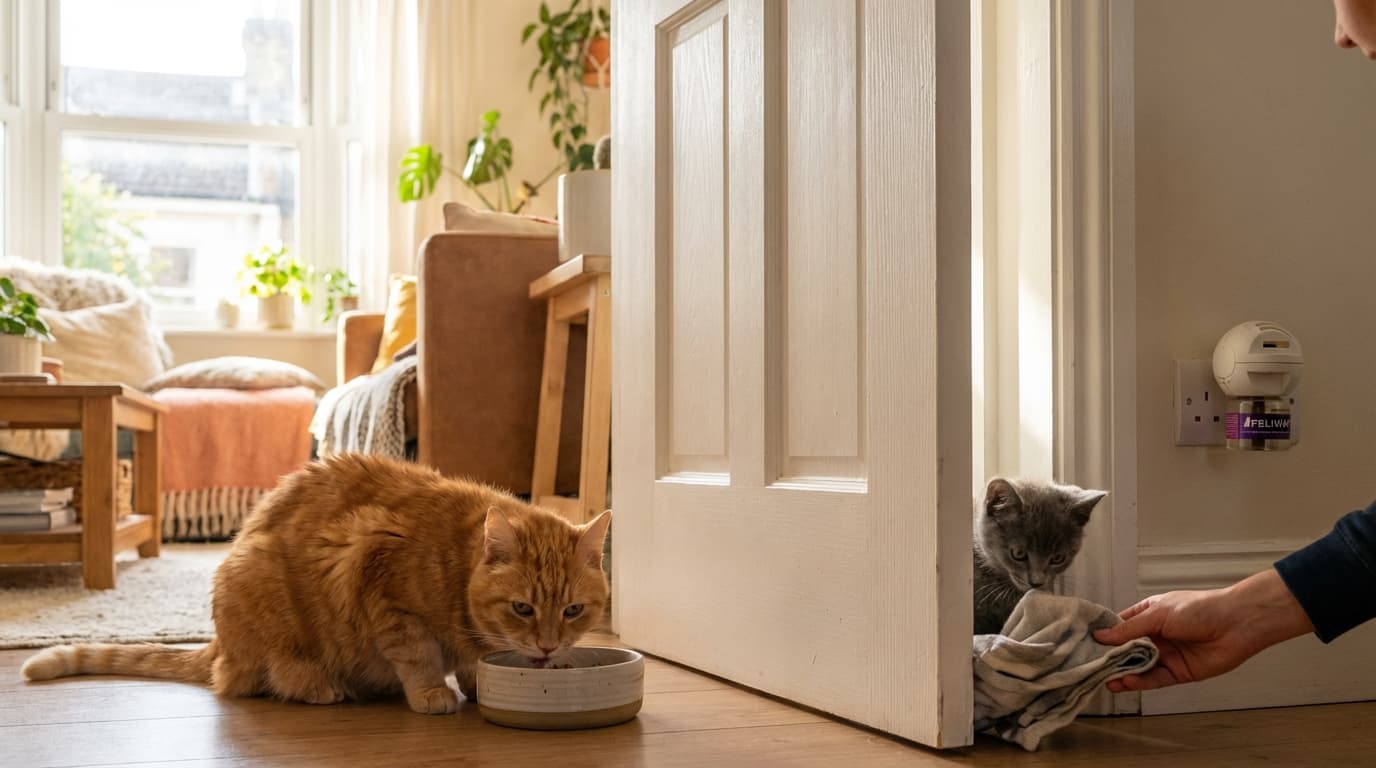
Once they seem relaxed with the scent exchange, it is time for the dinner date through a closed door. This is where the real magic happens. By feeding your cats on opposite sides of a door, you are teaching them to associate the other cat's scent with their favorite thing: food. It turns a potential territorial threat into a positive experience. It is much harder to be grumpy when you are enjoying a bowl of salmon pate.
The logistics are pretty straightforward, but they require a bit of observation. Place the food bowls on either side of the closed door. If your older cat seems hesitant, shows stress reactions like excessive grooming, or starts vocalizing, move the bowls further back. Each day, move them just an inch or two closer as they get comfortable. You want them to be able to eat a full meal while knowing the other cat is right there on the other side. This builds a foundation of trust that makes the eventual face-to-face meeting, which usually happens around day eight or ten, much less scary for everyone involved.
Key insights:
- Scent is the primary way cats establish a sense of safety and process social changes.
- Exchanging bedding daily allows cats to build recognition without the stress of physical contact.
- Feeding on opposite sides of a door creates a positive association between the new cat and mealtime.
- Patience is vital, as rushing the introduction process often leads to permanent territorial aggression.
The 'Dinner Date' Through a Closed Door
Think of this as the feline version of a blind date where nobody actually has to look at each other yet. Since cats process their social world primarily through scent, feeding them on opposite sides of a closed door is a brilliant way to hack their brains. You are essentially teaching both cats that the smell of the other person - or rather, the other cat - is a signal that something wonderful is about to happen. It turns a potential territorial threat into a dinner bell.
The logistics are straightforward but require a little bit of coordination. Start by placing their food bowls several feet away from the door on both sides. If everyone eats calmly, move the bowls a few inches closer during the next meal. The goal is to get them eating comfortably while catching whiffs of one another. As Dr. Sarah Bennett points out, a new kitten is a major disruption to the established social order, so we use these positive associations to build a new, peaceful routine.
Don't feel the need to rush this process. A successful integration often takes days or even weeks of structured steps. The reality is that rushing into a face-to-face meeting almost always backfires because cats are so territorial by nature. Keep inching those bowls closer until they are eating right against the wood of the door. Only when they are completely relaxed with this invisible dinner partner should you consider moving to visual contact, usually around Day 8 or 10, using a cracked door or a baby gate.
Key insights:
- Scent is the primary way cats establish a sense of safety during social changes.
- Feeding on opposite sides of a door creates a positive association with the other cat's smell.
- Visual contact should be delayed until both cats are comfortable eating near the closed door.
- Gradual exposure prevents long-term behavioral setbacks and territorial aggression.
A Realistic Timeline: From Day 1 to the Big Reveal
Think about how you would feel if a stranger suddenly moved into your house, started using your bathroom, and ate your snacks without asking. You would probably be pretty annoyed, right? That is exactly how your resident cat feels when a new kitten arrives. The old 'sink or swim' method where you just put them in a room together and hope for the best usually backfires because cats are territorial by nature. Any sudden change disrupts their sense of safety. Instead, you need a phase-based approach that moves slowly through scent, sound, sight, and finally, touch.
For the first seven days, your new kitten should be an 'invisible roommate.' Set them up in a dedicated 'base camp' room with their own food, water, and toys. This is also the time to implement the 2+1 rule for litter boxes: always have one more box than you have cats to prevent any fighting over territory. While they are separated by a door, start scent swapping. Exchange their blankets or beds daily so they get used to each other's smell before they ever lock eyes. This olfactory introduction is the most important step because scent is how cats process social changes.
During this first week, watch your older cat for signs of jealousy or stress. Are they hiding, grooming themselves too much, or acting out near the litter box? These are red flags that they feel threatened. To help, try using pheromone diffusers like Feliway to create a sense of calm in the house. You can also feed both cats on opposite sides of the closed door. If they can eat peacefully while smelling the other cat nearby, they are starting to associate that new scent with a positive reward like a tasty meal.
Around day eight or ten, you can finally move to the 'baby gate strategy.' This is the first time they will actually see each other, but the gate acts as a safety barrier. This visual contact is a big milestone, so keep these sessions short and sweet. Look for neutral body language - relaxed ears and soft eyes are good signs. If you see hissing or pinned-back ears, it just means they need a bit more time behind the door. There is no prize for rushing this part. What matters most is that both cats feel secure throughout the process.
To make the transition even smoother, make sure your home has plenty of vertical space. Cat trees and high shelves allow your older cat to observe the kitten from a safe distance without feeling like they have to defend their floor space. By giving them a way to escape upward, you reduce the chance of a physical confrontation. Remember, a successful integration can take weeks, but following this timeline ensures that when the gate finally comes down, your cats are ready to be roommates instead of rivals. It takes patience, but the peace and quiet in your home will be worth the wait.
Key insights:
- Scent swapping is the most effective way to build a positive association before physical contact.
- The 2+1 litter box rule prevents resource guarding and reduces territorial stress.
- Vertical territory like cat trees gives the resident cat a safe vantage point to monitor the new arrival.
- Visual contact should be delayed until at least day eight to prevent aggressive setbacks.
Days 1-7: The Invisible Roommate
Think of the first week as the ghost phase. Your new kitten stays in a single base camp room with everything they need. This isn't a punishment; it's a safety net. Cats are territorial by nature, and a sudden intruder can ruin their sense of security. As Dr. Sarah Bennett explains, a new kitten is a disruption to the established social order. By keeping them separated, you give your older cat time to process the new smells without the pressure of a face-to-face confrontation.
This week is all about scent swapping. Since smell is how cats process social changes, try exchanging blankets or bedding between rooms daily. You can even feed them on opposite sides of a closed door. This creates a positive association between the intruder's scent and a tasty meal. Watch your resident cat for stress signs like excessive grooming or hiding. If they seem tense, using a Feliway diffuser can help release calming pheromones that signal the home is still safe.
Don't forget the 2+1 rule for litter boxes. You want one for each cat plus an extra to prevent any guarding behavior. It might feel like you're moving slowly, but rushing this phase often leads to long-term aggression. Remember, visual contact shouldn't even happen until at least Day 8. For now, let them be invisible roommates while they learn to coexist through the wood of a door.
Key insights:
- Scent swapping is the most effective way to build olfactory recognition before cats ever see each other.
- Feeding cats on opposite sides of a door helps link the newcomer's scent with positive experiences like mealtime.
- The '2+1' litter box rule is essential to prevent territorial disputes and resource guarding in the early stages.
Day 8 and Beyond: The Baby Gate Strategy
By day eight, the mystery behind the closed door is probably driving both of your cats a little wild. Now is the perfect time to set up a baby gate or even just crack the door a tiny bit. This step is a big deal because it moves the introduction from just smells to actual sight. Since cats are naturally territorial, seeing a stranger in their home can be a huge shock to their routine. Most experts recommend waiting until this eight to ten day mark to prevent those long term behavioral setbacks that happen when humans move too fast.
Watch how they react through the bars. Are their ears pinned back or are they staring with giant pupils? These are clear signs of stress, much like hiding or vocalizing. On the flip side, if they sniff the gate and then walk away to eat or play, that is a huge win. It shows they are starting to accept the new roommate without feeling totally threatened. What does this mean for you? It means you are close to the finish line. Just keep these visual sessions short and positive until the gate feels like a boring piece of furniture rather than a battle line.
Key insights:
- Visual contact should only begin around Day 8 to 10 to ensure both cats feel secure.
- Positive body language, like walking away calmly after a sniff, is a better sign than forced interaction.
- Rushing the visual phase can lead to stress reactions like excessive grooming or hiding.
Setting Up the Environment for Peace
Imagine walking into your living room and finding a total stranger sitting on your favorite sofa, eating your snacks, and using your bathroom. You would be pretty annoyed, right? That is exactly how your resident cat feels when a new kitten arrives. They are not being mean or jealous in the human sense. They are simply reacting to a major disruption in their social order and their physical space. To keep the peace, you have to think like a cat and look at your home as a map of resources. Recent observations show that a slow introduction is much more successful than just letting them fight it out, and that starts with how you set up the house.
One of the biggest mistakes owners make is forcing cats to share their most private spaces too early. Consider the 2+1 rule for litter boxes. If you have two cats, you actually need three boxes. This matters because it prevents resource guarding. If one cat decides to camp out near a hallway, the other cat still needs a safe way to go without feeling threatened. Spreading these boxes out across different rooms ensures no one feels trapped or bullied. It is a simple way to lower the tension before it even starts because it removes the need for your older cat to patrol every single corner.
The same logic applies to dinner time. We often want our pets to eat together as a sign of friendship, but this creates a bottleneck that triggers stress. Instead, put food and water bowls in separate areas to avoid competition. If your older cat knows their meal is safe and will not be stolen by a high energy kitten, they can finally relax. You might even try feeding them on opposite sides of a closed door at first. This helps them associate the other cat's scent with something positive like food. It turns a scary new smell into a signal that something good is happening.
Don't forget to look up. Vertical space is your best friend for conflict resolution. Cat trees and wall shelves are not just for play. They are vital tools for keeping the peace. When a kitten gets too rowdy, an older cat can retreat to a high shelf to monitor the room from a distance. Being up high makes them feel secure because they can see everything without being touched. It is like having a private VIP lounge where the kitten cannot reach them. This simple change allows them to claim their own zone without a physical fight, which is exactly what a territorial cat needs to feel safe again.
Do Calming Aids Like Feliway Actually Work?
You have probably seen those diffusers in the pet store and wondered if they are just expensive air fresheners. The short answer is that they do work, but they are not magic. Products like Feliway release synthetic pheromones that mimic the happy messages cats leave when they rub their cheeks on furniture. These scents signal to a cat that their environment is safe and secure. It is basically a chemical all-clear sign that helps lower their baseline anxiety. For the best results, you should plug these diffusers in at least a week before the kitten arrives to create a buffer zone of calm.
However, a diffuser alone will not fix a bad environment. You have to combine these calming aids with the physical changes we talked about, like extra litter boxes and vertical space. Think of it as a support system rather than a total cure. If your older cat is still showing signs of extreme stress, like hiding constantly or vocalizing more than usual, you might look into nutraceuticals like Zylkène. These are natural supplements that help manage feline anxiety without heavy side effects. They can be a great bridge to help a nervous cat get through the first few weeks of a new introduction. Just remember that every cat is different, so what works for one might not work for another.
Key insights:
- Scent is the primary way cats process social changes and establish a sense of safety.
- Vertical territory allows cats to monitor their environment and resolve conflicts without direct aggression.
- The 2+1 rule for litter boxes is essential to prevent resource guarding and bullying in multi-cat homes.
- Calming aids like pheromone diffusers work best when combined with environmental management and slow introductions.
Do Calming Aids Like Feliway Actually Work?
Imagine you’ve just moved into a new house, but a stranger is already there, claiming the couch and the kitchen. That’s exactly how your resident cat feels when a new kitten arrives. You might wonder if plugging in a little diffuser can really fix that level of tension. Tools like Feliway use synthetic pheromones to mimic the 'happy messages' cats naturally rub onto furniture. It’s a way of telling your cat the room is still safe, even when a tiny interloper is zoomie-ing across the floor.
But here’s the thing: pheromones aren't a magic wand. They work best when you also tackle the physical layout of your home. If your older cat is hiding or vocalizing more than usual, they need more than just a scent - they need their own territory. This is where the '2+1' rule for litter boxes and adding vertical cat trees comes in. When you combine these environmental tweaks with a diffuser, you’re creating a multi-layered safety net that respects their territorial nature.
Sometimes, even with a perfect setup, a resident cat stays on edge. In those cases, we often see owners turning to nutraceuticals like Zylkène. These are supplements, not heavy meds, designed to help manage anxiety during big changes. Using these alongside a slow introduction - waiting until at least day eight for visual contact - gives both cats the best shot at becoming actual friends instead of just roommates who barely tolerate each other.
Key insights:
- Pheromones work as a 'safety signal' but require a supportive environment to be truly effective.
- The '2+1' litter box rule and vertical space are essential to prevent resource guarding.
- Nutraceuticals like Zylkène can bridge the gap for high-anxiety cats during the long introduction process.
What to Do When Things Get Hissy
Hearing that first sharp hiss can make your heart drop. You might think the introduction is a total failure, but hold on a second. Most of the time, a hiss is just your resident cat's way of saying they need some space while they figure things out. It is a boundary, not necessarily a declaration of war. Think of it as a conversation. While a low growl or a lunge means you should intervene, a quick hiss during a scent swap or through a cracked door is often just a normal part of the process.
If the tension feels like it is rising instead of cooling off, it is perfectly okay to hit the pause button. A successful integration usually takes days or even weeks, so there is no prize for rushing. If your older cat starts hiding, grooming themselves too much, or even urinating outside the box, they are likely feeling overwhelmed. This is your cue to take a step back in the timeline. For instance, if you just started visual contact around Day 8 or 10 and things got heated, go back to keeping them in separate rooms for another day or two.
You can also help lower the temperature by looking at your home's layout. Are there enough resources to go around? The 2+1 rule suggests having one more litter box than you have cats to stop anyone from feeling cornered or jealous. Adding a cat tree or some wall shelves also gives your cats a way to watch each other from a safe, elevated distance. Dr. Sarah Bennett, a feline behaviorist, points out that a new kitten is a major disruption to the social order. Using Feliway diffusers can help signal that the environment is safe while they adjust to this big change.
The secret weapon here is always food. Every time they have a calm moment near each other, even if it is just sniffing a door, break out the high-value treats. You want them to associate the other cat's scent with the best snacks they have ever had. By rewarding the good stuff and giving them plenty of vertical space to escape to, those hisses will eventually turn into curious sniffs.
Key insights:
- Hissing is often a boundary-setting tool rather than a sign of permanent aggression.
- Follow the 2+1 rule for litter boxes to prevent resource guarding and territorial stress.
- If stress signs like over-grooming appear, move back one step in the introduction timeline.
- High-value treats create a positive association between the cats and help build trust.
Final Thoughts: Patience Is Your Best Tool
Let's be real. Your living room won't turn into a peaceful sanctuary overnight. We all want that instant cuddle puddle moment, but a successful introduction usually takes weeks. Since cats are territorial, this new kitten feels like a major disruption to your older cat's routine. If progress feels slow, you’re actually doing it right. Rushing things almost always backfires, so stick to the slow timeline.
It’s normal to see some stress, like hiding or extra meowing. It’s tough to watch, but you’re building a foundation for a lifetime of friendship. By waiting until at least Day 8 for that first visual peek through a gate, you give them the security they need. Keep extra litter boxes handy. The 2+1 rule is a lifesaver here. Also, ensure there is plenty of vertical space for everyone to claim their own high ground.
Don't get discouraged if things feel stalled. The reward is a bonded pair that actually enjoys each other's company. One day, they will be sharing a sunbeam, and all this effort will feel worth it. You’ve got this, and your cats will be much happier for the extra time you took to get it right.
Key insights:
- Patience prevents long-term territorial aggression.
- Vertical territory is a secret weapon for multi-cat peace.
- The 2+1 litter box rule reduces resource guarding stress.
Frequently Asked Questions
Conclusion
So what is the bottom line here? Your resident cat is not being mean or spiteful. They are just trying to protect their home. When you use scent swapping and feed them on opposite sides of a door, you are showing your older cat that this new kitten is a friend rather than a threat. It turns a scary change into a predictable routine that keeps everyone feeling safe.
Following a steady cat introduction timeline is much better than rushing the process. Even if you use tools like Feliway for new cats or add more vertical climbing spots, the real secret is giving them space to adjust. Most resident cat jealousy comes from fear of losing resources, so keeping those bowls and litter boxes separate really does make a huge difference.
Learning how to introduce a kitten to an older cat takes a lot of snacks and even more heart. If things get a bit hissy, just take a step back and try again tomorrow. Your goal is a peaceful home where both cats feel like they belong. With a little bit of time and a lot of positive reinforcement, you will get there.
Send it to someone who should read it next.
About the author

Mia Torres
Cat Lifestyle Writer
Cat mom of four and writer covering the joys, quirks, and everyday adventures of living with cats.
View all articles