What Questions Should I Ask Before Adopting a Cat? A Guide for New Owners
Adopting a rescue is a big commitment, so you must prepare for adoption: what questions should i ask before adopting a cat, what supplies are needed for a new adopted...

PurrScript Editorial Team
Editorial Team

What Questions Should I Ask Before Adopting a Cat? A Guide for New Owners
Adopting a rescue is a big commitment, so you must prepare for adoption: what questions should i ask before adopting a cat, what supplies are needed for a new adopted kitten, what to do if adopted cat is not eating, why is my newly adopted cat hiding constantly, how to help a shy adopted cat feel comfortable. Getting these answers early prevents the stress that leads many new owners to return their cats to the shelter.
The stakes are higher than most people realize because the first 72 hours set the tone for your entire future together. Many cats end up back in shelters simply because their owners didn't understand that hiding is a survival instinct, not a sign of a bad match. If a cat stops eating due to stress, it can even lead to serious liver issues in as little as a day, making your early observations vital for their health.
While many blogs offer generic advice, this guide uses data from animal rescue experts and veterinary nutritionists to explain the science of scent marking and the 3-3-3 rule. We have looked at why certain box designs work better and how specific food ratios prevent stomach upset. It is a deep dive into the practical side of feline psychology that ensures your cat feels at home fast.
By the time you finish reading, you will have a complete plan for the shelter interview, a list of essential supplies that actually provide security, and the confidence to handle a shy cat with patience.
What Questions Should I Ask Before Adopting a Cat?
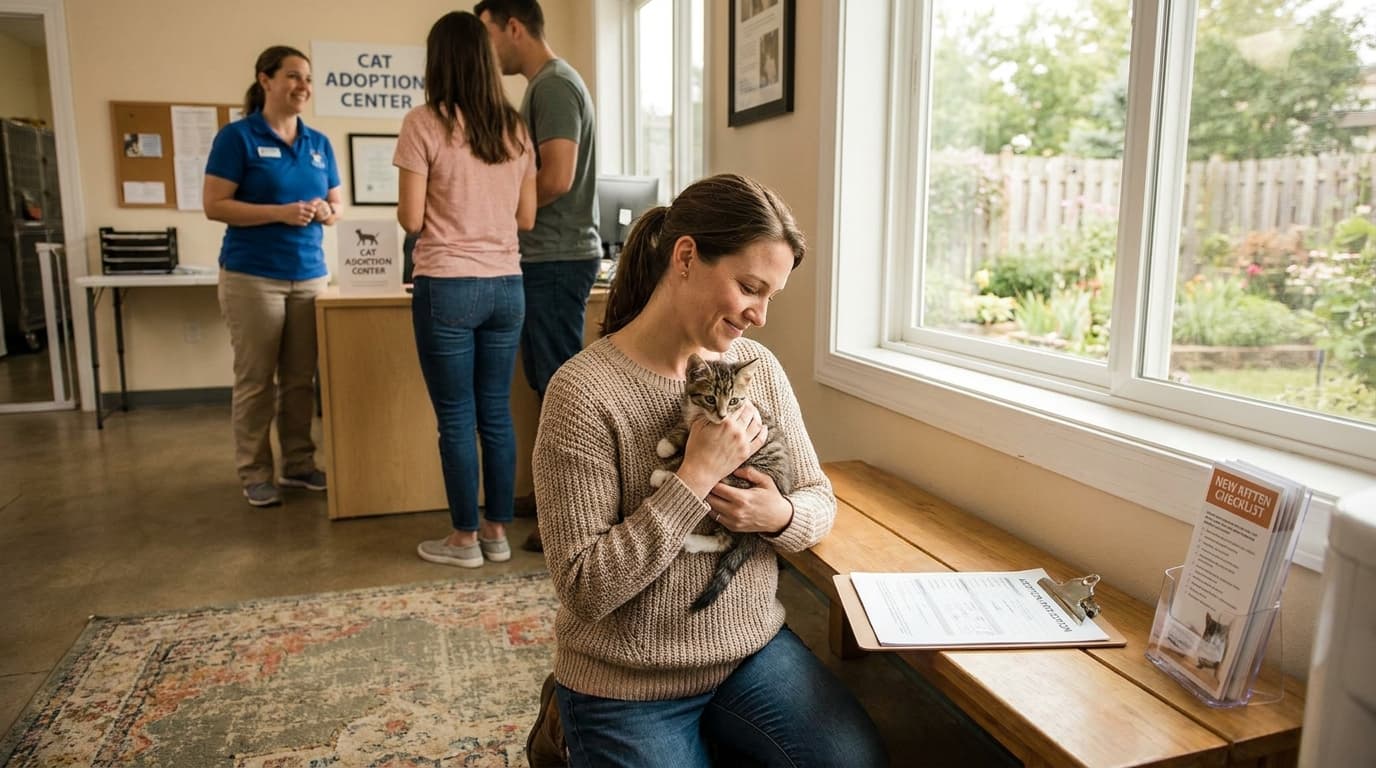
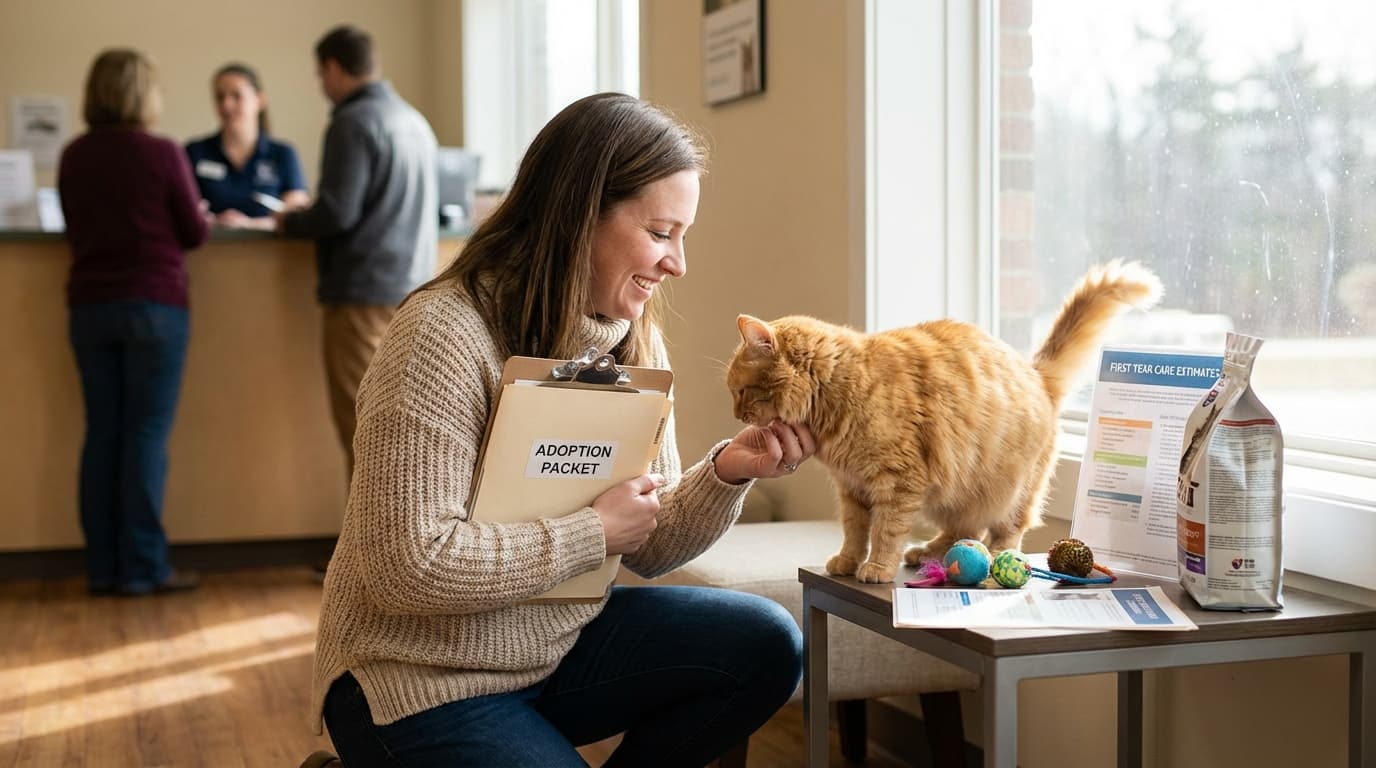
When you walk into a shelter, your goal isn't to find the prettiest cat on the block; it's to find the one whose energy level matches your typical Tuesday night. You should immediately ask the staff about the cat's daily routine, their reaction to loud noises, and how they handle being touched by strangers. Shelter workers spend hours with these animals and often have detailed notes on whether a cat is a quiet lap-dweller or a high-energy explorer who will thrive with a catio or harness training.
The reason we prioritize 'personality over plumage' is simple: it prevents the heartbreak of adoption returns. With roughly 1,300 shelters in the U.S. still working toward no-kill status, making a permanent match the first time around is a literal lifesaver. Most people overlook the fact that a cat's shelter behavior is just a compressed version of their real self. If you only choose based on coat color, you might bring home a shy hider when you actually wanted a social butterfly, which is a major reason why bringing home a cat can feel overwhelming without the right data.
Imagine you have a hyperactive Golden Retriever at home and you fall in love with a beautiful calico at the shelter. If you don't ask about her history with dogs, you are walking into a potential disaster. A cat that was previously surrendered because they were terrified of a canine roommate will likely spend their first month living on top of your refrigerator, no matter how many treats you offer. Knowing if they have successfully coexisted with other species before they hit your front door changes the entire integration plan.
One thing most guides get wrong is the 'perfect cat' myth. Every rescue has a learning curve, and even the most social cat will have baggage that doesn't show up until day four. This works differently when you realize that behavior is fluid; a cat that seems 'broken' or aggressive in a cage might just be a sensitive soul who needs the 3-3-3 rule to decompress. Acknowledge that there will be a transition period where you'll need to be a student of their body language rather than a master of their schedule.
To truly predict how a cat will act in your living room, you have to understand how their past dictates their current hiding behaviors. Ask the shelter for a 'behavioral assessment' summary to see if they have specific triggers, like a fear of men or a dislike of being picked up. A cat coming from a crowded hoarding situation will have vastly different spatial needs than a cat that lived with a quiet senior citizen. If your new friend stops eating or hides constantly, it's often a survival instinct rather than a personality flaw, but always check with a vet if they refuse food for more than 24 hours to rule out medical issues.
According to the Best Friends Animal Society, allowing a cat to emerge on their own terms is the fastest way to build trust. You can help this process by using scent transfer - rubbing a towel on the cat’s cheeks and then on a scratching post - to help them feel like they 'own' the room. This passive approach, combined with knowing their history, ensures you aren't just guessing about their needs but are actively providing the specific type of security they crave.
Key insights:
- Ask: 'Has this cat lived with dogs, other cats, or children before?' to ensure a safe household match.
- Ask: 'What specific behaviors do you see when this cat is overstimulated or scared?'
- Request a copy of the 'behavioral assessment' or any notes from the previous owner's surrender form.
- Ask: 'Is the cat currently on any medication or a specific food brand?' to avoid sudden digestive upset.
- Ask: 'How does the cat react to being handled, brushed, or having their paws touched?'
Understanding the Cat's Past to Predict the Future
A cat’s past is the lens through which they view your living room. If they spent years in a crowded hoarding situation, they might feel exposed in open spaces, whereas a cat from a quiet home might be startled by a simple TV. To get ahead of this, always ask the shelter for a behavioral assessment summary. This document reveals specific triggers, like a fear of sudden movements or a dislike of being picked up, allowing you to prepare your home before they even step paw inside.
What this actually means is that hiding isn't a personality flaw; it's a data-driven survival tactic. Most people overlook the fact that a cat’s previous living situation dictates their current safe distance. By reviewing their history, you aren't just guessing why they’re under the bed - you’re identifying whether they need more vertical space or a smaller starter room to feel secure. This proactive approach helps you implement the 3-3-3 rule with much more precision.
Imagine adopting a cat that the shelter notes as fearful of men. Without this context, a well-meaning husband might try to win the cat over by reaching into a hiding spot, accidentally triggering a defensive scratch. With the assessment in hand, the family knows to use passive presence - simply sitting in the room and reading aloud - to let the cat realize that new people aren't a threat at their own pace.
One thing most guides get wrong is assuming shelter behavior is a permanent trait. The truth is that signs of stress, such as decreased appetite or sleeping in strange places, are often just reactions to a loud environment. While a cat's past provides a roadmap, it doesn't set their future in stone. The catch is that you must respect their current boundaries to help them outgrow their old fears.
Individual circumstances vary - it's always worth checking with your vet or a behaviorist for advice specific to your cat's history and current health needs.
Key insights:
- Request a written behavioral assessment or surrender notes from the shelter staff.
- Identify specific triggers like loud noises, certain types of handling, or other animals.
- Set up a hiding box with two exits so the cat never feels trapped in their safe spot.
- Observe grooming and eating habits as these are the first indicators of how they are processing past stress.
What Supplies Are Needed for a New Adopted Kitten?
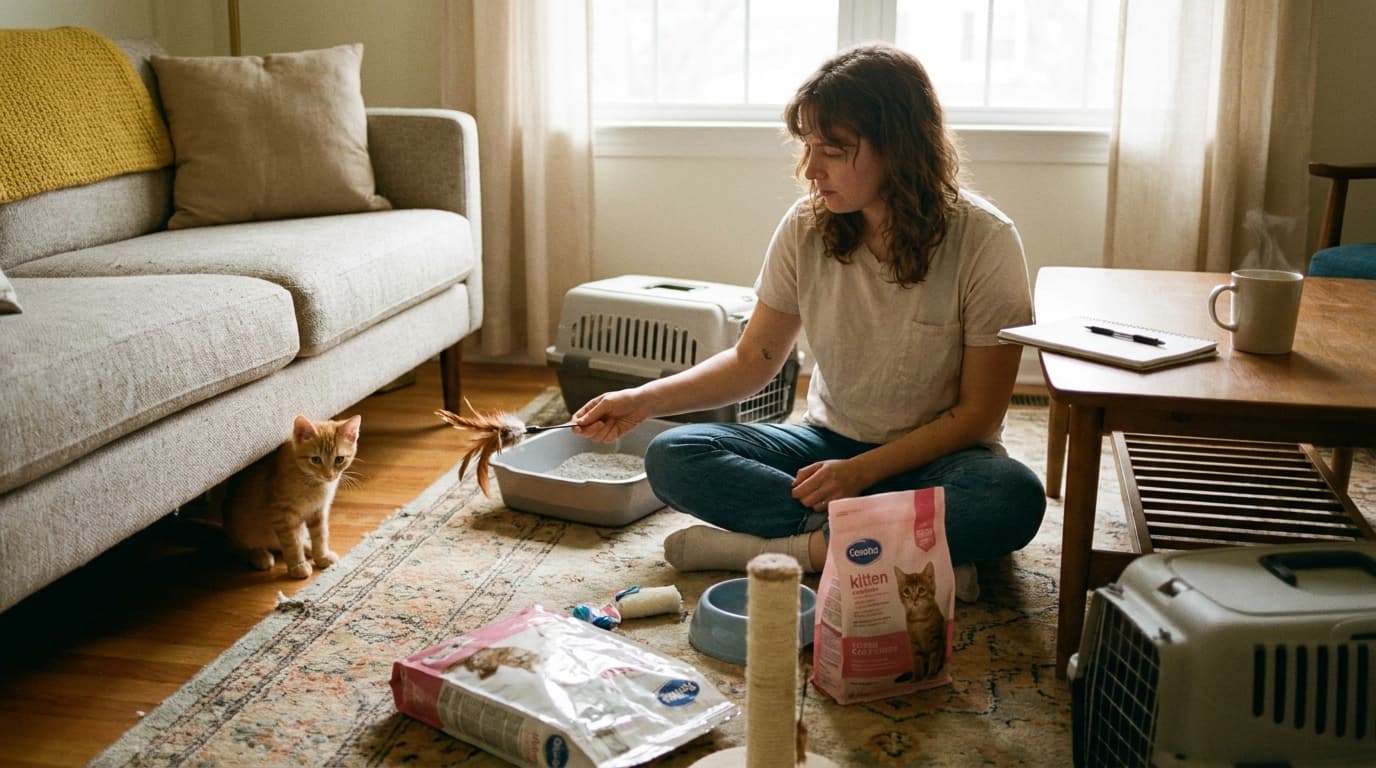
To kick things off, you do not need a mountain of expensive gadgets to make a kitten happy. While it is tempting to buy a fancy self-cleaning litter box or a designer cat tree, your new friend really just needs survival essentials that double as security markers. This includes a basic litter box, a sturdy scratching post, and two bowls for food and water. For a young cat, these items are not just furniture. They are landmarks that help them map out their new world. Having them in place before the kitten arrives helps them settle in according to the 3-3-3 rule much faster.
What many new owners overlook is that supplies act as environmental anchors. Cats are incredibly scent-oriented, and they feel safe when their surroundings smell like them. By providing a vertical scratching post right away, you are giving them a place to deposit scent from the glands in their paws. This scent-marking is a vital part of feline confidence. Most people think a cat is just sharpening their claws, but they are actually claiming the room. If they do not have a post, they might use your sofa, which is a stressful way to start a relationship.
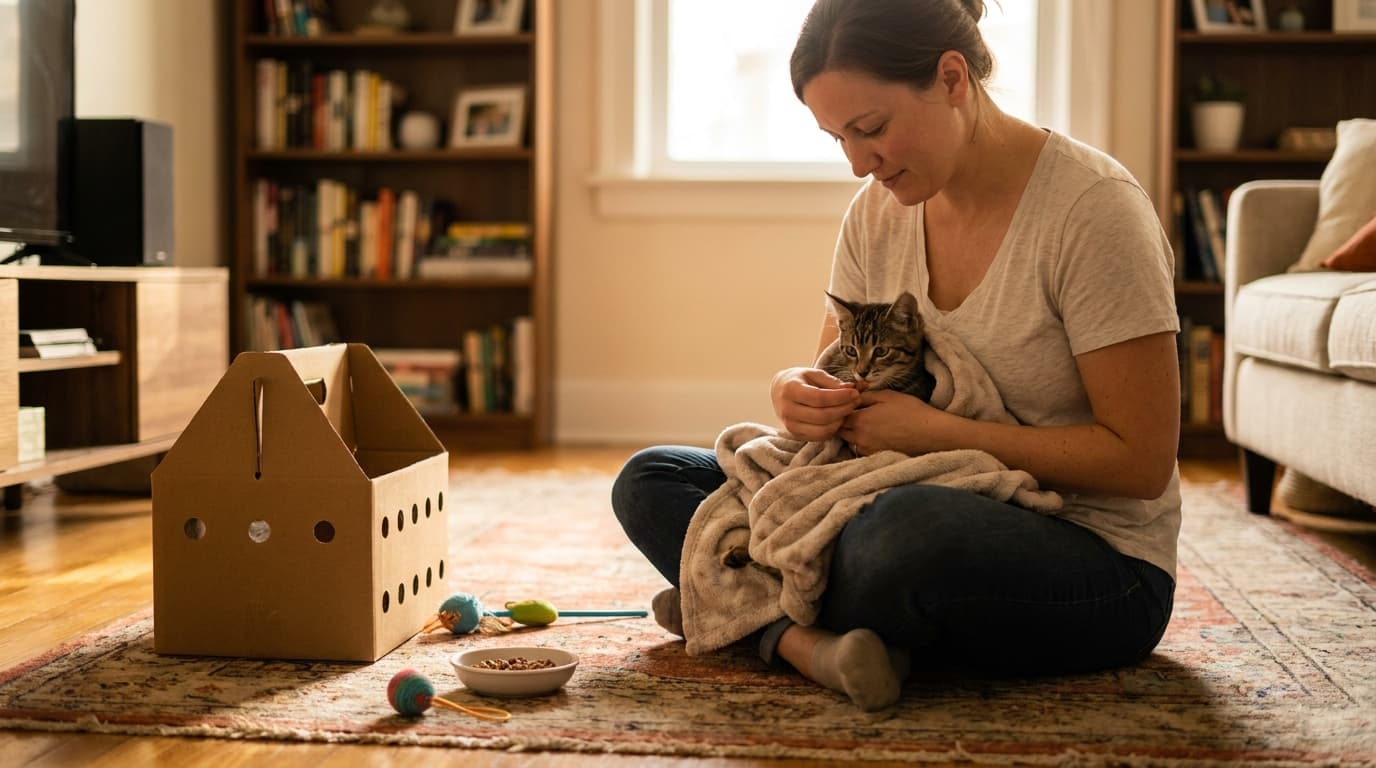
The construction of their hiding spots is another area where a little technical knowledge goes a long way. According to advice from the Best Friends Animal Society, a simple cardboard box should have holes cut into two different sides. This two-exit design ensures the kitten never feels trapped or cornered. If a scary noise happens, they know they have a way out. This small tweak can prevent a kitten from hiding for days on end because they feel in control of their immediate environment.
Imagine you have just brought home a tiny, wide-eyed kitten named Mochi. Instead of letting her roam the whole house, you set up a safe room in a quiet office. You place her two-exit box in the corner, her unscented litter box on the other side, and a few small toys nearby. Because Mochi has everything she needs in one predictable space, she does not feel the need to bolt under the heavy dresser. She spends an hour in her box, then cautiously emerges to investigate the scratching post, realizing that this small kingdom is safe and tailored just for her.
One big mistake is using your hands as toys to bond with your kitten. It is adorable when they are seven weeks old and batting at your fingers, but you are actually teaching them that human skin is a valid target for hunting. As they get older and stronger, this leads to painful biting habits that are hard to break. The catch is that kittens have an intense need to hunt, so you must provide a wand toy to keep that energy focused away from your body. It keeps the play fun for them and safe for your ankles.
Finally, do not forget the boring but essential stuff like a proper food transition. If you switch their diet too fast, you might deal with a messy litter box situation. A safe transition takes seven days. Start with 75% old food and 25% new food for two days, then move to a 50/50 split for two days, and so on until they are on 100% new food by day seven. Since every kitten has unique health needs, it is always a good idea to check with your vet for a specific feeding schedule that fits their weight and growth stage.
Key insights:
- Build a safe room hideout using a cardboard box with two holes so the kitten never feels trapped.
- Transition food over a full week using the 75/50/25 ratio to avoid tummy troubles.
- Choose unscented litter to help the kitten recognize their own scent and feel at home.
- Use wand toys for play instead of your hands to prevent biting and scratching habits.
- Place vertical scratching posts in prominent areas to encourage natural scent-marking behavior.
Why Is My Newly Adopted Cat Hiding Constantly?
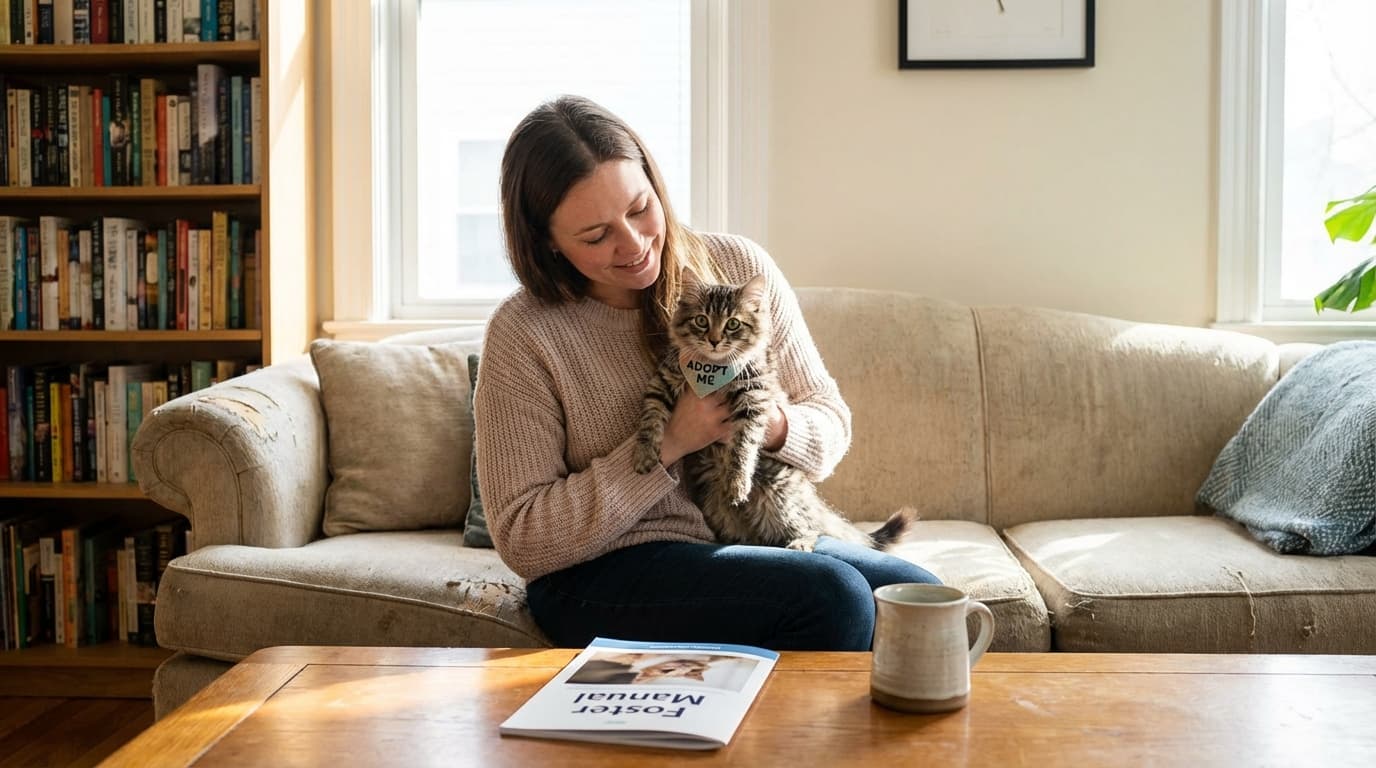
Your newly adopted cat is hiding because they are currently in survival mode. In the feline world, an unfamiliar territory is a dangerous territory, and your home - no matter how cozy it looks to you - is currently an alien landscape to them. You might notice they aren't just tucked away; they may also have a decreased appetite, groom themselves less frequently, or pick very isolated spots to sleep. This is a standard feline response to stress, and as the Best Friends Animal Society notes, allowing them to emerge on their own terms is the fastest way to build a lasting bond.
What this actually means is that your cat is prioritizing safety over social connection. Feline confidence is a direct byproduct of environmental mastery. When a cat first enters your home, they have no scent map of the area, which makes them feel exposed and vulnerable. By staying tucked away, they are controlling the only thing they can: their own visibility. Most people overlook the fact that a hiding cat is actually working very hard - they are listening to your footsteps, learning the sounds of your appliances, and gauging whether you are a threat. If you interrupt this process by forcing an interaction, you effectively reset their internal safety timer.
Imagine a cat named Oliver who spent his first three days in a new home wedged behind a bookshelf. He wouldn't even touch his kibble unless the house was pitch black and silent. His owners were tempted to pull the bookshelf out to show him love, but they chose to leave him be. By the fourth day, Oliver realized that the giants in the house weren't going to hunt him down in his safe spot. That realization - that he was safe even when vulnerable - is what finally gave him the courage to walk into the kitchen for breakfast. If his owners had forced the issue, Oliver likely would have associated their touch with the fear of being trapped.
The catch is that many owners confuse giving space with ignoring the cat. You should still be present, but in a non-threatening way. One thing most guides get wrong is suggesting you should pull a cat out to socialize them; this is known as flooding, and it usually just results in a cat that is terrified of your hands. However, keep an eye on the clock. While hiding is normal, a cat that refuses to eat for more than 24 to 48 hours can develop serious liver issues. If your cat is totally fasting or seems genuinely weak, it’s time to call your vet for advice specific to your situation. Stress is a mental hurdle, but it can quickly become a physical one.
To help your cat feel like they own the place, focus on scent and routine rather than physical contact. Since cats rely on smell to identify safe zones, you can help them claim the house by transferring their scent to common areas. Try rubbing a soft cloth on the cat's cheeks while they are in their hiding spot and then rubbing that same cloth on a nearby scratching post. This tells the cat, 'I have already been here, and it is safe.' Combine this with a predictable twice-daily feeding schedule, and you will find that the scary new house starts feeling like a home much faster.
Key insights:
- Allow the cat to emerge on their own terms to build a foundation of trust and confidence.
- Establish a twice-daily feeding routine to create a sense of predictable security in the new environment.
- Practice passive presence by sitting in the same room and reading aloud to desensitize the cat to your voice.
- Avoid reaching into hiding spots or pulling the cat out, as this can make them feel trapped and defensive.
- Use scent transfer by rubbing a cloth on the cat's cheeks and then on furniture to help them 'claim' the space.
How to Help a Shy Adopted Cat Feel Comfortable
To help a shy cat feel at home, you have to master the art of being a boring human. Instead of trying to coax them out with treats or toys right away, focus on passive presence by spending time in their room without looking at them or trying to touch them. This approach takes the pressure off the cat and lets them observe you from a safe distance, which is the fastest way to prove you aren't a predator. By simply existing in their space while you scroll on your phone or do some quiet work, you allow the cat to set the pace of the relationship.
We often think of bonding as an active process, but with a fearful cat, silence is your strongest tool. When you sit on the floor and ignore the cat, you are actually communicating in their language. This works hand-in-hand with scent markers. When you rub a soft towel on a cat’s cheeks to collect their pheromones and then rub that towel on a scratching post, you help them claim the territory. This environmental ownership is a massive confidence booster. It is worth noting that if your cat shows extreme signs of stress like a total lack of appetite or strange sleeping spots, you should consult your vet to rule out underlying health issues, as stress can sometimes mask medical problems.
The pattern here is that feline confidence comes from predictability. When a cat knows exactly how you are going to behave - that you will sit in the same chair at the same time and make the same soft noises - their fight-or-flight response finally starts to power down. This is why a 15-minute quiet time session every day is so effective. You are not there to play; you are there to be a consistent, non-threatening part of the furniture. According to the Best Friends Animal Society, allowing a cat to emerge on their own terms is what actually sets the stage for a long-term bond.
Imagine you have just brought home a shy tabby named Mochi who spent her first three days squeezed behind a bookshelf. Instead of reaching back there to pull her out, you pull up a chair nearby and start reading a novel out loud in a low, rhythmic voice. You do not look at the bookshelf. You just read. After twenty minutes, you might see a small nose poke out or hear a soft stretch. By desensitizing Mochi to the sound of your voice while you are distracted by your book, you have made yourself a safe background character in her new world.
One thing many new owners get wrong is the stare of love. We want to look at our new pets because they are adorable, but to a shy cat, a direct gaze is a sign of aggression. This is where the slow blink technique comes in. When you happen to catch their eye, do not look away instantly, but do not keep staring either. Slowly close your eyes, hold them shut for a second, and slowly open them. It is a non-threatening signal that tells the cat you are relaxed. If they blink back, you have just had your first real conversation. This works differently than forced interaction because it gives the cat the choice to engage or stay put.
Key insights:
- Implement a 15-minute daily quiet session where you sit in the cat's safe room and read aloud to desensitize them to your voice.
- Transfer the cat's scent by rubbing their cheeks with a cloth and then rubbing that cloth onto scratching posts and furniture.
- Use the slow blink technique whenever you make eye contact to signal that you are not a threat.
- Avoid using your hands as toys to prevent the cat from associating your skin with hunting or aggression.
- Monitor for signs of stress like hiding or decreased appetite, and reach out to a professional if these behaviors persist beyond the first week.
What to Do if Your Adopted Cat Is Not Eating
If your newly adopted cat refuses to eat, it is usually a result of new home nerves rather than a dislike for the food. Cats are territorial, and losing their familiar environment triggers a stress response that can temporarily shut down their appetite. For adult cats, you should take action if they go 24 hours without a single bite; however, for kittens, that window is much shorter. Because their energy reserves are tiny, a kitten that misses two consecutive meals or goes 12 hours without eating needs immediate professional attention. Individual circumstances vary, so it is always worth checking with your vet for advice specific to your cat's health history.
This behavior isn't just about a picky appetite; it's about the way a cat's body processes fat. When a cat stops eating, their body sends fat to the liver to be processed into energy, but feline livers are notoriously bad at this. This can lead to a dangerous condition called hepatic lipidosis, or fatty liver disease. This creates a difficult cycle where the cat is too stressed to eat, and the lack of food makes them feel even sicker. By moving away from free choice feeding - where food sits out all day - to a structured twice-daily schedule, you gain a vital diagnostic tool. You will know within minutes if your cat's appetite has dipped, which is often the first signal of a medical issue.
Imagine you just brought home a shy tabby named Max. He has spent the first 12 hours tucked behind the washing machine and hasn't touched the bowl of kibble you left out. Instead of hovering over him, which adds more pressure, you place a small dish of his original shelter food mixed with a little warm tuna juice just inside his hiding spot and walk away. By morning, the bowl is licked clean. This small win shows that he is physically capable of eating and just needed a high-value incentive to overcome his fear in a new space.
There is a common misconception that a hungry cat will eventually eat whatever is put in front of them. In reality, a stressed cat might choose to starve rather than eat something unfamiliar or in a location where they feel vulnerable. This is why the seven-day food transition schedule we detailed in our supplies section is so critical; a sudden change in protein can cause stomach upset that further discourages them from eating. If you are dealing with a total strike, the goal is getting calories into them first. Once they start eating anything, you can gradually steer them back toward their long-term diet using the slow mixing method.
While it is tempting to try every brand of cat food on the shelf to see what sticks, constant variety can actually lead to more digestive trouble. Stick to the basics, keep the environment quiet, and focus on building a routine that makes the cat feel safe enough to lower their guard and eat.
Key insights:
- Monitor the food bowl closely for the first 24 hours to establish a clear baseline of their appetite.
- Offer high-value toppers like tuna juice or plain, unseasoned chicken broth to entice a nervous eater.
- Stick to a twice-daily feeding schedule instead of leaving food out to keep a precise eye on their health.
- Contact your vet immediately if a kitten misses two meals or an adult goes 24 hours without eating.
- Avoid hovering or staring while they eat, as many stressed cats will only eat when they feel unobserved.
Final Verdict: Patience Is the Secret Ingredient
The transition from a shelter to a forever home isn't an overnight event; it almost always follows the 3-3-3 rule of pet adoption. For the first three days, your new cat is likely overwhelmed and may hide or refuse to eat as they decompress from the stress of the shelter. By the three-week mark, they usually start feeling comfortable enough to show their true personality and learn your daily routine. It typically takes a full three months for a cat to truly feel at home and build a deep, trusting bond with you.
What this actually means is that your cat’s progress isn't a reflection of your worth as an owner, but a biological response to change. When you prioritize the cat's pace over your own expectations for immediate cuddles, you are building a foundation of safety. Most people overlook the fact that forcing a shy cat to interact can trigger a stress response that sets the relationship back by weeks. By letting them win the space on their own terms, you ensure that the companionship you are building will remain solid for the next decade or more.
Imagine you have just brought home a nervous tabby who spent her first week squeezed behind the washing machine. Instead of reaching in to pull her out, you simply sit nearby on the floor and read a book aloud to get her used to your voice. One evening, she finally trots out, sniffs your shoe, and lets out a tiny chirp. That moment of voluntary contact is worth more than any forced interaction because it proves she finally feels safe enough to be herself in your presence.
One thing most guides get wrong is the idea that a successful adoption means a cat who sits on your lap by day two. The reality is that some of the most rewarding relationships come from the shyest cats who take months to warm up. Even after they settle in, you might notice stress signs like less grooming or sleeping in strange spots if the house gets noisy or the routine changes. Individual circumstances vary, so it is always worth checking with your vet if you are worried about their behavior or health during the first few months of adjustment.
Winning the heart of a shy cat is one of the most fulfilling experiences a pet owner can have. It requires you to stop looking at the clock and start looking at the cat. When they finally decide you are their safe person, that bond is unbreakable. Today's patience is the down payment on a lifetime of head bumps, purrs, and quiet companionship.
Key insights:
- Stick to the 3-3-3 timeline to help manage your own expectations during the transition.
- Monitor for stress signs like decreased appetite or unusual hiding spots during the first month.
- Establish a predictable twice-daily feeding schedule to provide a sense of security.
- Celebrate small milestones like the first time they use a scratching post or play with a toy.
- Allow the cat to initiate physical contact to build long-term trust and confidence.
Frequently Asked Questions
Most cats take anywhere from a few days to a couple of weeks to stop hiding, but every feline is an individual. It is completely normal for a new arrival to feel overwhelmed by their new surroundings. According to a Best Friends Animal Society guide, signs of stress like hiding, eating less, or grooming less are standard parts of the adjustment period. If you let your cat hide and come out when they feel ready, you are actually building a much stronger bond of trust.
Here is a trick that most people miss: give them a safe escape box with two holes. If a box only has one opening, a cat might feel trapped inside. Cutting a second hole lets them feel like they have an exit route, which actually helps them relax faster. Also, keep in mind that while hiding is fine, not eating is a different story. If your new friend goes more than 24 hours without a meal, it is a good idea to call your vet just to be safe. Patience is really the secret ingredient here.
It is very common for a new cat to skip the litter box on their first day home. Often, they are just too nervous to explore or they might not even know where the box is located yet. Stress can shut down their normal routines for a little while as they focus on staying safe. You can help them out by placing the box in a quiet, low traffic area where they do not feel exposed. This makes it easier for them to do their business without feeling like they are being watched by a predator.
A common mistake is using cleaners that are too strong. Cats have a very sensitive sense of smell, so avoid using ammonia or scented detergents when you clean their box. Most experts suggest scooping the box daily and doing a full deep clean with mild soap every two weeks to keep things fresh. If your cat still avoids the box after a few days or seems to be in pain, you should definitely talk to your veterinarian. Sometimes what looks like a behavior problem is actually a medical issue like a urinary tract infection. Getting a professional opinion early on can save you both a lot of stress.
It is totally normal for a new cat to hide, and usually, they are just adjusting rather than being truly unhappy. You can tell the difference by watching for specific signs of stress in a new cat like a big drop in appetite, less grooming, or sleeping in really strange places. If they are just shy, they will slowly start to explore when the house is quiet and they feel safe.
Here is the thing that most people miss: hiding is actually a way for your cat to feel in control of their environment. By letting them come out when they feel ready, you are building a foundation of trust that lasts a lifetime. Of course, if your cat stops eating for more than a day or seems very lethargic, it is always a good idea to call your vet just to be safe. Every cat has their own timeline for feeling at home, so try to be patient while they find their paws.
Leaving a small nightlight on is a great idea for the first few nights in a new home. While cats have excellent night vision, a completely dark and unfamiliar room can still be a bit disorienting for a nervous kitty. A dim light helps them find their litter box and water bowl without any extra stress. You want to make their starter room feel as cozy as possible so they do not feel like they are trapped in a void.
Here is a cool trick: scent is actually more important than light for a cat. You can rub their cheeks with a soft towel and then rub that towel on their bed or scratching post to make the room smell like them. This helps them feel secure even when the lights are low. Just remember to keep things quiet and predictable at night to help them settle in faster. If your cat seems especially anxious or keeps crying at night, your vet can offer advice on calming aids that might help.
Conclusion
Bringing a new cat home is a lot like starting a new relationship. It is easy to get caught up in how cute a kitten looks, but the real magic happens when you match your lifestyle to their actual personality. Based on everything we have looked at, the most successful adoptions happen when you treat the first few weeks as a transition period rather than an instant transformation. By asking the right questions at the shelter and having your supplies ready, you are not just buying gear. You are building a foundation of safety. Remember the 3-3-3 rule. That means three days to decompress, three weeks to learn the routine, and three months to feel at home. If you focus on their pace instead of your own timeline, you will avoid the frustration that comes when a cat hides or skips a meal.
One thing most people miss is that a cat's shelter behavior is rarely their forever personality. A cat that seems shy or stays tucked in the back of a cage might actually be the biggest cuddle bug once they feel secure in your living room. This means your job is not just to be a provider, but to be a patient observer. As you move forward, keep a close eye on those small victories. Look for the first time they eat while you are in the room or that first brave stretch outside the safe room. If you want to start on the right foot today, go grab a soft towel and rub it on your face. Leave it in their carrier or bed so they can get to know your scent without the pressure of a face-to-face meeting.
Winning over a rescue cat is one of the most rewarding things you can do. It takes time, a few cans of high-value treats, and a lot of sitting quietly on the floor, but that first purr makes every bit of effort worth it. Be the person your new cat needs you to be. Stay patient, stay prepared, and be totally obsessed with their happiness. The best friendships always take a little time to grow.
Send it to someone who should read it next.

PurrScript Editorial Team
Editorial Team
PurrScript's in-house editorial team. We research, write, and review every guide using established veterinary and behavioral resources, and update articles as best practices evolve.
View all articles