Cat Licking Bald Spots, Matted Fur, and How to Groom Aggressive Cats
Understanding cat licking bald spots on belly meaning how to calm aggressive cat for grooming what to do when cat has matted fur how to remove eye boogers from cat...

Mia Torres
Cat Lifestyle Writer
Cat Licking Bald Spots, Matted Fur, and How to Groom Aggressive Cats
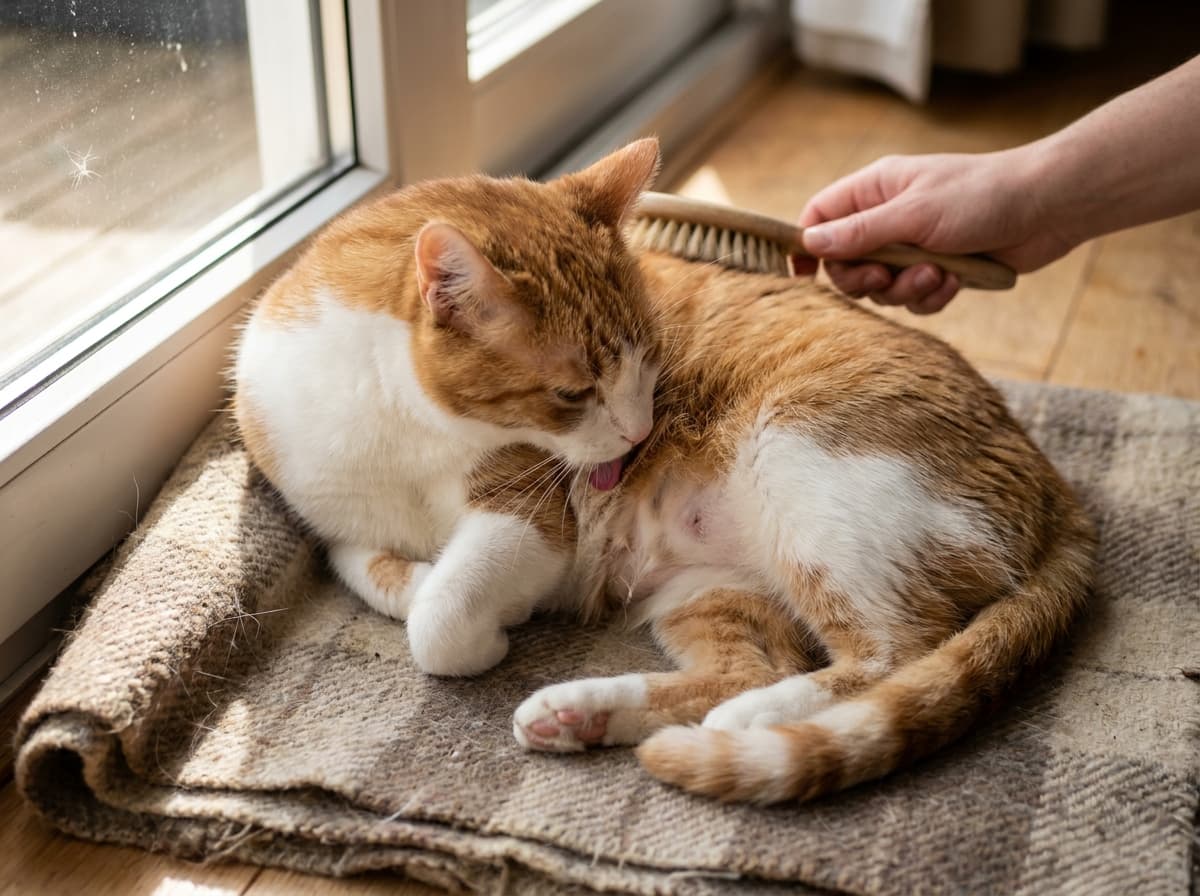
Understanding cat licking bald spots on belly meaning how to calm aggressive cat for grooming what to do when cat has matted fur how to remove eye boogers from cat safe way to clean cat inner ears is vital for your pet's health. Bald patches often signal stress, while mats require gentle care to avoid skin damage.
Addressing these issues early keeps your cat comfortable and helps you avoid expensive, stressful trips to the vet or a professional groomer.
You'll learn simple, pain-free DIY techniques to manage stubborn fur, clean delicate ears, and handle spicy personalities with ease.
Table of Contents
- Why Is Your Cat Licking Bald Spots on Their Belly?
- How to Calm an Aggressive Cat for Grooming
- What to Do When Your Cat Has Matted Fur
- The Safe Way to Clean Cat Eye Boogers and Inner Ears
- Essential Maintenance: Nails and Bathing Without the Scratching
- When to Call a Professional Groomer or Vet
- Frequently Asked Questions
- Conclusion
Why Is Your Cat Licking Bald Spots on Their Belly?
If your cat is suddenly licking their belly bare, it usually boils down to three main culprits: stress, allergies, or pesky parasites like fleas and ringworm. Cats are creatures of habit, so even small changes can trigger this over-grooming behavior as a way to cope or find relief from itchy, irritated skin. Grooming and skin health are closely linked, and bald spots are often the first sign that your cat is struggling with an underlying health issue.
Sometimes the cause is purely environmental, like a change in laundry detergent or a new type of floor cleaner that irritates their skin when they lie down. Cats have incredibly sensitive systems, and what seems like a minor switch to us can feel like an itchy nightmare to them. This often leads to a cycle where the more they lick to soothe the itch, the more irritated the skin becomes, eventually causing the hair follicles to break off or fall out entirely.
Imagine you just moved into a new apartment or brought home a bouncy new puppy. Your cat, who used to be a social butterfly, starts spending all their time under the bed or behind the sofa. You notice a patch of thinning fur on their stomach that eventually turns into a smooth, pink bald spot. This isn't just a grooming habit; it's often a physical response to the overwhelming anxiety of their world being turned upside down.
Why the belly? It's a soft, vulnerable area that is easy for a cat to reach while they are curled up in a defensive posture. Licking actually releases endorphins in a cat's brain, which acts as a natural self-soothing mechanism. It’s their version of deep breathing or pacing when things get too intense. If the house is too loud or there are too many strangers around, a cat might hide and lick until the fur is gone just to feel a sense of control.
While you work on helping your cat feel great through environment changes, you should also check for physical irritants. According to the ASPCA, excessive licking and bald patches are primary clinical signs of parasites like ringworm or fleas. Even a single flea bite can cause an allergic reaction that leads to frantic grooming, so look closely for tiny black specks or red bumps on the skin.
Before you rush to the vet, take a moment to observe the skin's texture and color. Is it bright red, or does it look like a normal, healthy pink color just without the fur? If the skin is broken or oozing, that's a sign of a secondary infection that needs medical attention immediately. Also, check if they are licking other areas, like their paws or inner thighs, which can help your vet narrow down the cause.
Key insights:
- Perform a thorough flea check using a fine-tooth comb to rule out parasites even if you don't see jumping bugs.
- Look for redness or inflamed skin which might suggest an allergic reaction to food or cleaning products.
- Try using pheromone diffusers in the rooms where your cat spends the most time to lower their general anxiety levels.
- Note if the behavior started after a specific lifestyle change, such as a new pet arrival or a move to a new home.
- Avoid using harsh chemicals on the floor where your cat rests to prevent contact dermatitis on their belly.
The Link Between Stress and Over-Grooming
Licking is a cat's natural stress-relief valve. When they groom, it triggers the release of endorphins, which are feel-good chemicals that act as a self-soothing mechanism. While a little grooming is healthy, a cat under pressure might start licking obsessively to cope with a loud environment or a new routine. It is their version of deep breathing during a stressful moment.
Imagine a cat named Oliver who lives in a house undergoing a major renovation. The constant banging and strange smells make him hide behind the sofa. To deal with the noise, Oliver licks the same patch of fur on his leg over and over. He is not trying to get clean; he is just trying to find a sense of control while his world feels upside down.
Key insights:
- Try using pheromone diffusers to lower your cat's general anxiety levels during stressful transitions.
- Give your cat a dedicated safe room where they can escape from loud noises or houseguests.
- Monitor for bald spots, which the ASPCA identifies as a primary sign of stress or parasites.
- Read about helping your cat feel great to create a calmer environment.
How to Calm an Aggressive Cat for Grooming
If your cat turns into a tiny, hissing tiger when the brush comes out, don't worry. Most feline aggression during grooming is actually just fear or a feeling of being trapped. Instead of starting a wrestling match, focus on desensitization. This just means teaching your cat that grooming tools are actually treat magnets rather than scary monsters.
Imagine a cat named Barnaby who usually treats a brush like a mortal enemy. His owner decides to stop the forced brushing and instead brings out a tube of liquid treats. While Barnaby is happily distracted by the snack, his owner just touches the brush to his shoulder for two seconds without actually grooming him. After a few days of this, Barnaby starts purring when the brush appears because he knows the good stuff is coming.
This method takes time, but it builds a foundation of trust that makes future sessions much easier. You are essentially rewiring their brain to associate the tools with pleasure. If you are dealing with a particularly spicy kitty, check out our guide on how to groom a cat that bites for more safety tips. Just remember that if the risk of a real injury is high, the ASPCA recommends calling a professional instead of risking a bite.
Key insights:
- Practice 3-second paw massages daily to get your cat used to having their feet handled.
- Use high-value rewards like liquid treat tubes to create a positive association with grooming.
- Press the toe pad gently to extend the nail and only snip the white, pointed tip.
- Avoid the quick, which is the pink part of the nail that contains sensitive nerves and blood vessels.
- Keep sessions very short and stop immediately if your cat shows signs of high stress or anger.
What to Do When Your Cat Has Matted Fur
Matted fur is more than just a messy look; it can pull on your cat's skin and cause real discomfort. Most people reach for scissors, but that is a dangerous move because feline skin is paper-thin and gathers easily into the blades. A safer, stress-free alternative is the olive oil method, which uses natural lubrication to break down the knot without any cutting or tugging.
Applying olive oil or coconut oil directly to the base of a fur mat can cause it to fall off on its own within a few days. Kari Kells, a professional pet sitter, recommends this technique as a non-invasive way to handle even the most stubborn clumps. The oil works its way into the hair sheath, allowing the mat to slide down the fur until it simply detaches from the body.
Take a cat like Oliver, a fluffy senior who hates being handled. His owner found a golf-ball-sized mat on his flank that was too tight for a comb. Instead of a vet visit, the owner applied room-temperature olive oil using a syringe. Within 48 hours, the oil worked its way through the hair fibers, and the mat literally slid off onto the carpet while Oliver was napping without him ever feeling a pull.
This trick is especially helpful when you are helping your cat feel great by keeping things low-stress. If the mat is still there after a couple of days, you can re-apply a little more oil to keep the process moving. It is a much gentler way to groom your cat without the drama often caused by mechanical tools or loud clippers.
Key insights:
- Use a needleless syringe to apply room-temperature olive or coconut oil directly to the base of the mat where it meets the skin.
- Avoid using scissors entirely, as it is incredibly easy to accidentally nick a cat's skin while trying to cut through a tight knot.
- Wait at least 48 hours for the oil to fully saturate the hair fibers and allow the mat to slide off naturally.
- Check the area daily and re-apply a small amount of oil every two to three days if the mat is particularly large or stubborn.
- Wash the oily patch with a bit of diluted cat shampoo once the mat has fallen off to prevent your furniture from getting stained.
The Safe Way to Clean Cat Eye Boogers and Inner Ears
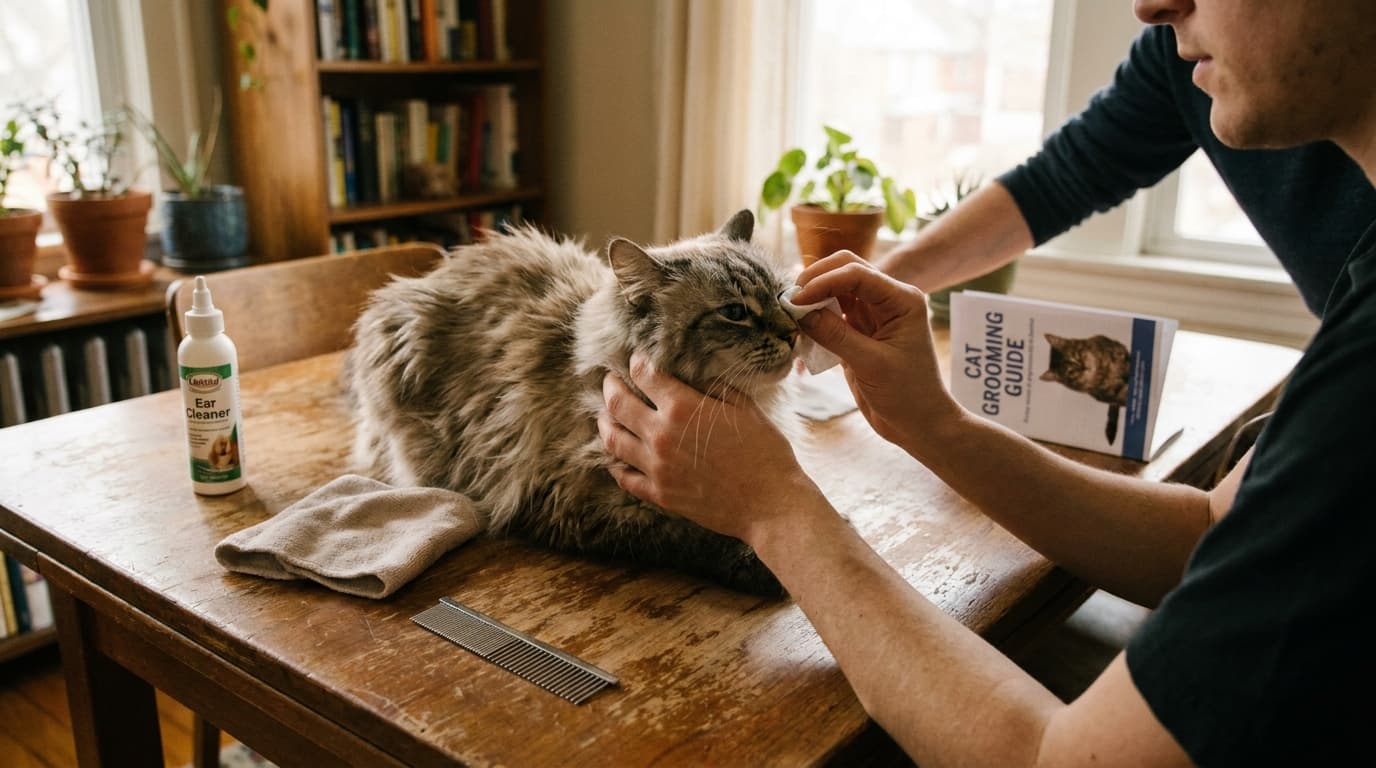
Cleaning your cat's face and ears is a delicate job that requires a gentle anatomical approach. You should focus on comfort and safety rather than scrubbing, as the tissues around the eyes and inside the ears are incredibly thin and prone to injury. If you notice your cat is frequently rubbing their face or has a strange odor coming from their ears, it might be a sign your cat has a fever or an ear infection.
The inside of a cat's ear is shaped like an L, and if you try to clean too deep, you risk pushing debris further down or even rupturing the eardrum. Only wipe the visible underside of the ear flap using a soft cloth or cotton ball. This simple routine is a big part of helping your cat feel great because it keeps them clean without the stress of invasive tools.
Take a first-time owner who sees their cat with heavy morning eye crust. Instead of using a finger to pick it off, which can cause a scratch, they soak a cotton ball in warm water and hold it against the eye booger for a few seconds. The warmth dissolves the hardened gunk, allowing it to slide off easily. This prevents the cat from flinching and keeps the skin around the eye from getting irritated or inflamed.
Key insights:
- Use a separate cotton ball for each eye to prevent spreading potential bacteria or infections between them.
- Soften dried eye discharge with warm water for at least ten seconds before trying to wipe it away.
- Wipe the ear flap only and never insert Q-tips or any objects into the ear canal itself.
- Look for redness, swelling, or bald spots during cleaning, as these can be signs of overgrooming or parasites.
- Stop immediately if your cat becomes aggressive or shows signs of pain, and consult a professional for help.
Essential Maintenance: Nails and Bathing Without the Scratching
Keeping your cat's claws in check doesn't have to be a battle. Most cats need a trim every ten days to two weeks to keep their nails from snagging on the carpet or becoming painfully overgrown. The secret is to only snip the very tip of the white, pointed part of the nail. You must stay far away from the quick, which is the pink area full of nerves and blood vessels. If you accidentally cut into this area, it causes pain and bleeding, which is exactly why many cats learn to fear the clippers in the first place.
Bathing is another hurdle, but it is often easier than you think if you prep the soap correctly. Most owners use way too much concentrated shampoo, which is difficult to rinse out and can leave the skin itchy. According to ASPCA grooming tips, you should dilute cat shampoo using a ratio of one part soap to five parts water. This thinner mixture spreads through the fur easily and rinses off in half the time, preventing the skin irritation that often leads to cat licking bald spots on belly or other sensitive areas.
Imagine a first-time owner who used to dread nail day because their cat would turn into a whirlwind of fur and teeth. Now, they wait until the cat is deeply napping in a sunbeam. They gently press a single toe pad to extend the nail and snip just the sharp tip before the cat even realizes what happened. By doing just one or two paws at a time while the cat is drowsy, the whole process becomes a non-event rather than a wrestling match. This approach is a huge part of helping your cat feel great and building trust.
If your cat is particularly spicy, you might need to focus on slow desensitization. Practice touching their paws for just a few seconds every day without any clippers in sight. This builds a positive association and makes them less reactive when it is actually time for maintenance. However, if your cat fights so hard that you or the cat might get hurt, it is always safer to make an appointment with a professional who can handle the job safely.
Key insights:
- Mix one part cat shampoo with five parts water in a squeeze bottle to make rinsing faster and prevent skin irritation.
- Trim nails every ten days to two weeks to keep them at a manageable length and prevent snagging.
- Clip only the white, pointed tips of the claws and stay clear of the pink quick to avoid causing pain.
- Schedule grooming sessions when your cat is sleepy or relaxed to minimize stress and movement.
- Press the toe pad gently to extend the nail fully before making any cuts with sharp pet trimmers.
When to Call a Professional Groomer or Vet
Sometimes the best grooming move is simply putting the brush down. If you find a mat that is pulled tight against the skin or your cat is acting truly aggressive, it is time to call in the experts. Pushing a stressed cat too far usually ends in a painful bite for you or a skin tear for them, which is never worth the risk.
You should also keep an eye out for physical warning signs that go beyond messy fur. If you see bald spots on the belly or skin that looks red and inflamed, it might not be a grooming issue at all. These are often clinical signs of allergies, stress, or parasites like ringworm that need a medical diagnosis from a vet rather than a bath.
Take a first-time owner with a fluffy rescue cat who discovers a huge, hard knot behind the ears. They try to work it out, but the cat starts growling and showing teeth. Instead of risking a deep scratch or accidentally cutting the cat’s paper-thin skin with scissors, they decide to stop. They realize that a professional groomer has the experience to handle spicy cats safely and can shave the area without a trip to the emergency room.
Key insights:
- Stop immediately if your cat’s ears go flat or they begin a low-frequency growl.
- Look for skin redness or a foul smell near mats, which could mean a hidden infection.
- Call a vet if you notice bald patches accompanied by scabs or flaky skin.
- Keep a local professional groomer’s number on your fridge for severe matting that won't budge with oil.
- Follow the ASPCA advice and see a pro if there is any potential for injury to yourself or your pet.
Frequently Asked Questions
Conclusion
Caring for your cat's coat is about so much more than just keeping them looking pretty for photos. When you understand the cat licking bald spots on belly meaning or finally figure out what to do when a cat has matted fur, you are actually building a deeper bond with your pet. These grooming sessions are chances to check in on their health and make sure they feel safe and comfortable in their own skin.
Your next move is to take it slow. If you have been wondering how to calm an aggressive cat for grooming, remember that treats and short sessions are your best friends. Whether you are learning the safe way to clean a cat's inner ears or how to remove eye boogers from a cat, patience is the secret ingredient. You do not need to be a professional to give your cat great care; you just need to be observant and gentle.
The bottom line is that a happy cat starts with a healthy routine. Keep those brushes handy and your olive oil ready, and do not be afraid to ask a vet if things look unusual. After all, a clean, mat-free cat is a much cuddlier companion.
Send it to someone who should read it next.
About the author

Mia Torres
Cat Lifestyle Writer
Cat mom of four and writer covering the joys, quirks, and everyday adventures of living with cats.
View all articles